

Ebola crisis hits home for African community
Concern for kin back home
Advertisement
Read this article for free:
or
Already have an account? Log in here »
To continue reading, please subscribe:

Digital Subscription
One year of digital access for only $205*
- Enjoy unlimited reading on winnipegfreepress.com
- Read the E-Edition, our digital replica newspaper
- Access News Break, our award-winning app
- Play interactive puzzles
*First annual payment billed as $205.00 + GST for one year. This annual subscription will automatically renew at $233.00 + GST every 52 weeks (10% off the regular annual price of $259.35). Offer available to new and qualified returning subscribers only. Cancel any time.
To continue reading, please subscribe:
Add Free Press access to your Brandon Sun subscription for only an additional
$1 for the first 4 weeks*
- Enjoy unlimited reading on winnipegfreepress.com
- Read the E-Edition, our digital replica newspaper
- Access News Break, our award-winning app
- Play interactive puzzles
*Your next Brandon Sun subscription payment will increase by $1.00 and you will be charged $17.95 plus GST for four weeks. After four weeks, your payment will increase to $24.95 plus GST every four weeks.
Read unlimited articles for free today:
or
Already have an account? Log in here »
Hey there, time traveller!
This article was published 03/10/2014 (4321 days ago), so information in it may no longer be current.
The Ebola crisis distresses Zita Somakoko so much she can’t even answer the phone.
She’s afraid of hearing the news coming from the other end.
“It’s overwhelming and quite terrifying,” she said following a press conference featuring a number of members of Winnipeg’s African community detailing the struggles back home. “From the beginning, I was just paralyzed, and I’m still that way today. I’m not ready to hear that my father has become infected or that someone else that I know has it.
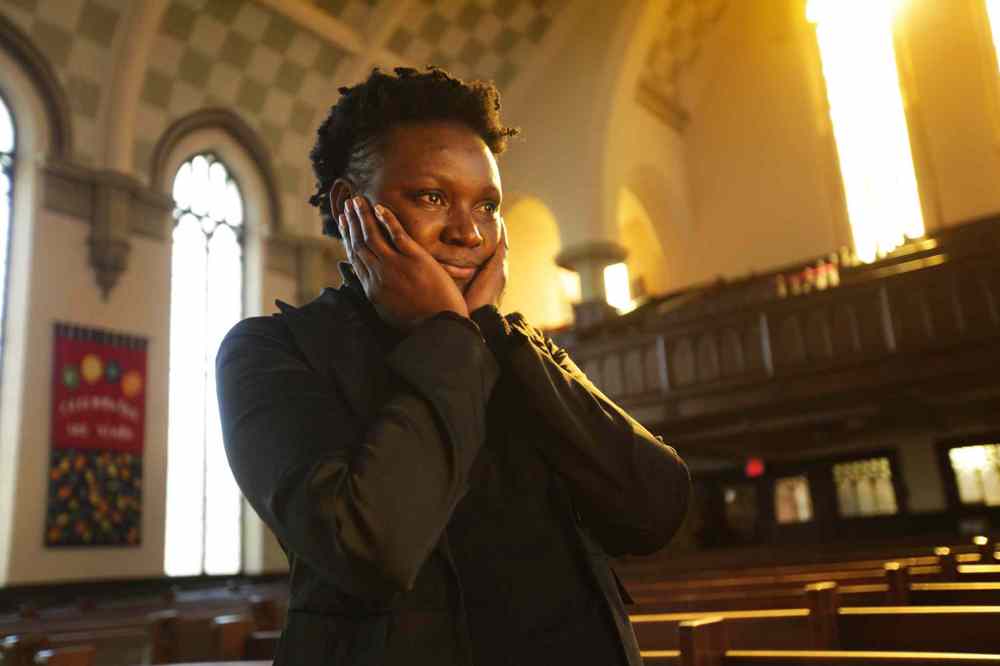
“When the phone rings, my heart goes ‘boom!’ I see that it’s Guinea and I let it go to the machine. Every single time. I think that it might be easier to hear the message played than to have the person tell me directly that something is wrong.”
Somakoko hails from the Central Africa Republic, a landlocked country approximately 3,600 kilometres east of Sierra Leone, Liberia, Guinea and the Western Africa region at the heart of the Ebola crisis. In regular contact with her father, a church pastor who is doing humanitarian work in Guinea, she, like many others in Winnipeg’s African community, are starting to see their fears of Ebola turn to frustration and anger.
The report from her father is grim, she says. People are dying. Bodies are being left in health-centre hallways. Medical supplies are dwindling. Human resources are quickly disappearing, as fears become realized and more cases are diagnosed. Basic sanitary supplies, such as hand soap, are quickly running out in the communities.
“This is what (my father) told me, ‘Daughter, if I must die in this because lives need to be saved, then I should die,’ ” Somakoko said.
The purpose of Thursday’s press conference was two-fold: First, it was an announcement of a call for prayer at Knox United Church, tonight at 7 p.m. Everyone is invited. Second, the local African expats wanted to raise the awareness of Ebola here, specifically how the virus is becoming a global issue.
“This is not only a West African crisis, this is not only an African crisis, this is a world crisis,” Somakoko said. “This threat is real. Here, in this community, we have lost mothers and fathers, children and grandparents. We need to do something more than what’s going on now.”
Simeon Ganda came to Winnipeg from the southern region of Sierra Leone in 2010. A number of family members are still there, and he describes a health-care system in Sierra Leone not uncommon for the region; with only 163 doctors for a population of six million people, proper care was already tenuous at best.
“You don’t know who might come into your house who has already been infected,” he said. “Just a single contact with that infected person will lead to an infection for all.”
As of Thursday, Ebola had claimed more than 3,300 lives, said the World Health Organization.
‘This is not only a West African crisis, this is not only an African crisis, this is a world crisis’
— Zita Somakoko

Ganda said a growing problem is what to do with children after their parents die or become quarantined. Humanitarian-aid organizations such as UNICEF are stretched to their limits. Ganda says orphaned children are often shunned by extended family due to fears the children are carrying the virus. In most cases, the children are taken in by the nurses who helped treat their parents.
Many Western-African communities are in a semi-lockdown state these days, with families asked to stay home unless they need to get supplies (food) or go to work. Ganda, who cites a series of misinformation and Ebola denial by government officials as the major cause for the epidemic, said a daily schedule only consists of those going to work in the morning and returning home immediately afterward. By 6 p.m., when the town is usually buzzing with activity, there’s nothing happening. It’s a ghost town.
Makhady Boucher-Camara, who’s been living in Winnipeg for 16 years, still has three sisters in Guinea. She doesn’t know what the future holds for her old home.
“I’m worried for them,” she said. “I’m worried for everyone there.”
adam.wazny@freepress.mb.ca
Province prepared for outbreak
THERE have been no suspected cases of Ebola in Manitoba to date, but the province’s health-care system is prepared for one, the province’s chief public health officer said Thursday.
Dr. Michael Routledge said health officials have been cautious about the possibility of Ebola in a few cases, but it has never gotten to the point where testing was necessary.
“There’s a number of steps we’ve taken over the last few weeks,” said Routledge.
That included sending a letter Thursday to health-care providers in Manitoba in the wake of the first case of Ebola diagnosed in a patient outside of Africa. That patient, in Dallas, had travelled to the United States from Liberia.
The Oct. 2 letter to medical providers in Manitoba says if a patient arrives with a fever and has at least one of nine other symptoms including headache, diarrhea or vomiting, and has been in Sierra Leone, Liberia or Guinea in the last 21 days, the patient should be immediately isolated and public-health officials alerted.
The detection of the first imported Ebola virus disease (EVD) case in Texas does not change the risk level in North America,” the notice says. “Public health risk in Canada and Manitoba to EVD remains very low.”
Routledge cautioned, however, early symptoms of Ebola — headache, fever, chills, a sore throat — can be the same as many other viruses, including the flu. This caution was also included in the notice to health-care providers.
Public health has contacted all of the regional health authorities, but has worked particularly closely with the Winnipeg Regional Health Authority and Health Sciences Centre to prepare for the possibility of a case. Those preparations are made easier by the fact many of the country’s top infectious disease experts are based in Winnipeg at the National Microbiology Lab.
— Mia Rabson
Related Articles
WRHA issues Ebola policy; ER patients to be asked for travel history Family confined to home under guard
Advertisement Advertise With Us
Advertisement Advertise With Us
History
Updated on Friday, October 3, 2014 7:35 AM CDT: Replaces photo