

Family confined to home under guard
Liberian visitor became ill after arriving in Texas
Advertisement
Read this article for free:
or
Already have an account? Log in here »
To continue reading, please subscribe:

Digital Subscription
One year of digital access for only $205*
- Enjoy unlimited reading on winnipegfreepress.com
- Read the E-Edition, our digital replica newspaper
- Access News Break, our award-winning app
- Play interactive puzzles
*First annual payment billed as $205.00 + GST for one year. This annual subscription will automatically renew at $233.00 + GST every 52 weeks (10% off the regular annual price of $259.35). Offer available to new and qualified returning subscribers only. Cancel any time.
To continue reading, please subscribe:
Add Free Press access to your Brandon Sun subscription for only an additional
$1 for the first 4 weeks*
- Enjoy unlimited reading on winnipegfreepress.com
- Read the E-Edition, our digital replica newspaper
- Access News Break, our award-winning app
- Play interactive puzzles
*Your next Brandon Sun subscription payment will increase by $1.00 and you will be charged $17.95 plus GST for four weeks. After four weeks, your payment will increase to $24.95 plus GST every four weeks.
Read unlimited articles for free today:
or
Already have an account? Log in here »
Hey there, time traveller!
This article was published 03/10/2014 (4322 days ago), so information in it may no longer be current.
DALLAS — Four members of a family the U.S. Ebola patient was staying with were confined to their Texas home under armed guard Thursday as the circle of people possibly exposed to the virus widened and Liberian authorities said they would prosecute the man for allegedly lying on an airport questionnaire.
The unusual confinement order was made after the family was “non-compliant” with a request not to leave their apartment, Dallas County Judge Clay Jenkins said.
Texas State Health Commissioner David Lakey said the confinement would help ensure the relatives can be closely watched, including checking them for fevers over the next three weeks.
“We didn’t have the confidence we would have been able to monitor them the way that we needed to,” he said.
Several days of food have been delivered to the apartment. The family will not be allowed to receive visitors, officials said.
Officials were concerned about the cleanliness of the home and hired a cleaning service to come, Lakey said.
“The house conditions need to be improved,” he said.
The infected man’s belongings, including clothes and possibly bedsheets, are bagged inside the home so the family cannot come into contact with them until they are removed, Jenkins said.
Elsewhere, Texas health officials expanded their efforts to contain the virus, reaching out to about 80 people who may have had direct contact with Thomas Eric Duncan or someone close to him.
None of the people is showing symptoms, but public-health officials have educated them about Ebola and told them to notify medical workers if they begin to feel ill, Erikka Neroes, a spokeswoman for the Dallas County Health and Human Services agency, said Thursday.
The group will be monitored to see if anyone seeks medical care during the three weeks immediately following the time of contact, Neroes said.
The 80 people include 12 to 18 who came in direct contact with the infected man, as well as others known to have had contact with them, she said.
“This is a big spiderweb” of people involved, Neroes said.
The initial group includes three members of the ambulance crew that took Duncan to the hospital, plus a handful of schoolchildren.
The virus that causes Ebola is not airborne and can only be spread through close contact with someone who has symptoms. People have to come into direct contact with the patient’s bodily fluids — blood, sweat, vomit, feces, urine, saliva or semen — and those fluids must have an entry point.
For example, people might get infected by handling soiled clothing or bedsheets and then touching their nose, mouth or eyes, or if they are not wearing gloves while doing those tasks and have a cut on their hand.
“If you sit next to someone on the bus, you’re not exposed,” CDC director Dr. Tom Frieden said.
In Liberia, authorities announced plans to prosecute Duncan, alleging he lied on a form about not having any contact with an infected person.
Duncan filled out a series of questions about his health and activities before leaving on his journey to Dallas. On a Sept. 19 form obtained by The Associated Press, he answered no to all of them.
Among other questions, the form asked whether Duncan had cared for an Ebola patient or touched the body of anyone who had died in an area affected by Ebola.
“We expect people to do the honourable thing,” said Binyah Kesselly, chairman of the board of directors of the Liberia Airport Authority in Monrovia. The agency took the case to the Ministry of Justice, which will formally prosecute it.
Neighbours in the Liberian capital believe Duncan became infected when he helped bundle a sick, pregnant neighbour into a taxi a few weeks ago and set off with her to find treatment.
The case has raised questions about whether a disease that has killed 3,300 people in West Africa could spread in the United States. U.S. health officials say they remain confident they can keep it in check.
Duncan arrived in Dallas Sept. 20 to visit the family and fell ill a few days later. His sister, Mai Wureh, identified him as the infected man in an interview with The Associated Press.
A Dallas emergency room sent Duncan home last week, even though he told a nurse he had been in disease-ravaged West Africa. The decision by Texas Health Presbyterian Hospital to release him could have put others at risk of exposure to Ebola before he went back to the ER a couple of days later when his condition worsened.
The man has been kept in isolation at the hospital since Sunday. He was listed Thursday in serious but stable condition.
— The Associated Press
A death sentence for a good deed
MONROVIA, Liberia — Thomas Eric Duncan rushed to help his 19-year-old neighbour when she began convulsing days after complaining of stomach pain. Everyone assumed her illness was related to her being seven months pregnant.
When no ambulance came, Duncan, Marthalene Williams’ parents and several others lifted her into a taxi, and Duncan rode in the front seat as the cab took Williams to the hospital. She later died.
Within weeks, everyone who helped Williams that day was either sick or dead, too — victims of Ebola, the virus that is ravaging Liberia’s capital and other parts of West Africa, with more than 3,300 deaths reported.
The disease is spread through direct contact with saliva, sweat, blood and other bodily fluids, and all those who fell ill after helping Williams had touched her. She turned out to have Ebola.
Duncan is now hospitalized in an isolation ward in Texas after falling sick with Ebola following his arrival last month on a family visit. He has become a symbol of how the lethal disease could spread within the U.S.
Here in Liberia, however, he is just another neighbour infected by a virus that is devastating the cluster of tin-roof homes along 72nd SKD Boulevard where Williams lived.
In the neighbourhood, some people were no longer willing to take any risks Thursday, not after seeing what happened to those who showed compassion for the pregnant woman.
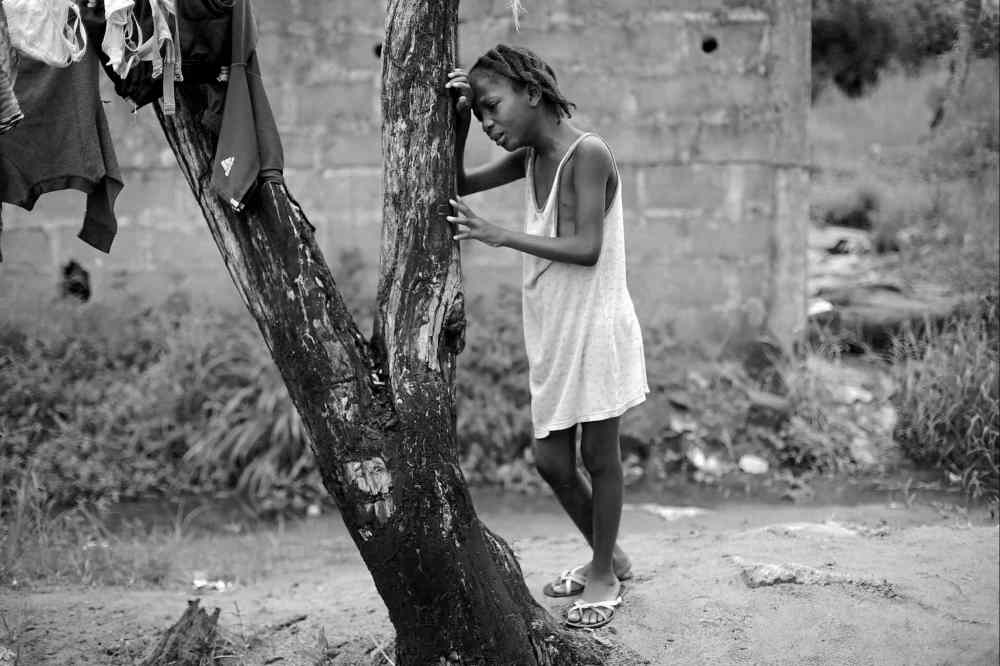
As nine-year-old Mercy Kennedy sobbed along with neighbours mourning news of her mother’s death, not a person would touch the little girl to comfort her.
Mercy’s mother had helped to wash the pregnant woman’s clothes, and had touched her body after she died at home when no hospital could find space for her, neighbours said.
On Thursday, little Mercy walked around in a daze in a torn nightgown and flip-flops, pulling up the fabric to wipe her tears as a group of workers from the neighbourhood task force followed the sound of wailing through the thick grove of banana trees and corn plants.
With Mercy’s mother dead, neighbours fear it is only a matter of time before she, too, shows signs of the virus.
— The Associated Press
Related Articles
Ebola crisis hits home for African community
Advertisement Advertise With Us
Advertisement Advertise With Us