Coming to Canada: History of postwar English immigration detailed
Advertisement
Read this article for free:
or
Already have an account? Log in here »
To continue reading, please subscribe:

Digital Subscription
One year of digital access for only $205*
- Enjoy unlimited reading on winnipegfreepress.com
- Read the E-Edition, our digital replica newspaper
- Access News Break, our award-winning app
- Play interactive puzzles
*First annual payment billed as $205.00 + GST for one year. This annual subscription will automatically renew at $233.00 + GST every 52 weeks (10% off the regular annual price of $259.35). Offer available to new and qualified returning subscribers only. Cancel any time.
To continue reading, please subscribe:
Add Free Press access to your Brandon Sun subscription for only an additional
$1 for the first 4 weeks*
- Enjoy unlimited reading on winnipegfreepress.com
- Read the E-Edition, our digital replica newspaper
- Access News Break, our award-winning app
- Play interactive puzzles
*Your next Brandon Sun subscription payment will increase by $1.00 and you will be charged $17.95 plus GST for four weeks. After four weeks, your payment will increase to $24.95 plus GST every four weeks.
Read unlimited articles for free today:
or
Already have an account? Log in here »
Hey there, time traveller!
This article was published 09/05/2015 (4106 days ago), so information in it may no longer be current.
In the post-Second World War years, over half a million war-weary English citizens, like many immigrants before them, flocked to Canada in search of a better life.
But despite being the largest group of arriving immigrants to Canada during those years, the English have tended to be virtually invisible, say the authors of this scholarly, knowledgeable and informative historical work.
Because little has been written about this enormous group of immigrants who came from the late 1940s to the mid-1970s, Invisible Immigrants seeks to address this neglected area of our history.
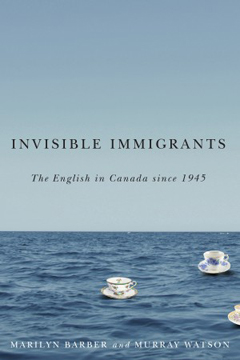
There is a wealth of information here, much of it garnered from interviews with English immigrants who came to Canada during that period and stayed.
Authors Marilyn Barber and Murray Watson share excerpts of the actual recorded interviews and written testimonies of more than 70 English migrants. They then analyze, explore and discuss the inevitable similarities and differences revealed in their testimonies.
Barber, a Canadian historian and research professor based at Carleton University, teamed up with U.K.-based oral historian Watson to produce a work moulded and fashioned by perspectives from both sides of the Atlantic. Barber has long been involved with the study of immigration and has written many academic articles on the subject. Watson worked in international marketing until embarking later in life on the study of English immigration. He is the author of Being English in Scotland.
While written in a style that is often academically inclined and so somewhat dry, the text is often enlivened by the inclusion of engaging stories of many of the English newcomers to Canada. Many of them were in their 20s and early 30s when they came and settled in mostly larger cities in Canada. Ontario was the most favoured destination followed by British Columbia and then Quebec.
Noticeably, the majority of those interviewed are also from Ontario and Quebec, with folks living in the Prairies largely absent – the authors do not claim to present a representative selection. The stories are often as individual and varied as the people themselves but the writers do attempt to sort out some of the confusion by pointing out similarities and summing things up at the end of each section.
They describe how emigration following the Second World War “took place on a massive scale.” So many set out for what they believed to be the “land of milk and honey” that in 1946, Winston Churchill labelled the emigrants “rats leaving a sinking ship.” (He changed his opinion during a visit to Canada in the early 1950s.)
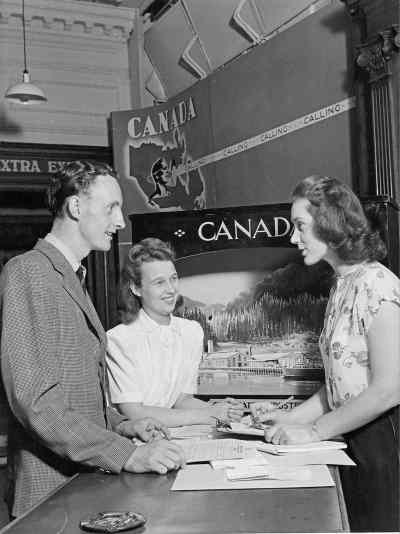
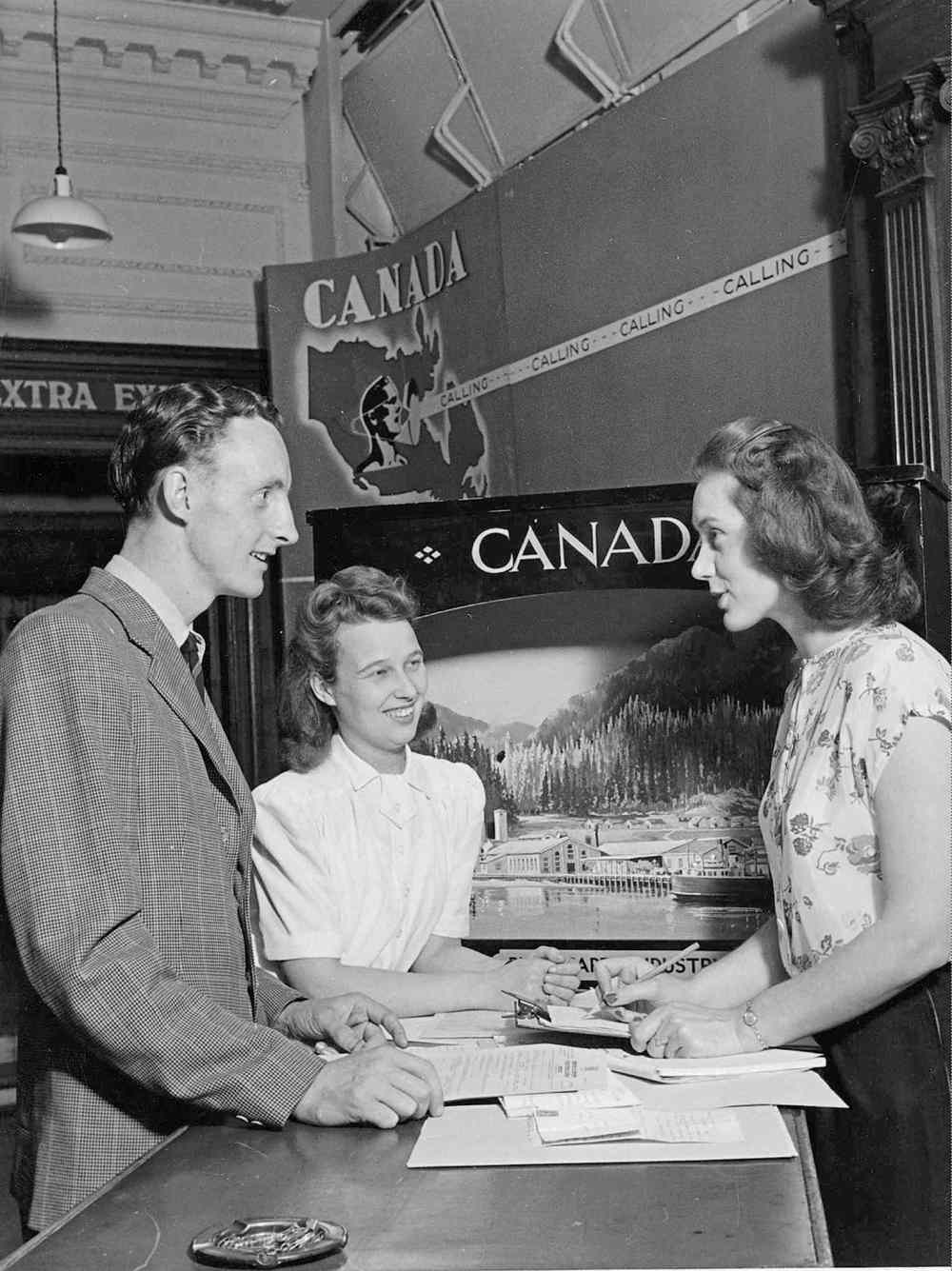
Along with Australia and New Zealand, Canada was eager to attract new emigrants after the war and had advertised and extolled the country’s advantages, even recruiting potential emigrants to various fields of employment.
Barber and Watson describe the grim political, social and economic conditions of an England devastated by the war that led people to search elsewhere to improve their lives. They also examine why Canada was so often chosen over Australia or New Zealand.
The different ways in which immigrants coped with the journey across the Atlantic and how they adapted and began to build a new life are all detailed here. The final pages take the reader through an exploration of the immigrants’ family and community stories and their perspectives on national identity.

Most interesting are the initial reactions of the English newcomers to the country they came to call home – their astonishment at the wide, open spaces, the extremes of the climate, the differences in the landscape, and the overwhelming variety and abundance of food, clothing and housing available to Canadians.
In comparison, England after the war was still subject to strict food rationing well into the 1950s and most things, including housing, were hard to come by.
Those who love history, those who hope to deepen their knowledge of Canadian immigration history and those who are postwar English immigrants will most appreciate this carefully researched and informative contribution to a part of our history that has received little attention.
Cheryl Girard is a Winnipeg writer who was brought as an infant from the middle of England to live in the middle of Canada and who loves this vast, spacious and beautiful country… well, winters, not so much.
History
Updated on Saturday, May 9, 2015 8:29 AM CDT: Formatting.