Soviet victory at Stalingrad bore a heavy cost

Advertisement

Advertise with us

The battle of Stalingrad in the Second World War was a titanic struggle between the armies of Nazi Germany and the Soviet Union.

Read this article for free:


or

Already have an account? Log in here »

To continue reading, please subscribe:

Subscribe and receive a limited-edition Free Press branded hat or tote.

Digital Subscription

One year of digital access for only $205*

  • Enjoy unlimited reading on winnipegfreepress.com
  • Read the E-Edition, our digital replica newspaper
  • Access News Break, our award-winning app
  • Play interactive puzzles

*First annual payment billed as $205.00 + GST for one year. This annual subscription will automatically renew at $233.00 + GST every 52 weeks (10% off the regular annual price of $259.35). Offer available to new and qualified returning subscribers only. Cancel any time.

To continue reading, please subscribe:

Add Free Press access to your Brandon Sun subscription for only an additional

$1 for the first 4 weeks*

  • Enjoy unlimited reading on winnipegfreepress.com
  • Read the E-Edition, our digital replica newspaper
  • Access News Break, our award-winning app
  • Play interactive puzzles
Start now

*Your next Brandon Sun subscription payment will increase by $1.00 and you will be charged $17.95 plus GST for four weeks. After four weeks, your payment will increase to $24.95 plus GST every four weeks.

Hey there, time traveller!
This article was published 30/05/2015 (4107 days ago), so information in it may no longer be current.

The battle of Stalingrad in the Second World War was a titanic struggle between the armies of Nazi Germany and the Soviet Union.

It lasted six months, from August 1942 to early February 1943, ending with the encirclement and surrender of the German forces.

The bitter, street-by-street and building-by-building combat cost an estimated one million lives.
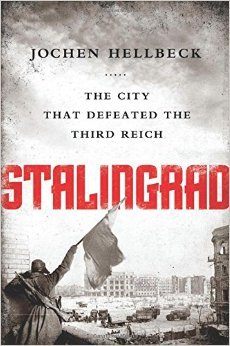
The Soviet victory represented a turning point in the Second World War; as Rutgers University historian Jochen Hellbeck observes, the battle “shifted the war’s momentum in favour of the Red Army; after Stalingrad, its divisions would push steadily westward, their sights set on Berlin.”

Hellbeck has selected excerpts from Soviet first-person accounts of the battle of Stalingrad in order to illuminate the motivations of the Soviet rank and file.

It is an intriguing and gripping yet off-putting collection.

The source of these first-person accounts was the work of the Commission on the History of the Great Patriotic War, a delegation of historians from Moscow who visited the Stalingrad front in January and February 1943.

Aware of the monumental significance of the battle, the historians wanted to record for posterity the experiences of participants.

Accordingly, they conducted interviews with a wide range of actors: “generals, staff officers, troop commanders, simple foot soldiers, commissars, agitators, sailors of the Volga Military Flotilla, nurses and a number of civilians.”

The commission’s historians ultimately collected 215 interviews that fill thousands of typed pages. They were unable to obtain permission to publish these documents, however; Hellbeck’s selection represents their first appearance in English.

The eyewitness accounts presented in Hellbeck’s volume reflect the brutality and futility of industrialized warfare, its carnage and destruction.

The courage, tenacity and self-sacrifice of the Soviet soldiers in defending Stalingrad against the Nazi invader can only excite the highest admiration. But there is a limit to which one can sympathize with the Soviet soldier: charging into battle, they would shout “For the socialist motherland!” and “For comrade Stalin!”

They really were indoctrinated — or perhaps the historians inserted these expressions of fidelity to communism and the Soviet state in order to make the interviews more acceptable to Soviet censors. Who knows?

The Soviets did emphasize indoctrination and constant monitoring of the “political-moral mood” of the troops. For this purpose, political officers were attached to each regiment.

As Hellbeck writes, “The cement that the Red Army command used to bind together diverse soldiers and motivate them to fight was ideology.”

Hellbeck’s selections vividly depict the battle of Stalingrad in all its horror and heroism.


Graeme Voyer is a Winnipeg writer.

History

Updated on Saturday, May 30, 2015 8:50 AM CDT: Formatting.

Report Error Submit a Tip

More Stories

Dolly Parton, music star, actor and beloved figure who spanned generations, dies at 80 of cancer

Kristin M. Hall And Andrew Dalton, The Associated Press 10 minute read Preview

Dolly Parton, music star, actor and beloved figure who spanned generations, dies at 80 of cancer

Kristin M. Hall And Andrew Dalton, The Associated Press 10 minute read Updated: Yesterday at 11:42 AM CDT

NASHVILLE, Tenn. (AP) — Dolly Parton, the country music icon whose soaring vibrato vocals, poignant songwriting and sparkling costumes defined her rise from a log cabin in the Tennessee mountains to the height of stardom and acclaim, has died in Nashville. She was 80.

“After bravely facing a brief battle with cancer, Dolly departed her Earthly life today at the Vanderbilt-Ingram Cancer Center surrounded by loved ones,” her publicist, Marcel Pariseau, said in a statement Tuesday.

Known for her curvy physique, massive blond wigs and skin-tight outfits that served her self-deprecating wit, she was among the most beloved personalities in music and beyond — the rare celebrity whose appeal transcended generations, geography and politics.

She wrote hundreds of songs, including classics like “Jolene,” “Coat of Many Colors” and “I Will Always Love You,” that totaled more than 100 million worldwide sales and more than 1 billion online streams. Parton, who plucked bejeweled banjos, guitars and dulcimers with her long fingernails during performances, was a generous philanthropist and successful businesswoman whose projects included a theme park in the Smoky Mountain foothills near her birthplace.

Read
Updated: Yesterday at 11:42 AM CDT

Holocaust tour helps Manitoba teachers tackle difficult subject

Maggie Macintosh 5 minute read Preview

Holocaust tour helps Manitoba teachers tackle difficult subject

Maggie Macintosh 5 minute read Yesterday at 6:26 PM CDT

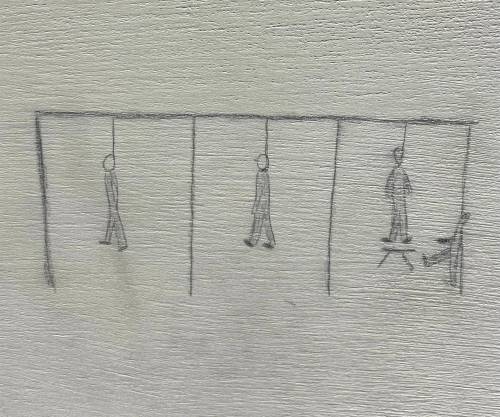
Casey Whitfield’s voice cracked and he began to cry as he recalled the children’s drawings — one of which depicts an adult being hanged — on display in Auschwitz-Birkenau.

Read
Yesterday at 6:26 PM CDT

Soviet victory at Stalingrad bore a heavy cost

Reviewed by Graeme Voyer 3 minute read Preview

Soviet victory at Stalingrad bore a heavy cost

Reviewed by Graeme Voyer 3 minute read Saturday, May. 30, 2015

The battle of Stalingrad in the Second World War was a titanic struggle between the armies of Nazi Germany and the Soviet Union.

It lasted six months, from August 1942 to early February 1943, ending with the encirclement and surrender of the German forces.

The bitter, street-by-street and building-by-building combat cost an estimated one million lives.

The Soviet victory represented a turning point in the Second World War; as Rutgers University historian Jochen Hellbeck observes, the battle "shifted the war's momentum in favour of the Red Army; after Stalingrad, its divisions would push steadily westward, their sights set on Berlin."

Read
Saturday, May. 30, 2015

Blue Bombers volunteer seriously injured in collision with e-scooter

Malak Abas and Zoe Pierce 7 minute read Preview

Blue Bombers volunteer seriously injured in collision with e-scooter

Malak Abas and Zoe Pierce 7 minute read Monday, Aug. 24, 2026

A longtime Winnipeg Blue Bombers volunteer was rushed to hospital and now faces months of recovery after being hit by an e-scooter while directing football fans after a home game last month.

Read
Monday, Aug. 24, 2026

Thirteen accused in gun, drug trafficking network in rural Manitoba

Erik Pindera 4 minute read Preview

Thirteen accused in gun, drug trafficking network in rural Manitoba

Erik Pindera 4 minute read Tuesday, Aug. 25, 2026

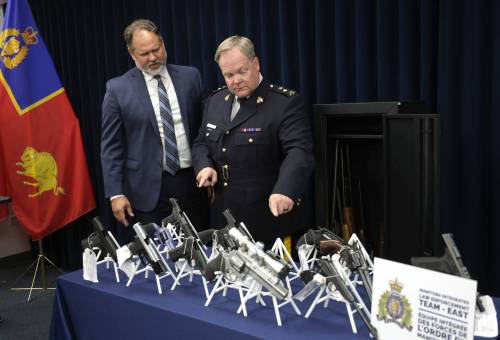
RCMP and Winkler police have arrested more than a dozen people allegedly connected to a drug-and-gun trafficking network that operated in rural Manitoba.

The joint investigation began in December 2024, when officers from the Winkler Police Service asked the Mounties for help after learning kilograms of cocaine were being imported to a Winkler-area truck repair business, said RCMP Supt. Jeff Asmundson, who oversees the force’s Manitoba integrated law enforcement team.

Mounties and Winkler police gathered evidence for 19 months and expanded the probe, dubbed Project Dolor, as investigators learned other types of illicit substances and firearms were being trafficked by the network in a number of southern Manitoba communities, said Asmundson, whose team investigates serious and organized crime.

“It started as a cocaine trafficking investigation, and obviously, as we move along in a project or a file, evidence is gathered and an opportunity arose and we wanted to ensure public safety,” he told reporters Tuesday. “We were able to secure some firearms.”

Read
Tuesday, Aug. 25, 2026

Winnipeg biz owners encouraged to fly the Maple Leaf

Morgan Modjeski 4 minute read Preview

Winnipeg biz owners encouraged to fly the Maple Leaf

Morgan Modjeski 4 minute read Yesterday at 7:34 PM CDT

A Winnipeg city councillor says business owners should fly the Maple Leaf to bolster Canadian pride as the country fends off a trade assault from the U.S.

“It’s all about being patriotic and showing that we are all on the same page and are unified in our efforts as we negotiate trade with the United States,” said Markus Chambers.

The St. Norbert - Seine River representative launched “Operation Naked Flag Pole” Wednesday.

“I’m seeing flag poles in our downtown area, but they’re not covered with Canadian flags,” he said. “They’re sitting empty. They’re naked. So let’s get them dressed with the Canadian flag.”

Read
Yesterday at 7:34 PM CDT