

Mom seeks changes after suicidal son disappears
Advertisement
Read this article for free:
or
Already have an account? Log in here »
To continue reading, please subscribe:

Digital Subscription
One year of digital access for only $205*
- Enjoy unlimited reading on winnipegfreepress.com
- Read the E-Edition, our digital replica newspaper
- Access News Break, our award-winning app
- Play interactive puzzles
*First annual payment billed as $205.00 + GST for one year. This annual subscription will automatically renew at $233.00 + GST every 52 weeks (10% off the regular annual price of $259.35). Offer available to new and qualified returning subscribers only. Cancel any time.
To continue reading, please subscribe:
Add Free Press access to your Brandon Sun subscription for only an additional
$1 for the first 4 weeks*
- Enjoy unlimited reading on winnipegfreepress.com
- Read the E-Edition, our digital replica newspaper
- Access News Break, our award-winning app
- Play interactive puzzles
*Your next Brandon Sun subscription payment will increase by $1.00 and you will be charged $17.95 plus GST for four weeks. After four weeks, your payment will increase to $24.95 plus GST every four weeks.
Read unlimited articles for free today:
or
Already have an account? Log in here »
Hey there, time traveller!
This article was published 31/10/2015 (3959 days ago), so information in it may no longer be current.
Two mothers who had never met spoke for the first time over the phone Friday morning and, when they had stopped, they were just getting going.
Getting going on changes to Manitoba’s rigidly restrictive health-privacy law that could help some of our most vulnerable children.
Our adult, mentally ill children.
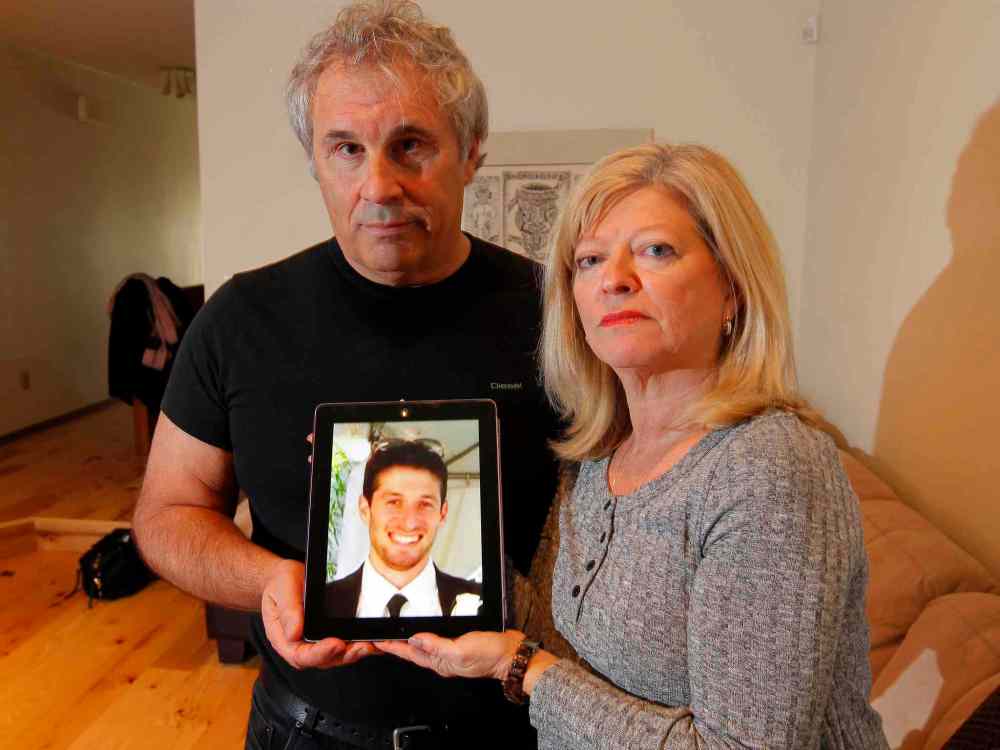
And their frustrated, powerless and aging parents.
“The first words out of her mouth this morning,” recalled Bonnie Bricker, were, ‘Bonnie, this Sharon Blady. And mother-to-mother, what can I do to help you?’ “
Bricker had reached out to Manitoba’s health minister because of her suicidal adult son, Reid Bricker, who, on Oct. 23, was escorted by police to Health Sciences Centre under what his mother says is known as a “Form 3.”
“That means you cannot leave the facility unless a health-care professional signs you out,” Bricker explained.
That’s what happened, and was done according to proper protocol, according to what the Winnipeg Regional Health Authority has since told his mother. Last Saturday, on the day before his 33rd birthday, Reid was released from HSC alone into the darkness of the early morning streets and the darkness of his thoughts.
Reid, the young sculptor with the gifted-yet-tragic brain, is now a missing person. No one has reported seeing him since the hospital security cameras recorded him leaving. But for Bricker and her husband, George, what has exacerbated the anguish is it wasn’t the first time their middle child had ended up in the emergency ward of a Winnipeg hospital this month after attempting to die by suicide. They say it’s the third time in 10 days. First at Seven Oaks, later at St. Boniface and finally at HSC.
“He managed to get into three major hospitals, and all three of them let him go after he’d overdosed,” Bricker said. “That’s the big message I want you to get out.”
It wasn’t the only message she wanted to get out, though. The other one — the one Blady clearly received — is changes are needed to the provincial public health information privacy laws that prevented Reid’s parents being called before he was released.
Reid and his parents aren’t the only ones who have felt abandoned and lost in the health-care system, particularly by the overburdened, often impotent mental-health system. Blady knows that. She also knows how vulnerable people are when they struggle with anxiety and depression the way Reid does, because, as she openly and often acknowledges, she has had her own struggles with mental health beginning more than 20 years ago after the birth of her son.
Which, at least in part, is why the health minister seems open to trying to change things, possibly even amending Manitoba’s Personal Health Information Act, the way British Columbia has allowed for the release of private health information to caregiving third parties if it’s in the best interests of the person’s health and safety.
Later Friday, this time over the phone with me, Blady again expressed both her empathy for the vulnerable mentally ill and her commitment to help them in any way within her power.
What was so refreshingly rare was how personal and sincere she made it sound.
“They need our support, and we need to ensure that they’re looked after,” Blady said.
“And if right now there is something in place that is preventing that from happening, or not allowing it to happen to its fullest extent, I want to know what it is. And I want to fix it.”
But Manitoba’s health minister thinks the changes may require delving into policy and regulation, too.
“I want to look at the entire package and see where the gaps are. And, yes, it might be the PHIA legislation. It might be elsewhere.”
Blady says she wants to get at it promptly, and she seems ready to invite every mental-health organization and expert on the issues she can engage, plus the legal ones in her department.
“She gave me a very strong impression,” Bricker said, “that this is not just lip service.”
That’s probably partly because Blady has already invited someone to the table; someone who, like the minister, brings “lived experience” to that big table.
Reid Bricker’s mother.
“She asked me to sit in with the people who are making the change and give input,” Bricker said.
In the meantime, Bricker calls the news media and scours social media for any help and lead that might locate her son with the brilliant mind and the tortured soul.
“I don’t know if we’re ever going to find Reid. I haven’t lost hope. But every lead has gone to a dead end.”

Sunday evening, Bricker is holding a candlelight vigil in front of the Manitoba Legislative Building, and this time it’s her turn to invite you and anyone else who cares about making life better and safer for the mentally ill to join her.
“Just to come down there,” Bricker said, “so we can all pray for change.”
She asked me what time the vigil should start, but she was the one who decided. “Just before the sun sets,” she said. Just before the darkness Reid Bricker disappeared into descends.
So the candles light the night with the hope he still might be out there. Looking to find his way back home.
gordon.sinclair@freepress.mb.ca


Advertisement Advertise With Us
Advertisement Advertise With Us