

Nativism and Donald Trump
Advertisement
Read this article for free:
or
Already have an account? Log in here »
To continue reading, please subscribe:
Monthly Digital Subscription
$1 per week for 24 weeks*
- Enjoy unlimited reading on winnipegfreepress.com
- Read the E-Edition, our digital replica newspaper
- Access News Break, our award-winning app
- Play interactive puzzles
*Billed as $4.00 plus GST every four weeks. After 24 weeks, price increases to the regular rate of $19.95 plus GST every four weeks. Offer available to new and qualified returning subscribers only. Cancel any time.
Monthly Digital Subscription
$4.99/week*
- Enjoy unlimited reading on winnipegfreepress.com
- Read the E-Edition, our digital replica newspaper
- Access News Break, our award-winning app
- Play interactive puzzles
*Billed as $19.95 plus GST every four weeks. Cancel any time.
To continue reading, please subscribe:
Add Free Press access to your Brandon Sun subscription for only an additional
$1 for the first 4 weeks*
*Your next subscription payment will increase by $1.00 and you will be charged $16.99 plus GST for four weeks. After four weeks, your payment will increase to $23.99 plus GST every four weeks.
Read unlimited articles for free today:
or
Already have an account? Log in here »
Hey there, time traveller!
This article was published 05/01/2016 (3745 days ago), so information in it may no longer be current.
Of all the media commentary about Donald Trump’s improbable run for the Republican presidential nomination, the most apt might be the portrayal of him by National Post writer Michael Murray as “nothing more than a pro wrestler who stepped into the ring alongside the other candidates and then just began bashing folding chairs over everybody’s heads.” In the parlance of pro wrestling, Trump is a bad guy “heel” who presents himself as a good guy “baby face.”
Much, too, has been made of the fact that should Trump actually succeed in becoming the Republican contender — and despite favourable poll results that is far from certain — he would be the first non-politician to do so since Dwight Eisenhower won the presidency for the party in 1952. Gen. Eisenhower, of course, was supreme allied commander in Europe in the Second World War, while Trump is a wealthy entrepreneur, hotel magnate and wannabe entertainer.
Whatever his faults, and they are many, Trump has admittedly exhibited political smarts of sorts. No matter what his Republican or Democratic opponents and the media say or write about him, he never retracts or apologizes for anything he has said, no matter how distasteful and outrageous the comment. Instead, he dismisses his critics as “losers” and “liars,” while his enthusiastic supporters continue to cheer him on.
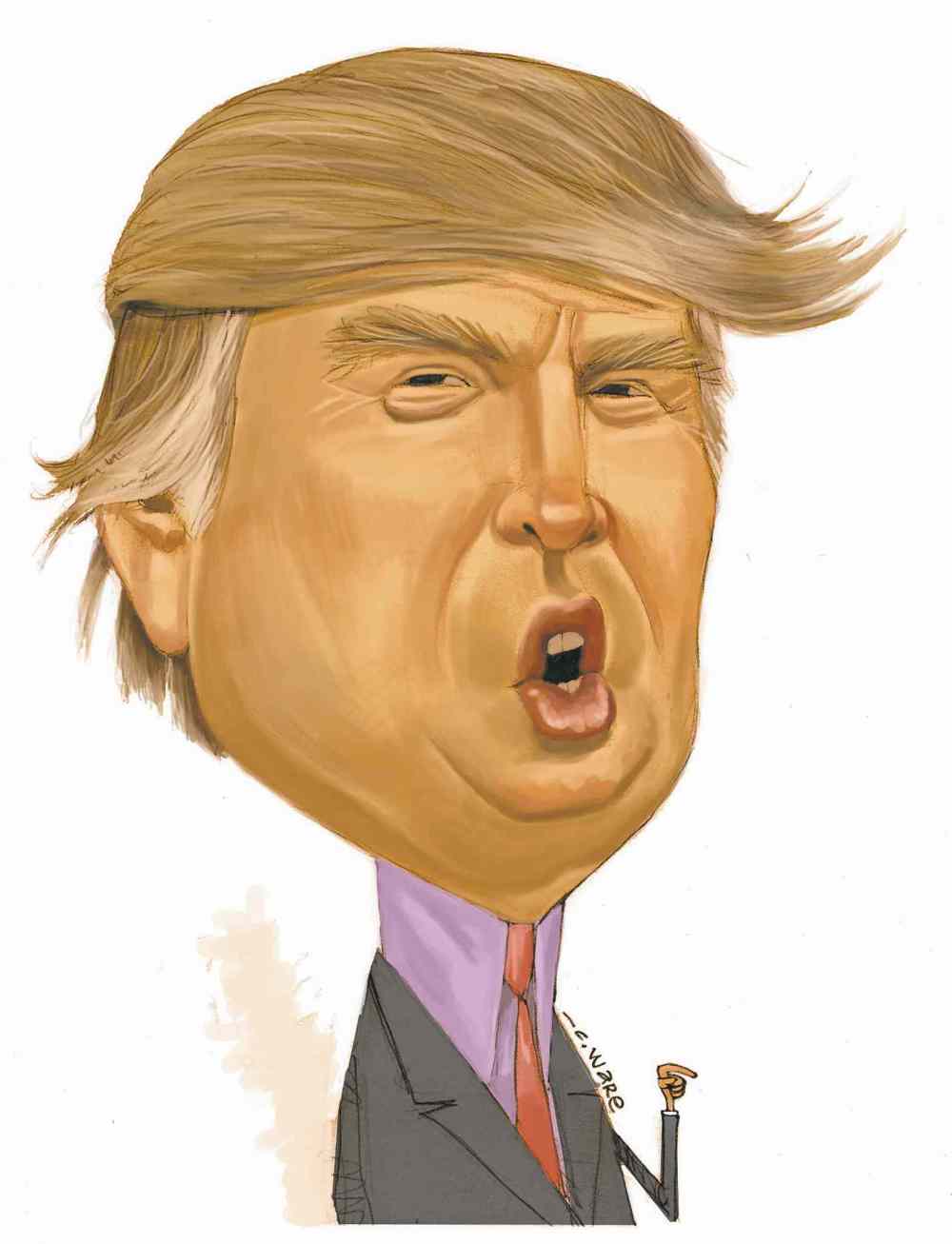
His foolish and inflammatory declarations that as president he would erect a wall on the American-Mexican border to keep out illegal immigrants and temporarily ban all Muslims from entering the United States aren’t really fascist, as they have been mistakenly labelled. Rather, these pronouncements that keep Trump front and centre on newscasts link back more than 150 years with what is referred to in U.S. history as “nativism,” a narrow nationalism that put American interests as defined by the white majority above all else.
As today with Trump and his followers, nativism was an expression immersed in fear — fear of Catholics, foreigners, paupers, radicals and every other bogeyman who were thought to be a threat to American liberty and the country’s sacred institutions.
An early manifestation of American nativism was the Know-Nothing movement of the late 1840s and 1850s. Initially established as a secret society in the northeastern part of the U.S., the group’s name derived from the fact its middle- and working-class members when asked by non-members about their policies, replied with the phrase, “I know nothing.” By 1853, the Know-Nothings had formed the American Party to stop Catholics and foreigners from holding public office, to push for the deportation of foreign criminals and paupers and to promote mandatory Bible reading in public schools.
“The grand work of the American Party is the principle of nationality… we must do something to protect and vindicate it. If we do not, it will be destroyed,” declared a Know-Nothing journal in 1855. Such sentiments found favour among many New Yorkers, who feared their city was being overrun by Irish and German Catholics, and in Massachusetts, where in 1854 the American Party gained control of the state legislature.
In later years, nativism gave rise to anti-immigration organizations, especially during periods when economic conditions were poor, influenced an isolationist “America First” foreign policy after the First World War, encouraged Americans to see threatening conspiracies around every corner and paved the way in 1924 for a restrictive immigration act.
Acts of violence strengthened the nativist cause. Today, it is the Islamic State spreading terror around the world; in 1919, it was anarchists, followers of Italian activist Luigi Galleani, who attempted to blow up the Washington, D.C. home of U.S. Attorney General A. Mitchell Palmer in June 1919, and then a year later (likely) set off massive bombs on Wall Street that killed 30 people.

Classically, the government did not distinguish between legitimate left-wing protesters and dangerous anarchists. Caught up in the Red Scare (which also defined the Winnipeg General Strike as a Bolshevik plot), anyone thought to be a “radical” became an automatic target for legal harassment and deportation.
In such a tense atmosphere and in an era when the eugenics movement was popular and Americans, like Canadians, were concerned about the racial impact of an open immigration policy, it was hardly surprising that nativists found support in Congress for closing the country’s door as much as was possible.
Eventually, nativism waned, attitudes softened and within two decades the 1924 immigration restrictions were eased. But as Trump’s enduring appeal, mainly among white working-class men who have little faith in the current political elite, has shown, American nativism has never vanished. And Trump has exploited the fear of terrorism and America’s perceived failings to propel his presidential campaign forward.
Now and Then is a column in which historian Allan Levine puts the events of today in a historical context.