

Infrastructure needs focus

Advertisement
Read this article for free:
or
Already have an account? Log in here »
To continue reading, please subscribe:
Monthly Digital Subscription
$0 for the first 4 weeks*
- Enjoy unlimited reading on winnipegfreepress.com
- Read the E-Edition, our digital replica newspaper
- Access News Break, our award-winning app
- Play interactive puzzles
*No charge for 4 weeks then price increases to the regular rate of $19.95 plus GST every four weeks. Offer available to new and qualified returning subscribers only. Cancel any time.
Monthly Digital Subscription
$4.99/week*
- Enjoy unlimited reading on winnipegfreepress.com
- Read the E-Edition, our digital replica newspaper
- Access News Break, our award-winning app
- Play interactive puzzles
*Billed as $19.95 plus GST every four weeks. Cancel any time.
To continue reading, please subscribe:
Add Free Press access to your Brandon Sun subscription for only an additional
$1 for the first 4 weeks*
*Your next subscription payment will increase by $1.00 and you will be charged $16.99 plus GST for four weeks. After four weeks, your payment will increase to $23.99 plus GST every four weeks.
Read unlimited articles for free today:
or
Already have an account? Log in here »
Hey there, time traveller!
This article was published 30/01/2016 (3625 days ago), so information in it may no longer be current.
It is hard not to admire Winnipeg Mayor Brian Bowman’s pledge to focus the city’s attention this year on racial tolerance. It’s a gargantuan task, and one with great merit.
Bowman’s pledge comes on the heels of his much-celebrated anti-racism summit last fall and his stoic attempts to confront a report in a Toronto-based magazine that dubbed Winnipeg the most racist city in Canada.
Racism is a big problem, here and elsewhere, and local government leaders are essential players in any kind of effective community response. However, there are signs Bowman may be losing himself somewhat in this issue.
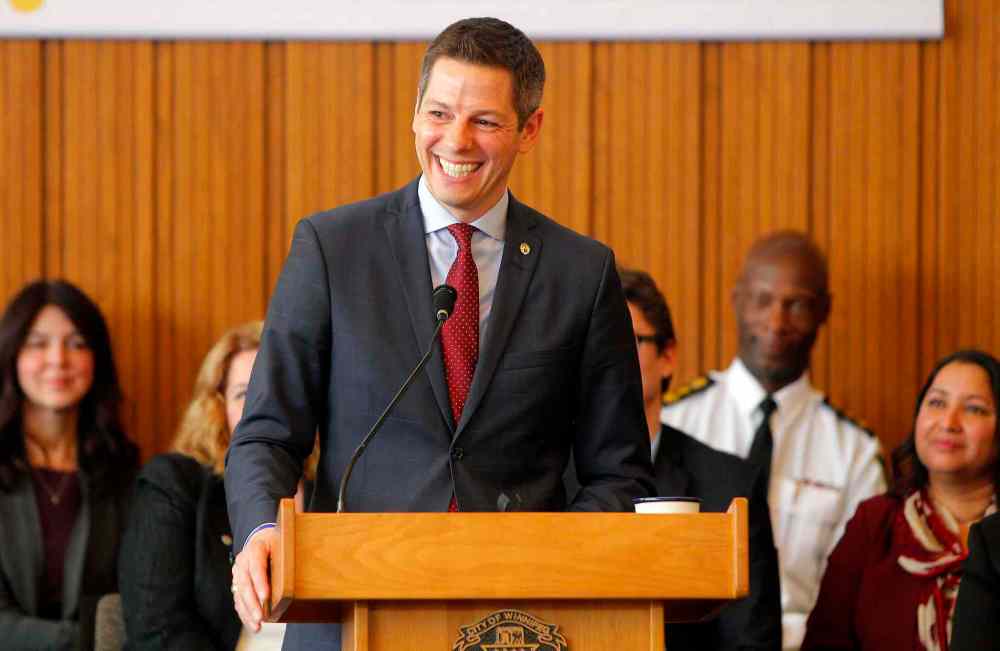
The summit was admirable, but Bowman’s decision to hold an event to commemorate the one-year anniversary of the Maclean’s article that kicked off the debate was a bit problematic — particularly since the article in question was a triumph of marketing over responsible journalism.
Still, the mayor has people talking about racism, in large part thanks to his forceful leadership on the issue. If there is any lingering concern, it is that this kind of leadership is desperately needed on other files as well.
The reality of being mayor is you’re constantly dealing with an inventory of needs and problems that outpace resources and solutions. Still, if there is one overarching problem for local government leaders, it is infrastructure.
In the past few weeks at city hall, we’ve watched council struggle mightily to make progress on some of the city’s biggest infrastructure projects.
First, Coun. Russ Wyatt attempted to get council to abandon plans to build the $155-million Waverley Street underpass until rail-line relocation is more fully explored. Wyatt argued the city should undertake other projects, namely the Chief Peguis Trail extension and the widening of Kenaston Boulevard, while waiting to see if the railways agree to relocate the line that crosses Waverley.
Wyatt is correct to question whether this project is being approved too far in advance of other developments that might otherwise make the underpass unnecessary. For the same reasons, it makes sense to look at relocating the main CPR yards downtown rather than spend hundreds of millions of dollars to funnel traffic over and under it.
However, Wyatt is also partly wrong in his assertion that two other major traffic projects should be moved up ahead of the Waverley underpass. Wrong because now is the time we need to reassess altogether the money we are investing in traffic arteries.
Consider, for a moment, these two colliding narratives.
Coming off the warmest year on record (evidence we have crippled the climate with human-made greenhouse gases), the world’s leading nations gathered in Paris to consider emergency measures to address this impending ecological disaster.
At the same time, we are engaged in a bitter national debate about whether to allow the construction of multibillion-dollar pipelines so Alberta bitumen can be made more easily available to U.S. customers and eastern ports and refineries.
There is a disconnect in those two narratives. On the one hand, we are deliberating on ways to save the planet from our own reckless excess; on the other, we’re debating whether we should make it easier to sell and refine the very commodity at the heart of our relentless attack on the environment.
Locally, there are similar disconnects. Municipal leaders continue to plan infrastructure investments in an outdated manner, focusing the majority of expenditures on expensive traffic projects that do not make the city work better.
We’re chasing an impossible dream that says if you just keep on building more and bigger roads and bridges or underpasses, at some point, the city will start to work like a well-oiled machine. It’s not going to happen. More and bigger roads mean more traffic, not less.
An alternative infrastructure vision will not be an easy thing to undertake. Urgent and substantial investment in public transit is certainly one part of the new vision. So, too, are changes to the way we approve and plan suburban sprawl.
The important point here is we need to stop focusing so much money and attention on traffic arteries and look at ways of building a city in which people don’t have to travel as far or use cars nearly as much.

If the mayor could take just a bit of time away from his quixotic quest to cultivate empathy, he might see an opportunity to change the way this city views and discusses infrastructure. Council certainly needs some dynamic leadership on this issue.
The city is proceeding, albeit at a snail’s pace, with a second stage of its bus rapid transit plan, connecting the first phase from Main Street to Jubilee Avenue south to the University of Manitoba. And there are plans in place for other BRT routes, but they are buried so deeply under plans for new, wider and longer roads with more bridges and underpasses that we’ll likely never see them come to fruition.
The mayor should be commended for taking a bold leadership position on racism.
Now, if only he would take the same forceful approach and use it to help the city change the future course on infrastructure strategy.
dan.lett@freepress.mb.ca Twitter: @danlett
Dan Lett is a columnist for the Free Press, providing opinion and commentary on politics in Winnipeg and beyond. Born and raised in Toronto, Dan joined the Free Press in 1986. Read more about Dan.
Dan’s columns are built on facts and reactions, but offer his personal views through arguments and analysis. The Free Press’ editing team reviews Dan’s columns before they are posted online or published in print — part of the our tradition, since 1872, of producing reliable independent journalism. Read more about Free Press’s history and mandate, and learn how our newsroom operates.
Our newsroom depends on a growing audience of readers to power our journalism. If you are not a paid reader, please consider becoming a subscriber.
Our newsroom depends on its audience of readers to power our journalism. Thank you for your support.
Dan Lett is a columnist for the Free Press, providing opinion and commentary on politics in Winnipeg and beyond. Born and raised in Toronto, Dan joined the Free Press in 1986. Read more about Dan.
Dan’s columns are built on facts and reactions, but offer his personal views through arguments and analysis. The Free Press’ editing team reviews Dan’s columns before they are posted online or published in print — part of the our tradition, since 1872, of producing reliable independent journalism. Read more about Free Press’s history and mandate, and learn how our newsroom operates.
Our newsroom depends on a growing audience of readers to power our journalism. If you are not a paid reader, please consider becoming a subscriber.
Our newsroom depends on its audience of readers to power our journalism. Thank you for your support.
Related Articles
Winnipeg should follow Brandon’s lead
Advertisement Advertise With Us
Advertisement Advertise With Us
History
Updated on Saturday, January 30, 2016 6:38 AM CST: Fixes headline