

Miracles of medicine
While transplanted uterus failed, there have been many surgical marvels
Advertisement
Read this article for free:
or
Already have an account? Log in here »
To continue reading, please subscribe:
Digital Subscription
One year of digital access for only $75*
- Enjoy unlimited reading on winnipegfreepress.com
- Read the E-Edition, our digital replica newspaper
- Access News Break, our award-winning app
- Play interactive puzzles
*Billed as $5.77 plus GST every four weeks. After 52 weeks, price increases to the regular rate of $19.95 plus GST every four weeks. Offer available to new and qualified returning subscribers only. Cancel any time.
Monthly Digital Subscription
$4.99/week*
- Enjoy unlimited reading on winnipegfreepress.com
- Read the E-Edition, our digital replica newspaper
- Access News Break, our award-winning app
- Play interactive puzzles
*Billed as $19.95 plus GST every four weeks. Cancel any time.
To continue reading, please subscribe:
Add Free Press access to your Brandon Sun subscription for only an additional
$1 for the first 4 weeks*
- Enjoy unlimited reading on winnipegfreepress.com
- Read the E-Edition, our digital replica newspaper
- Access News Break, our award-winning app
- Play interactive puzzles
*Your next Brandon Sun subscription payment will increase by $1.00 and you will be charged $17.95 plus GST for four weeks. After four weeks, your payment will increase to $24.95 plus GST every four weeks.
Read unlimited articles for free today:
or
Already have an account? Log in here »
Hey there, time traveller!
This article was published 12/03/2016 (3718 days ago), so information in it may no longer be current.
For the recipient of the first uterus transplant in U.S. history, it looked as if her prayers had finally been answered.
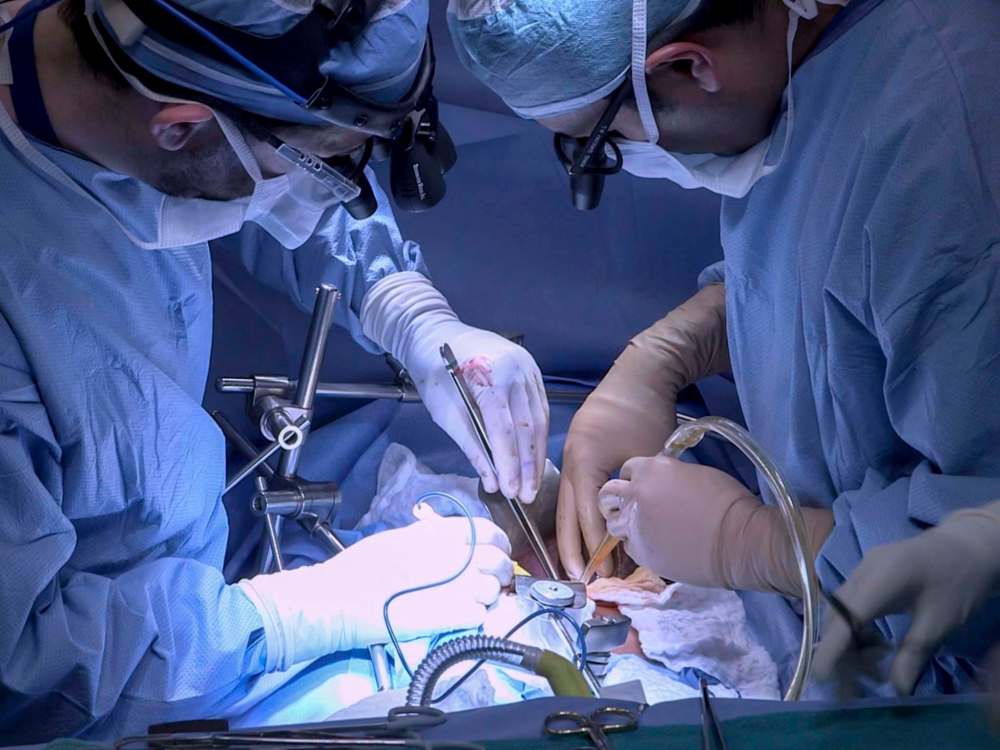
On Monday, surgeons at the Cleveland Clinic said the 26-year-old woman, identified only as Lindsey, was recovering well from nine hours of surgery to implant a uterus from a deceased organ donor late last month.
Lindsey told reporters she’d adopted three “beautiful little boys,” but had prayed for years for the chance to give birth to a child.
She told a news conference she’d been warned at age 16 she would never be able to have a biological child. “From that moment on I have prayed that God would allow me the opportunity to experience pregnancy.”
On Wednesday, the happy story took a tragic turn as clinic officials revealed the transplant had failed and the organ had been surgically removed.
Lindsey, who was born without a uterus, released a statement, saying: “I just wanted to take a moment to express my gratitude towards all of my doctors. The acted very quickly to ensure my health and safety. Unfortunately, I did lose the uterus to complications. However, I am doing OK and appreciate all of your prayers and good thoughts.”
The Cleveland team trained with surgeons from Sweden, where five babies from nine transplants have been reported since 2014.
The history of transplantation is full of joy and sadness. From that perspective, here’s a look at the Top Five transplants throughout history:
5) The medical marvel: The first kidney transplant
The miracle worker(s): In the early 1950s, there had never been a successful human organ transplant, although there were some remarkable achievements. On June 17, 1950, for example, surgeons at Little Company of Mary Hospital in Evergreen Park, Ill., took a kidney from a patient who had died of cirrhosis of the liver and implanted it into Ruth Tucker, a 44-year-old woman with a genetic kidney disease that had claimed her sister and mother. The kidney functioned for at least 53 days, but was removed 10 months later because it failed and there were no anti-rejection drugs at the time. Still, the donor organ gave her other kidney time to recover and Tucker lived another five years. The true era of organ transplantation was ushered in four years later by Dr. Joseph E. Murray and his team at Boston’s Peter Bent Brigham Hospital. They had developed new techniques by transplanting kidneys in dogs. In December 1954, they found the perfect patients — 23-year-old Richard Herrick, who had end-stage kidney failure, and his identical twin, Ronald. On Dec. 23, 1954, the team, led by Murray, whose pioneering work earned him the Nobel Prize in 1990, gave one of Ronald’s kidneys to Richard, keeping him alive for another eight years in what is considered the world’s first successful live-donor organ transplant. Time magazine had noted of Richard Herrick: “Only a surgical miracle could give him hope of lasting relief and near-normal life.”
4) The medical marvel: The first lung transplant
The miracle worker(s): This story is a made-in-Canada miracle. Back in 1983, Toronto resident Tom Hall didn’t realize 45 was going to be his lucky number. Hall had a fatal lung disease — idiopathic pulmonary fibrosis — and a transplant was his only hope to stay alive. Prior to Hall, surgeons around the world had attempted 44 lung transplants unsuccessfully. On Nov. 7, 1983, at Toronto General Hospital, Hall — described as an upbeat man, bursting with optimism who kept oxygen tanks at his desk and in his car — became lucky No. 45. “He understood and was willing to take the risk. And the rest is history,” Dr. Joel Cooper, who led Toronto’s transplant team, told Global News at a celebration in 2013 to mark the 30th anniversary of the first successful single-lung transplant in the world. The Etobicoke salesman, then 58, lived a full life for six years after his historic transplant, an operation that paved the way for successful double-lung transplants. Dr. Cooper said he remains deeply moved when he sees transplant patients not only surviving, but thriving. “To me, it’s still a miracle. Someone who’s on death’s door to look as well as anyone else in the room and conduct a normal life; it’s a miracle,” the surgeon said at the anniversary celebration. Since Hall’s surgery, about 1,500 lung transplants have taken place at TGH and recipients reportedly have a 95-per-cent survival rate.

3) The medical marvel: The first hand transplant
The miracle worker(s): Little is known about the first-ever hand transplant, performed on a patient in Ecuador in 1964 with drugs that are considered primitive by today’s standards. That historic hand was lost to rejection two weeks after the transplant. The first long-term success came on Jan. 24, 1999, at Jewish Hospital in Louisville, Ky., when Matthew Scott, 37, of Absecon, N.J., underwent the first hand transplant in the U.S. It was conducted by a partnership of surgeons and researchers at Jewish Hospital, Kleinert Kutz and the University of Louisville. Scott had lost his left hand on Dec. 23, 1985, to a blast from an M80 firecracker. Today, he is considered the most successful hand transplant patient in the world. “I’m reminded of all the hands that touched mine: people I never met, researchers, nurses, doctors, co-ordinators, donor family,” he said in 2013 on the 15th anniversary of his transplant. The success of his operation has impacted transplantation and reconstructive surgery worldwide, including Canada, where this January a team of doctors conducted the first successful hand transplant in Canada on a 49-year-old woman who lost her arm below the elbow in an accident years ago. “She is doing very well and seems to be very happy with the procedure,” Dr. Steven McCabe, director of the Toronto Western Hospital’s hand and upper extremity transplant program, told the Toronto Star. McCabe was part of the team that did the surgery on Scott, who later in 1999 threw out the ceremonial first pitch for baseball’s Philadelphia Phillies.
2) The medical marvel: The first face transplant
The miracle worker(s): Imagine going through life wearing a dead person’s face. The first person to experience that bizarre reality was Isabelle Dinoire, a mother of two from northern France, who underwent the world’s first partial face transplant on Nov. 27, 2005. A team led by surgeons Jean-Michel Dubernard and Bernard Devauchelle grafted a triangle of face tissue — including the nose and mouth — from a brain-dead female donor onto Dinoire. The surgery became necessary after Dinoire, in a fit of depression, took an overdose of sleeping pills in an apparent but unconfirmed attempt to end her life. She awoke to find herself at home, lying beside a pool of blood, with her pet Labrador at her side. The dog, named Tania, had apparently found her unconscious, and desperate to rouse her, had gnawed away at her face. The injuries were so extreme doctors ruled out routine face reconstruction. A year later, she had regained the ability to smile. “When I look in the mirror, I see a mixture of the two (of us). The donor is always with me,” she told BBC. The first full facial transplant was given in 2010 to a Spanish man who accidentally shot himself in the face. In August 2015, surgeons in New York conducted the most extensive face transplant in history on Patrick Hardison, a retired Mississippi firefighter who was disfigured when a burning roof collapsed on him in 2001, melting his mask. In a surgery in which more than 100 people worked in two teams for 26 hours, Hardison received the face of David Rodebaugh, a 26-year-old bike mechanic from Brooklyn who was left in a vegetative state by a cycling accident. Like Dinoire, Hardison will have to take pills to suppress his immune system for the rest of his life. Rodebaugh’s mother has said her son was “born a miracle” and now “the miracle of David will live on.”
1) The medical marvel: The first heart transplant
The miracle worker(s): You would be hard pressed to find someone who has never heard the name Christiaan Barnard. That’s because on Dec. 3, 1967, the legendary South African surgeon performed the world’s first human-to-human heart transplant at Groote Schuur Hospital in Cape Town, South Africa. The recipient of the historic heart was 53-year-old Lewis Washkansky, a South African grocer dying from chronic heart disease. The donor was 25-year-old Denise Darvall, who was run over by a car on Dec. 2 and had been declared brain dead. The nine-hour operation was completed when the new heart in Washkansky’s chest was electrically shocked into action. The grocer was able to talk and, on occasion, walk after the surgery, but his condition deteriorated and he died of pneumonia 18 days later, with his new heart functioning normally until his death. “In the view of some experts, perhaps Dr. Barnard’s most important medical contribution was the courage to proceed with a human heart transplant at a time when other surgeons who had performed the operation only on animals continued to hesitate to be the first to transplant a heart in a human,” The New York Times said at the time of Barnard’s death. Barnard shot to worldwide fame, but the techniques he used had been developed by a group of American researchers in the 1950s at Stanford University. It’s fair to say Barnard stood on the shoulders of Dr. Norman Edward Shumway, who is widely regarded as the father of heart transplantation and performed the first successful transplant in the U.S. in 1968 on steel worker Mike Kasperak, who lived for 14 days. In 1959, working with Dr. Richard Lower, Shumway transplanted the heart of a dog into a two-year-old mongrel. The transplanted dog lived eight days, proving the whole process was viable and paving the way for the thousands of heart transplants now performed worldwide every year.
doug.speirs@freepress.mb.ca