The Winnipeg Free Press would like to show you notifications for breaking news and noteworthy local journalism.
No Thanks
Allow
Notification Settings
This browser doesn't support push notifications at the moment. Check browsers features, update your browser or try to use one from the list of recommended to manage your notifications settings:
Firefox (27+)
Google Chrome (30+)
Safari ( MacOS 13+ with browser 16.1+ and iOS 16.4+ ) / Note make sure Push API support enabled under Settings > Safari > Advanced > Experimental Features
Microsoft Edge
If you wish to manage your notification settings from this browser you will need to update your browser's settings for this site. Just click button below and allow notifications for this site
Note Safari 16.4+ working on iOS devices also need this site app to be installed at device's Home Screen for Push Notifications to work
Notifications are blocked for this site. If you wish to manage your notification settings from this browser you will need to update your browser's settings. Usually you'd need to click on site options icon to the left of address bar and change notifications preferences/permissions from there
*Billed as $4.00 plus GST every four weeks. After 24 weeks, price increases to the regular rate of $19.95 plus GST every four weeks. Offer available to new and qualified returning subscribers only. Cancel any time.
Monthly Digital Subscription
$4.99/week*
Enjoy unlimited reading on winnipegfreepress.com
Read the E-Edition, our digital replica newspaper
Access News Break, our award-winning app
Play interactive puzzles
*Billed as $19.95 plus GST every four weeks. Cancel any time.
To continue reading, please subscribe:
Add Free Press access to your Brandon Sun subscription for only an additional
*Your next Brandon Sun subscription payment will increase by $1.00 and you will be charged $17.95 plus GST for four weeks. After four weeks, your payment will increase to $24.95 plus GST every four weeks.
Ed Tait and Jeff Hamilton break down day 1 of Bombers mini-camp at IGF Monday.
Hey there, time traveller!
This article was published 26/04/2016 (3663 days ago), so information in it may no longer be current.
Ed Tait and Jeff Hamilton break down day 1 of Bombers mini-camp at IGF Monday.
CP
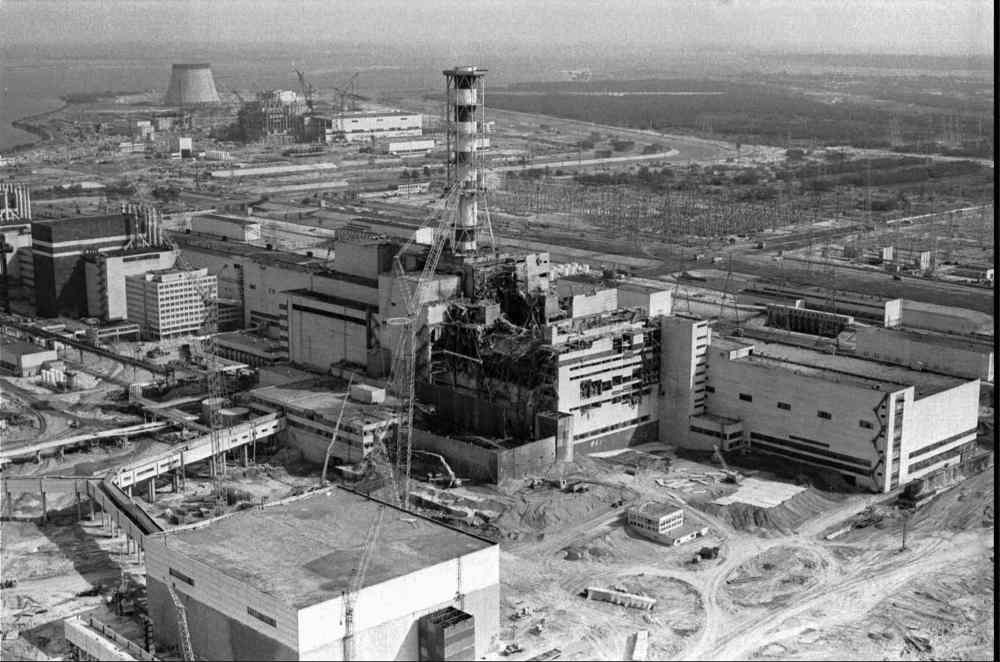
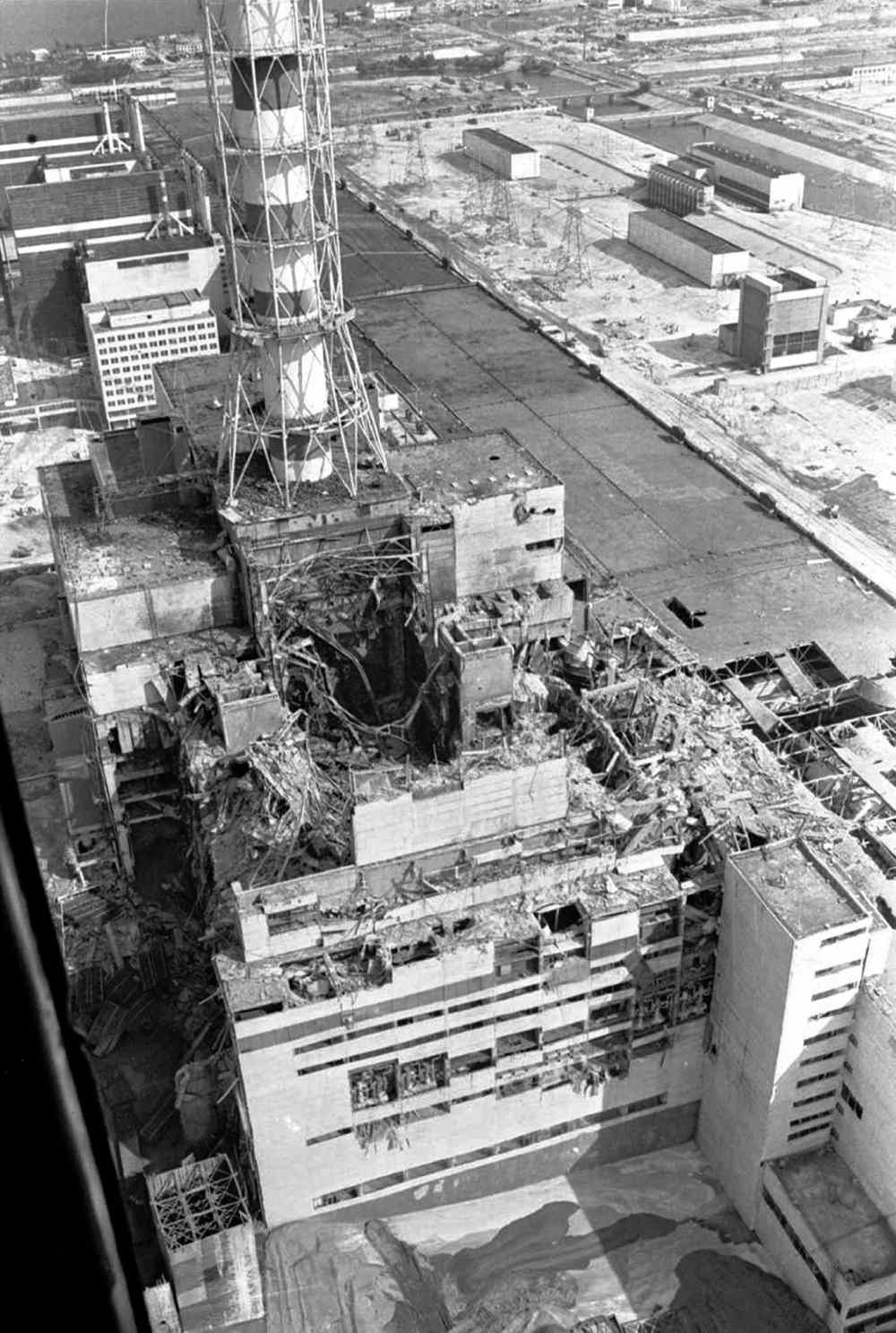
A 1986 file photo of an aerial view of the Chornobyl nuclear plant in Chornobyl, Ukraine showing damage from an explosion and fire in reactor four on April 26, 1986 that sent large amounts of radioactive material into the atmosphere. (AP Photo/Volodymyr Repik, File)A 1986 file photo of the aerial view of the reactor four at the nuclear plant in Chornobyl, Ukraine shows damage from an explosion and fire on April 26 that sent large amounts of radioactive material into the atmosphere. Thirty years after the world's worst nuclear accident, the Chernobyl nuclear power plant is surrounded by both a hushed desolation and clangorous activity, the sense of a ruined past and a difficult future. (AP Photo/Volodymyr Repik)CP
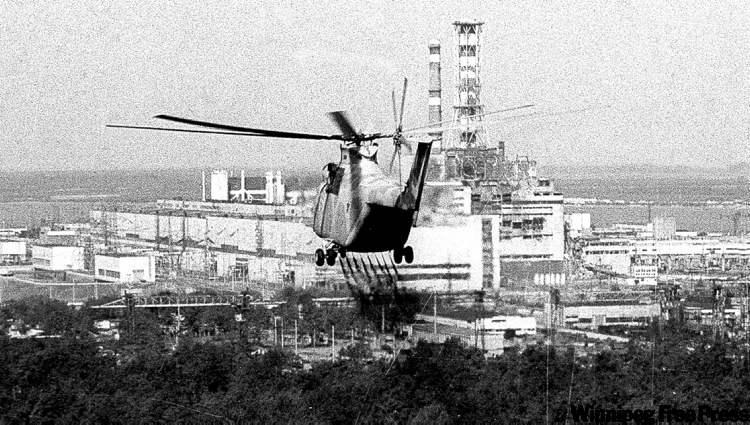
A helicopter, throwing chemicals to suppress radiation, approaches the fourth destroyed reactor at the Chernobyl nuclear power plant in May of 1986.CP
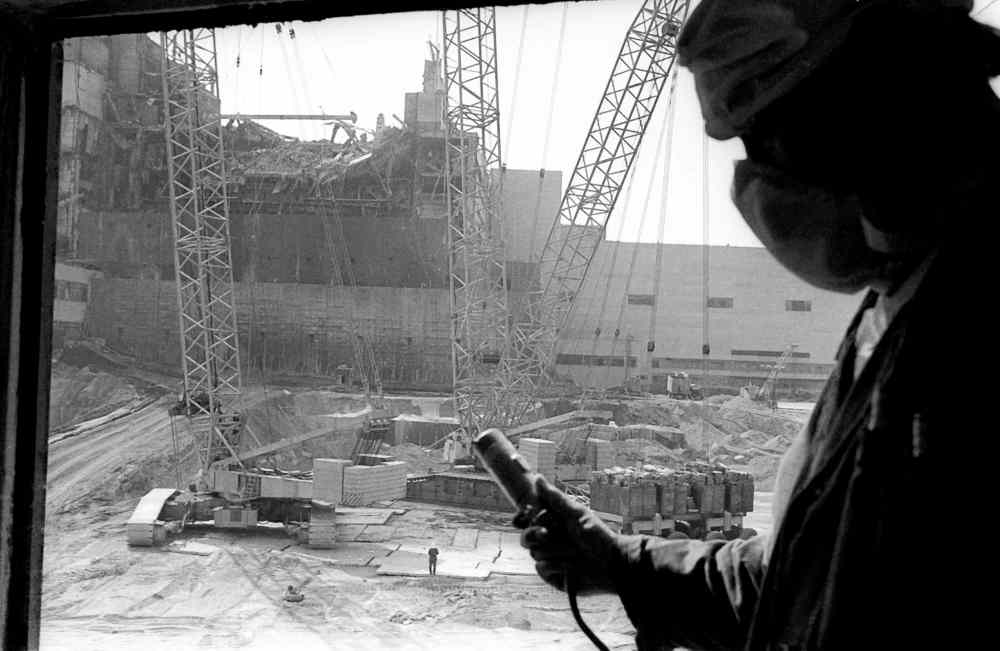
In this 1986 photo, a Chornobyl nuclear power plant worker holding a dosimeter to measure radiation level is seen against the background of a sarcophagus under construction over the 4th destroyed reactor. (AP Photo/Volodymyr Repik)CP
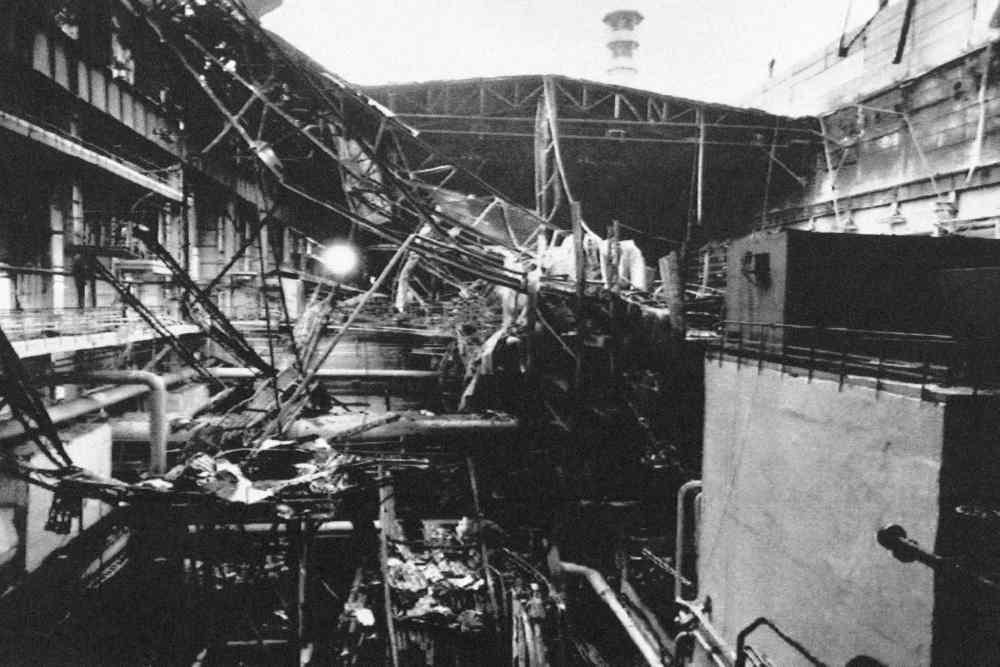
This Friday, Oct. 13, 1991 file picture shows part of the collapsed roof at the Chornobyl nuclear power plant during a media tour of the facility. (AP Photo/Efrem Lukatsky)CP
Photographer Efrem Lukatsky, wearing protective clothes to reduce the radiation impact, stands in front of the sarcophagus that covers destroyed Reactor No. 4 in the Chornobyl nuclear power plant, in 1996. The explosion was only about 60 miles from photographer Efrem Lukatsky's home, but he didn't learn about it until the next morning from a neighbor. (AP Photo)CP
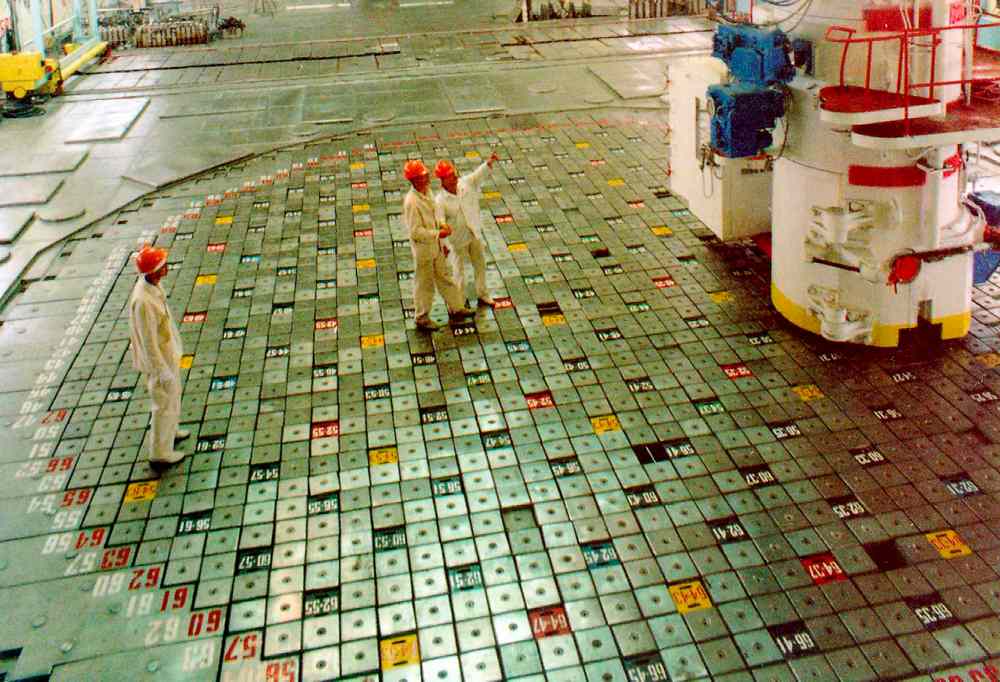
Engineer operators of Ukraine's Chornobyl nuclear power plant carry out their routine work inside the only operating third reactor shortly before the reactor was closed in 2000. (AP Photo/Efrem Lukatsky, File)CP
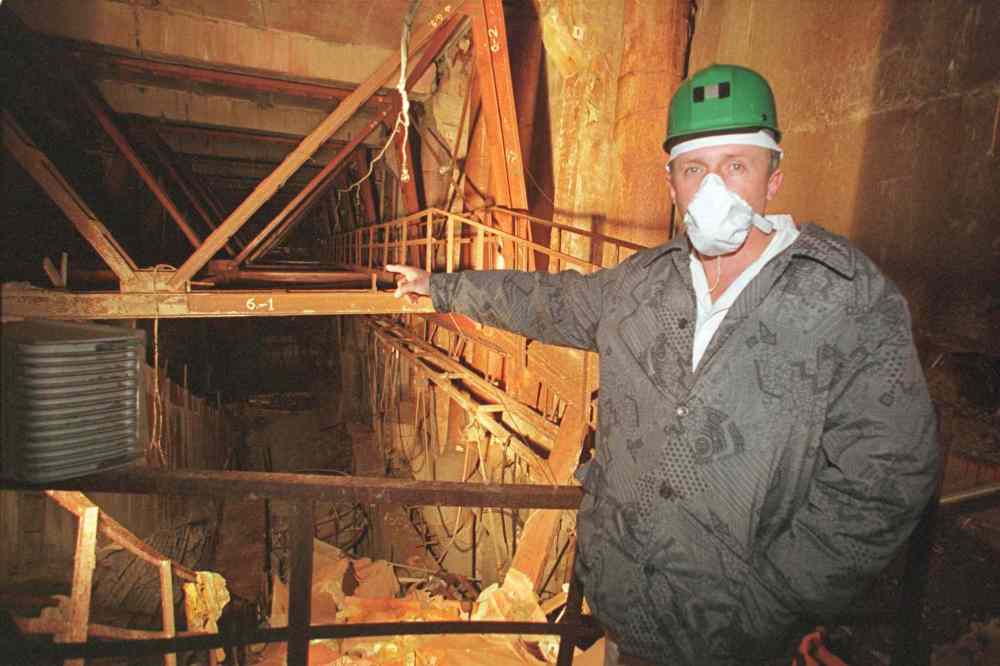
In this Nov.10, 2000 file photo, an investigator points at the place of the April 26, 1986 explosion in Reactor No. 4 in the Chornobyl nuclear power plant. (AP Photo/Efrem Lukatsky, File)CP
This Nov. 10, 2000, file photo the shattered remains of the control room for Reactor No. 4 at the Chornobyl nuclear power plant, Ukraine. Soviet engineers in the control room threw a power switch for a routine test on that doomed night, and two explosions followed. (AP Photo/Efrem Lukatsky, File)CP
Vehicles contaminated by radioactivity lie dormant near the Chornobyl nuclear power plant in November 2000. Some 1,350 Soviet military helicopters, buses, bulldozers, tankers, transporters, fire engines and ambulances were used while fighting against the April 26, 1986 nuclear accident. All were irradiated during the clean-up operation. (AP Photo/Efrem Lukatsky)CP
In this photo taken on Monday, April 11, 2016, a radiation warning sign is placed near the check-point 'Maidan' of the state radiation ecology reserve inside the 30 km exclusion zone around the Chernobyl nuclear reactor, some 370 km ( 231 miles) south-east of Minsk, Belarus. (AP Photo/Sergei Grits)CP
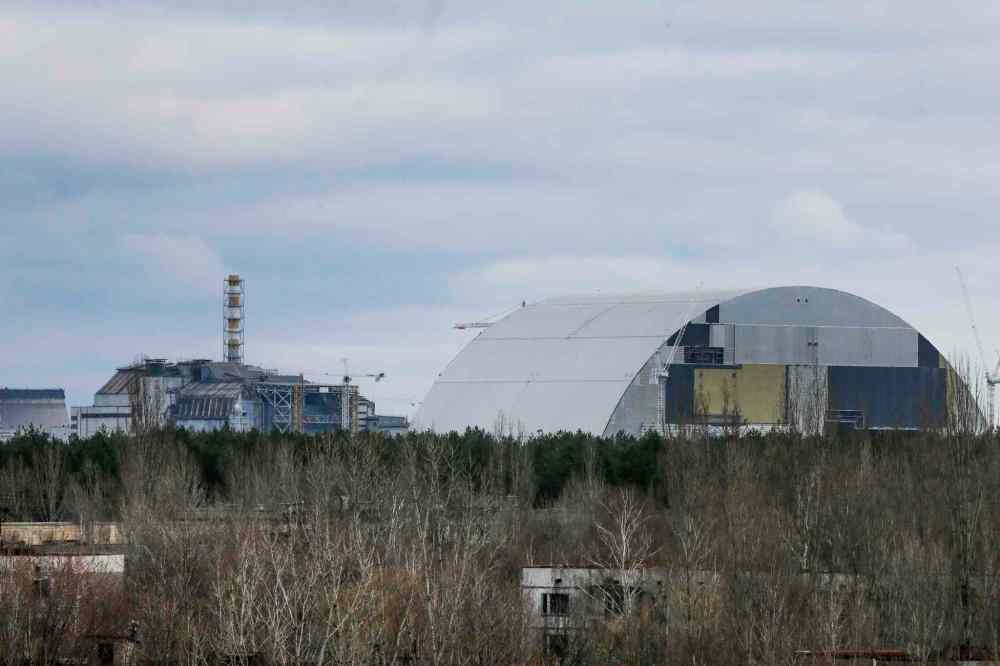
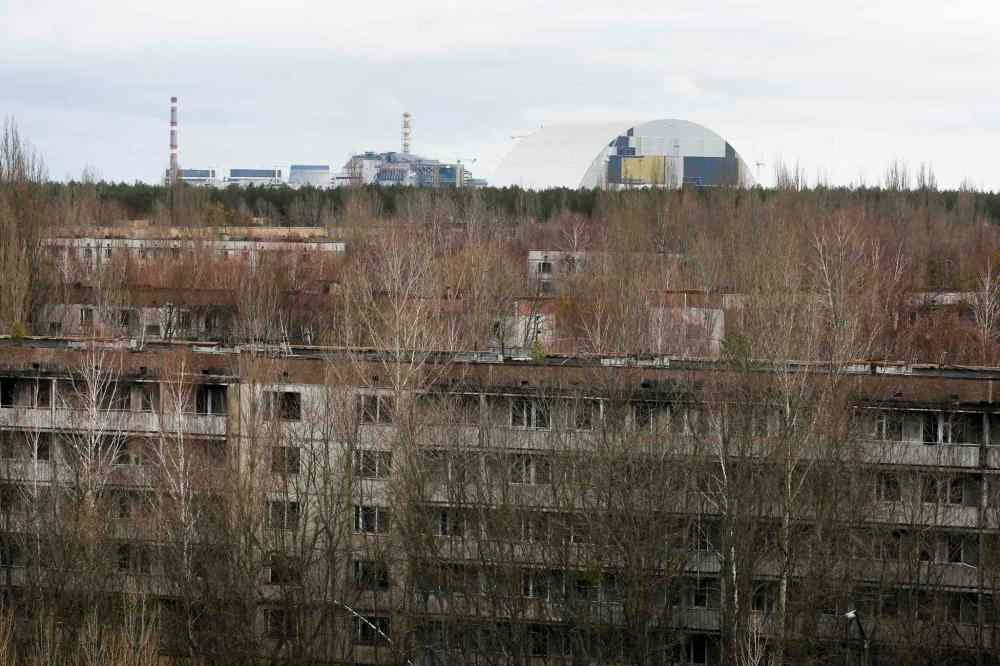
In this photo taken on Wednesday, March 23, 2016, a chimney over the destroyed reactor at the Chornobyl (background left) and a gigantic steel-arch under construction to cover the remnants of the exploded reactor, in the town of Prypiat close to Chernobyl, Ukraine. Houses in the foreground were abandoned by Chornobyl plant workers a few days after the explosion, and since then Prypiat had become the ghost town. (AP Photo/Efrem Lukatsky)CP
This photo taken Wednesday, March 23, 2016 shows abandoned apartment buildings in the town of Prypiat near Chornobyl, Ukraine, with a chimney, left, at the destroyed reactor and a gigantic arch-shape confinement to cover the remnants of the exploded reactor, in the back, at the Chernobyl nuclear power plant. (AP Photo/Efrem Lukatsky)CP
This photo taken Wednesday, March 23, 2016 shows abandoned apartment buildings in the town of Prypiat near Chornobyl, with a chimney, left, at the destroyed reactor and a gigantic arch-shape confinement to cover the remnants of the exploded reactor, in the back. (AP Photo/Efrem Lukatsky)Tribune Media TNS
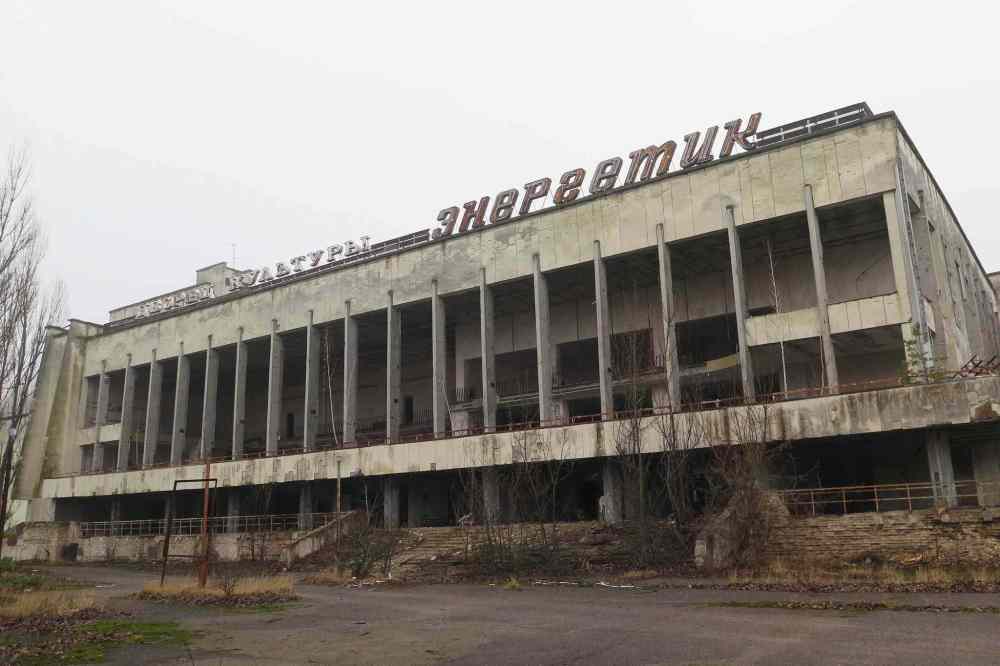
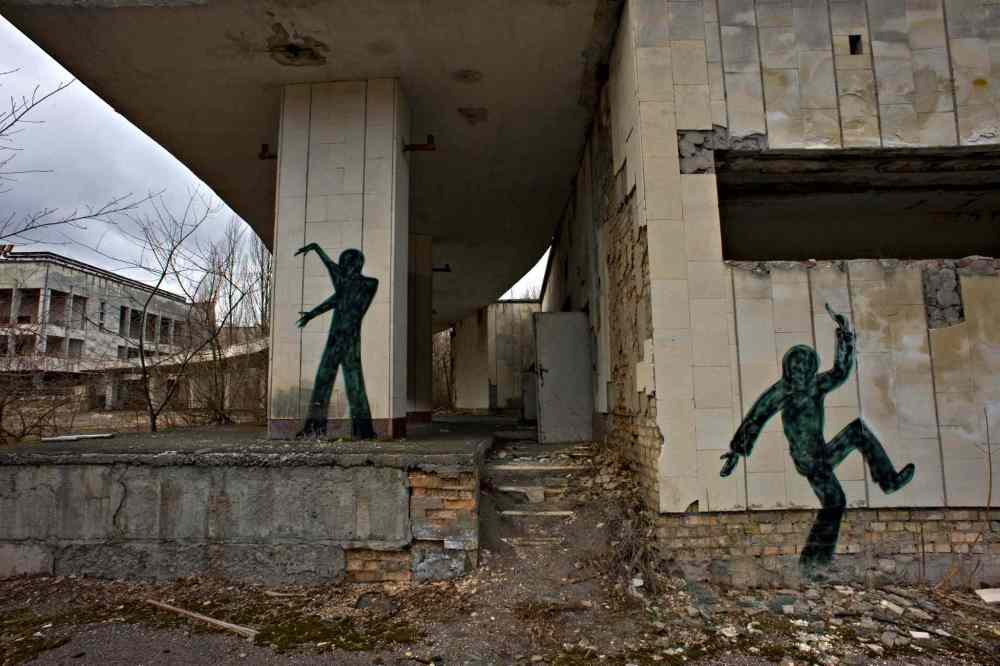
The "Energy Worker" palace of culture in Prypiat, once deemed as a shining example of the future of the Soviet Union. The town was abandoned after the Chornobyl accident at the nuclear power plant it was built to serve. (Claudia Himmelreich/McClatchy DC/TNS)Tribune Media TNS
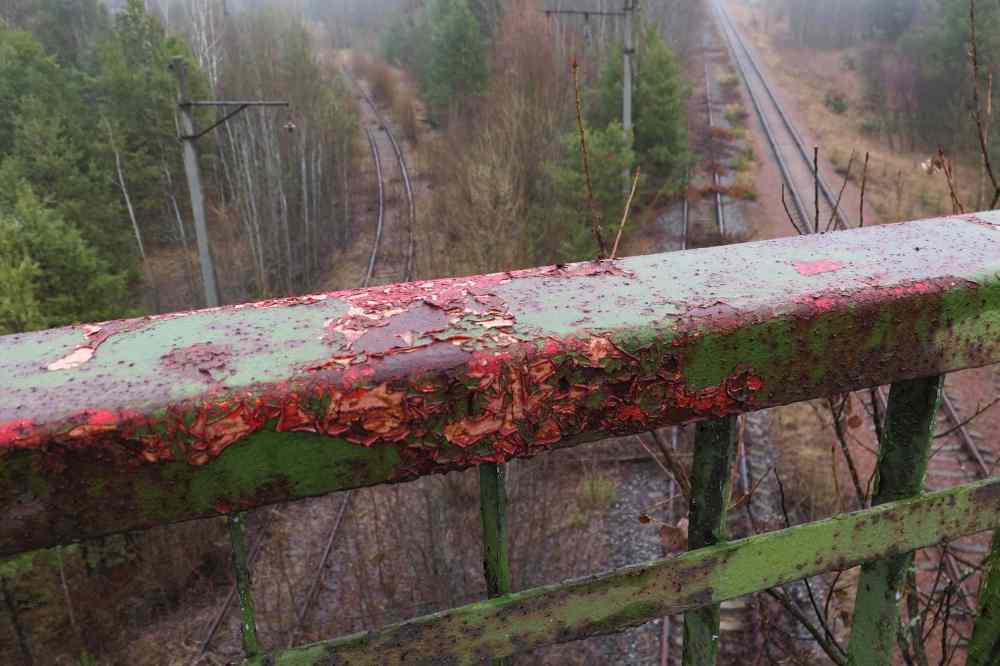
The view from the "Bridge of Death" in Prypiat, Ukraine. After the Chornobyl nuclear explosion, Prypiat residents stood on the bridge watching the "fireworks" show of the burning graphite and other materials from Reactor Number 4. Ukrainian legend has it that none of those who watched survived, though some who say they were there are still alive to the story of being there. (Claudia Himmelreich/McClatchy DC/TNS)Tribune Media TNS
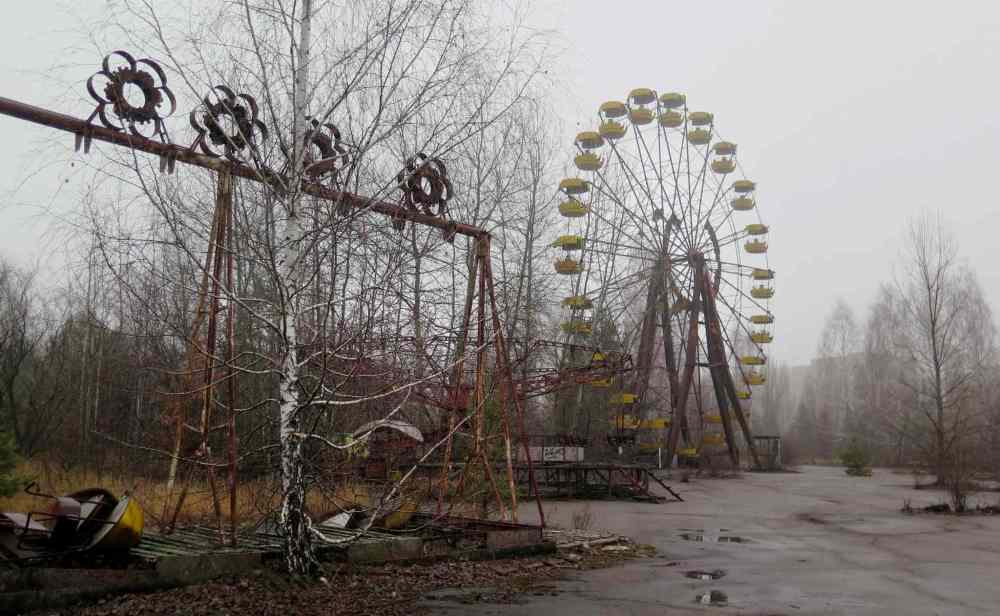
Swings and a ferris wheel remain in an abandoned amusement park of Prypiat, Ukraine. The park was scheduled to open on May 1, 1986, for the Soviet May Day celebrations. It never opened, as the Chornobyl disaster happened on April 26, 1986, a week before the opening. (Claudia Himmelreich/McClatchy DC/TNS)CP
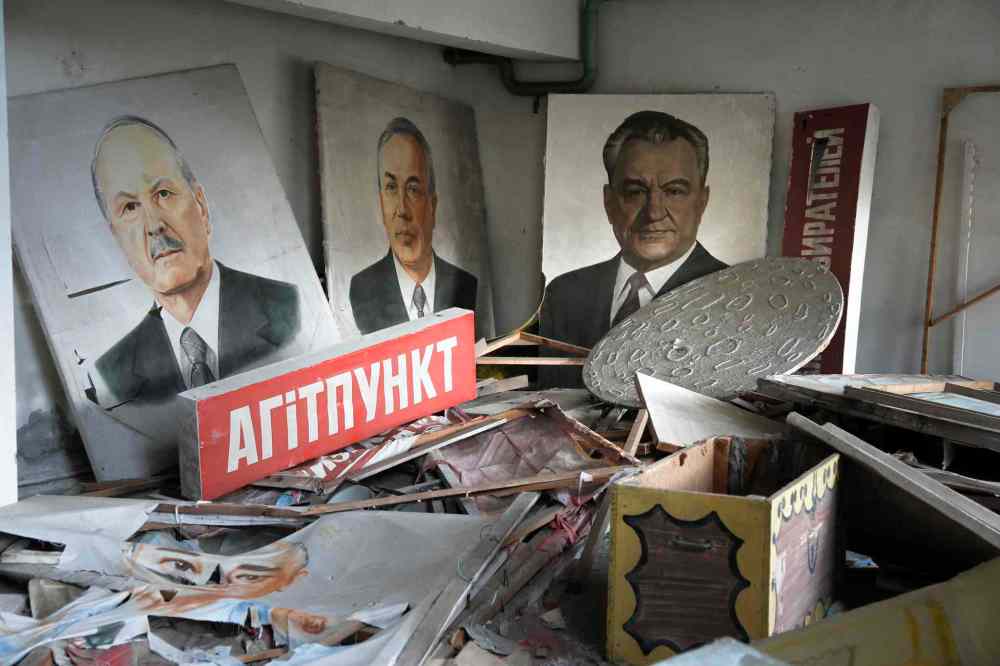
In this photo taken Wednesday, March 23, 2016, portraits of Soviet leaders are covered by radioactive dust in a club in the dead town of Prypiat, near Chornobyl in Ukraine. The portraits were prepared for a May Day rally in the town, which housed the nuclear power plant workers - but the residents were evacuated within hours after the radioactive explosion. (AP Photo/Efrem Lukatsky)Bloomberg The Washington Post
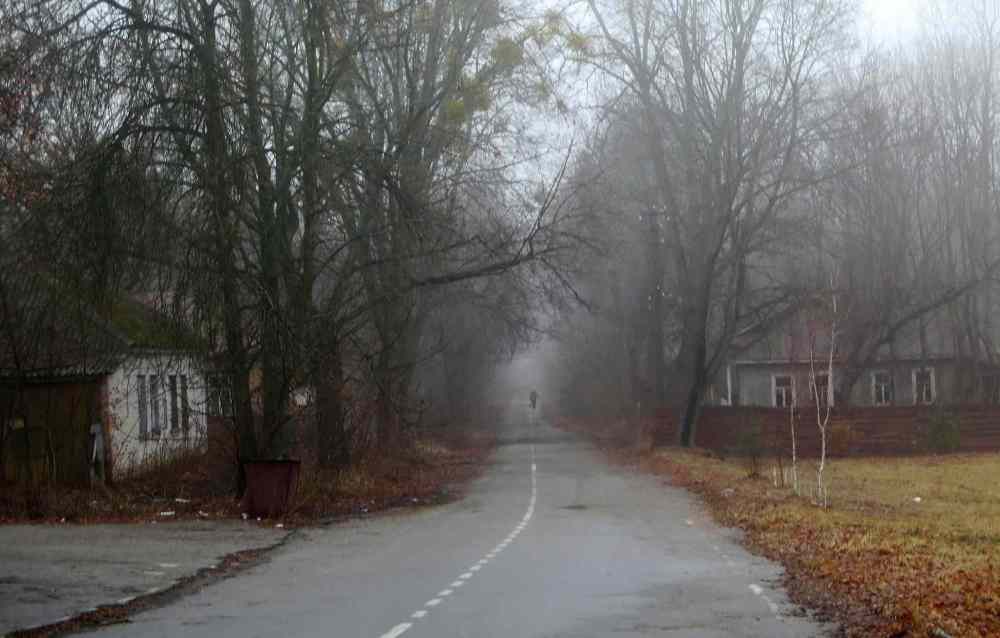
Abandoned buildings in the town of Prypiat, Ukraine, are shown in March 2011. The town, founded in 1970 for workers at the Chornobyl Nuclear Power Plant and evacuated following the 1986 explosion, has become a tourist destination with tours of the mostly abandoned area. (Washington Post photo by Nikki Kahn.)Tribune Media TNS
An woman returns to her house inside the irradiated 30-kilometer off limits zone in Prypiat, Ukraine. It is expected to be safe for humans to live inside the zone again in 3,000 years. (Claudia Himmelreich/McClatchy DC/TNS)AP
In this photo taken on Thursday, April 7, 2016, one of abandoned houses in Karpylivka, Ukraine. Karpylivka is one of the nearest villages to the destroyed reactor of the Chornobyl plant and has very few inhabitants. (AP Photo/Mstyslav Chernov)Tribune Media TNS
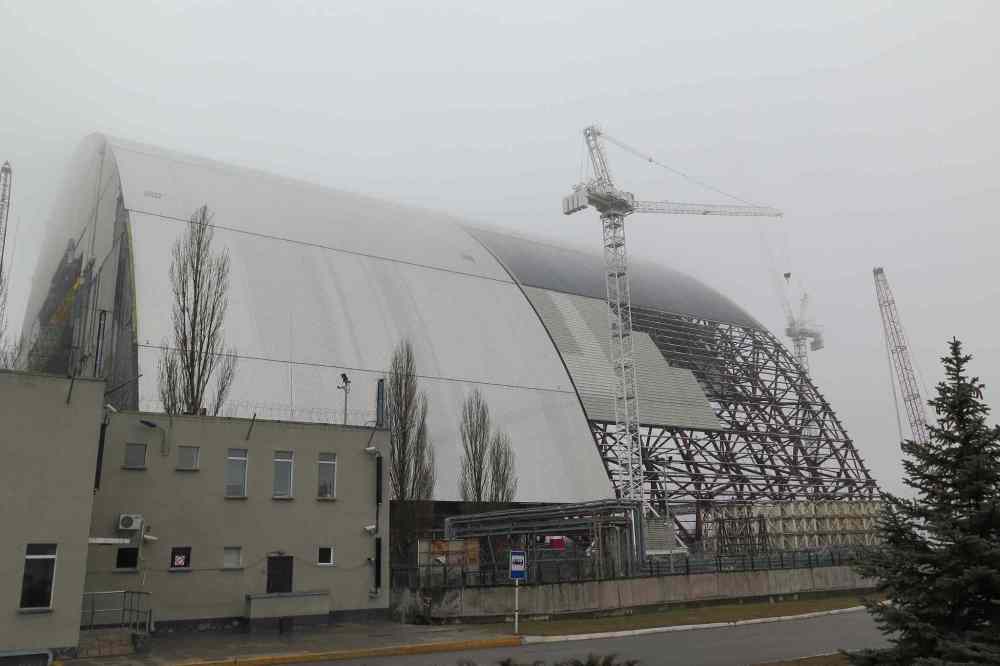
A new sarcophagus under construction to cover the destroyed Chornobyl Reactor No. 4. The new cover is expected to be completed in the next few years, though Ukrainians are skeptical of the schedule. (Claudia Himmelreich/McClatchy DC/TNS)CP
Workers build an arch-shape confinement that will be moved on rails over the sarcophagus and reactor building at Chernobyl nuclear power plant in Ukraine, Tuesday, April 26, 2016. (AP Photo/Sergei Chuzavkov)CP
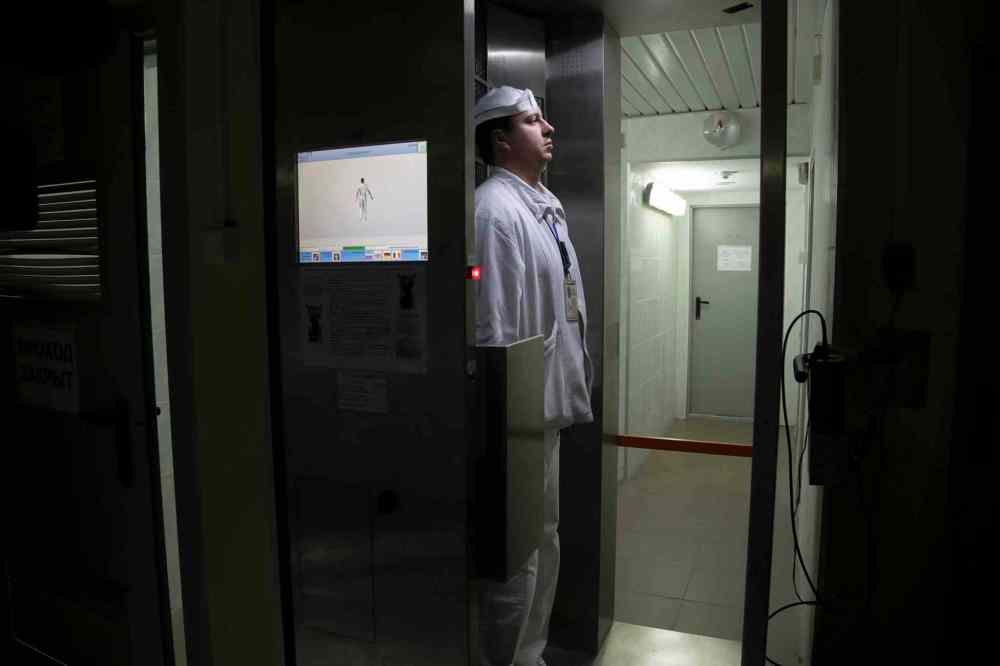
In this photo taken on Wednesday, March 23, 2016, a worker checks radiation levels after he leaves the nuclear waste storage at the Chornobyl nuclear power plant. The half-life of cesium-137, one of the most dangerous of the particles emitted by the explosion, is 30 years -- as long as it's been since the blast. At least three more of those half-lives will have to pass before the soil might be considered uncontaminated. (AP Photo/Efrem Lukatsky)CP
A crucifix and a radiation sign at the entrance to the out-of-bounds town Prypiat close to the Chornobyl nuclear power station are seen through a bus window. (AP Photo/Efrem Lukatsky)AP
In this photo taken on Thursday, April 7, 2016, a radiation dosimeter measures radiation showing slightly increased levels in abandoned cow farm near Zalyshany, Ukraine. After the April 26, 1986 explosion and fire spewed radioactive fallout over much of Ukraine, the most heavily affected areas were classified into four zones. Zalyshany, 53 kilometers (32 miles) southwest of the destroyed reactor, is in the fourth zone, not contaminated enough for resettlement but eligible for subsidies to help with health issues. (AP Photo/Mstyslav Chernov)AP
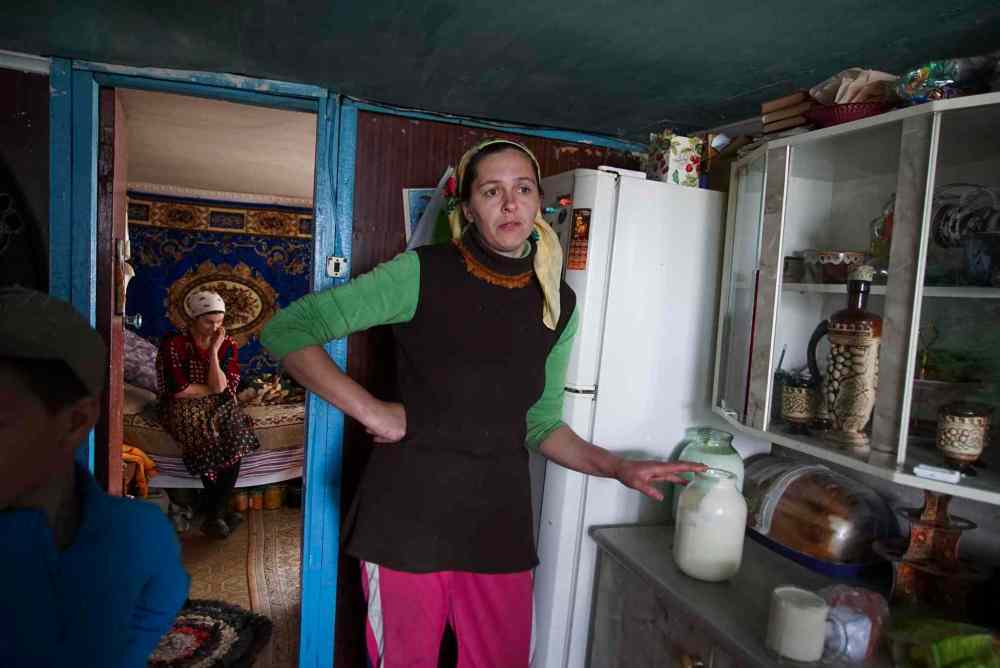
In this photo taken on Tuesday, April 5, 2016, Viktoria Vetrov holds a jar with fresh cow milk, believed to be radioactive, in her house, with her mother Tatiana Vetrov sitting in the back, in Zalyshany, 53 km (32 miles) southwest of the destroyed reactor of the Chernobyl plant, Ukraine. Vetrov keeps two cows to help feed her four children. (AP Photo/Mstyslav Chernov)CP
In this photo taken on Tuesday, April 5, 2016, children queue t to be checked by a pediatrician for radioactive elements in a hospital in Ivankiv, Ukraine. After the 1986 explosion and fire spewed radioactive fallout over much of Ukraine, the most heavily affected areas were classified into four zones. Last year, as the national economy deteriorated sharply, the government cut off paying for school lunches for children living in the fourth zone, not contaminated enough for resettlement but eligible for subsidies to help with health issues. (AP Photo/Mstyslav Chernov)CP
A soldier places portrait photos near the monument erected in memory of the victims of the Chornobyl explosion in Ukraine's capital Kyiv, Tuesday, April 26, 2016. (AP Photo/Efrem Lukatsky)CP
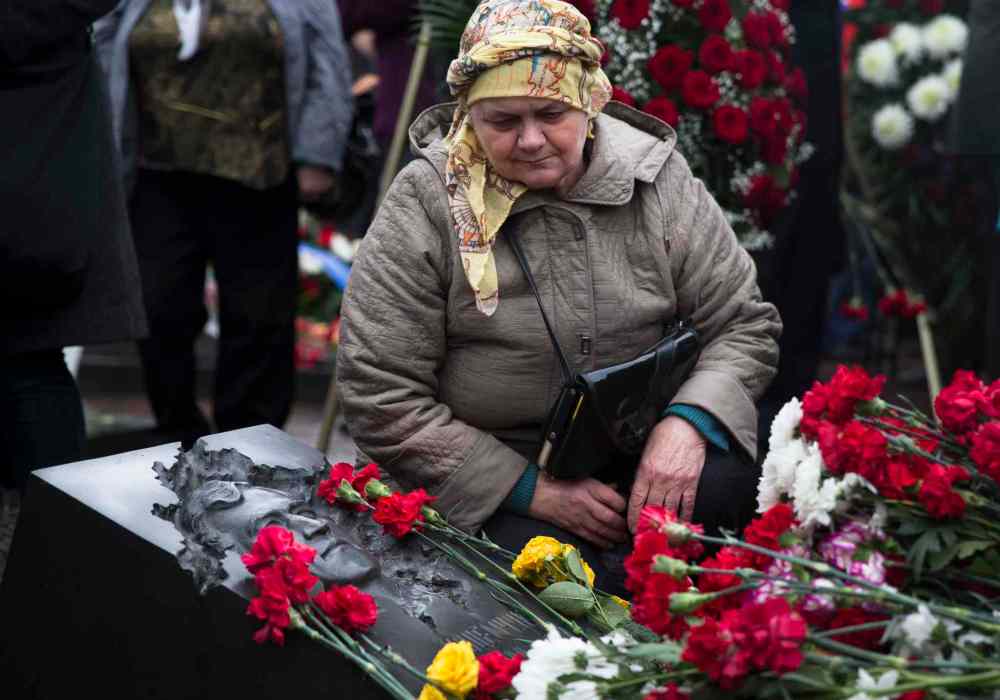
Nataliya Khodemchyuk, 64, from Ukraine, a widow of Chornobyl liquidator Valery Khodemchyuk, sits at his grave at the Mitino Cemetery in Moscow, during a ceremony on the 30th anniversary of the explosion at the Chernobyl nuclear power plant on Tuesday, April 26, 2016. About 600,000 people, often referred to as Chernobyl's "liquidators," were sent in to fight the fire at the nuclear plant after an explosion on April 26, 1986. (AP Photo/Pavel Golovkin)CP
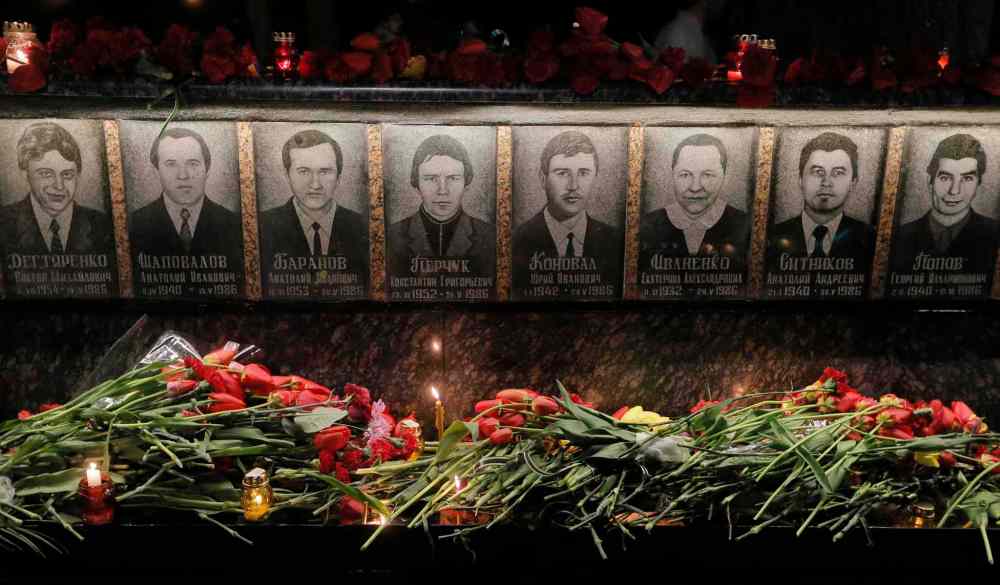
Candles and flowers are placed in front of the memorial to Chornobyl workers and firefighters in the town of Slavutych, Ukraine, early Tuesday, April 26, 2016. The city of Slavutych was built following the evacuation of Prypiat, the town of the Chernobyl plant workers, which was just 1.5 kilometers away from the plant. Some 50,000 Prypiat residents were evacuated after the disaster, taking only a few belongings. They never returned, and workers and their families now live in Slavutych. (AP Photo/Efrem Lukatsky)