

In cabinet, size matters
Advertisement
Read this article for free:
or
Already have an account? Log in here »
To continue reading, please subscribe:

Digital Subscription
One year of digital access for only $205*
- Enjoy unlimited reading on winnipegfreepress.com
- Read the E-Edition, our digital replica newspaper
- Access News Break, our award-winning app
- Play interactive puzzles
*First annual payment billed as $205.00 + GST for one year. This annual subscription will automatically renew at $233.00 + GST every 52 weeks (10% off the regular annual price of $259.35). Offer available to new and qualified returning subscribers only. Cancel any time.
To continue reading, please subscribe:
Add Free Press access to your Brandon Sun subscription for only an additional
$1 for the first 4 weeks*
- Enjoy unlimited reading on winnipegfreepress.com
- Read the E-Edition, our digital replica newspaper
- Access News Break, our award-winning app
- Play interactive puzzles
*Your next Brandon Sun subscription payment will increase by $1.00 and you will be charged $17.95 plus GST for four weeks. After four weeks, your payment will increase to $24.95 plus GST every four weeks.
Read unlimited articles for free today:
or
Already have an account? Log in here »
Hey there, time traveller!
This article was published 02/05/2016 (3761 days ago), so information in it may no longer be current.
Premier-designate Brian Pallister has promised to appoint a cabinet of only 12 members, a one-third reduction from the outgoing NDP cabinet. How many ministers are needed to run a province and how does a premier decide on the size of cabinet?
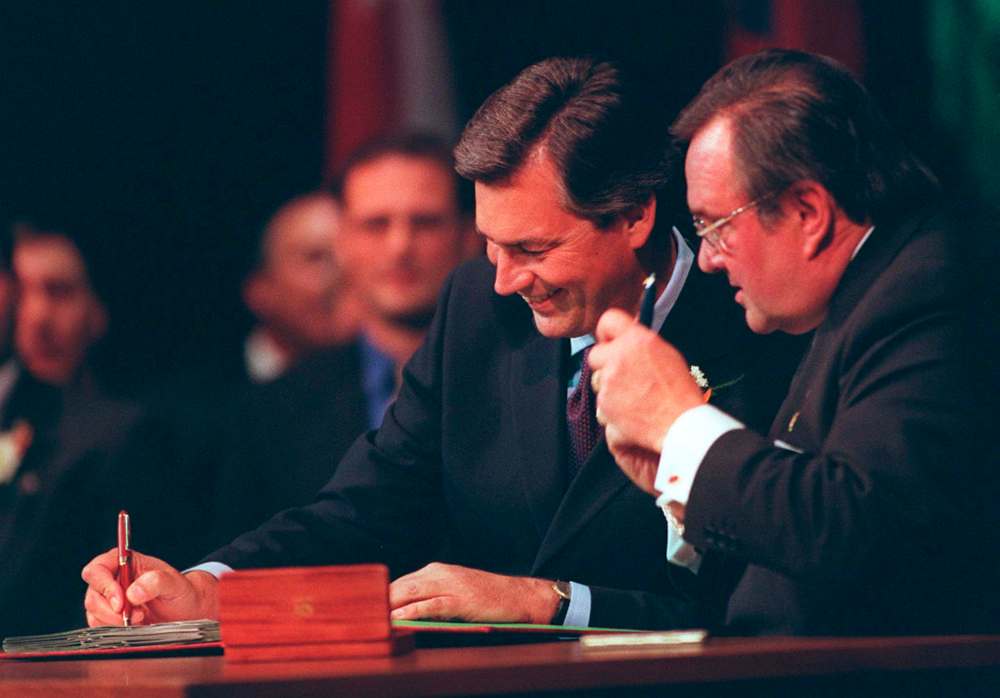
One has to go back to the Progressive Conservative governments of premier Duff Roblin during the late 1950s and the 1960s to find cabinets in the 12-member range. Roblin started in 1958 with a minority government of eight ministers, and over three subsequent majority governments cabinet grew to 14 ministers. Of course, government was simpler back then. The budget in 1958 was only $100 million and there were just 4,500 civil servants. Even after a decade of PC rule that saw government expand greatly, the 1969 budget was still under $400-million and there were only close to 9,000 civil servants.
Over the ensuing four-and-a-half decades, the scope and complexity of core government operations continued to expand. More agencies, boards and commissions operating at arms length from government were created. Governments were serving a growing and more diverse population. There were more demands for responsiveness and accountability to various organizations and groups of voters. The media became more influential and demanding. In this more complicated, challenging and risky political environment, the cabinet grew in size, and power became centralized in the premier’s office.
Not surprisingly given their respective philosophies, the PCs have tended to favour slightly smaller cabinets than the NDP. PC premiers Sterling Lyon and Gary Filmon had cabinets in the 17- to 18-minister range. NDP premiers Schreyer, Pawley and Doer had cabinets in the 21- to 20-minister range.
In 2015, the provincial budget was just under $13 billion and there 14,000 civil servants. To direct and oversee the 18 departments of government and the various non-departmental bodies, there were 19 ministers serving in the NDP cabinet of premier Greg Selinger. This number was over half the NDP caucus and one-third of the elected 57 MLAs serving in the legislature. Only tiny PEI had a larger percentage of elected representatives serving in cabinet.
In deciding on the size of cabinet, the premier makes a political judgment that balances considerations of political representation with considerations of efficiency.
In terms of political representation, a larger cabinet allows (depending upon the composition of the governing party caucus) for greater diversity along gender, ethnic, regional and ideological lines. This can promote, but not guarantee, more inclusive cabinet decision-making. Larger cabinets can include a mix of veterans and newcomers who can be mentored by the former to avoid the mistakes that first-time ministers are prone to make. In a larger cabinet, there is greater potential to use cabinet committees that allow a wider range of ministers to participate in certain decisions. With more caucus members in cabinet, there should be less potential for internal dissent, but the leadership revolt against premier Selinger proved, this is not always true.

In terms of efficiency, there is both a real and a symbolic benefit from a smaller cabinet. By reducing cabinet to 12 members, Pallister estimated there would be a saving of $5-million because there are fewer ministerial salaries, political staff, cars and other benefits to take care of. In a budget of $13-billion that may appear to be a small amount, but fewer ministers may mean less pressure for new spending. More importantly, the reduction sends a powerful message that the government is serious about controlling spending.
A large cabinet can be unwieldy in terms of collective decision-making and this can lead to greater control by the premier as other ministers look to him for leadership. A smaller cabinet allows for the possibility of more collegial decision-making. Appointing ministers on the basis of their social characteristics, rather than background knowledge and skills, can produce larger cabinets that are less informed and effective in their decision-making.
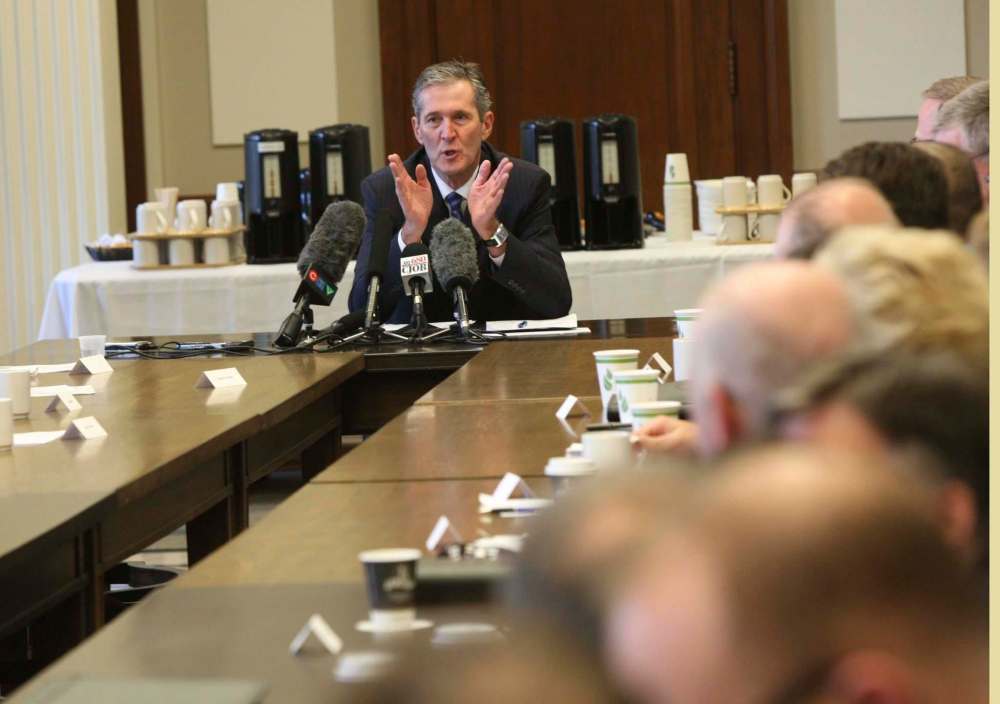
Faced with criticism of his cabinet, Canada’s first prime minister John A. Macdonald declared: “Give me better wood and I will build you a better cabinet.” With 40 MLAs to choose from, premier-designate Pallister has plenty of good wood from which to build a cabinet. Talented veteran and first time MLAs may be left out of cabinet. There are a few other jobs as legislative assistants, as chairs of legislative committees and positions within caucus to bestow on disappointed backbench followers. A promise to increase or shuffle cabinet after a couple of years might be another way to forestall caucus unrest, but rest assured, in all likelihood the Pallister cabinet will grow over time as the demands for political representation and inclusion trump the arguments for efficiency and modest savings gained from shrinking the cabinet back to its size in the 1960s.
Paul G. Thomas is a professor emeritus of political studies at the University of Manitoba.


Advertisement Advertise With Us
Advertisement Advertise With Us