Guidelines on stem cell research put patients first, warn against hyping results
Advertisement
Read this article for free:
or
Already have an account? Log in here »
To continue reading, please subscribe:

Digital Subscription
One year of digital access for only $205*
- Enjoy unlimited reading on winnipegfreepress.com
- Read the E-Edition, our digital replica newspaper
- Access News Break, our award-winning app
- Play interactive puzzles
*First annual payment billed as $205.00 + GST for one year. This annual subscription will automatically renew at $233.00 + GST every 52 weeks (10% off the regular annual price of $259.35). Offer available to new and qualified returning subscribers only. Cancel any time.
To continue reading, please subscribe:
Add Free Press access to your Brandon Sun subscription for only an additional
$1 for the first 4 weeks*
- Enjoy unlimited reading on winnipegfreepress.com
- Read the E-Edition, our digital replica newspaper
- Access News Break, our award-winning app
- Play interactive puzzles
*Your next Brandon Sun subscription payment will increase by $1.00 and you will be charged $17.95 plus GST for four weeks. After four weeks, your payment will increase to $24.95 plus GST every four weeks.
Read unlimited articles for free today:
or
Already have an account? Log in here »
Hey there, time traveller!
This article was published 12/05/2016 (3748 days ago), so information in it may no longer be current.
TORONTO – A global organization of scientists and bioethicists has released updated guidelines for research using stem cells, the so-called “holy grail” of regenerative medicine, stressing that the protection of patients must take precedence as the field continues to rapidly evolve.
The guidelines developed by the International Society for Stem Cell Research (ISSCR) are aimed at assuring both the medical field and the public that research using these powerhouse cells is conducted with scientific and ethical integrity.
“ISSCR’s overriding goal is to improve human health through stem cell research,” society president Sean Morrison told a media telebriefing Thursday. “That means promoting sound and rigorous science as well as accelerating the translation of that research to help patients.
“It also means opposing the marketing of unproven stem cell therapies to patients,” said Morrison, head of the Children’s Medical Center Research Institute at the University of Texas Southwestern Medical Center.
Dr. George Daley, director of the stem cell transplantation program at Boston Children’s Hospital, said the ISSCR is aware there’s “an industry already out there” that is marketing unproven stem cell therapies directly to patients.
Indeed, there is a growing international medical tourism business, in which patients desperate for treatments for serious or life-threatening illnesses travel to countries where unregulated clinics offer stem cell-based therapies that have not been proven to work and in some cases may be unsafe.
High-profile examples include former hockey great Gordie Howe, who travelled to Mexico in late 2014 for stem cell injections after suffering two debilitating strokes. Family members believe the therapy vastly improved the now 88-year-old’s symptoms at the time, although Canadian stem cell experts questioned whether the experimental and unapproved treatment was responsible.
In December, friends of Spirit of the West frontman John Mann, who has early-onset Alzheimer’s disease, organized a crowdfunding campaign to help the Canadian musician pay for an experimental stem cell treatment not available in Canada or the U.S.
“It’s facilitated by the Internet, it’s facilitated by the international scope of medical care, it’s facilitated by rather weak regulatory structures in some countries and it is part of the concern that’s really raised the alarm and is part of the impetus behind having these guidelines,” explained Daley, who helped craft the recommendations.
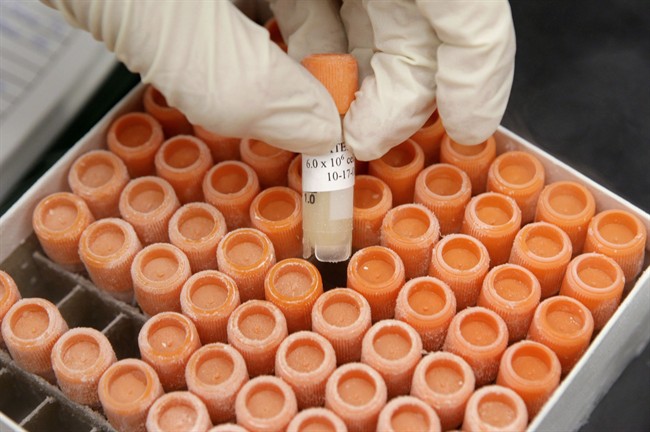
There are many kinds of stem cells in the body, but much of the research focuses on embryonic stem cells and what are known as induced pluripotent stem cells, or iPSCs. Both have the power to give rise to almost any type of cell in the body, from brain and heart to kidneys and bone. But iPSCs are developed from adult tissues like skin cells, which can be chemically manipulated in the lab to return to an embryonic-like state.
While research using stem cells derived from donated embryos is allowed in Canada, the U.S. and several other countries, the guidelines recommend some restrictions.
“The ISSCR holds that scientific research on preimplantation-stage human embryos is ethically permissible when performed under rigorous scientific and ethical oversight, especially in the areas of human development, genetic and chromosomal disorders, human reproduction, and new disease therapies,” the document states.
However, the group warns against scientists going too far when it comes to the use of new gene-editing tools such as CRISPR/CAS, which allows researchers to remove minute slices of DNA with incredible precision. The technology could be used, for instance, to remove a mutated gene that causes an inherited disease.
“This is obviously very important for biomedicine, but it also raises more challenging ethical questions, such as whether we should use the technology to edit embryos,” said Daley, who’s also a professor of biological chemistry and molecular pharmacology at Harvard Medical School.
“But we draw a very clear distinction given that there’s uncertainty about the safety of gene editing of embryos and not yet any kind of social consensus on whether it should be practised.”
Although using such tools to modify the genome of human embryos can be used for basic lab-based science to advance biomedical knowledge, Daley said using altered embryos for human reproduction is premature and should be prohibited “at this time.”
While stem cells hold great promise, with hopes they could some day be harnessed to create replacement organs and cure such conditions as Parkinson’s disease, macular degeneration-related blindness, diabetes and spinal cord injuries, the guidelines also caution researchers against “hyping” their results to the media and public.
“Scientists are often very excited by their findings and occasionally scientists and others can overstate either the clinical promise or the timelines needed in order to convert a finding into a clinical application,” said Jonathan Kimmelman, a bioethicist at McGill University who chaired the 25-member international task force that updated the previous 2006 and 2008 guidelines.
“The guidelines clearly urge scientists to balance their communications with each other, as well as with the public,” he said, “and to make sure that the projected clinical applications are not unrealistically optimistic.”
Rigorously designed patient trials that emphasize the safety and efficacy of any experimental therapy are the gold standard of medical research, and that holds for stem cell research efforts as well, the guidelines stress.
“No doubt the path forward will be fraught with setbacks and not all of the clinical trials will work, but we believe that these trials will lead to new insights that will increase our chance of curing some of these diseases,” added Morrison, referring to Parkinson’s and other debilitating and often life-shortening disorders.
“And even if we only succeed some of the time, it will change the world for subsets of patients who are currently beset by these terrible conditions.”
Details of the guidelines and related articles were published Thursday in a number of journals, including Nature, Science and the Lancet.
Follow @SherylUbelacker on Twitter.