

Tasers have improved since police-involved fatal shooting, expert says

Advertisement
Read this article for free:
or
Already have an account? Log in here »
To continue reading, please subscribe:
Digital Subscription
One year of digital access for only $1.44 a week*
- Enjoy unlimited reading on winnipegfreepress.com
- Read the E-Edition, our digital replica newspaper
- Access News Break, our award-winning app
- Play interactive puzzles
*Billed as $5.77 plus GST every four weeks. After 52 weeks, price increases to the regular rate of $19.95 plus GST every four weeks. Offer available to new and qualified returning subscribers only. Cancel any time.
To continue reading, please subscribe:
Add Free Press access to your Brandon Sun subscription for only an additional
$1 for the first 4 weeks*
- Enjoy unlimited reading on winnipegfreepress.com
- Read the E-Edition, our digital replica newspaper
- Access News Break, our award-winning app
- Play interactive puzzles
*Your next Brandon Sun subscription payment will increase by $1.00 and you will be charged $17.95 plus GST for four weeks. After four weeks, your payment will increase to $24.95 plus GST every four weeks.
Read unlimited articles for free today:
or
Already have an account? Log in here »
Hey there, time traveller!
This article was published 08/08/2016 (3730 days ago), so information in it may no longer be current.
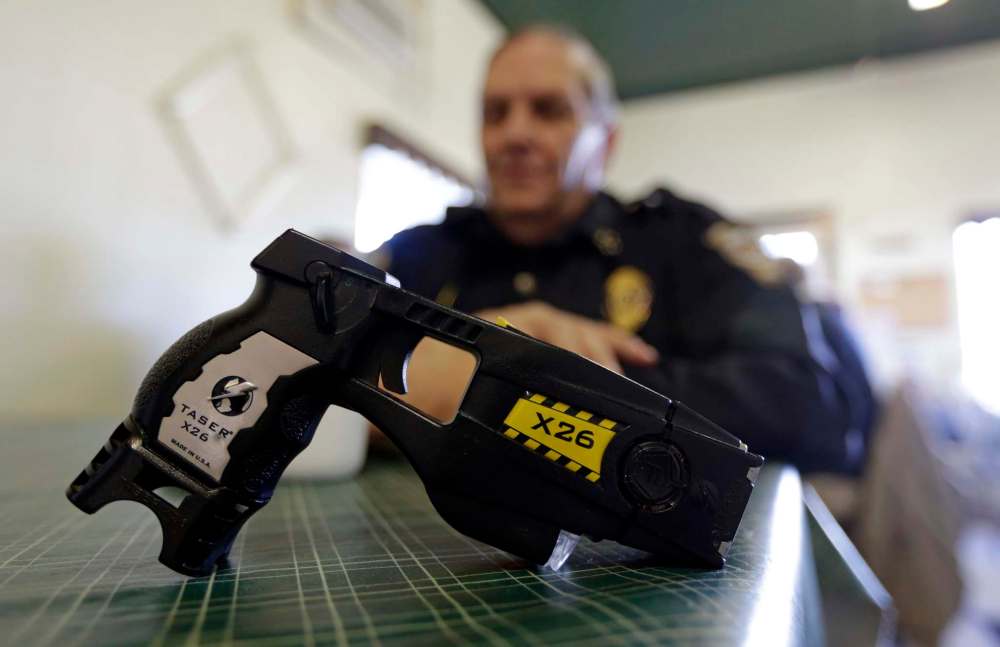
Would Craig McDougall be alive today if the Taser Winnipeg police used to try to subdue him had worked properly?
No one will ever know, but Ross McLean, a Canadian security expert and former Toronto police officer, said on Monday improved Tasers are just one of the tools added to officer toolboxes in the eight years since the 26-year-old McDougall was fatally shot while refusing to drop a knife police have said he was holding.
And in the last few months, American police leaders unveiled what they believe are the future changes needed to guide use of force when officers arrive at a volatile encounter.
An inquest into McDougall’s death started on Monday, but it was quickly put over to next week after word came that a witness had changed their statement.
The inquest is expected to hear from a representative of the company that manufactures Tasers to explain why the device malfunctioned when police tried to use it on McDougall.
McLean said that in the years since McDougall was shot, two newer models of Tasers have come out.
“They are more effective since 2008,” he said. “That is something that has changed.
“But there are others. Sock rounds, the bean bag rounds, pepper spray, more police officers get more de-escalation training. Winnipeg now has the IIU (Independent Investigation Unit of Manitoba).
“And another thing, there are more cellphones, smartphones and cameras now taking photos of what officers are doing.”
McLean said more police officers and departments are using body cameras to record what officers are doing and seeing.
“The unfortunate thing is there are times police will still have to use a lethal weapon,” he said.
“It still is not a good outcome, but it is an outcome… it’s not easy. The second guessing has never got bigger than now.”
Meanwhile, the Police Executive Research Forum, a law enforcement policy group based in Washington, D.C., released the report Guiding Principles on Use of Force in January. The report came after 18 months of study including surveys of 280 police agencies in the United States and even taking a group of police chiefs to Scotland to see how policing is done in a country where most officers don’t carry guns.
The report came after a report by the Washington Post, which said that of the 990 people shot and killed by police in the United States last year, about 25 per cent displayed signs of mental illness, 16 per cent were armed with a knife, and nine per cent were unarmed.
The principles the organization came up with on use of force include emphasizing the sanctity of human life, that use of force must meet the test of proportionality, de-escalation should be formal agency policy, and officers need to prevent other officers from using excessive force.
The principles also include instructing officers to immediately give first aid to the person who seconds before may have been trying to kill them.
And the report recommends getting rid of what it called “outdated concepts” such as police feeling they must resolve all situations as quickly as possible and the “so-called 21-foot rule”, the buffer zone they would try to keep between themselves and the person they are trying to help.
Chuck Wexler, the organization’s executive director, wrote in the report that they looked at the issue because police chiefs were telling them departments are confronted with serious challenges.
“That means rethinking some of the fundamentals of policies, training, tactics, and equipment regarding use of force,” Wexler wrote.
“We need to challenge the conventional thinking on how the police approach some potential use of force situations, in particular those that involve people with mental illness who do not have a firearm… this report reflects the latest thinking on police use of force issues from the perspective of many of the nation’s leading police executives.”
But the proposals were immediately criticized by the National Association of Police Organizations, which represents officers.

The association called the recommendations “dangerous new use of force rules.”
“The men and women who actually do this difficult and often dangerous job deserve to have their own lives, and the ability to protect themselves, defended,” the association said in a statement in response at the time.
“The actual general public out there still overwhelmingly supports law enforcement both as the fundamental safeguard of civilized society, and as personified in the individual man or woman who, while imperfect, still usually gets it right.”
kevin.rollason@freepress.mb.ca
Kevin Rollason
Reporter
Kevin Rollason was a general assignment reporter at the Free Press.
Our newsroom depends on a growing audience of readers to power our journalism. If you are not a paid reader, please consider becoming a subscriber.
Our newsroom depends on its audience of readers to power our journalism. Thank you for your support.
Related Articles
Witness in fatal police shooting changes statement, delays start of long-awaited inquest
Advertisement Advertise With Us
Advertisement Advertise With Us