Dystopian premise can’t be caged
Greek director puts unique spin on surreal black comedy
Advertisement
Read this article for free:
or
Already have an account? Log in here »
To continue reading, please subscribe:

Digital Subscription
One year of digital access for only $205*
- Enjoy unlimited reading on winnipegfreepress.com
- Read the E-Edition, our digital replica newspaper
- Access News Break, our award-winning app
- Play interactive puzzles
*First annual payment billed as $205.00 + GST for one year. This annual subscription will automatically renew at $233.00 + GST every 52 weeks (10% off the regular annual price of $259.35). Offer available to new and qualified returning subscribers only. Cancel any time.
To continue reading, please subscribe:
Add Free Press access to your Brandon Sun subscription for only an additional
$1 for the first 4 weeks*
- Enjoy unlimited reading on winnipegfreepress.com
- Read the E-Edition, our digital replica newspaper
- Access News Break, our award-winning app
- Play interactive puzzles
*Your next Brandon Sun subscription payment will increase by $1.00 and you will be charged $17.95 plus GST for four weeks. After four weeks, your payment will increase to $24.95 plus GST every four weeks.
Read unlimited articles for free today:
or
Already have an account? Log in here »
Hey there, time traveller!
This article was published 10/09/2016 (3681 days ago), so information in it may no longer be current.
A long way from Tinder, the entrancingly strange black comedy The Lobster imagines single life not as an array of swipe-right options, but rather as a quest for a mate for life on a serious deadline, to prevent being turned into a member of a nonhuman species.
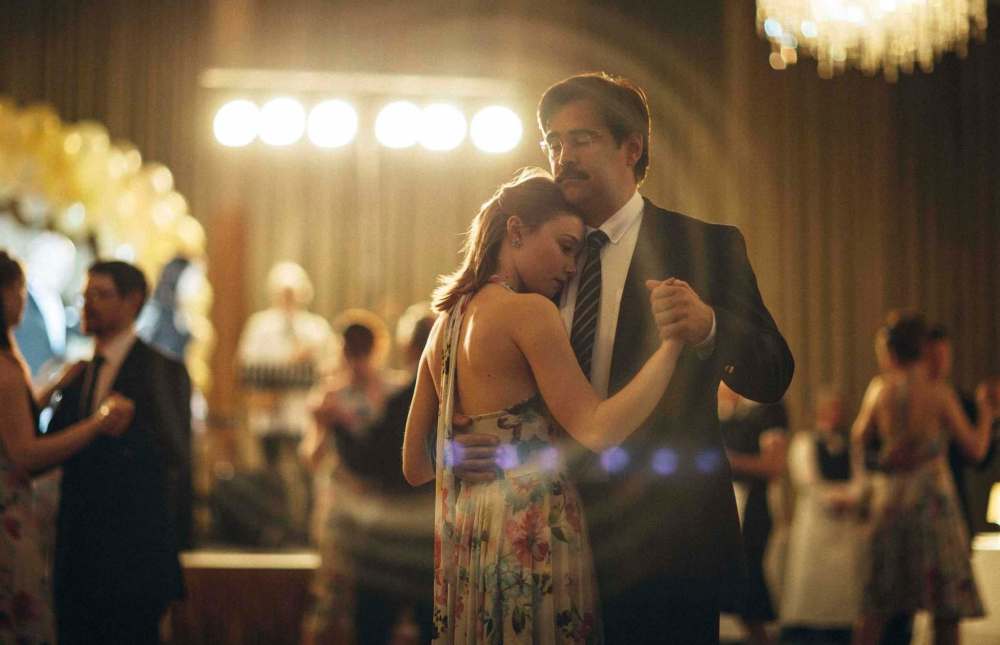
Allow me to explain. In the world of The Lobster, singlehood is illegal. The unmarried have 45 days to find a mate on the grounds of a large, beige hotel, or else become transformed into the animal of their choice and fend for themselves in the nearby woods. As with nearly everything filling in the contours of co-writer and director Yorgos Lanthimos’ first English-language feature — he has made four films in his native Greece — this insane dystopian premise is tapped into place at the outset, and you believe it. Best known for his Oscar-nominated Dogtooth, Lanthimos has long asserted himself as a master of tone management. As a stage director and a filmmaker, he’s steeped in not just deadpan absurdism, but the general, perplexing absurdity of love and family in the realm of totalitarian excess.
At the hotel check-in counter, we meet David, played with perfect, dodgy timidity by Colin Farrell. The man has arrived at the hotel accompanied by Bob, a dog, formerly his brother. David’s politely grilled by the desk clerk. Gay or straight? A pause. David wonders if there’s a bisexual option. No, he’s told. “This option is no longer available,” due to various “operational problems.”
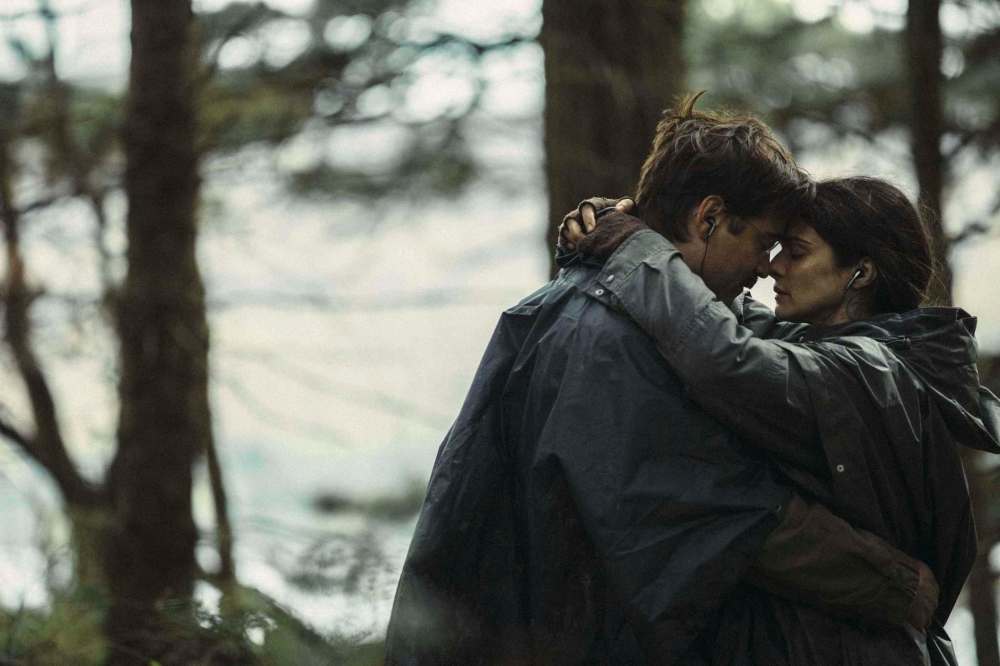
We come to learn the rules and regulations of this place along with David, and his fellow singles played by Ben Whishaw and John C. Reilly. David informs the management that he’s chosen the lobster as his next incarnation. Thick of neck and droopy of mustache, David is a man who may have been born beaten down, or may have been beaten down by whatever world this world has become. But change is possible; once he meets his match, a similarly shortsighted woman played by Rachel Weisz, who also narrates the film, this empty vessel finds meaning and purpose and something like love.
Lest I make The Lobster sound conventionally upbeat and life-affirming, it should be noted that Lanthimos’s eccentric marvel of a film is all of a piece with its maker’s earlier work. The performance style is one of vaguely robotic minimalism, as if the characters had learned a common language phonetically, without quite grasping the meaning or the feeling of what they say. There are short, sharp shocks of heinous violence, as when Reilly’s character is nailed for a transgression and subjected to brief but painful torture involving his hand and a hot toaster.
Much of The Lobster takes place in the woods, charting David’s escape from the hotel into the realm of a militant group known as the Loners, led by Lea “Deader Than Deadpan” Seydoux. In the wild David meets the Weisz character, and while the rhythm of the storytelling in these later sequences can get a little pokey, Lanthimos takes the story to a tantalizing, ambiguous conclusion.
Everyone’s excellent in The Lobster, and the suffocatingly bland settings brake just short of monumental claustrophobia. Cinematographer Thimios Bakatakis shot much of the film in County Kerry, Ireland, on what appears to have been a string of relentlessly grey, windy days. The classically driven score, heavy on the Shostakovich and Stravinsky, becomes one with the images. Seeing it a second time, I wasn’t sure if the increasingly narrow focus of Lanthimos’ dark fairy tale worked, entirely. I’m still not sure. Yet everything within the film connects to neighbouring elements, performance to performance to cryptic absurdity (the opening is one of the strangest of the year) to surprisingly heartfelt acknowledgment of the power of love. Whether things work out or not.
— Chicago Tribune