WEATHER ALERT

A necessary dialogue

Vowel's accessible, thoughtful book a must-read for all Canadians

Advertisement

Advertise with us

In 2013, the Thompson Citizen shut down its Facebook page to deny a platform for, in the words of editor John Barker, “anti-aboriginal racists and haters (to) spew their evil.” Similarly, in late November 2015, the CBC suspended all comments for articles and features related to indigenous issues, citing the frequency of “hateful, vitriolic (and) ignorant” comments. (For its part, this newspaper restricts commenting privileges to subscribers only).

Read this article for free:

or

Already have an account? Log in here »

To continue reading, please subscribe:

Subscribe and receive a limited-edition Free Press branded hat or tote.

Digital Subscription

One year of digital access for only $205*

  • Enjoy unlimited reading on winnipegfreepress.com
  • Read the E-Edition, our digital replica newspaper
  • Access News Break, our award-winning app
  • Play interactive puzzles

*First annual payment billed as $205.00 + GST for one year. This annual subscription will automatically renew at $233.00 + GST every 52 weeks (10% off the regular annual price of $259.35). Offer available to new and qualified returning subscribers only. Cancel any time.

To continue reading, please subscribe:

Add Free Press access to your Brandon Sun subscription for only an additional

$1 for the first 4 weeks*

  • Enjoy unlimited reading on winnipegfreepress.com
  • Read the E-Edition, our digital replica newspaper
  • Access News Break, our award-winning app
  • Play interactive puzzles
Start now

*Your next Brandon Sun subscription payment will increase by $1.00 and you will be charged $17.95 plus GST for four weeks. After four weeks, your payment will increase to $24.95 plus GST every four weeks.

Hey there, time traveller!
This article was published 24/09/2016 (3580 days ago), so information in it may no longer be current.

In 2013, the Thompson Citizen shut down its Facebook page to deny a platform for, in the words of editor John Barker, “anti-aboriginal racists and haters (to) spew their evil.” Similarly, in late November 2015, the CBC suspended all comments for articles and features related to indigenous issues, citing the frequency of “hateful, vitriolic (and) ignorant” comments. (For its part, this newspaper restricts commenting privileges to subscribers only).

In the face of this public bigotry and ignorance, Chelsea Vowel wants to help shape our relationship as non-indigenous and indigenous Canadians by engaging us in a badly needed, non-confrontational and — most of all — respectful conversation.

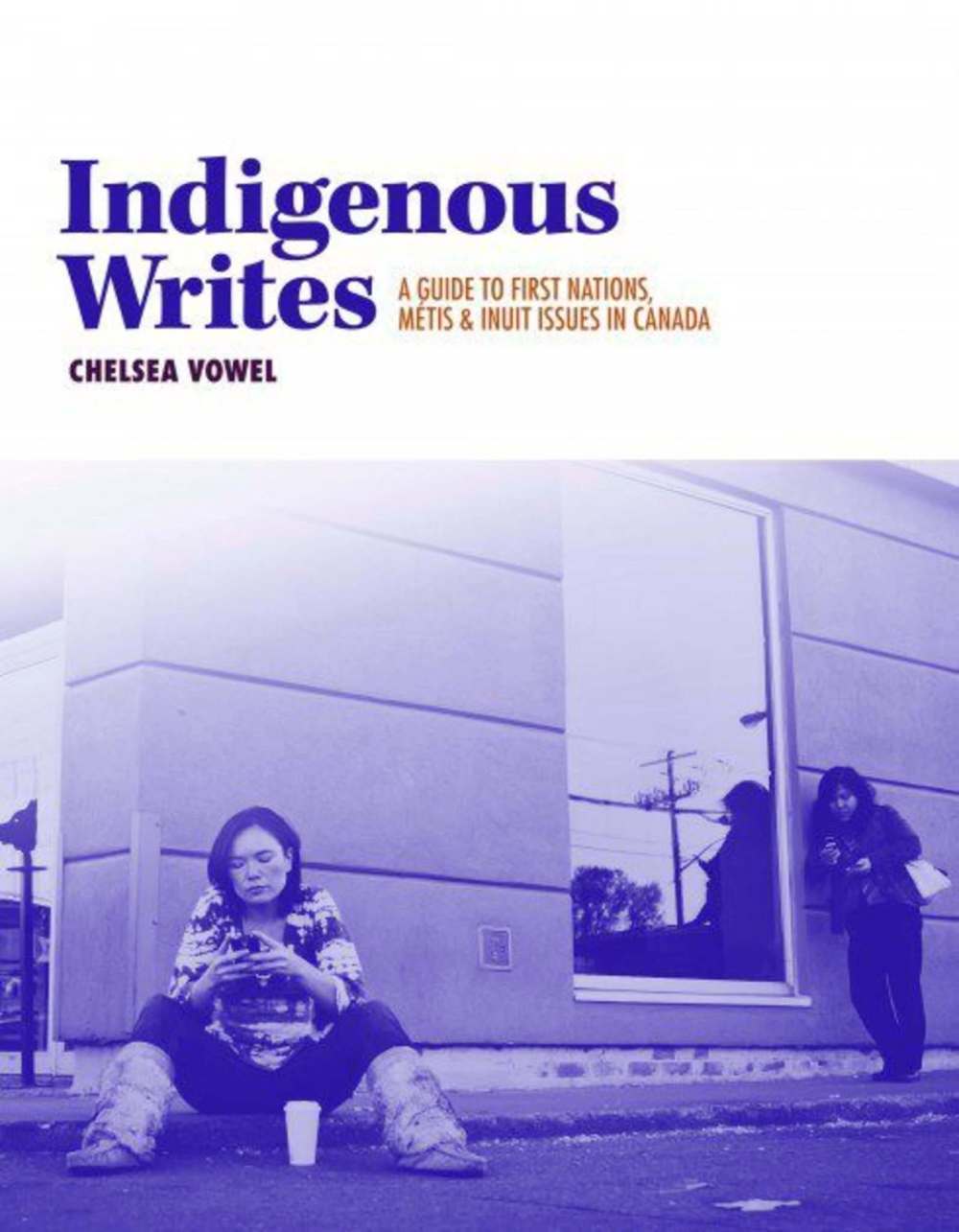
In her meticulously organized and highly accessible new book Indigenous Writes, Vowel, a Cree-speaking Métis writer and educator based in Montreal, both addresses and demolishes the many myths, misconceptions and stereotypes that have for so long poisoned public discourse and done endless harm to indigenous peoples.
SEAN KILPATRICK / CANADIAN PRESS FILES 
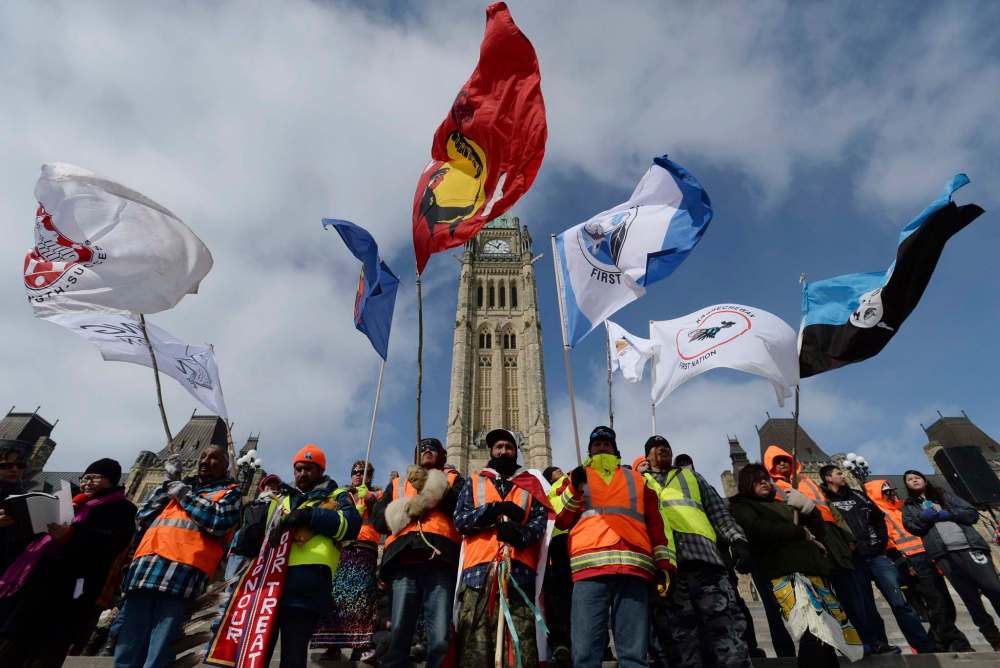
In 2014, a group of 25 adults and youth walked 1,700 kilometres from Attawapiskat First Nation to Ottawa to raise awareness about broken treaties as well as land, water protection and human rights issues.
SEAN KILPATRICK / CANADIAN PRESS FILES In 2014, a group of 25 adults and youth walked 1,700 kilometres from Attawapiskat First Nation to Ottawa to raise awareness about broken treaties as well as land, water protection and human rights issues.

Indigenous Writes is the latest release in Portage & Main Press’ Debwe series edited by the University of Manitoba’s Niigaanwewidam James Sinclair. While her title is a play on words which can be read several ways, it powerfully underscores Vowel’s agency as an indigenous author, which is consistent with Debwe’s mandate.

Over 31 brief chapters, Vowel maintains a personal and frequently humorous tone as she engages directly with non-indigenous readers (such as this reviewer) — or, more accurately, those “who form the European-descended socio-political majority,” with the recognition that the descendants of African slaves cannot be seen as “settlers.”

Such concern over naming might seem pedantic, but it is this care in establishing the basis for the conversation at hand that characterizes her thoughtful approach in responding to the misunderstandings over which our nations-to-nation relationships have foundered.

Many of these, she is quick to point out, are not entirely our fault: Canada’s history of colonization and assimilation through unequal treaty-making, unjust legislation, obfuscation and racialized oppression is bewilderingly (and in her view, deliberately) confusing. Much as she does on her outstanding blog, âpihtawikosisân, issues such as status and non-status Indians, “blood quantum,” the treaties, indigenous identity, cultural appropriation, rights and legal decisions on aboriginal titles are explained and clarified, often by contextualizing these within the legal foundations and rights enjoyed by non-indigenous Canadians.

More importantly, a host of pernicious myths are assiduously debunked, chief among them that aboriginal people pay no taxes. As she makes abundantly clear, the Indian Act tax exemption for on-reserve income and property is enjoyed by a mere 192,000 people, or 0.5 per cent of the population — hardly an undue burden on non-indigenous taxpayers who have, needless to say, benefited beyond all conventional financial measures from access to indigenous lands.

SUPPLIED PHOTO
Author Chelsea Vowel.
SUPPLIED PHOTO Author Chelsea Vowel.

Significantly, she counters not just the common bread-and-butter arguments of misinformed anonymous commenters, but the writings of well-known Canadian media personalities such as Conrad Black, the Province’s Gordon Clark and public intellectuals such as John Ralston Saul.

Fortunately, Vowel is able to call on her law degree to provide easily understood explanations and contexts for the general reader, supported by extensive lists of recommended reading.

Yet it is all accomplished with such disarming informality and even nerdiness (she is a fan of Canadian science-fiction author Rob Sawyer and the Civilization video games) that the book is unabashedly engaging. In a brilliantly satiric turn, she even adopts the rhetoric of the online trolls themselves to demonstrate the colonial vapidity of the arguments so often made against inherent indigenous rights.

While subtitled A Guide to First Nations, Métis and Inuit Issues in Canada, it would be a mistake to see Indigenous Writes as a book primarily about indigenous people. Instead, it is much more about all of us — our relationship as non-indigenous and indigenous Canadians, and how it has been shaped (and misshaped) by the historic and contemporary governance of these issues.

For any Canadian who wishes to have an informed opinion about the country that we share — or, more to the point, publicly share that opinion — Indigenous Writes is essential reading.
Michael Dudley is the librarian for indigenous studies at the University of Winnipeg.
Report Error Submit a Tip

More Stories

Provincial independence means loss of portable health benefits

Charles S. Shaver 5 minute read Preview

Provincial independence means loss of portable health benefits

Charles S. Shaver 5 minute read 2:00 AM CDT

During the many decades that I practised internal medicine, at times I would warn patients about the potential adverse effects of medications or procedures. No one accused me of scare-mongering. Most thanked me for spending the time so that they could make an informed decision. Similarly, Albertans and Quebecers need a full discussion of all the risks of amputating themselves from Canada.

On Oct. 19, Albertans will vote on whether to have a referendum on independence. Also, if the Parti Québécois wins the early October election, Paul St-Pierre Plamondon has promised to hold a third referendum on Quebec independence, likely toward the end of his mandate. An Ipsos poll found that 15 to 18 per cent of Albertans were committed to separation. Meanwhile, CTV and Global polls found that 26 to 29 per cent of Quebecers favoured separation, a historic low. About 62 to 71 per cent rejected having a third referendum.

Alberta Premier Danielle Smith estimated that start-up costs would be about $400 billion. The Calgary Chamber of Commerce warned that Alberta would forego $10 to 15 billion in investment in the first year.

Few have mentioned the effects on access to health care within an independent province or elsewhere in Canada. A vote for independence would cause many physicians, nurses, and health professionals to flee, for they are quite mobile. CBC reported on June 27 that from October 2025 to June 2026, the College of Physicians and Surgeons in New Brunswick granted 47 licences and received 156 applications from Quebec physicians. Also, between late October and mid-November 2025, nearly 300 Quebec physicians applied to work in Ontario; over half were family physicians.

Read
2:00 AM CDT

Slam the door on overly aggressive suitor

Maureen Scurfield 5 minute read 2:01 AM CDT

DEAR MISS LONELYHEARTS: My new boyfriend wanted a key to my place and I told him, “Not yet — we just met. It’s too soon.”

So, last night I came home from playing tennis and there he was in my little house sitting in my new recliner. He was eating a bag of chips, drinking a beer and watching TV.

He laughed when he saw my shocked face! Then he said, “Hello, beautiful! I just let myself in. You must be hungry. Can I make you something to eat?”

I said, “You’re acting like you live here, but you don’t. Where did you get my house key? You scared me!”

Toys ‘R’ Us closing Polo Park store

Free Press staff 2 minute read Preview

Toys ‘R’ Us closing Polo Park store

Free Press staff 2 minute read Yesterday at 8:39 PM CDT

Embattled toy retailer Toys “R” Us is closing its store in Winnipeg’s Polo Park area.

Staff hung signs sharing the news — and advertising liquidation pricing — on Friday. The signage does not indicate when the store, located at 1445 St. Matthews Ave., will close for good.

A store manager declined to comment on Monday, directing a reporter to Toys “R” Us Canada Ltd.’s head office. The company did not respond to interview requests.

Toys “R” Us announced in January it would close its Polo Park location, but reversed course a few weeks later. The Canada-wide company has been in creditor protection since February.

Read
Yesterday at 8:39 PM CDT

Folk fest donates leftover food to Siloam Mission

Scott Billeck 2 minute read Preview

Folk fest donates leftover food to Siloam Mission

Scott Billeck 2 minute read Updated: Yesterday at 5:14 PM CDT

Thousands of meals will be served at Siloam Mission this week thanks to a massive food donation from the Winnipeg Folk Festival.

More than 4,200 pounds — about two tonnes — of surplus food from the four-day festival that wrapped up Sunday was delivered to the mission on Monday.

The donation, consisting of prepared food, protein, dairy and fresh produce, is expected to provide enough ingredients to prepare about 6,000 meals for people experiencing homelessness and poverty.

“We are part of the Winnipeg community and when we can give back, we do,” said folk festival executive director Valerie Shantz.

Read
Updated: Yesterday at 5:14 PM CDT

Would-be mayors respond to extreme heat

Marsha McLeod 3 minute read Preview

Would-be mayors respond to extreme heat

Marsha McLeod 3 minute read Yesterday at 7:00 AM CDT

With Winnipeg in the midst of an intense heat wave, the city has yet to introduce maximum heat legislation for rental housing.

In 2023, the Free Press and the Narwhal reported on calls by tenants and environmental advocates to enact a law that would require indoor temperatures in rental units not exceed 26 C. It would be similar to how Winnipeg landlords, under the city’s neighbourhood livability bylaw, must maintain a minimum daytime temperature of 21 C during cold weather.

On Sunday, the Free Press emailed all nine registered mayoral candidates asking for their policy plans to tackle the dangers of extreme heat, and specifically, whether they would support a change to the city’s bylaw to create heat protections for renters.

Eight candidates responded, and of them, six — Noah Redden, Don Woodstock, Mazher Alam, Christopher Clacio, Michael Vogiatzakis and Umar Hayat — said they would support (or support exploring) a bylaw amendment to establish a maximum indoor temperature threshold.

Read
Yesterday at 7:00 AM CDT

Letters,

7 minute read 2:01 AM CDT

A mature prime minister

Re: Carney plays well on the road (Editorial, July 14)

The editorial discusses Mark Carney’s strengths from being head of the Bank of Canada and Bank of England.

There is merit in this analysis, but it overlooks Carney’s major contribution to date. This is the simple fact he has replaced Justin Trudeau. Trudeau’s primary personal characteristic is petulance. He slapped a moral label on every issue. If you agreed with him you were amongst the virtuous, if you disagreed with him you were morally culpable and/or stupid. He polarized Canadians in a blink of an eye.