The need for speed
Jets trio of Hull, Hedberg and Nilsson an unstoppable force in the WHA
Advertisement
Read this article for free:
or
Already have an account? Log in here »
To continue reading, please subscribe:

Digital Subscription
One year of digital access for only $205*
- Enjoy unlimited reading on winnipegfreepress.com
- Read the E-Edition, our digital replica newspaper
- Access News Break, our award-winning app
- Play interactive puzzles
*First annual payment billed as $205.00 + GST for one year. This annual subscription will automatically renew at $233.00 + GST every 52 weeks (10% off the regular annual price of $259.35). Offer available to new and qualified returning subscribers only. Cancel any time.
To continue reading, please subscribe:
Add Free Press access to your Brandon Sun subscription for only an additional
$1 for the first 4 weeks*
- Enjoy unlimited reading on winnipegfreepress.com
- Read the E-Edition, our digital replica newspaper
- Access News Break, our award-winning app
- Play interactive puzzles
*Your next Brandon Sun subscription payment will increase by $1.00 and you will be charged $17.95 plus GST for four weeks. After four weeks, your payment will increase to $24.95 plus GST every four weeks.
Read unlimited articles for free today:
or
Already have an account? Log in here »
Hey there, time traveller!
This article was published 26/11/2016 (3538 days ago), so information in it may no longer be current.
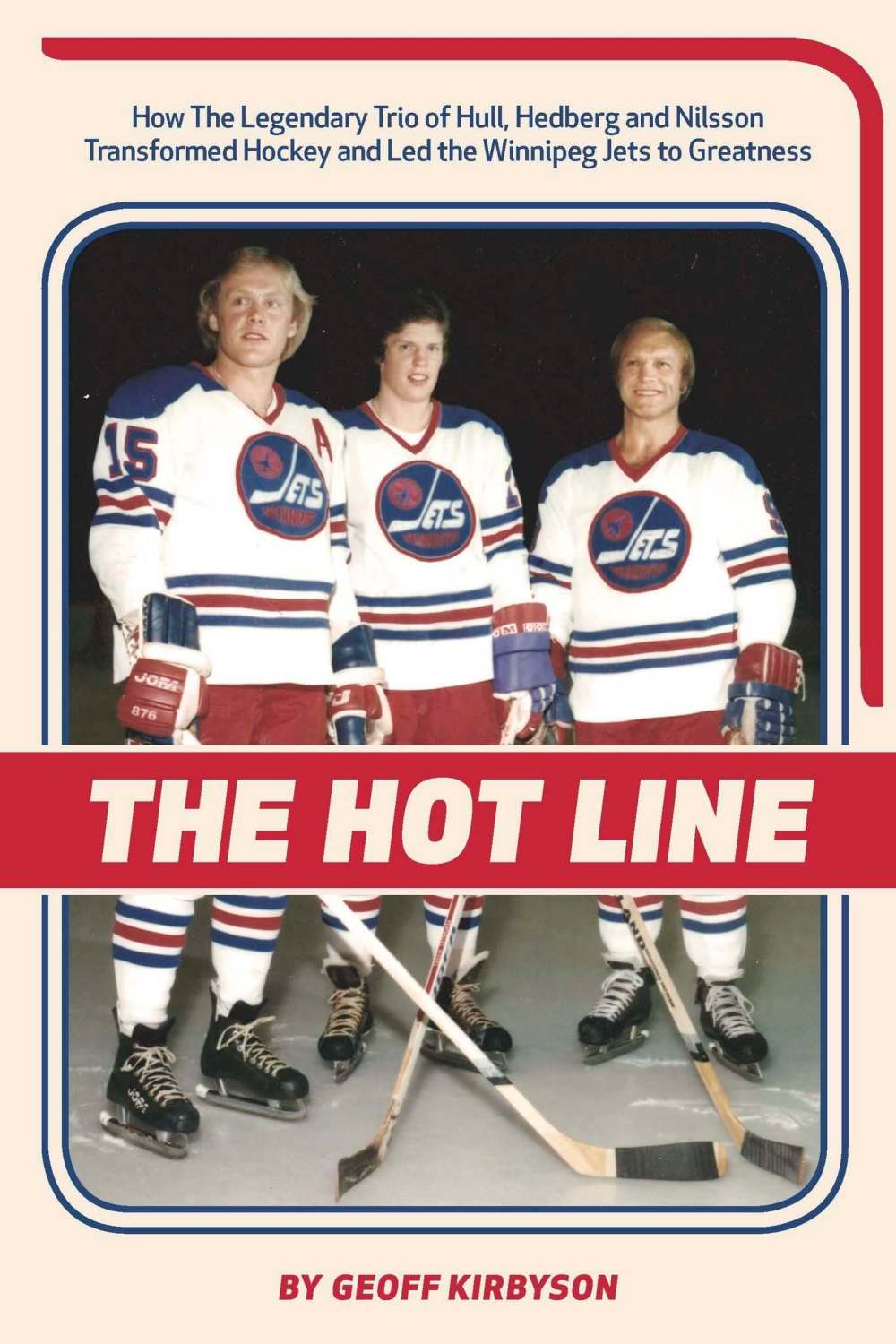
Ulf Nilsson, Bobby Hull and Anders Hedberg formed one of the most potent forward lines hockey has ever seen. Ulf was the quintessential playmaking pivot, feeding his fleet-footed linemates perfect passes. Bobby had the big slap shot from the top of the circle. Hedberg had the speed and amazing accuracy around the net.
They were constantly in motion, often circling and circling between the blue lines, mesmerizing their opponents while setting up a play.
Dubbed “The Hot Line,” they played for the WHA-era Winnipeg Jets, but for far too short a time, 1974 to 1978.

A book about them was long overdue, and Winnipeg journalist Geoff Kirbyson has risen to the challenge. There are no doubt fans who will welcome The Hot Line for its confirmation of the threesome’s brilliance, but many will wish it were more comprehensive.
Perhaps the book’s greatest strength is the number of quotations from a vast array of hockey people — rival players, teammates, coaches, owners, referees and journalists. Kirbyson conducted more than 125 interviews.
Here’s Morris Lukowich on checking the Hot Line when he played for Houston: “It was a matter of trying to slow them up, hard hits along the boards, dirty hits along the boards. Like, really dirty hits along the boards.”
And Jet Thommie Bergman on Nilsson: “He… didn’t have a muscle on his body and he went out there and played every night and couldn’t really defend himself. He couldn’t skate that fast, they chopped him and they hacked him, but he played the way he did.”
Kirbyson, a former Free Press reporter, goes beyond the Hot Line to show the rise and fall of the World Hockey Association, from 1972 to 1979. He also follows the fortunes of many other Swedes and Finns as more and more North American teams followed the lead of the Winnipeg Jets in importing Europeans. Dr. Gerry Wilson is given his due as the man who created the Jets’ interest in Swedish hockey players.
Former Houston Aeros coach Bill Dineen called the Hot Line “the toughest, most explosive offensive line” he ever saw. “Hedberg had such speed and Nilsson could make plays. Hull fit in with them. That exchanging lanes, we’d never seen that before… It’s almost like the three of them had played their whole lives together.”
A wide variety of people bemoan the fact the trio has not been inducted into the Hockey Hall of Fame as a line (Hull is there as an individual). They see the snub as an example of how the Hall regards the WHA as inferior to the NHL, despite countless observers’ certainty that the Hot Line would have dominated either league.
The book falls short of explaining how Nilsson and Hedberg developed their skills — what factors in their rise through Swedish hockey made them the talented players they were. Hull is presented as the older star who bolted from the NHL to give Winnipeg hockey world-class credibility, and Kirbyson shows how and why he fit so well with the two guys from Sweden. The author also covers the effect Hull’s move had on hockey-franchise development and player salaries.
One has the feeling that The Hot Line was rushed into print, perhaps to be out in time for the Heritage Classic weekend in October. There are too many typos, too many grammatical errors and too much needless repetition.
What might be added to the book is some speculation on whether the Hot Line really did transform hockey. Maybe it was a wonderful one-time phenomenon. Today defence is stressed, game scores are lower, scoring production by top players is lower and no threesomes are being developed to rival the Lach-Blake-Richard, Abel-Lindsay-Howe, Nilsson-Hull-Hedberg combos of yesteryear.
On the weekend of the Heritage Classic, when Winnipeg writer Dave Williamson’s daughter Laura posted on Facebook that her dad was such a fan of Nilsson that he would’ve named her Ulf if she’d been a boy, the first person to “like” her posting was Ulf Nilsson himself.