

Mayor slow to tackle poverty
Advertisement
Read this article for free:
or
Already have an account? Log in here »
To continue reading, please subscribe:

Digital Subscription
One year of digital access for only $205*
- Enjoy unlimited reading on winnipegfreepress.com
- Read the E-Edition, our digital replica newspaper
- Access News Break, our award-winning app
- Play interactive puzzles
*First annual payment billed as $205.00 + GST for one year. This annual subscription will automatically renew at $233.00 + GST every 52 weeks (10% off the regular annual price of $259.35). Offer available to new and qualified returning subscribers only. Cancel any time.
To continue reading, please subscribe:
Add Free Press access to your Brandon Sun subscription for only an additional
$1 for the first 4 weeks*
- Enjoy unlimited reading on winnipegfreepress.com
- Read the E-Edition, our digital replica newspaper
- Access News Break, our award-winning app
- Play interactive puzzles
*Your next Brandon Sun subscription payment will increase by $1.00 and you will be charged $17.95 plus GST for four weeks. After four weeks, your payment will increase to $24.95 plus GST every four weeks.
Read unlimited articles for free today:
or
Already have an account? Log in here »
Hey there, time traveller!
This article was published 22/12/2016 (3547 days ago), so information in it may no longer be current.
Last week, Edmonton city council passed a budget that included $1.3 million in 2017 and $1.2 million in 2018 for 14 poverty-reduction initiatives.
These projects are part of the End Poverty Edmonton strategy — a bold initiative led by Mayor Don Iveson and developed with thousands of Edmontonians through 2014 and 2015. The strategy aims to pull 10,000 people out of poverty in five years, and highlights “six game-changers” as critical places to start, including eliminating racism, providing livable incomes, affordable housing, accessible and affordable transit, affordable and quality child care and access to mental health services and addictions support.
In addition to these most recent investments, Edmonton has also implemented a program that provides free bus passes for at-risk youth and is cost-sharing a low-income bus pass with the province of Alberta. The city has also advocated for an increase to the minimum wage, which the Alberta government has confirmed it will act on.
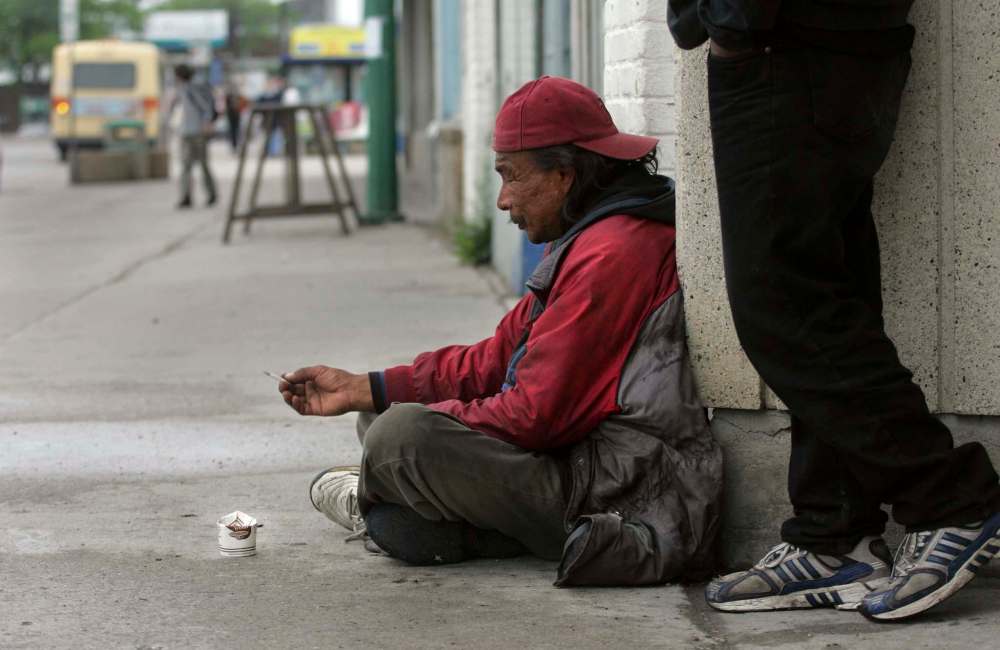
Winnipeg does not have a comprehensive poverty-reduction strategy despite years of pressure from anti-poverty advocates. Reducing poverty is so far off city council’s radar that the word “poverty” isn’t even mentioned in the 2017 budget. It’s fair to say our city council is nowhere near Edmonton’s when it comes to leading on poverty reduction.
Mayor Brian Bowman will know from his participation in the Cities Reducing Poverty: When Mayors Lead conference held earlier this year that Edmonton is not the only Canadian city Winnipeg is lagging far behind in the fight against poverty.
For example, Toronto introduced its TOProsperity: Toronto Poverty Reduction Strategy in 2015. Toronto’s plan outlines six issue areas of focus including housing stability, service access, transit equity, food access, quality jobs and livable wages and systemic change. The jury is still out on how effective the plan will be, but Torontonians now have something by which to measure the city’s progress on poverty reduction.
Importantly, Edmonton’s plan also makes a strong case for poverty reduction in the spirit of “true reconciliation” aligned with the Truth and Reconciliation Commission’s final report. Like Winnipeg, Edmonton has a large indigenous population, with a high number of indigenous people living in poverty. The EndPoverty Edmonton plan acknowledges this injustice and aims to “make systemic changes to better reflect the needs, interests and culture of aboriginal people.”
So what’s happening in Winnipeg?
Not much. Unlike other mayors, Brian Bowman’s response to poverty has been ad hoc and reactionary, at best. For example, immediately before attending the When Mayors Lead conference in Edmonton, Bowman announced the “Winnipeg Promise” initiative, which aims to assist low-income families to register for the Canada Learning Bond. The bond is a worthwhile initiative, but hardly a comprehensive poverty-reduction plan, nor a City of Winnipeg initiative.
The Winnipeg Poverty Reduction Council is an initiative hosted by the United Way of Winnipeg and the city of Winnipeg is one of many participants. The city has contributed financially to the council in past years and it now contributes $150,000 annually to the council’s End Homelessness Winnipeg. While the council is doing some interesting work, it does not take a comprehensive approach to poverty reduction, nor does it take an active role in policy and systems change.

The mayor also recently announced the city will provide $150,000 to the Winnipeg BIZ to “address homelessness.” But the BIZ takes no responsibility for acting, stating that “instead of focusing on what people ‘need,’ we focus on what that person is able to bring to the table.”
Bowman signalled some hope when designating 2016 as “the year of reconciliation”; however, unlike Edmonton’s mayor, he has failed to make the link between reconciliation and poverty reduction, and has not indicated in any substantive way what reconciliation means for the city as we approach 2017.
If Bowman wants to be a leader on poverty reduction and reconciliation, he has a lot of work ahead of him. But he doesn’t have to start from scratch. The idea of a comprehensive poverty plan was identified in the 2010 SpeakUpWinnipeg process, which was followed by a brief mention of poverty in the Our Winnipeg Plan approved by city council in 2011. Community organizations are keen to help and he can look to plans such as Edmonton’s for guidance.
Bowman might be slow out of the gate, but it isn’t too late to put Winnipeg on the map as a city that truly cares about reducing poverty and inequality.
Kirsten Bernas is research and policy manager for the Canadian Community Economic Development Network — Manitoba. Lorie English is the executive director of the West Central Women’s Resource Centre.