Paulo Coelho’s Mata Hari an empowered feminist martyr
Advertisement
Read this article for free:
or
Already have an account? Log in here »
To continue reading, please subscribe:

Digital Subscription
One year of digital access for only $205*
- Enjoy unlimited reading on winnipegfreepress.com
- Read the E-Edition, our digital replica newspaper
- Access News Break, our award-winning app
- Play interactive puzzles
*First annual payment billed as $205.00 + GST for one year. This annual subscription will automatically renew at $233.00 + GST every 52 weeks (10% off the regular annual price of $259.35). Offer available to new and qualified returning subscribers only. Cancel any time.
To continue reading, please subscribe:
Add Free Press access to your Brandon Sun subscription for only an additional
$1 for the first 4 weeks*
- Enjoy unlimited reading on winnipegfreepress.com
- Read the E-Edition, our digital replica newspaper
- Access News Break, our award-winning app
- Play interactive puzzles
*Your next Brandon Sun subscription payment will increase by $1.00 and you will be charged $17.95 plus GST for four weeks. After four weeks, your payment will increase to $24.95 plus GST every four weeks.
Read unlimited articles for free today:
or
Already have an account? Log in here »
Hey there, time traveller!
This article was published 14/01/2017 (3536 days ago), so information in it may no longer be current.
Her real name was Margarethe Zelle, but history knows her as Mata Hari, the most famous spy of the First World War.
She was born in the Netherlands in 1876 and executed on Oct. 15, 1917. She faced death with dignity and resolution. Mata Hari looked steadily and impassively at her 12 executioners, blew them a kiss and showed no fear when the soldiers raised their rifles and shot. An officer walked up to her fallen body and fired a bullet into her skull. “Mata Hari,” he stated, “is dead,” and the myth was born.
Although he fictionalizes and popularizes her story, bestselling Brazilian author Paulo Coehlo (The Alchemist) has read the current biographies, done his historical research, looked at British secret service documents and seen the transcripts of Mati Hari’s trial.
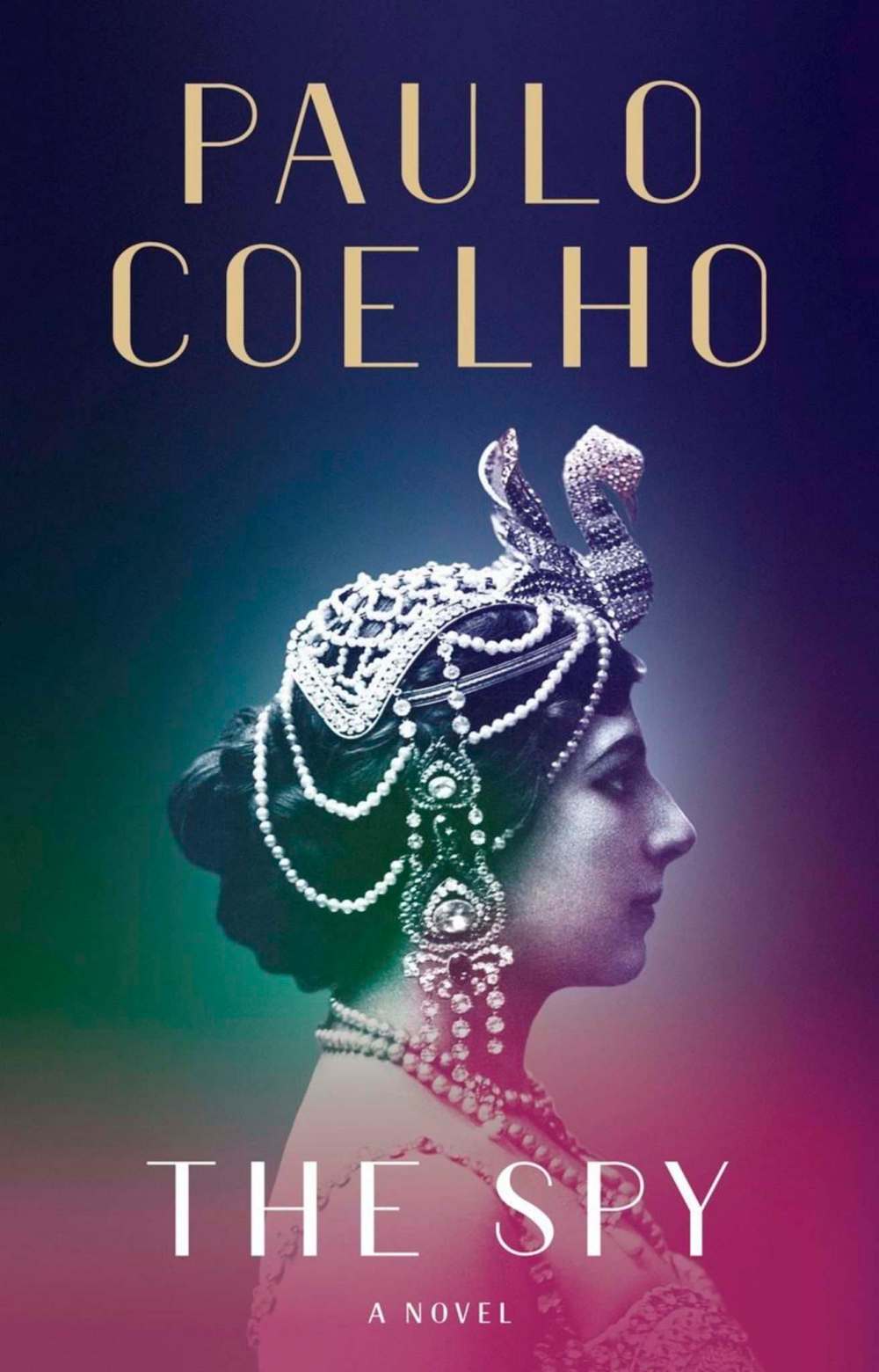
His Mata Hari is a virtual feminist martyr who used her wiles and sexuality to gain money and power in a repressive and oppressive society. She understood and lived the saying, “A girl must do what a girl must do.” However, the power and influence she thought she had achieved were a mere fantasy.
Margarethe begins her story in the socially conservative Netherlands. At 18, she marries a Dutch army officer and moves to the Dutch East Indies to find freedom and adventure. Her husband is an abusive alcoholic; she takes a lover and becomes entranced by the exotic sensuality of Javanese dance.
After leaving her husband, she moves back to the Netherlands and, in due course, to Paris.
In 1905, she takes on the identity of Mata Hari, a seductive Javanese temple princess.
Prewar bohemian Parisiens adored her and flocked to see her mysterious dancing and scandalous attire. However, as it is in our age, she learned celebrity has a short lifespan. The ingenue soon became the aged character actress who had trouble getting a good part.
In terms of history, Coelho simplifies life in France and doesn’t really provide readers with a sense of what it was like to live in vibrant, avant-garde Paris. His Mata Hari is neither well-educated nor sophisticated; she merely floats on the surface of life in a turbulent metropolis.
She meets Sigmund Freud, Pablo Picasso and Russians who are writing ballets. She has heard of a man named Dreyfus, who has caused a social upheaval. She drops a few other names for no real purpose; in the end, Coelho’s Mata Hari is not very interesting.
As the Great War looms, Mata Hari is offered a contract to dance in Berlin. Her new patron is connected to the German secret police; he offers 20,000 francs (which she takes) to spy on France.
She then went to the French and offered to be a double agent.
Whether though naiveté, cynicism or a combination of the two, she believed she could manipulate the dangerous men who controlled her life. She was arrested in 1917 for selling secrets to the enemy, convicted and sentenced to be executed. She blamed her lawyer, Mr. Clunet, who was once her lover.
Clunet writes Mata Hari a letter explaining how the cards were stacked against her and he could not have done anything to change the outcome of the trial. He becomes Coelho’s stand-in to critique the self-serving patriarchy.
The war, he writes, has changed French morality. The behaviour tolerated in fin-de-siècle France — the little lies, the petty scandals and the moral peccadilloes — would not be permitted in 1917. The times demanded a more upright moral posture.
It was all a ruse by the prosecution. It didn’t matter no real evidence of espionage was presented. The government needed a victory to distract the public from their failures and to assert moral authority. What better than the trial of a demi-monde celebrity?
The government believed it had licence to prosecute and convict Mata Hari. She has been vilified in history as a spy and traitor when she was a victim of the patriarchy.
In Coelho’s hands, Mata Hari becomes an iconic figure for women who aspire to be free from societal and economic constraints so they might make their way independently in the world. The choices she made were her own and not imposed from above.
This is the 20th anniversary of Ian Stewart writing book reviews for the Free Press. He hopes you enjoyed a couple, at least.