Lively, clever economics history adds up

Advertisement

Advertise with us

If you ever wanted to know more about economics but were daunted by the prospect of reading a 500-page-plus “Introduction to Economics” text of the sort favoured by university curricula, this book’s the ticket.

Read this article for free:


or

Already have an account? Log in here »

To continue reading, please subscribe:

Subscribe and receive a limited-edition Free Press branded hat or tote.

Digital Subscription

One year of digital access for only $205*

  • Enjoy unlimited reading on winnipegfreepress.com
  • Read the E-Edition, our digital replica newspaper
  • Access News Break, our award-winning app
  • Play interactive puzzles

*First annual payment billed as $205.00 + GST for one year. This annual subscription will automatically renew at $233.00 + GST every 52 weeks (10% off the regular annual price of $259.35). Offer available to new and qualified returning subscribers only. Cancel any time.

To continue reading, please subscribe:

Add Free Press access to your Brandon Sun subscription for only an additional

$1 for the first 4 weeks*

  • Enjoy unlimited reading on winnipegfreepress.com
  • Read the E-Edition, our digital replica newspaper
  • Access News Break, our award-winning app
  • Play interactive puzzles
Start now

*Your next Brandon Sun subscription payment will increase by $1.00 and you will be charged $17.95 plus GST for four weeks. After four weeks, your payment will increase to $24.95 plus GST every four weeks.

Hey there, time traveller!
This article was published 25/03/2017 (3468 days ago), so information in it may no longer be current.

If you ever wanted to know more about economics but were daunted by the prospect of reading a 500-page-plus “Introduction to Economics” text of the sort favoured by university curricula, this book’s the ticket.

It’s economics delivered as an easily digestible history of ideas. The “dismal science,” as Scottish writer and philosopher Thomas Carlyle famously dubbed it, has rarely been presented in such sprightly fashion.

Author Niall Kishtainy is a former policy adviser to the United Kingdom and United Nations Economic Commission on Africa, and a guest teacher at the London School of Economics. He’s also penned two prior books on economics, The Economics Book (2012) and Economics in Minutes (2014).
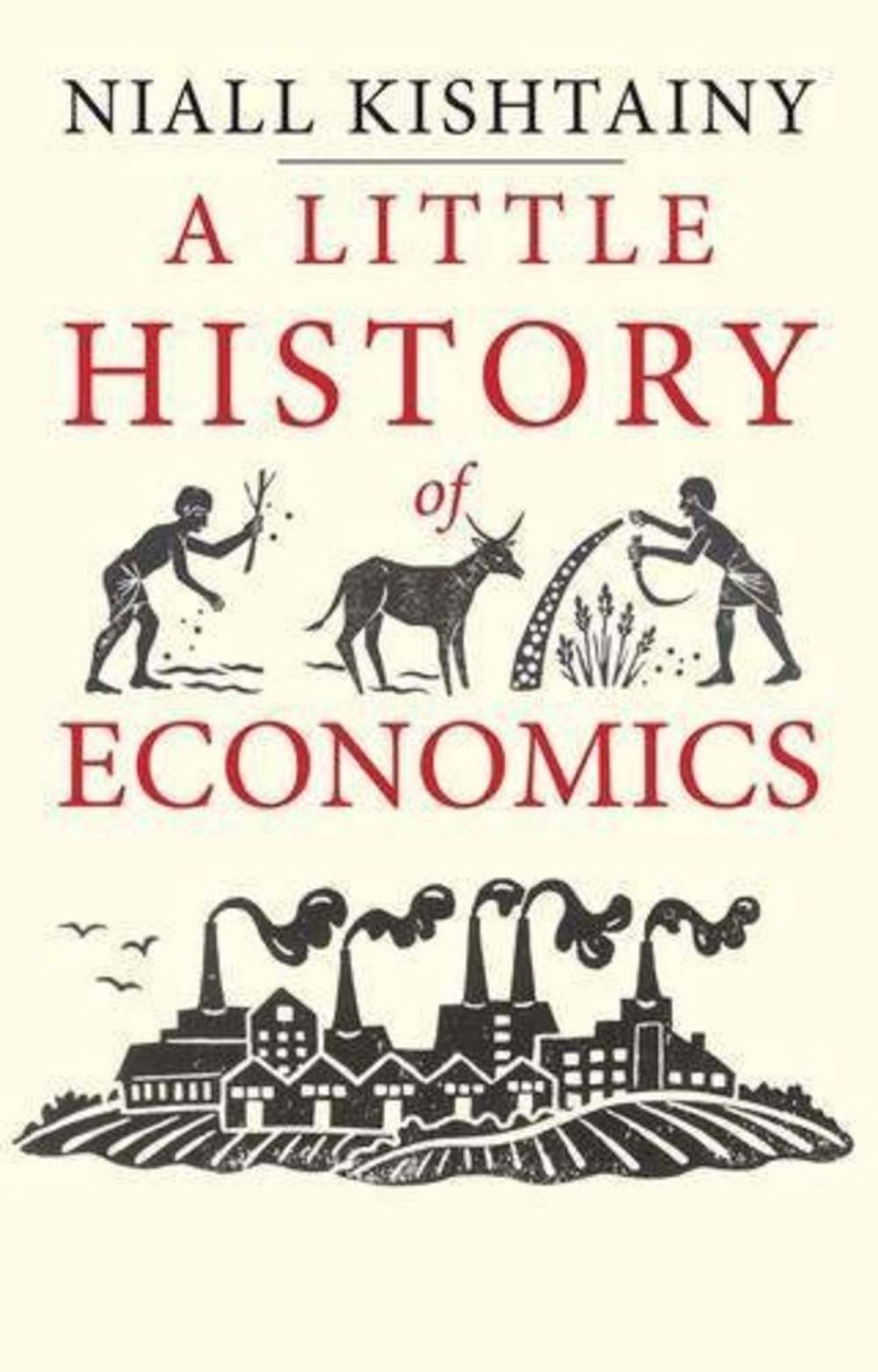
His latest book consists of 40 lively chronological chapters, each a mere four to six pages long. Each chapter focuses on an idea or figure critical to economic thought or methodology.

It starts with Plato and Aristotle, runs through Karl Marx, Adam Smith, John Maynard Keynes, Friedrich Hayek, Thorstein Veblen and a host of other luminaries, culminating with the likes of John Nash (he of Russell Crowe-starring A Beautiful Mind movie fame) and Milton Friedman.

The chapters capture big ideas and major historical events, including the invention of money, mercantilism, the rise of capitalism, exploitation of colonial (later Third World-nation) economies, the varieties of mixed (combination free market and government intervention) economies, the Great Depression, entrepreneurship, environmental damage, the relationship between economic freedom and political freedom, and conspicuous consumption.

Kishtainy knows how to capture a lay audience. He cleverly opens each chapter with an arresting anecdote or zippy intro before launching into more substantive narrative and analysis.

For example, the chapter on free-market apostle Hayek opens with a quirky tale about him and his professorial colleague (and ideological opposite) Keynes, sitting on the roof of King’s College, Cambridge, one night during the Second World War as the German Luftwaffe dropped bombs near the university.

A chapter about tariffs on imported goods versus free trade begins with an 1840s economist’s letter to the French parliament, ostensibly written on behalf of French candle manufacturers, complaining about a foreign rival flooding the market with cheap light. The rival was the sun; the letter was a joke, and a dig at nationalist economic protectionism.

Kishtainy’s writing is accessible even when he tackles denser topics, such as Friedman’s monetarism, supply-side economics or game theory.

And he’s always at pains to be balanced. After explaining any given theorist’s take on how money and markets do, or should, work, he delivers sensible qualifiers, caveats or criticism of what the guy pitched as gospel economic truth.

And it’s all guys here — there’s no female representation, at least until the very end, when he sympathetically considers the work of contemporary female economists Dianna Strassmann and Nancy Folbre, who are critical of how economists traditionally calibrated the labours of women.

“Think of all the labour that’s invisible because it’s not paid for: shopping, cooking, cleaning, caring for children,” he writes. “In poor countries women collect wood, heave water, plough land, grind corn, repair huts. Calculations by the United Nations shows that unpaid work could be equivalent to 70 per cent of the world’s economic production.”

The book rounds off with a paean-to-cum-plea-for the field of economics.

Kishtainy cites with approval the work of American economist William Nordhaus, who believes that “with a decisive application of the most basic tools of economics — the balancing of costs and benefits — we still have time to solve the problem of global warming and avoid a planetary disaster.”

Here’s hoping he’s right.

Douglas J. Johnston is a Winnipeg lawyer and writer.
Report Error Submit a Tip

More Stories

NDP will have to decide whether to make good on 2023 pledge or spend during election year

Tom Brodbeck 5 minute read Preview

NDP will have to decide whether to make good on 2023 pledge or spend during election year

Tom Brodbeck 5 minute read 1:12 PM CDT

The good news is the provincial deficit has been shrinking for the past two years. The bad news is the NDP government is still deep in the red.

The province released its public accounts Monday for the 2025-26 fiscal year. It shows the provincial deficit came in at $832 million last year, down from $1.12 billion the previous year and $1.95 billion in 2023-24.

The almost $2-billion shortfall was shared between the former Progressive Conservative government and the NDP, which took the reins of power about halfway through the 2023-24 fiscal year.

Premier Wab Kinew and Finance Minister Adrien Sala continued to insist Monday that the NDP inherited a $2-billion deficit from the Tories, which is not entirely accurate.

Read
1:12 PM CDT

Rudick banks win, Bisons nab first team victory in seven years

Joshua Frey-Sam 5 minute read Preview

Rudick banks win, Bisons nab first team victory in seven years

Joshua Frey-Sam 5 minute read 2:49 PM CDT

Jack Rudick knew what it meant personally. He was surprised to find out how significant his breakthrough victory was for his program.

Earlier this month, the fourth-year Manitoba Bisons golfer strung together 36 holes of excellent play to win by four strokes over teammate Rory Neill at the Augsburg Fall Invitational at Majestic Oaks Golf Club in Ham Lake, Minn.

Rudick not only earned the individual victory, but his 5-under-par finish also helped the Bisons to their first team victory in seven years. With Neill (1-under), Terence Rafferty (6-over) and Ethan Portey’s (9-over) cumulative scores, Manitoba combined for a dominant 12-stroke victory.

For Rudick, it was a long-awaited breakout as a university player.

Read
2:49 PM CDT

Trump defends Iran war in address to UN General Assembly

Kelly Geraldine Malone, The Canadian Press 5 minute read Preview

Trump defends Iran war in address to UN General Assembly

Kelly Geraldine Malone, The Canadian Press 5 minute read Updated: 5:31 PM CDT

UNITED NATIONS - U.S. President Donald Trump told the United Nations General Assembly on Tuesday he has a choice to make on Iran: negotiate a deal or "annihilate the Islamic Republic."

In a wide-ranging speech, Trump defended his war on Iran and boasted of American strength, claiming that "while others have talked, I have acted.”

He celebrated the U.S. military operation to oust Venezuelan President Nicolás Maduro earlier this year and a new agreement to expand the American military presence in Greenland, which came after his threats of annexation.

But those actions have upended U.S. relationships with other nations, including traditional allies. Many of those allies have used the United Nations forum to call for a return to international law.

Read
Updated: 5:31 PM CDT

Hydro board members visit First Nation communities to discuss damage from past developments

Free Press staff 3 minute read Preview

Hydro board members visit First Nation communities to discuss damage from past developments

Free Press staff 3 minute read 1:18 PM CDT

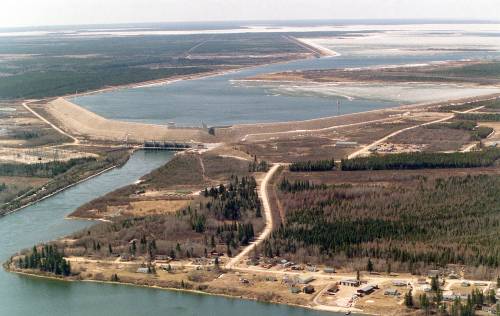
Members of the Manitoba Hydro board visited Misipawistik Cree Nation and Chemawawin Cree Nation last week to learn more about the impacts of the Grand Rapids Generating Station and strengthen relationships with communities affected by hydroelectric development.

The two-day visit included spending time at culturally significant sites and discussions with leadership and community members, and a tour of generating stations and Grand Rapids fish hatchery, a Manitoba Hydro news release said.

The visit is part of Manitoba Hydro’s ongoing engagement with Indigenous communities affected by hydroelectric development, the release said. In 2024, the Manitoba Hydro board visited Gillam and met with First Nations that partner in the Keeyask Generating Station.

Last week’s visit to Misipawistik and Chemawawin came just weeks after the Federal Court on Sept. 3 ordered Ottawa pay Opaskwayak Cree Nation $27 million over damages suffered due to the construction of the Grand Rapids hydro dam in the 1960s.

Read
1:18 PM CDT

Labour leaders, councillors urge Wyatt to reconsider re-election bid while facing sexual assault charges

Malak Abas 3 minute read Preview

Labour leaders, councillors urge Wyatt to reconsider re-election bid while facing sexual assault charges

Malak Abas 3 minute read 3:39 PM CDT

City councillors and labour leaders called on incumbent Transcona councillor Russ Wyatt to reconsider his decision to seek re-election while facing sexual assault charges.

A day after Wyatt announced he would be running again, the Canadian Union of Public Employees Local 500 and the Winnipeg Labour Council, joined by councillors Cindy Gilroy (Daniel McIntyre) and Evan Duncan (Charleswood-Tuxedo-Westwood), told reporters Wyatt would not be able to serve Transcona while fighting multiple sexual assault charges in court and should step aside.

“I am not declaring him guilty of anything, the courts will decide that, and his lawyer says that he is innocent. I’m stating a plain fact about capacity. Every hour spent on legal defence is an hour not spent on Transcona,” CUPE 500 President Patrick Troughton said at city hall Tuesday afternoon.

Wyatt filed his registration papers to run for councillor on Monday, one day before the nomination deadline.

Read
3:39 PM CDT

Kinew ‘open to everything’ after Bell’s 911 failures

Chris Kitching 4 minute read Preview

Kinew ‘open to everything’ after Bell’s 911 failures

Chris Kitching 4 minute read 4:32 PM CDT

Premier Wab Kinew signalled Tuesday he’s open to all potential options, including switching 911 providers, if feasible, after a series of outages in Manitoba.

Kinew, who’s spoken to Bell Canada CEO Mirko Bibic and Prime Minister Mark Carney about Manitoba’s 911 service, said the government and the telecom continue to have a “back and forth.”

“At this stage, we’re open to everything,” Kinew said of potential steps to ensure the service is reliable. “The No. 1, I think, baseline is that when you dial 911, you’re going to get through to the help you need, whether that’s an ambulance or fire truck or police.”

Kinew said he’s looking forward to receiving Bell’s draft report to learn the cause of the most recent outage, which occurred Thursday and affected five other provinces where the telecom provides 911 service.

Read
4:32 PM CDT