

Mexican newspaper’s journalists continue work while many publications avoid controversy
Advertisement
Read this article for free:
or
Already have an account? Log in here »
To continue reading, please subscribe:
Digital Subscription
One year of digital access for only $1.44 a week*
- Enjoy unlimited reading on winnipegfreepress.com
- Read the E-Edition, our digital replica newspaper
- Access News Break, our award-winning app
- Play interactive puzzles
*Billed as $5.77 plus GST every four weeks. After 52 weeks, price increases to the regular rate of $19.95 plus GST every four weeks. Offer available to new and qualified returning subscribers only. Cancel any time.
To continue reading, please subscribe:
Add Free Press access to your Brandon Sun subscription for only an additional
$1 for the first 4 weeks*
- Enjoy unlimited reading on winnipegfreepress.com
- Read the E-Edition, our digital replica newspaper
- Access News Break, our award-winning app
- Play interactive puzzles
*Your next Brandon Sun subscription payment will increase by $1.00 and you will be charged $17.95 plus GST for four weeks. After four weeks, your payment will increase to $24.95 plus GST every four weeks.
Read unlimited articles for free today:
or
Already have an account? Log in here »
Hey there, time traveller!
This article was published 07/05/2017 (3331 days ago), so information in it may no longer be current.
TIJUANA, Mexico — Isai Lara Bermúdez had just started lunch at a Tijuana barbecue joint when a stranger approached his table.
“Watch out,” she warned him. “He’s after you.”
Lara, an investigative reporter, had written a series of stories in February showing evidence the police chief of a neighbouring city had tortured detainees. Now it appeared Lara was paying the price.
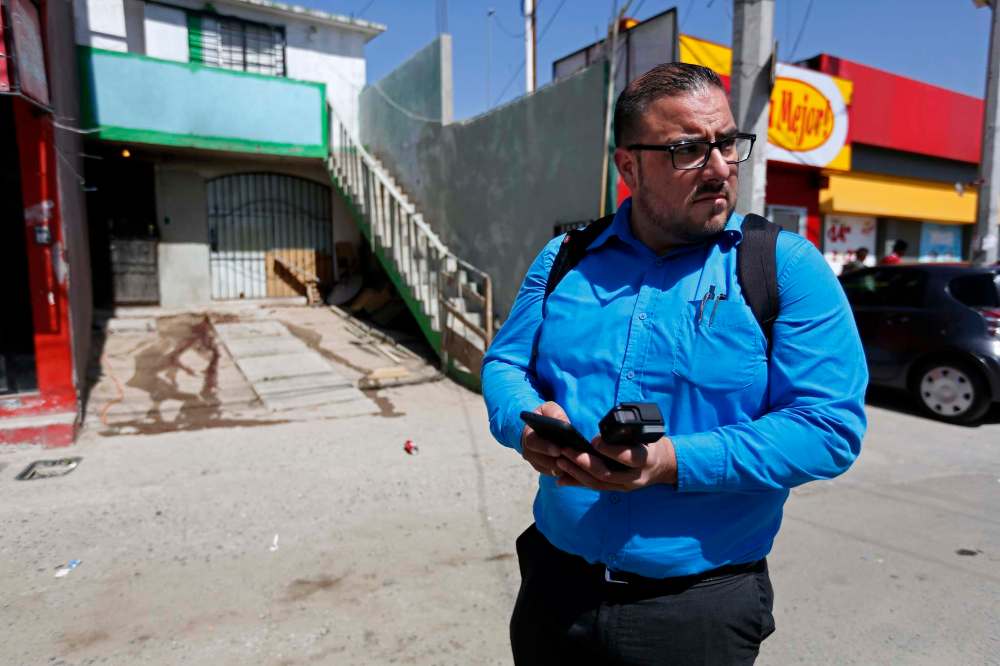
For weeks, he didn’t leave the house without a private bodyguard. He worried about his young daughter’s safety and whether the cars pulling up alongside him in traffic carried gunmen out to kill him.
This is what it’s like practising journalism in Mexico.
Journalists bold enough to report on the misdeeds of drug cartels or the government often face threats and retaliation, and increasingly pay for their work with their lives. Mexico has become the third-deadliest country in the world for journalists, leading many publications across the nation to avoid controversial topics or to shut down entirely.
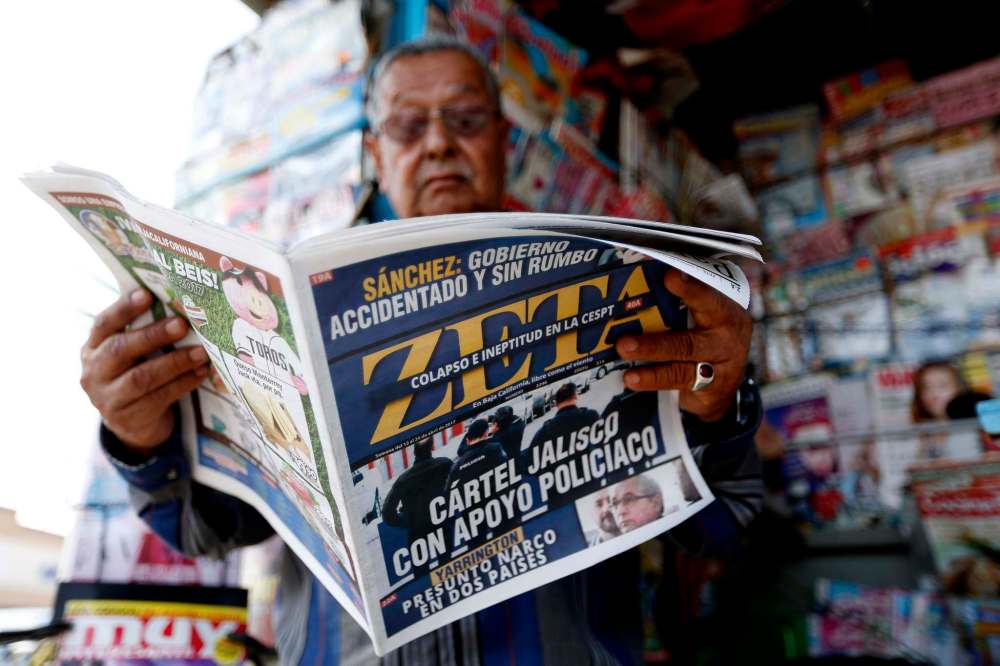
But Lara keeps reporting, along with the rest of the small, tight-knit staff at Zeta, one of Mexico’s most respected newspapers. Zeta is also one of the country’s most frequently targeted publications. Over the past three decades, as the Tijuana weekly documented government corruption and Mexico’s exploding drug war, two of its editors were killed and a third was gravely wounded because of the stories they produced.
The Knight Center for Journalism in the Americas once said Zeta’s reporters and editors practise “suicide journalism.” The newspaper’s motto, printed on the front page amid murder counts and corruption allegations, is: “Free like the wind.”
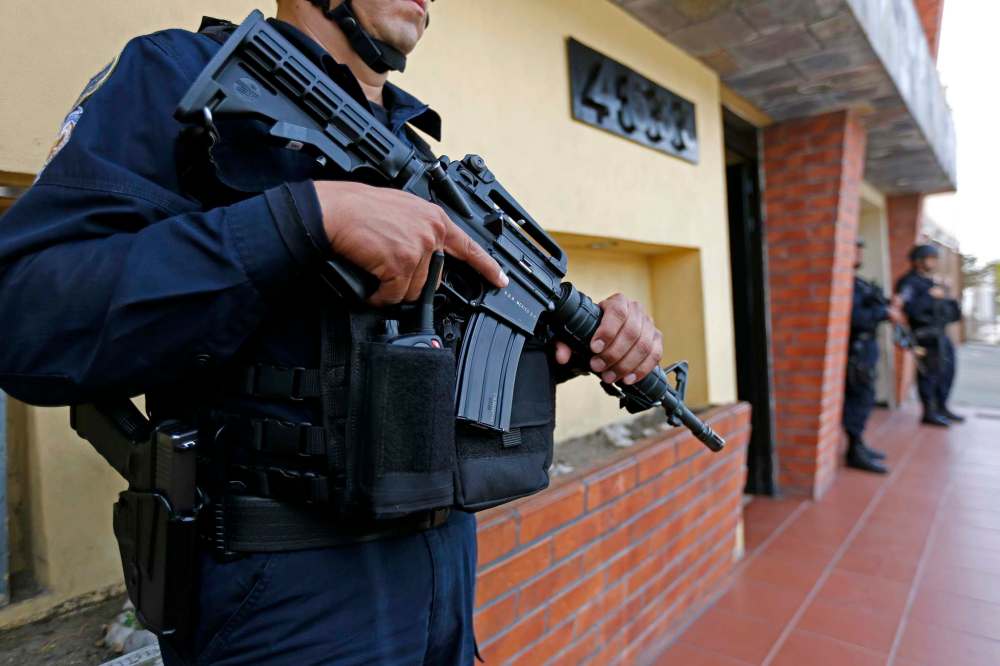
Luckily for Lara, the threat communicated at the restaurant by an associate of the police chief never materialized. But that doesn’t mean he can relax now. In April, U.S. and Mexican law enforcement intercepted a threat from a drug boss who planned to bomb Zeta’s headquarters. Now, when Lara goes to work each morning, he nods hello to a team of state police officers guarding the front door with machine guns.
“Sometimes I ask myself if it’s worth it,” said Lara, 34. “But we have a commitment to our readers. And if you’re paralyzed by fear, you can’t do anything.”
Since 2000, 124 journalists have been killed in Mexico, according to the National Human Rights Commission, the government’s independent watchdog. Article 19, a non-profit that advocates for media protections in Mexico, recorded 426 threats or attacks against the media last year, including beatings and torture.
Only Syria and Afghanistan surpassed Mexico in the number of journalists killed in 2016, Reporters Without Borders said. Since the beginning of March, four reporters have been killed and three others wounded by gunshots in attacks across the country.
The recent victims include Miroslava Breach, a veteran investigative reporter who died after being sprayed with bullets while driving her child on March 23 in Chihuahua. Her death prompted the publisher of El Norte, the Juárez newspaper where she worked, to close down. In a letter to readers, the publisher said he could no longer guarantee the safety of his staff.
“There are many places across the country where naming people convicted of drug trafficking or reporting on organized crime is off-limits, where shootouts are not reported, where human rights violations are not reported,” said Carlos Lauria, program director at the Committee to Protect Journalists.
In a country where journalists are being silenced, Zeta stands out for its bravery, said Alejandro Hope, a security expert in Mexico City.
“They have made it their mission to make narco-violence and corruption visible,” Hope said. “They have gone through hell and back and somehow have survived.”
Along with exposing corruption, Zeta has chronicled a recent dramatic increase in violence in Mexico, which this year is on track to log more homicides than any year previously recorded.
The bloodshed has been particularly bad in Tijuana and the state of Baja California, where, according to federal statistics, 181 people were killed in March, twice as many as in March of last year.
While many Mexicans have grown weary of coverage of the 10-year drug war, Lara said he believes change will occur only if journalists continue to shine a light on the problem.
“We can’t ignore it,” he said. “My city is hurting, my country is hurting. That’s why I’m here.”
On a recent windy afternoon, photographer Margarito Martinez heard a crackle over the police scanner that he keeps attached to his hip.
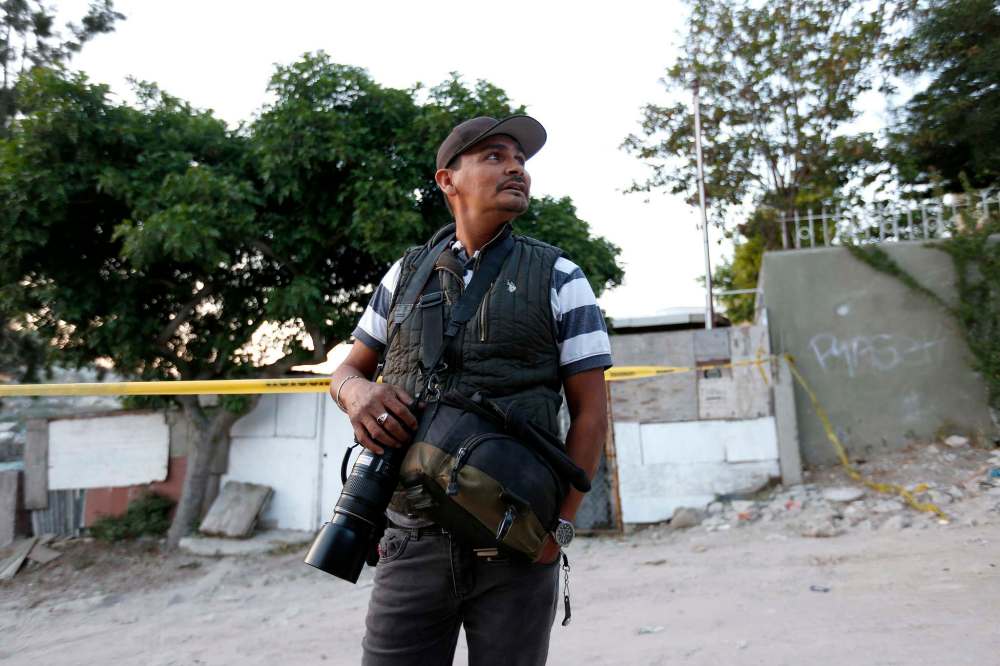
A man had been killed in Camino Verde, a poor hillside neighbourhood criss-crossed with dirt roads and dense with concrete-block shacks. Martinez, a freelancer who frequently contributes to Zeta, sped to the scene in his battered white minivan, his bulletproof vest rattling in the truck.
Martinez started taking photos as soon as he spotted the body of a man facedown on the ground, blood seeping from a gaping gunshot wound in the back of his head. Next to the body was a handwritten sign: “The new ones don’t pardon.” It was signed “Tijuana New Generation Cartel.”
In recent months, Martinez and his colleagues at Zeta have been documenting the rise of Tijuana’s newest criminal group — an alliance formed between members of the Arellano Felix organization, which once held sway in Baja California, and the Jalisco New Generation Cartel, which is quickly becoming one of Mexico’s most powerful drug gangs.
Last fall, the newspaper published the names and photos of several alleged drug lords under the headline The Jalisco Cartel’s Most Wanted, contradicting police claims the Jalisco Cartel didn’t operate in Tijuana. That triggered yet another threat against the paper, this one from a Jalisco member known as “Goofy” who said he was going to shoot up Zeta’s headquarters. Once again, the state police were sent to stand guard outside the office.
To protect reporters, hard-hitting stories are often published under the byline “Zeta investigations” rather than the writer’s name. The windows in the newspaper’s headquarters, located in an elegant home in one of Tijuana’s nicest residential neighbourhoods, are made of bulletproof glass.
When the newspaper receives a threat, it immediately publishes the details, the idea being the more people who are aware a crime may be committed, the less likely it is to happen. Then they alert the Mechanism to Protect Human Rights Defenders and Journalists, a government program established in 2012 that provides emergency evacuations, police protection and, in some cases, even a panic button that summons authorities.
There are 174 journalists protected under the program, the majority of whom have been threatened by government authorities. Funding is due to run out in a few months, and Mexico’s federal legislators have not earmarked more money to continue it.
Human-rights advocates complain public officials don’t want to strengthen protections for journalists because a free and transparent press often isn’t in their best interest.
“There is no political will to tackle this problem because what journalists investigate and report on is uncomfortable for many public functionaries,” said Luis Knapp, a lawyer at Article 19. Less than one per cent of crimes against journalists are solved, Knapp said. And a federal office formed to prosecute crimes against free speech has convicted suspects in just two cases over the last six years.
It is outrage over that impunity that fuels Adela Navarro, Zeta’s general director, who on a recent afternoon smoked a cigarette while waiting for her reporters to finish writing ahead of that night’s deadline.
Each week, Zeta publishes a full-page editorial featuring a photo of Hector (El Gato) Felix, a Zeta editor known for his biting criticism of members of Mexico’s elites, including Jorge Hank Rhon, the owner of a Tijuana racetrack.
In 1988, a man pulled up next to Felix while he was driving and opened fire, killing him. Two of Rhon’s bodyguards were convicted of the attack, but Rhon was never prosecuted.
The editorial addresses Rhon, as well as the current and former governors of Baja California: “Will your government capture the one who ordered this crime?” it asks.
In 1997, Zeta’s legendary founder, Jesus Blancornelas, was badly wounded and his bodyguard killed in a botched assassination attempt.
Afterward, Blancornelas had a brick wall built in front of his home and employed 14 bodyguards.
Eight years later, Francisco Ortiz Franco, who frequently wrote about drug trafficking for Zeta, was shot and killed while driving his children. In both cases, the culprits were never brought to justice.
“This means that one can silence, kill or extort a journalist and never see justice,” said Navarro, who won the Committee to Protect Journalists’ International Press Freedom Award in 2007, like Blancornelas before her.
Navarro is sometimes frustrated Zeta’s stories don’t have a bigger impact. Corrupt public officials hold on to power. Drug cartels continue their bloody wars. But she knows her work is doing something. When Zeta publishes the names and faces of cartel members, many flee Tijuana.
Navarro says she runs her newsroom with a mantra coined by Blancornelas, who died in 2006 of complications from stomach cancer.
“Be far from the government,” he used to say, “and close to the people.”
— Los Angeles Times