

Trudeau can learn from father’s NAFTA mistakes
Advertisement
Read this article for free:
or
Already have an account? Log in here »
To continue reading, please subscribe:
Monthly Digital Subscription
$1 per week for 24 weeks*
- Enjoy unlimited reading on winnipegfreepress.com
- Read the E-Edition, our digital replica newspaper
- Access News Break, our award-winning app
- Play interactive puzzles
*Billed as $4.00 plus GST every four weeks. After 24 weeks, price increases to the regular rate of $19.95 plus GST every four weeks. Offer available to new and qualified returning subscribers only. Cancel any time.
Monthly Digital Subscription
$4.99/week*
- Enjoy unlimited reading on winnipegfreepress.com
- Read the E-Edition, our digital replica newspaper
- Access News Break, our award-winning app
- Play interactive puzzles
*Billed as $19.95 plus GST every four weeks. Cancel any time.
To continue reading, please subscribe:
Add Free Press access to your Brandon Sun subscription for only an additional
$1 for the first 4 weeks*
*Your next subscription payment will increase by $1.00 and you will be charged $16.99 plus GST for four weeks. After four weeks, your payment will increase to $23.99 plus GST every four weeks.
Read unlimited articles for free today:
or
Already have an account? Log in here »
Hey there, time traveller!
This article was published 11/08/2017 (3160 days ago), so information in it may no longer be current.
Tough NAFTA renegotiations with the United States are about to begin in earnest. Is Prime Minister Justin Trudeau up to the task?
The milieu today is similar to a difficult period in the early 1980s, when Pierre Elliott Trudeau was prime minister and Canada-U.S. relations were facing major challenges. Some commentators even referred breathlessly to a “crisis” in the bilateral relationship.
Still, there are important lessons that Justin Trudeau can learn from his father’s mistakes to improve the eventual outcome for Canada in 2017-18.
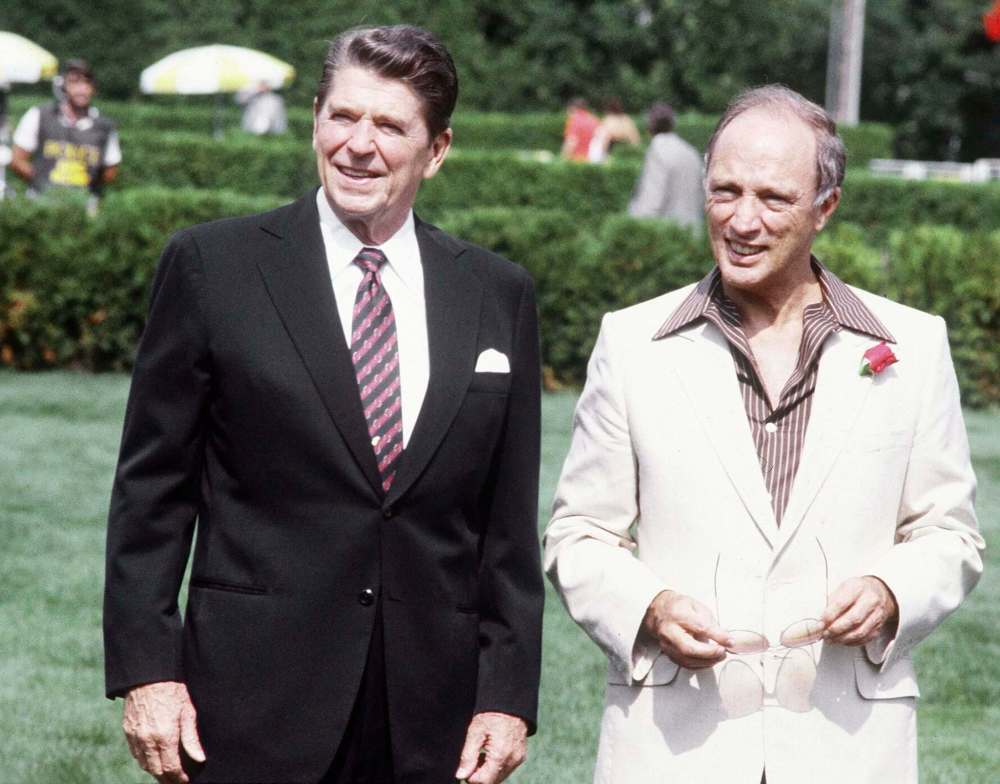
The early 1980s was one of the most contentious periods in bilateral relations. There were plenty of high-level negotiations between officials from both countries, but very little in the way of meaningful progress or neighbourly compromise.
Part of the problem was the fact the incoming Republican administration of U.S. president Ronald Reagan did not have all of its key departmental people in place. There were times when Canadian officials would meet in Washington, D.C., with their U.S. counterparts and the Americans would show up with the wrong agenda and policy demands for a completely different set of bilateral issues.
Eventually, U.S. negotiators got their act together and started to make some significant demands of Canadian officials. They specifically wanted Ottawa to back away from introducing additional changes to the controversial Foreign Investment Review Agency and the highly objectionable National Energy Program (NEP).
The Trudeau government, however, wanted to toughen up the review agency by including so-called “performance requirements” that would compel U.S. investors in Canada to purchase their supplies and materials from wholly owned Canadian companies. As for the NEP, the market-oriented Reagan White House objected strenuously to Canadian efforts to both expropriate and discriminate against U.S. oil firms operating in Alberta and northern Canada.
Washington was not shy about threatening substantial retaliation against Canada if it did not stand down. There was talk of invoking Section 301 of the U.S. Trade Act (which would enable the U.S. president to retaliate against Canada for allegedly violating an international trade agreement), going after the 1965 Auto Pact and cancelling the Canada-U.S. defence production sharing agreement. There was even mention of the possibility that the U.S. would move to have Canada summarily kicked out of the coveted G7 club.
Unfortunately, the Trudeau government started to panic — believing that Washington had unlimited potential to inflict serious damage upon Canada.
While Ottawa may not have totally capitulated, it went a long way toward meeting most of the Reagan administration’s key demands.
Changes to the agency were essentially rescinded. Many of the most egregious components of the NEP were watered down and Ottawa offered “ex gratia” payments by way of financial compensation to U.S. oil companies. Most important, Washington secured a critical pledge from the Trudeau government that there would be no new “Son of NEP” in the future.
What was so striking, though, was that all of these changes were made without a single act of retaliation on the part of the Reagan administration. Indeed, Canada effectively folded its negotiating tent when the U.S. was merely threatening rain — rather than after it actually began.

The reality was that we didn’t have to concede in the face of this tough talk and loud threats of punishment. The fact of the matter was that the U.S. was actually having trouble coming up with viable measures to punish Canada without having them backfire spectacularly or damaging itself in the process.
Because of the highly integrated nature of the two economies, it quickly became evident to U.S. officials that any attempts to retaliate economically against Canada would only end up hurting lucrative supply chains and U.S. corporate interests. They also feared the prospect of Ottawa retaliating on its own to restrict or reduce further a significant U.S. investment stake in Canada.
The long and the short of it is that Canada is not without weapons or means of defending itself against our superpower neighbour. So the current Prime Minister Trudeau should learn from his father’s quick capitulation in the face of U.S. threats and remain steadfast if the Trump administration tries the same tactic this time around.
After all, there is no need to give ground on Chapter 19, rules of origin and supply management, just because the U.S. demands we do so. The prime minister should remember the one seminal point from 1981-82 — namely, that the U.S. cannot retaliate against Canada (or walk away from NAFTA) without simultaneously shooting itself in the foot.
Peter McKenna is professor and chairman of political science at the University of Prince Edward Island in Charlottetown.