Size doesn’t matter
New website lists health practitioners who have pledged to look beyond patients' weight

Advertisement
Read this article for free:
or
Already have an account? Log in here »
To continue reading, please subscribe:

Digital Subscription
One year of digital access for only $205*
- Enjoy unlimited reading on winnipegfreepress.com
- Read the E-Edition, our digital replica newspaper
- Access News Break, our award-winning app
- Play interactive puzzles
*First annual payment billed as $205.00 + GST for one year. This annual subscription will automatically renew at $233.00 + GST every 52 weeks (10% off the regular annual price of $259.35). Offer available to new and qualified returning subscribers only. Cancel any time.
To continue reading, please subscribe:
Add Free Press access to your Brandon Sun subscription for only an additional
$1 for the first 4 weeks*
- Enjoy unlimited reading on winnipegfreepress.com
- Read the E-Edition, our digital replica newspaper
- Access News Break, our award-winning app
- Play interactive puzzles
*Your next Brandon Sun subscription payment will increase by $1.00 and you will be charged $17.95 plus GST for four weeks. After four weeks, your payment will increase to $24.95 plus GST every four weeks.
Read unlimited articles for free today:
or
Already have an account? Log in here »
Hey there, time traveller!
This article was published 12/09/2017 (3232 days ago), so information in it may no longer be current.
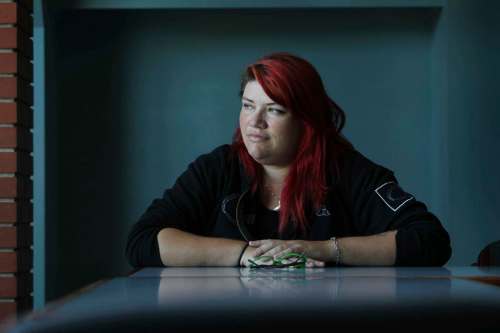
A few years ago, Ray Eskritt noticed palm-sized bruises blooming all over her abdomen.
Scared, she went to a walk-in clinic. “The doctor looked at me and said, ‘Well, are you walking into counters?’” she recalls. “That was his response. I must be so big that I’m walking into things and not noticing it. He didn’t touch me, he didn’t take vitals. He didn’t ask me to come back. He didn’t ask me anything.”
That incident stands out to Eskritt, 31, as a time when she felt a doctor was seeing her weight, not her. For many years, she avoided going to doctors altogether (she never did find out what caused her bruising). “I knew they were going to tell me I was fat and that I just needed to stop being fat,” she says. She got used to health-care providers not taking her problems seriously.
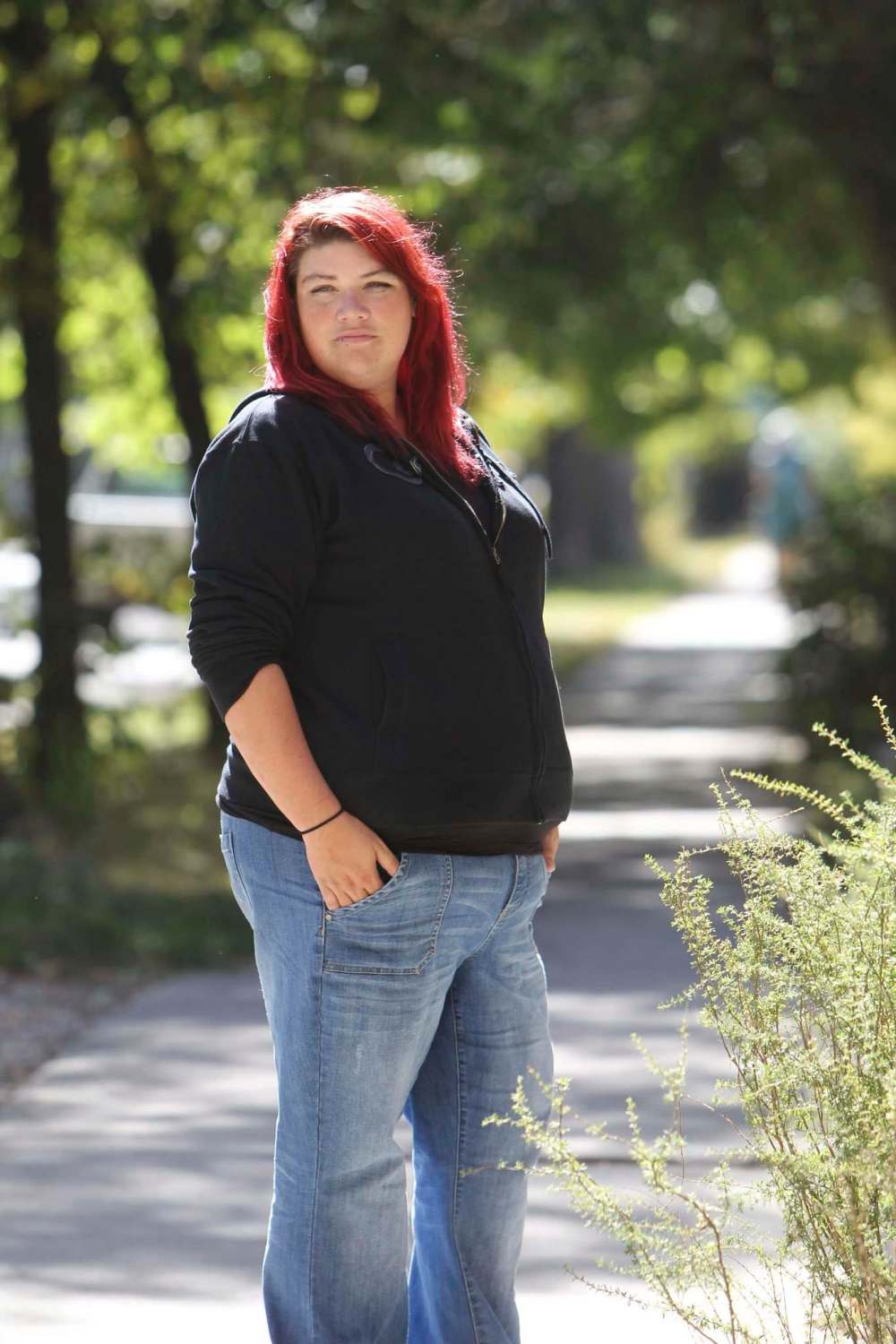
Eskritt’s experience is all too familiar to Lisa Naylor, Amy McGimpsey-Tuckett and Lori Peters, three Winnipeg women who work in women’s health. They, too, have heard from clients and friends who have put off seeing doctors, avoided seeing massage therapists or felt apprehensive about a fitness class because of weight bias.
They had a vision: what if there was a website where people could find health-care providers and professionals who focused on people, not their weight?
And so, they created Good Fat Care. The resource website soft-launched earlier this month, and the trio is in the process of building a seachable, Canada-wide database that will include physicians, nurse practicioners, dietitians, midwives, counsellors, physiotherapists, massage therapists and yoga and fitness instructors who have taken the Good Fat Care pledge.
The Good Fat Care pledge is a list of principles and pledges such as “I will not classify bodies as ‘good/acceptable’ or ‘bad/unacceptable’ based on BMI or weight,” “I will not promote weight-based rules around how or what to eat,’ and “I understand that weight stigma, fat oppression and discrimination may negatively impact one’s mental and physical heath,” among others. The goal is to link body-inclusive providers with the people who need them, removing the guess-work.
Such a resource has been a long time coming. “I’ve been fantasizing about this website for, I don’t know, 10 years,” Naylor says.
As an eating-disorder counsellor at Women’s Health Clinic, Naylor has seen the affects of weight bias — and the problem with viewing weight loss as a panacea for all health issues — first-hand. She recalls a client in recovery who was told by her GP that she “really had to start exercising.”
“What the doctor didn’t know is that this is a client I’d been working with on her addiction to exercise,” Naylor says. “She was going to the gym six times a week, spending a couple of hours each time, to the exclusion of social time with friends.” Naylor was working with her on reducing her frequency and restoring some balance to her life. “The doctor didn’t even ask her about her exercise history. She just assumed that this woman in a slightly larger body than average must not exercise.”
In a society in which weight is inextricably linked to health, weight loss is sold as a goal always worth pursuing — often at devastating costs.
And it’s insidious. The term “healthy lifestyle” is used as a euphemism for weight-loss. Fad diets are disguised as “wellness.” Fitness instructors talk about calories burned and building summer bodies.
People with larger bodies are openly discriminated against, but weight bias can be covert, too.
“The equipment isn’t built for you, so there’s an innate fear,” Eskritt says. “You’re on the examining table and you don’t fit. Or your put on a robe the hospital provides you and it doesn’t go all the way around you. Or you’re facing down the tube, the MRI tube, wondering, ‘Am I going to fit in there, or are they going to have to take me to the zoo.’ You hear stories about people who have to be taken to an animal hospital because they don’t fit in human machines. Who is designing these human machines?”
The use of stigmatizing language can also be a barrier when it comes to seeking care. In her practice, Naylor doesn’t use the term “overweight,” for example. “Overweight implies that there’s a weight standard that one should be at,” she says. Instead, she acknowledges that everyone has a weight. “Just as they have a height. We don’t tell people who are 6-3 that they are ‘over-height.’”
Naylor recognizes that Good Fat Care’s use of word ‘fat’ might be stigmatizing to people because of the way the word has been used. “We’ve tried to use it in a feminist reclaiming way,” she says, “but also ‘thin’ gets used in the culture every day, and fat is the opposite of thin. The value judgements don’t need where they are. We thought fat was a word we could reclaim and make clear what we’re doing here.”
And while Good Fat Care is a health-focused website, its creators stress that the treatment of a person in a larger body should not be contingent on whether or not that person is striving for health in some way. Everyone deserves respect and care, regardless of size or behaviour.
“That’s what we do for thin people,” Naylor points out. “You can be thin and never step foot in a gym and forget to go to the doctor for three years, or smoke and drink a little too much, and you’re not judged for not taking good care of yourself — and if you do get sick, you aren’t blamed.”
Eskritt bikes to work every day, and takes part in three fitness classes a week. But she’d still be a person of value if she didn’t do any of those things.

“You can be fat and healthy, you can be fat and have perfect blood — but some of us don’t,” Eskritt says. “Some of us are fat and have health problems. That doesn’t mean we’re not people worthy of care.”
For her part, Eskritt has since found an excellent doctor. But she says she’d absolutely use Good Fat Care.
“If there was just a website I could go to and be like, ‘Where’s a doctor who will treat me well and doesn’t care that I’m fat, or understands the complications that fat brings to wellness in a non-discriminatory way, I’d go there all the time,” she says. “Anytime I needed something, I’d go there.”
jen.zoratti@freepress.mb.ca
Twitter: @JenZoratti
Jen Zoratti is a columnist and feature writer working in the Arts & Life department, as well as the author of the weekly newsletter NEXT. A National Newspaper Award finalist for arts and entertainment writing, Jen is a graduate of the Creative Communications program at RRC Polytech and was a music writer before joining the Free Press in 2013. Read more about Jen.
Every piece of reporting Jen produces is reviewed by an editing team before it is posted online or published in print – part of the Free Press‘s tradition, since 1872, of producing reliable independent journalism. Read more about Free Press’s history and mandate, and learn how our newsroom operates.
Our newsroom depends on a growing audience of readers to power our journalism. If you are not a paid reader, please consider becoming a subscriber.
Our newsroom depends on its audience of readers to power our journalism. Thank you for your support.
Jen Zoratti is a columnist and feature writer working in the Arts & Life department, as well as the author of the weekly newsletter NEXT. A National Newspaper Award finalist for arts and entertainment writing, Jen is a graduate of the Creative Communications program at RRC Polytech and was a music writer before joining the Free Press in 2013. Read more about Jen.
Every piece of reporting Jen produces is reviewed by an editing team before it is posted online or published in print – part of the Free Press‘s tradition, since 1872, of producing reliable independent journalism. Read more about Free Press’s history and mandate, and learn how our newsroom operates.
Our newsroom depends on a growing audience of readers to power our journalism. If you are not a paid reader, please consider becoming a subscriber.
Our newsroom depends on its audience of readers to power our journalism. Thank you for your support.
Advertisement Advertise With Us
Advertisement Advertise With Us
History
Updated on Tuesday, September 12, 2017 7:04 AM CDT: Adds photo
Updated on Tuesday, September 12, 2017 10:29 AM CDT: Updates