‘Human library’ lets you discover the true story

Advertisement
Read this article for free:
or
Already have an account? Log in here »
To continue reading, please subscribe:

Digital Subscription
One year of digital access for only $205*
- Enjoy unlimited reading on winnipegfreepress.com
- Read the E-Edition, our digital replica newspaper
- Access News Break, our award-winning app
- Play interactive puzzles
*First annual payment billed as $205.00 + GST for one year. This annual subscription will automatically renew at $233.00 + GST every 52 weeks (10% off the regular annual price of $259.35). Offer available to new and qualified returning subscribers only. Cancel any time.
To continue reading, please subscribe:
Add Free Press access to your Brandon Sun subscription for only an additional
$1 for the first 4 weeks*
- Enjoy unlimited reading on winnipegfreepress.com
- Read the E-Edition, our digital replica newspaper
- Access News Break, our award-winning app
- Play interactive puzzles
*Your next Brandon Sun subscription payment will increase by $1.00 and you will be charged $17.95 plus GST for four weeks. After four weeks, your payment will increase to $24.95 plus GST every four weeks.
Read unlimited articles for free today:
or
Already have an account? Log in here »
Hey there, time traveller!
This article was published 20/09/2017 (3287 days ago), so information in it may no longer be current.
We’ve all heard the adage, “Don’t judge a book by its cover.” And we’re all guilty of doing exactly that.
It’s in that spirit that the first Human Library was formed in Denmark in 2000, as a way to challenge stereotypes and prejudice by allowing participants to “check out” a human book they could engage in mind-opening conversation. Human Libraries have since been held all over the world.
The Winnipeg Public Library, in partnership with Sarasvati Productions, will be running its third Human Library Sept. 21-23, as part of this year’s FemFest.
“The whole goal of Human Libraries is to see beyond the label,” Sarasvati Productions artistic director Hope McIntyre says. “We all have prejudices, even though we like to believe we’re not prejudiced. We all have our myths that we carry because of our life experiences and what we see. By having a real conversation with a real human being, anyone’s stereotypes and prejudices will be challenged and they’ll be able to see from a different perspective.”
“It’s about opening yourself up to being vulnerable as far as asking questions that you really want answered but you can’t really ask on social media — or you’ve heard things in media but you’ve never actually met anyone from that community,” says Kathleen Williams, the administrative co-ordinator of community outreach and marketing for the Winnipeg Public Library.
“So your information and your opinions about something might be entirely informed based on what you’ve heard about online or what people have told you. But have you actually sat down and talked with someone from that community?”
The Winnipeg Public Library hosted Human Libraries in 2011 and 2013.
“They were both extremely successful,” Williams says. “We had probably close to 500 conversations over both events. It was amazing both times — the conversations, the energy, the engagement.”
How it works is this: first, participants will browse the catalogue of Human Books. There are 24 “books” from diverse backgrounds who will tell their stories: Artbeat Studio founder Nigel Bart will speak about living with schizophrenia, comedian Lara Rae will talk about her journey as a transgender woman and Garry Sawatzky will talk about leaving gang life for the CFL. There are 21 others who are just as fascinating.
“Winnipeg likely has thousands of potential Human Books,” Williams says.
You can put a book or two on hold, or you can show up to check out a book — first come, first served. Participants will get 30 minutes with each book, for storytelling and conversation. Each book comes with a check-out slip with a list of guidelines. Books must be returned in the same condition they were found, for example.
“If they’re happy and healthy when you borrow them, we expect them to return in that condition,” Williams says. Oh, and Human Books are “reference-only.” You can’t take them out of the event space.
Each Human Book goes through an orientation session on how to deal with difficult questions and learn to redirect, if necessary. Monitors also will be on hand to make sure conversations remain respectful. Human books also are permitted to “close” on a reader, although out of 500 conversations, Williams can only recall two books that chose to do so.
“There have definitely been difficult conversations, but enlightening ones, where a reader walked away and said, ‘I didn’t know. I didn’t realize. I realize now there’s a whole other story I never considered,’” Williams says. (Indeed, this experience may include some discomfort for the reader — with having beliefs challenged, yes, but also with not knowing what to say. It’s OK to listen.)
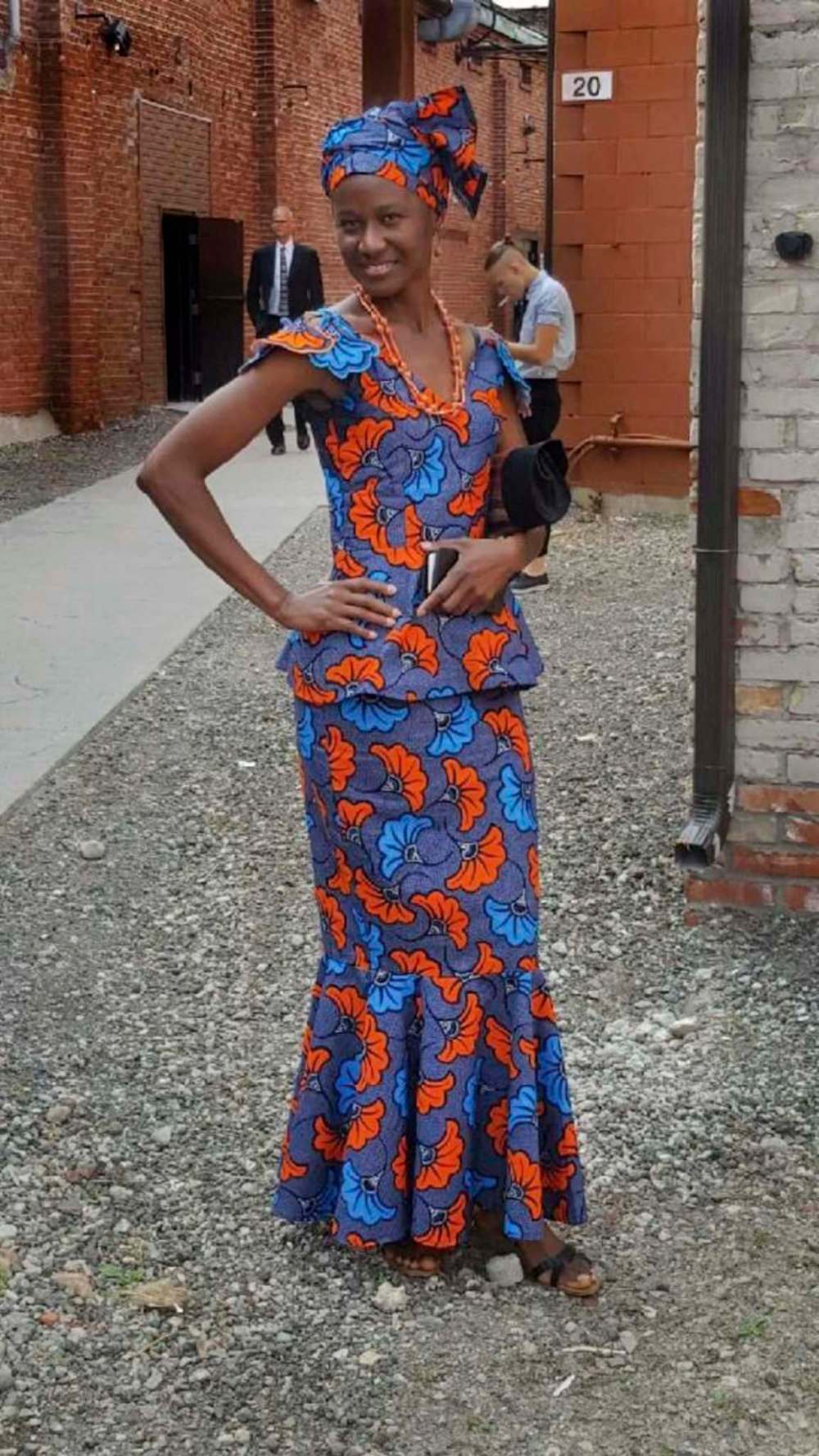
Lucy Kaikai, 40, is one the Human Books. She’s a writer and teacher who came to Canada from Ghana as a refugee, and is originally from Sierra Leone. For the past 13 years, she’s called Canada home, raising her two children age 12 and eight here in Winnipeg.
She was a Human Book in both 2011 and 2013 and was eager to return. “It was wonderful, having an opportunity to talk to people who were interested in hearing about my experiences,” she says. “I was there as a black woman, as a mother, as someone who was raising children on her own, as an immigrant.”
What drew her to the event is the same thing that drew her to teaching. “Whether it’s cooking with my friends or homeschooling my children, I like being involved with any kind of learning experience with people.”

Kaikai will tell her story and describe the biases and discrimination she’s faced. “Stepping out into any kind of community is not easy for me, I find,” she says. “Wherever I go — whether it’s the grocery store, or the bus, or walking into a school — first thing (I encounter) is people think I don’t speak English. They just see me as… I don’t know — whatever their judgment is of a black woman with two kids trailing behind her, if I have them with me.”
She says participating in the Human Library is her own little way of trying to bring about change. “Maybe by talking to one person, they’ll talk to their family and friends,” she says.
As our interactions increasingly happen online, face-to-face conversations — so crucial in building openness and understanding — are becoming rare, especially with people we don’t know. Platforms such as Twitter and Facebook aren’t always useful tools when it comes to having nuanced conversations about difficult subjects; it’s easy to misread tone in text-based communication and public conversations can quickly be derailed by trolls. At a Human Library event, there’s nothing to hide behind — no avatars or anonymous usernames, just two people trying to understand one another.
“The whole point of the Human Library is to take apart those stereotypes and work against discrimination by humanizing,” McIntyre says. “It’s hard to humanize someone on a digital or virtual plane, but you can’t ignore the humanity and reality of this person when they’re sitting there opposite you.”
jen.zoratti@freepress.mb.ca Twitter: @JenZoratti
Jen Zoratti is a columnist and feature writer working in the Arts & Life department, as well as the author of the weekly newsletter NEXT. A National Newspaper Award finalist for arts and entertainment writing, Jen is a graduate of the Creative Communications program at RRC Polytech and was a music writer before joining the Free Press in 2013. Read more about Jen.
Every piece of reporting Jen produces is reviewed by an editing team before it is posted online or published in print – part of the Free Press‘s tradition, since 1872, of producing reliable independent journalism. Read more about Free Press’s history and mandate, and learn how our newsroom operates.
Our newsroom depends on a growing audience of readers to power our journalism. If you are not a paid reader, please consider becoming a subscriber.
Our newsroom depends on its audience of readers to power our journalism. Thank you for your support.
Jen Zoratti is a columnist and feature writer working in the Arts & Life department, as well as the author of the weekly newsletter NEXT. A National Newspaper Award finalist for arts and entertainment writing, Jen is a graduate of the Creative Communications program at RRC Polytech and was a music writer before joining the Free Press in 2013. Read more about Jen.
Every piece of reporting Jen produces is reviewed by an editing team before it is posted online or published in print – part of the Free Press‘s tradition, since 1872, of producing reliable independent journalism. Read more about Free Press’s history and mandate, and learn how our newsroom operates.
Our newsroom depends on a growing audience of readers to power our journalism. If you are not a paid reader, please consider becoming a subscriber.
Our newsroom depends on its audience of readers to power our journalism. Thank you for your support.
Advertisement Advertise With Us
Advertisement Advertise With Us
History
Updated on Wednesday, September 20, 2017 8:00 AM CDT: Thumbnail photo added.
Updated on Wednesday, September 20, 2017 9:17 AM CDT: Line break fixed.