Eight months on ‘Mars’
How these six strangers survived a NASA simulation on a volcano in Hawaii
Advertisement
Read this article for free:
or
Already have an account? Log in here »
To continue reading, please subscribe:

Digital Subscription
One year of digital access for only $205*
- Enjoy unlimited reading on winnipegfreepress.com
- Read the E-Edition, our digital replica newspaper
- Access News Break, our award-winning app
- Play interactive puzzles
*First annual payment billed as $205.00 + GST for one year. This annual subscription will automatically renew at $233.00 + GST every 52 weeks (10% off the regular annual price of $259.35). Offer available to new and qualified returning subscribers only. Cancel any time.
To continue reading, please subscribe:
Add Free Press access to your Brandon Sun subscription for only an additional
$1 for the first 4 weeks*
- Enjoy unlimited reading on winnipegfreepress.com
- Read the E-Edition, our digital replica newspaper
- Access News Break, our award-winning app
- Play interactive puzzles
*Your next Brandon Sun subscription payment will increase by $1.00 and you will be charged $17.95 plus GST for four weeks. After four weeks, your payment will increase to $24.95 plus GST every four weeks.
Read unlimited articles for free today:
or
Already have an account? Log in here »
Hey there, time traveller!
This article was published 30/09/2017 (3214 days ago), so information in it may no longer be current.
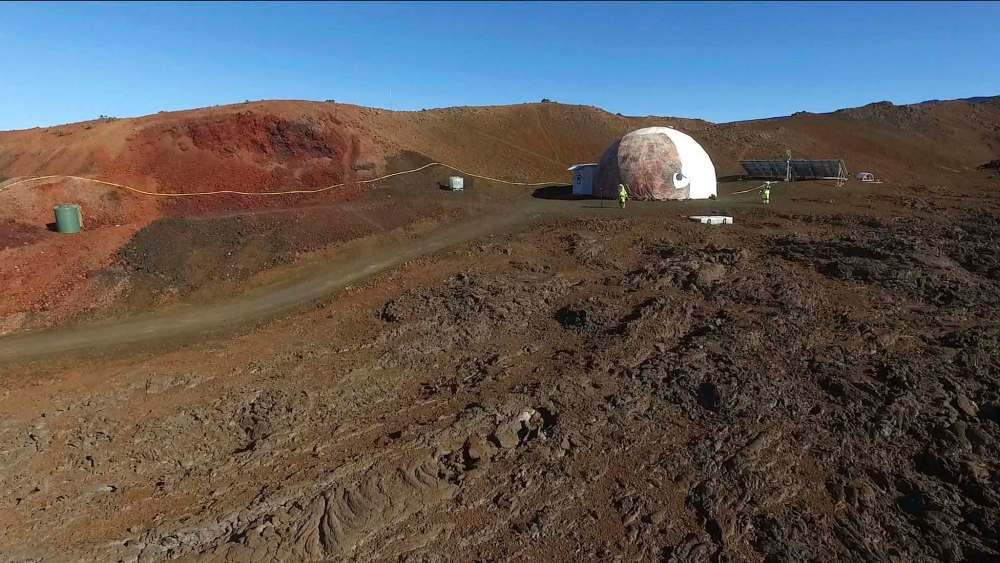
Inside the 111-square-metre dome on Hawaii, 29-year-old James Bevington listened to the countdown with a combination of excitement and fear.
“10, 9, 8…”
Outside, family members and the media waited near the summit of the world’s largest active volcano for six scientists and engineers to emerge after eight months simulating life on Mars.
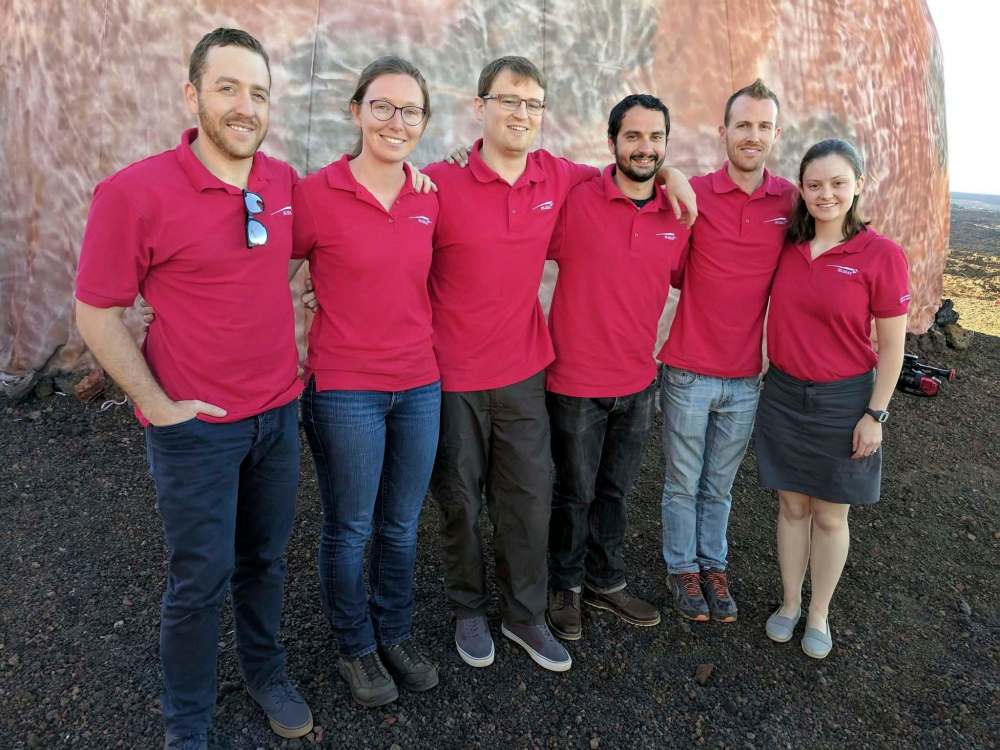
For Bevington, an aspiring astronaut, the chance to live in the Mars-like habitat as a NASA-backed space psychology research subject was a dream come true. Leaving the dome — and eight months of self-imposed seclusion — on the overcast morning of Sept. 17 was bittersweet. It meant leaving the people who were his colleagues, his roommates and who eventually became his best friends.
“It’s a really difficult moment — it’s scary, but exciting,” said Bevington, commander of the 2017 Hawaii Space Exploration Analog and Simulation (HI-SEAS) mission. “You’re leaving the people who have been by your side 24/7 and you’re walking into a whirlwind.”
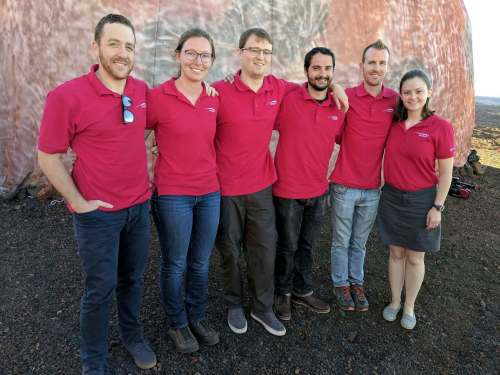
With cameras flashing and video cameras rolling, the group emerged onto the rocky, red plains below the summit of Mauna Loa on the overcast Sunday. Wearing matching red HI-SEAS polo shirts, they answered journalists’ questions, posed for selfies with their families and feasted on watermelon, mango and berries — luxuries they had missed after subsisting on mostly freeze-dried food during their months of isolation.
The journey is bittersweet: five of the six members of the Hawaii team received rejection letters from NASA’s most recent round of astronaut selection when they were in the dome, Bevington said. The sixth, a U.K. resident, hopes to go to space as a tourist one day.
But for eight months, Bevington came closer to experiencing life on Mars than most people ever will. This is what he found.
What it would be like on Mars
During the simulation, the crew of four men and two women did not leave the dome unless they were in full spacesuits on biweekly exploratory missions, during which they conducted geological surveys and mapping studies, said the project’s lead investigator, University of Hawaii professor Kim Binsted. All their communication with the outside world had a 20-minute delay, the time it takes for a signal to reach Earth from Mars, meaning no calls, Skype or turning to Google to answer a quick question. Food and supplies were dropped off at a distance from the dome and retrieved by a robot.
The project, which is the fifth of six NASA-funded studies at the University of Hawaii facility, was designed to better understand the psychological impacts of a long-term space mission on astronauts. Researchers hope the results will help NASA choose individuals best-suited to cope with the isolation and stress of two- to three-year trips to Mars — which the U.S. space agency hopes to begin by the 2030s.
How to handle conflict in a dome
As the Hawaii team went about day-to-day business, including cooking, cleaning and working out, in a shelter roughly the size of a small two-bedroom home, they wore specially designed sensors that measured their voice levels and proximity to other people, allowing researchers to collect data on whether people were arguing or avoiding each other. That data will not be analyzed until Mission 6, the final study funded by the U.S. space agency, is completed, Binsted said.
“What I can tell you is that this group did well,” she said. “They completed their mission.”
Bevington, the group’s commander and researcher focused on synthetic biology and space studies, said conflict in the small space — which has sleeping quarters, a kitchen, laboratory and two bathrooms — was inevitable.
“If you put six people together in a stressful situation, there will be conflict,” said Bevington, who will return to the University of New South Wales in Sydney to pursue his PhD after visiting his grandparents in Tennessee.
“But the crew was very open with each other about conflict. We realized it was two people versus the thing in between them, rather than two people against each other.”
Researchers are studying how the mood-gauging sensors could be used on future NASA trips to space, where it is especially important that conflict be addressed early, Binsted said.
NASA has dedicated about US$2.5 million for research at the facility, according to The Associated Press.
“The idea is that you’re not just relying on self-reporting,” Binsted said.
“Astronauts tend to be very stoic and positive. So their self-reports tend to be very positive. That’s well and good. But the downside is that you don’t detect issues until they become very prominent.”
How they passed the time
Bevington said the crew, which included a software engineer from Google, a systems engineer for Lockheed Martin and an electrical engineer, played board games and watched movies in their downtime. One member knitted, while another learned how to play the ukulele. It was recommended that they all exercise for an hour and a half every day because “your bones would start to deteriorate on Mars,” Bevington said.
Bevington said the decision to cease steady contact with his friends and family and pause his studies in Australia was “completely worth it for him.”
No one who has participated in HI-SEAS so far has become an astronaut, Binsted said, although a few have advanced to become finalists.
More than 18,300 people applied to join NASA’s 2017 class — almost three times the number of applications received in 2012 — and only eight to 14 individuals will ultimately become astronaut candidates.
“With those odds, it’s not something you can plan your life around,” Bevington said. “You have to enjoy everything along the way. But this was a step in the right direction.”
— Washington Post