

Walleye fishery running out of time
Advertisement
Read this article for free:
or
Already have an account? Log in here »
To continue reading, please subscribe:

Digital Subscription
One year of digital access for only $205*
- Enjoy unlimited reading on winnipegfreepress.com
- Read the E-Edition, our digital replica newspaper
- Access News Break, our award-winning app
- Play interactive puzzles
*First annual payment billed as $205.00 + GST for one year. This annual subscription will automatically renew at $233.00 + GST every 52 weeks (10% off the regular annual price of $259.35). Offer available to new and qualified returning subscribers only. Cancel any time.
To continue reading, please subscribe:
Add Free Press access to your Brandon Sun subscription for only an additional
$1 for the first 4 weeks*
- Enjoy unlimited reading on winnipegfreepress.com
- Read the E-Edition, our digital replica newspaper
- Access News Break, our award-winning app
- Play interactive puzzles
*Your next Brandon Sun subscription payment will increase by $1.00 and you will be charged $17.95 plus GST for four weeks. After four weeks, your payment will increase to $24.95 plus GST every four weeks.
Read unlimited articles for free today:
or
Already have an account? Log in here »
Hey there, time traveller!
This article was published 01/11/2017 (3264 days ago), so information in it may no longer be current.
Manitoba’s commercial fishing industry is in disarray, and before it gets better, it is likely to get worse.
We do not know, going forward, who is going to buy and market our fish, a job currently performed by a federal Crown corporation, the Freshwater Fish Marketing Corporation (FFMC). Manitoba has announced it will exit the FFMC monopoly, but when and how are unclear.
And Manitoba’s most important fishery — Lake Winnipeg walleye — is in free fall. Whether it can be rescued before a dwindling population collapses is unclear. The major problem is the current management structure, one familiar to anyone who buys airline tickets: all the available seats have been oversold.
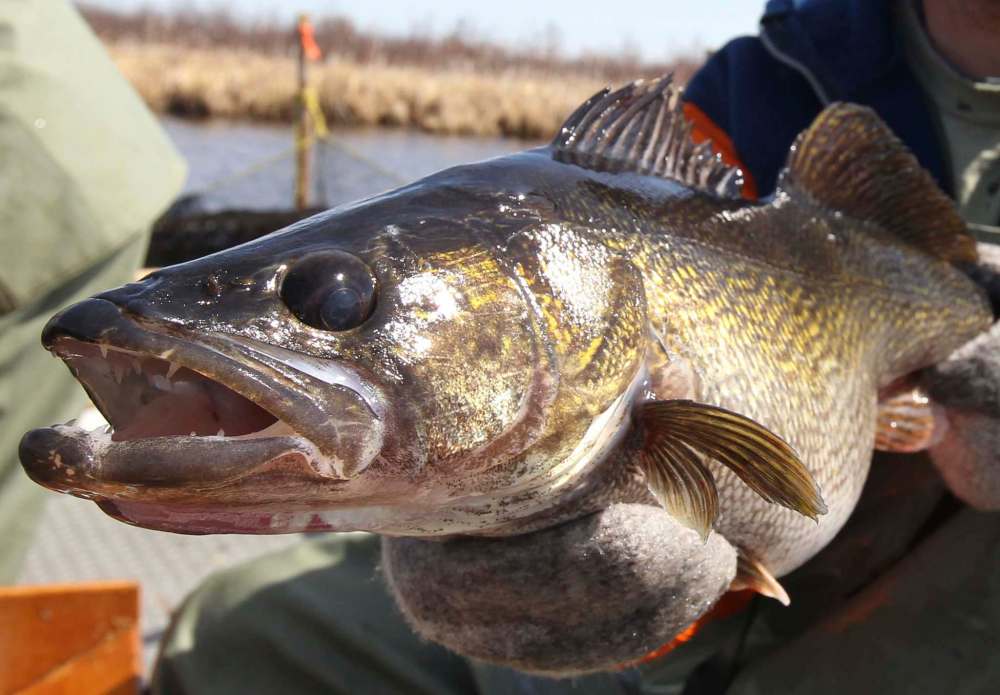
The Lake Winnipeg fishery is governed by a transferable quota system. Fishers buy a quota, at considerable expense, for the right to harvest any of three species: walleye (pickerel), sauger or whitefish. A kilogram of any of these species caught counts against the quota. The current total lake quota is about seven million kilograms. For obvious reasons, fishers target the most valuable species, which for the last half-century has been walleye.
The 1990s and early 2000s saw improving conditions for Lake Winnipeg walleye and walleye fishers. Rising phosphorus levels and the arrival of an invasive species, the rainbow smelt, fuelled a sharp increase in walleye productivity. Catches soared. The fishery reached its zenith around 2010, when roughly three-quarters of the seven-million-kilogram quota were walleye, a far higher proportion than the historical average.
But these heady days were not to last.
With catches likely already above sustainable levels, rainbow smelt populations collapsed in 2011. This removed a major food source and walleye populations suffered. Then zebra mussels arrived.
Though their full impact is not yet clear, the appearance of zebra mussels elsewhere has led to substantial declines in walleye populations.
Fishery biologists estimate that the maximum sustainable annual rate of harvest for Lake Winnipeg walleye is about 38 per cent of the harvestable population. Anything over that will cause the population to decline, and a harvest rate of 60 per cent will obliterate the stock. The current harvest rate is above 50 per cent and rising.
Lake Winnipeg walleye have little time left.
Unfortunately, under the current management system there is no simple mechanism to reduce harvests short of buying back quotas from fishers. Like airline tickets, we have oversold our walleye resource.
Without walleye to fish, fishers turn primarily to whitefish that are worth less than half as much. Or worse they will not fill their quota at all. If walleye populations collapse, so too will the value of fishers’ quotas. No one wants that.
Lake Winnipeg is the world’s largest producer of walleye. A fall in Lake Winnipeg harvests thus affects global supply. Perversely then, as Lake Winnipeg walleye catches decline, scarcity drives up their value. This provides a powerful incentive for commercial fishers to fish them even harder. The result is a death spiral for Lake Winnipeg walleye.
The numbers are stark. The catch of Lake Winnipeg walleye in 2016 was half that of 2010. And falling. But not for lack of trying.
With dwindling numbers of the most desirable medium-sized walleye, fishers in recent years began using larger nets to target jumbo walleye, fish born mainly in 2001 and 2005.
These big fish were almost exclusively female and vital to the spawning population as they produce more and better eggs than smaller fish. In 2017 maximum mesh size regulations were implemented to end this practice, but it was probably too little too late. The giant walleye of Lake Winnipeg are now a memory.
And in response to the 2017 change to mesh size regulations, fishers shifted to entry-level walleye with small mesh nets. These young fish have barely had a chance to spawn, further eroding the ability of the stock to replenish itself.
And once these small fish are gone, the lake will be nearly empty of walleye.
Overlain on a declining fishery is the uncertainty created by Manitoba’s pending exit from the FFMC. The exit date has not yet been announced, nor have the details about the system to follow.
Soon after taking office, Premier Brian Pallister appointed a fisheries envoy team to consult with commercial fishers about the FFMC exit. Part of their job was to provide recommendations for the future direction of the fishery.
My recommendation to the envoy was a voluntary buyback of 20 per cent of the existing quota at full and fair market value. Reducing quota would move the harvest toward sustainable levels.
The final envoy report was delivered to the provincial government last spring. It has not yet been released to the public.

In recent days, reports of a federal audit questioning management at the FFMC have surfaced, leaving its future in even greater doubt.
It is clear that big change is coming to Manitoba fisheries. But exactly what?
Our provincial government needs to provide — now — a clear and credible transition plan detailing how Manitoba’s fisheries will be managed once the FFMC monopoly is removed.
Our current management system for Lake Winnipeg is not sustainable. For either the fish or the fishers.
Scott Forbes is an ecologist at the University of Winnipeg.