A symbolic return

Harvard code-cracker in fine form in Dan Brown's latest thriller

Advertisement

Advertise with us

Robert Langdon is back, the fictional Harvard professor bringing his equally fictional academic discipline to bear on a new web of conspiracy, murder and world-shaking intellectual revelation.

Read this article for free:


By clicking the button above, an account will be created and you will begin to receive some of our recommended newsletters. You may opt out of any newsletter by visiting your Email and Communication Preferences page or by clicking "unsubscribe" at the bottom of any email.

or

Already have an account? Log in here »

To continue reading, please subscribe:

Digital Subscription

One year of digital access for only $1.44 a week*

  • Enjoy unlimited reading on winnipegfreepress.com
  • Read the E-Edition, our digital replica newspaper
  • Access News Break, our award-winning app
  • Play interactive puzzles

*Billed as $5.77 plus GST every four weeks. After 52 weeks, price increases to the regular rate of $19.95 plus GST every four weeks. Offer available to new and qualified returning subscribers only. Cancel any time.

To continue reading, please subscribe:

Add Free Press access to your Brandon Sun subscription for only an additional

$1 for the first 4 weeks*

  • Enjoy unlimited reading on winnipegfreepress.com
  • Read the E-Edition, our digital replica newspaper
  • Access News Break, our award-winning app
  • Play interactive puzzles
Start now

*Your next Brandon Sun subscription payment will increase by $1.00 and you will be charged $17.95 plus GST for four weeks. After four weeks, your payment will increase to $24.95 plus GST every four weeks.

Hey there, time traveller!
This article was published 04/11/2017 (3276 days ago), so information in it may no longer be current.

Robert Langdon is back, the fictional Harvard professor bringing his equally fictional academic discipline to bear on a new web of conspiracy, murder and world-shaking intellectual revelation.

Can the world-famous symbologist still be a hapless academic? He’s done this five times now. But author Dan Brown throws in enough twists to keep his hero on his toes, and makes just the right tweaks to his familiar recipe to produce his strongest effort since The Da Vinci Code itself.

Odds are you’ve read that worldwide bestseller. It sold more than 80 million copies, and if current estimates of global English speakers (some 1.5 billion) and the size of the leisure reading population (estimated at 10 per cent) are correct, then more Free Press Books section readers are familiar with the modern-day grail quest of Robert Langdon than not.

Markus Schreiber / The Associated Press files
Dan Brown’s new novel may not be a literary masterpiece, but it is a return to form after a couple of mediocre sequels to The Da Vinci Code.
Markus Schreiber / The Associated Press files Dan Brown’s new novel may not be a literary masterpiece, but it is a return to form after a couple of mediocre sequels to The Da Vinci Code.

Even those who haven’t read The Da Vinci Code may remember the controversy and media attention surrounding the 2003 book, which featured secretive Catholic sects, pagan rituals, conspiracy and murder, each helping to fuel a political firestorm as books flew off the shelves.

But what of Brown’s 2009 and 2013 followups, The Lost Symbol and Inferno? Of course they were bestsellers in a strict technical sense, easily moving millions of copies. But that still marks a rather precipitous drop. The Lost Symbol was even passed over for inclusion in the Tom Hanks-starring film series.

Perhaps it was because, unlike The Da Vinci Code, these stories didn’t really attempt a paradigm shift in closely held human values. So now the author has returned to the Catholic Church, to deep, humanity-defining questions — Where do we come from? Where are we going? — and to a revelation that promises to shift perspectives and upend world views.

There are many allusions and even direct references to Langdon’s most famous adventure here, and none whatsoever to the more recent outings; Origin could very well be treated as the true sequel to its great predecessor. But it’s important to understand what both The Da Vinci Code and Origin are, and also what they aren’t.

These are page-turning thrillers, designed to be finished at 3 o’clock in the morning as readers keep telling themselves “just one more chapter.” The plot moves rapidly and twists reflexively. Stunning ideas are thrown out quickly and just as quickly pushed aside as the story runs ahead. These novels are not world-changing literary works of art or philosophical powerhouses, even if they name-drop real-life examples of both.

Comedians are known for using “no-joke jokes” when they are on a roll, issuing a punchline that doesn’t actually make sense and then quickly moving on to the next bit, giving hysterical audiences no time to process the holes in the setup or finish. Brown uses the “no-revelation revelation” — insights, connections and leaps in logic that don’t actually hold up under scrutiny but feel true in the midst of the breakneck narrative.

And that’s all fine. Even on a first read, it’s clear much of the science in Origin is nonsense. Brown is no more a scientist than he is a religious scholar — that latter fact having been pointed out when The Da Vinci Code came out — but that doesn’t make his books any less fun to read. Most readers will gloss over misrepresentations, factual errors and plot holes until well after the book has been put down and the ride finished.

These adventures are as much about letting the reader experience the thrill of intellectual discovery as they are about dodging assassins’ bullets and diving out of helicopters. Despite a relative dearth of code- and symbol-centric puzzles, Origin achieves that feeling of apparent learning and perspective-shifting from its earliest pages through to a satisfying conclusion.

There is an art to writing an “unputdownable” thriller, and Brown has just about reached the state of it. Enjoy this for what it is and it should be very enjoyable indeed.

Joel Boyce is a Winnipeg writer and educator.

Report Error Submit a Tip

More Stories

Puzzles Palace

1 minute read Friday, Oct. 16, 2026

To solve our puzzles, please subscribe with this special offer: |

Province orders ban on private teacher-student messaging

Maggie Macintosh 4 minute read Preview

Province orders ban on private teacher-student messaging

Maggie Macintosh 4 minute read Updated: Yesterday at 6:14 PM CDT

Manitoba teachers are no longer allowed to text or use social media to contact a student – regardless of whether they coach a school sports team or supervise other activities outside typical instruction times.

Read
Updated: Yesterday at 6:14 PM CDT

Goalposts to define normal vintage keep moving

Ben Sigurdson 5 minute read Preview

Goalposts to define normal vintage keep moving

Ben Sigurdson 5 minute read 6:00 AM CDT

The 2026 grape-growing vintage in the northern hemisphere is done and dusted, with producers in most wine-producing countries having to navigate a growing season that was, to put it mildly, volatile.

European producers in particular struggled with a growing season plagued by a lengthy heat wave, wildfires and hail.

Some producers in Bordeaux, for example, started picking wine grapes for both white and red grapes in August, weeks ahead of when the fruit would normally be brought in from the vineyards. Drought-like conditions resulted in the region’s viticultural regulatory body giving permission to wineries in some sub-regions to irrigate, which they’re not normally allowed to do, and a mid-July hail storm wreaked havoc on grapes.

The region was also devastated by wildfires over the summer, which saw thousands flee the region but which mostly spared vineyards, although the effect of smoke may find its way into some wines.

Read
6:00 AM CDT

Opening of Portage and Main shows even seemingly insurmountable impasses can be overcome

Jason Syvixay 10 minute read Preview

Opening of Portage and Main shows even seemingly insurmountable impasses can be overcome

Jason Syvixay 10 minute read 2:00 AM CDT

There are places in a city that become more than places. Portage and Main is one of them. For generations of Winnipeggers, the intersection has represented downtown, traffic, development and civic identity. Its reopening to pedestrians in 2025, after 46 years of closure, was about more than crossing a street. It was a reminder that decisions made by one generation can shape the choices available to another — and that even seemingly permanent decisions can be reconsidered.

I have spent much of my professional life thinking about Winnipeg as a planner, working in public, private and non-profit settings. My PhD research gave me an opportunity to examine Portage and Main differently: not simply as a debate about cars and pedestrians, but as a window into how power operates in a city. I reviewed 569 archival documents spanning the 1960s to the present, interviewed 48 planners with experience in Winnipeg, and mapped the relationships between planners, politicians, developers, engineers, residents, businesses and advocacy groups.

What emerged was a story about how planning decisions become embedded in a city’s institutions, agreements, infrastructure, professional practices and political expectations — shaping not only what gets built, but who gets to influence what gets built.

The closure of Portage and Main in 1979 did not remain a decision confined to a particular political moment. Over time, it was reinforced by development agreements, physical infrastructure, property relationships, traffic-engineering practices, administrative routines, and public narratives about mobility and downtown revitalization. The people who made many of those original decisions eventually left office. The arrangements they created remained. Later planners inherited them.

Read
2:00 AM CDT

Eadie faces crowded field — including former councillor — in bid for fifth term in Mynarski

Malak Abas 8 minute read Preview

Eadie faces crowded field — including former councillor — in bid for fifth term in Mynarski

Malak Abas 8 minute read Yesterday at 6:00 AM CDT

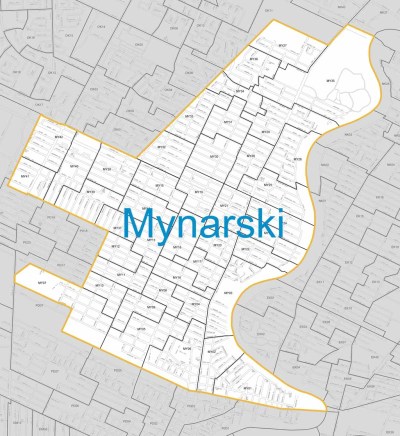
The city’s most crowded council race has a little bit of everything: a long-serving incumbent, a former ward councillor in the 1980s, an unsuccessful candidate in the last municipal election seeking a rematch and three political newcomers.

Mynarski has long been led by Coun. Ross Eadie, who was first elected in 2010 and is seeking his fifth term. Five challengers want the job: Natalie Smith, who ran in the ward in 2022 and came in second, Terry Wachniak, Harold Brazil, Laurie Kozak and Ayaz Noor Mohammed.

It’s the city ward with the largest number of candidates this year.

Eadie describes himself as “a dancer, a singer and a city councillor” who has made inroads on garbage pickup, back-lane cleaning and earning the respect of his fellow council members by being the first Mynarski councillor to be appointed to executive policy committee, the mayor’s inner circle, in decades.

Read
Yesterday at 6:00 AM CDT

Bombers top B.C. Lions 34-10 to earn playoff spot

Taylor Allen 4 minute read Preview

Bombers top B.C. Lions 34-10 to earn playoff spot

Taylor Allen 4 minute read 8:41 AM CDT

Dru Brown saved the Winnipeg Blue Bombers’ season.

They were a trainwreck for the opening 40-plus minutes in Vancouver on Friday night before Brown provided the ultimate spark, accounting for 31 consecutive points in a 34-10 victory over the B.C. Lions to clinch a playoff berth.

The Lions — who had nothing to play for and rested a long list of key starters — somehow led 10-3 late in the third quarter when Bombers quarterback Zach Collaros was forced to leave the game. Lions defensive tackle Nathan Cherry was flagged for roughing the passer after driving Collaros into the turf, and the 38-year-old pivot was ruled out shortly thereafter.

And then Brown’s brilliance began.

Read
8:41 AM CDT