History of lost lake makes a big splash

Advertisement

Advertise with us

Through his reporting for the Free Press, Bill Redekop has been introducing Manitobans to their own province for years through his upbeat profiles of interesting people and places.

Read this article for free:


or

Already have an account? Log in here »

To continue reading, please subscribe:

Subscribe and receive a limited-edition Free Press branded hat or tote.

Digital Subscription

One year of digital access for only $205*

  • Enjoy unlimited reading on winnipegfreepress.com
  • Read the E-Edition, our digital replica newspaper
  • Access News Break, our award-winning app
  • Play interactive puzzles

*First annual payment billed as $205.00 + GST for one year. This annual subscription will automatically renew at $233.00 + GST every 52 weeks (10% off the regular annual price of $259.35). Offer available to new and qualified returning subscribers only. Cancel any time.

To continue reading, please subscribe:

Add Free Press access to your Brandon Sun subscription for only an additional

$1 for the first 4 weeks*

  • Enjoy unlimited reading on winnipegfreepress.com
  • Read the E-Edition, our digital replica newspaper
  • Access News Break, our award-winning app
  • Play interactive puzzles
Start now

*Your next Brandon Sun subscription payment will increase by $1.00 and you will be charged $17.95 plus GST for four weeks. After four weeks, your payment will increase to $24.95 plus GST every four weeks.

Hey there, time traveller!
This article was published 23/12/2017 (3186 days ago), so information in it may no longer be current.

Through his reporting for the Free Press, Bill Redekop has been introducing Manitobans to their own province for years through his upbeat profiles of interesting people and places.

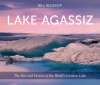
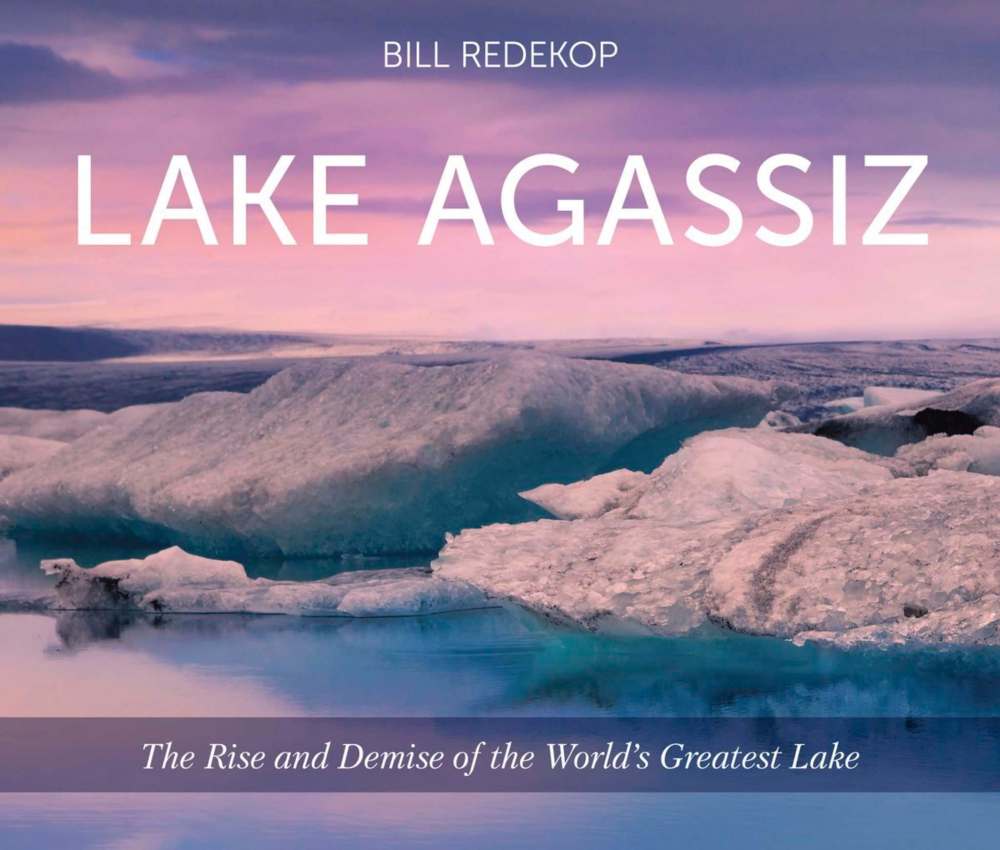
He approaches the much more complicated task of telling us about Lake Agassiz in the same non-technical language so we can all understand, calling on a crowd of experts to help tell the story of the lake and generously acknowledging his debt to them.

Although the great lake was the largest in the world in its day, covering much of what is now Manitoba, as well as northwestern Ontario and portions of Minnesota and North Dakota, it disappeared around 8,000 years ago. So how can we know anything about it?

Redekop answers this question from many different angles, starting with the “discoverers” of the lake. In 1837, Louis Agassiz, a Swiss scientist and professor, lectured on the idea that Europe must have been covered with thick ice sheets in the past. He was one of several who developed similar theories about ice ages, but he was a showman, and so got more of the credit.
Agassiz continued to lecture, and taught at Harvard when he immigrated to the U.S., becoming something of a scientific celebrity. He never spoke about the lake that bears his name, however, and the closest he got to Manitoba was Thunder Bay during an 1848 scientific trip.

The lake was named after Agassiz by a much more self-effacing scientist and admirer of Agassiz named Warren Upham. Upham travelled around North Dakota and Manitoba for several summers in the 1880s, searching for evidence that a vast lake had once covered the area. He was not the first to suspect the existence of a lake, as is so often the case in science, but Upham might be said to have proven the lake’s existence. Mapping many kilometres of the gravel beaches that once bordered Lake Agassiz and recording a great deal of other evidence, Upham began to make the lake visible to modern eyes. He worked for the U.S. Geological Survey; it was that body which published his work The Glacial Lake Agassiz, which presented his conclusions about the lake.

Agassiz and Upham are only two of the large number of scientists Redekop profiles in the story of the lake. Discussing the many different issues surrounding its history, he introduces the scientists who developed our knowledge about them.

There are also chapters on mammoths and other large mammals that lived in the area while the lake existed.

Redekop details the evidence that people also lived and hunted along the lake’s shores, discussing the arrow and spear points dating from the time that have been found. He gives us chapters on geological features such as the Manitoba Escarpment and the delta of the ancestor of our present Assiniboine River, and examines the origin of Bird’s Hill.

The book is fascinating reading. It’s easy to foresee an increase in traffic on certain country roads as people follow the book’s directions to places where one can still see the remains of the lake’s gravel beaches or scale the ancient Manitoba Escarpment.

The book is also beautifully designed, with numerous excellent maps and photos credited to Dawn Huck and Peter St. John, the designer and photographer, respectively (among other duties), at Heartland Associates. One small complaint: like many of Heartland’s books, Lake Agassiz is printed in landscape format. This makes it awkward, for this reader anyway, to hang on to while reading.

But this is a fine book that skilfully gathers a great wealth of information about our ancient past in one place and presents it in an entertaining and interesting way.

Jim Blanchard is a retired librarian and local historian.

Report Error Submit a Tip

More Stories

Port of Churchill expansion could chase belugas away, U of M researcher says

Nicole Buffie 4 minute read Preview

Port of Churchill expansion could chase belugas away, U of M researcher says

Nicole Buffie 4 minute read 9:07 AM CDT

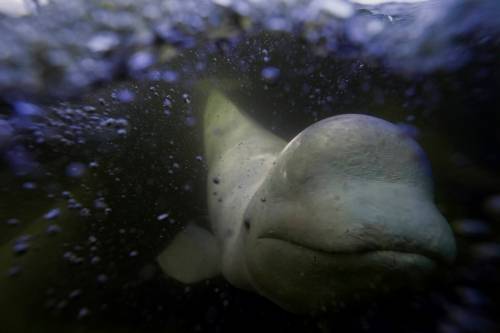
As plans to expand the Port of Churchill into a four-season trade corridor gathers momentum, a University of Manitoba researcher has published a report on what ship traffic could mean for the beluga whales that gather in the Churchill River estuary each summer.

Veronica Coppolaro said more vessels in the waterways bring a risk that belugas will stop using the estuary for migration, which would impact the ecological landscape, tourism and communities that rely on the animals for food and cultural purposes.

“There are studies showing that (noises) change the way they swim, they change the way (the whales) are vocalizing, they change their main activity, and so this (expansion) can have consequences at different levels,” she said.

The Churchill river estuary is a marine habitat where the Churchill River empties into Hudson Bay. During the summer months belugas gather in the area to feed and give birth.

Read
9:07 AM CDT

Drug recovery centre opens office in ‘heart of the city’

Morgan Modjeski 4 minute read Preview

Drug recovery centre opens office in ‘heart of the city’

Morgan Modjeski 4 minute read Yesterday at 3:38 PM CDT

Richard Halverson found his freedom from addiction through Adult & Teen Challenge and, six years later, he hopes a new Winnipeg location will bring hope to the city.

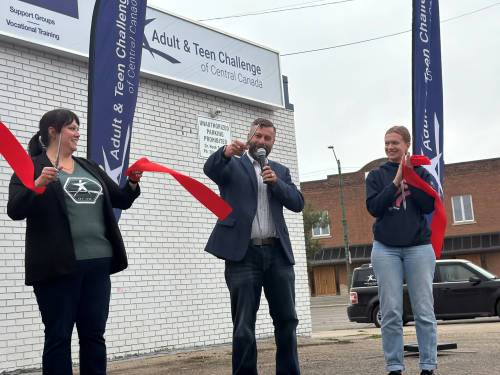
Dozens gathered Saturday morning to mark the grand opening of the recovery centre’s community services office on Main Street.

Located inside the former Wojcik funeral home, the bright-white building — which was also formerly a liquor store — will serve as an access point for people fighting drug addiction. That includes connecting them to addictions support, housing and training.

“For me, I always start with: ‘What’s your story?’” said Halverson, who now works for the faith-based organization.

Read
Yesterday at 3:38 PM CDT

Tory health critic ‘disappointed’ after being rebuffed by health officials

Carol Sanders 4 minute read Preview

Tory health critic ‘disappointed’ after being rebuffed by health officials

Carol Sanders 4 minute read Yesterday at 11:53 AM CDT

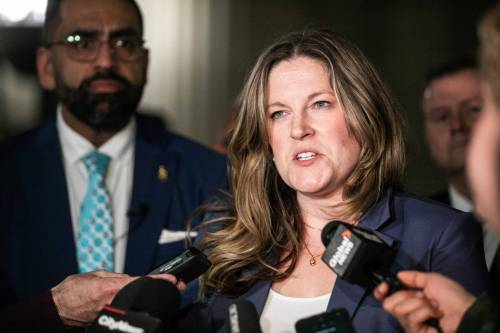
The health critic for the Progressive Conservative party says her ability to get information about the accelerated reopening of Dauphin’s emergency department was stymied by Prairie Mountain Health officials because they refused to meet with her.

“I wanted to meet with PMH staff to discuss the status of the facility and the challenges they’re facing and getting services back online,” Kathleen Cook said Friday.

“I was very disappointed that Prairie Mountain Health declined me that opportunity.”

Cook said she asked for a meeting a few days after the Sept. 7 reopening of a temporary ER at the hospital, that was severely damaged by flooding.

Read
Yesterday at 11:53 AM CDT

Retired sportscaster Scott Oake determined as fundraising for women's addictions treatment facility enters home stretch

Melissa Martin 4 minute read Preview

Retired sportscaster Scott Oake determined as fundraising for women's addictions treatment facility enters home stretch

Melissa Martin 4 minute read Thursday, Sep. 10, 2026

For now, the patch of land just east of the Victoria Hospital doesn’t look like much: just a field of rocks, mounded dirt, and concrete piles driven into the earth. Yet when Scott Oake looks over the site, he can already imagine how it will look in just over a year’s time, when the new Anne Oake Family Recovery Centre is expected to open.

It’s easier to picture this time around. In 2020, when the recently-retired CBC sportscaster and his late wife, Anne, were building their first labour of intermingled grief and love, the Bruce Oake Recovery Centre for men, it was hard for him to wrap his mind around how a raw construction site could transform into a welcoming addictions treatment facility.

When that centre opened in 2021, Oake found it looked “almost identical” to the architect’s renderings. So it’s easy to hope the Anne Oake Centre will be the same. It will be the first facility of its kind, its founders believe, not only in Canada but in North America: a place where 50 to 70 women can pursue sobriety while staying with their children.

“At Bruce Oake there’s a culture of love, and most of all a culture of hope,” Oake said, speaking at the site Thursday after a media conference to announce the final push of the centre’s fundraising campaign. “I can feel it every time I walk into that building. And I know it will be the same here.”

Read
Thursday, Sep. 10, 2026

Bombers exact revenge in Banjo Bowl, lose Collaros to injury

Taylor Allen 6 minute read Preview

Bombers exact revenge in Banjo Bowl, lose Collaros to injury

Taylor Allen 6 minute read Yesterday at 9:20 PM CDT

Redha Kramdi downplayed the significance of his return for the Winnipeg Blue Bombers.

“I don’t think I have that big of an impact,” said Kramdi on Tuesday, who watched the club go 2-4 while he was sidelined with a cast on his left hand.

It sounded silly at the time, and it’s even sillier now considering how exceptional the 29-year-old safety from Montreal was in Saturday’s 22nd edition of the Banjo Bowl.

Kramdi caused two turnovers — a forced fumble and an interception — to lead the Bombers to a 19-6 victory over the Saskatchewan Roughriders in front of a sell-out crowd at Princess Auto Stadium.

Read
Yesterday at 9:20 PM CDT

Contact Us

6 minute read Monday, Jul. 27, 2026

Contact UsJUMP: Editorial

Delivery

Promotions

Advertising |Photo Reprints

Privacy Inquiries

Newsmedia Council

By TelephoneIf the number you need is not listed below, call the Winnipeg Free Press main switchboard, at 204-697-7000, it's open Monday to Friday 8 a.m. to 4 p.m. All numbers are area code204 unless otherwise noted.

E-Mailfpcirc@freepress.mb.ca |