Taking stress out of entertaining
Author explores wabi-sabi across the globe
Advertisement
Read this article for free:
or
Already have an account? Log in here »
To continue reading, please subscribe:

Digital Subscription
One year of digital access for only $205*
- Enjoy unlimited reading on winnipegfreepress.com
- Read the E-Edition, our digital replica newspaper
- Access News Break, our award-winning app
- Play interactive puzzles
*First annual payment billed as $205.00 + GST for one year. This annual subscription will automatically renew at $233.00 + GST every 52 weeks (10% off the regular annual price of $259.35). Offer available to new and qualified returning subscribers only. Cancel any time.
To continue reading, please subscribe:
Add Free Press access to your Brandon Sun subscription for only an additional
$1 for the first 4 weeks*
- Enjoy unlimited reading on winnipegfreepress.com
- Read the E-Edition, our digital replica newspaper
- Access News Break, our award-winning app
- Play interactive puzzles
*Your next Brandon Sun subscription payment will increase by $1.00 and you will be charged $17.95 plus GST for four weeks. After four weeks, your payment will increase to $24.95 plus GST every four weeks.
Read unlimited articles for free today:
or
Already have an account? Log in here »
Hey there, time traveller!
This article was published 22/01/2018 (3095 days ago), so information in it may no longer be current.
Newfoundlanders are well-known for their hospitality. It comes both from being in an often-inhospitable environment, where the kindness of strangers (and friends) can be counted on for your survival, and from just being a good-hearted people. That good-heartedness at a time of survival and fear is front and centre in the musical Come From Away (now playing onstage at the Royal Manitoba Theatre Centre), the musical love letter to the people of Gander, N.L., who threw open their doors and their hearts to travellers after airplanes were rerouted “from away” to the town on the Rock in the immediate aftermath of the events of 9/11.
What was required of and which was given willingly by the people of Gander, was the capacity to just open their homes — to share life as it presented itself, unvarnished and untidy — to be present and welcoming. There’s a certain vulnerability in that. It requires taking the risk that people will see you, really see you, just as you are.
What if you could have that spirit of “just come in, be home here” whenever you decided to invite people in? Could you learn to put aside worries about the housekeeping, the unpainted rooms, the places in your home where things look and feel lived-in — just let them go and enjoy the people in your life?

That’s the essence of a Japanese idea called “wabi-sabi.”
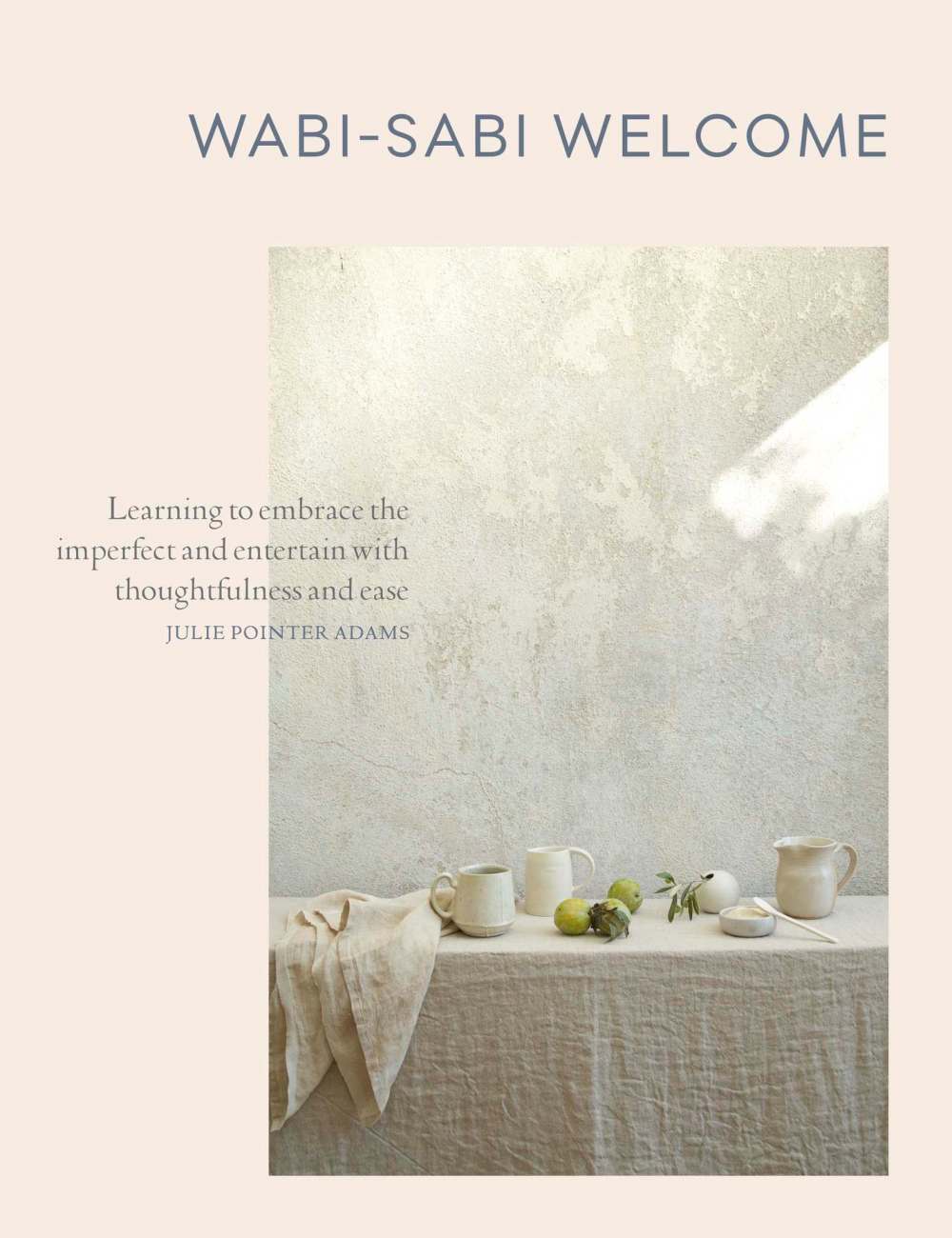
The people of Gander mustered it in its most extreme, but it’s a quality that can be found across cultures. Author Julie Pointer Adams shares her views on this way of being in her beautifully photographed and thoughtfully written book Wabi-Sabi Welcome: Learning to Embrace the Imperfect and Entertain with Thoughtfulness and Ease (Artisan Books, $45). It’s a look at how wabi-sabi is expressed in different countries — Japan, France, Italy, Denmark and in Adams’ own California — and how we can find it for ourselves.
Julie Pointer Adams shared her thoughts with the Winnipeg Free Press via email from her home in Santa Barbara, Calif.
Free Press: What is “wabi-sabi?”
Julie Pointer Adams: Wabi-sabi is an elusive concept. However, most simply put, it’s a beauty that celebrates the impermanent, imperfect and incomplete. It’s about simplicity, living in tune with nature, and humility. Wabi-sabi means being content with what you have and always moving towards having less. It is a way of life that clings to what is fleeting, mysterious and unassuming.
FP: What inspired you to write Wabi-Sabi Welcome?
JPA: There were so many reasons, but I think the simplest explanation is that I wanted to create a physical antidote to all the messages — visual and otherwise — of perfection and striving-for-more that constantly bombard us.
Everything around us seems to communicate that we need to have and be more in order to succeed and to be noticed in this world. I have always been attracted to an unconventional and rather unnoticed kind of beauty, and I wanted to make something that helped others recognize these simple pleasures in life as well.
I think the wabi-sabi way of life presents a compelling alternative to the more common narrative about beauty and perfection we often hear — rather than offering an exclusive, impossible standard of beauty, it’s a world view that anyone can embrace, anywhere.
FP: Of all the places you’ve visited, which place do you feel best embodied wabi-sabi?
JPA: This is an impossible question! So much of why I included a number of places in the book is that I wanted to convey that wabi-sabi is not a one-size-fits-all philosophy.
Every place and culture presents a ton of contradictions, and for every 10 wonderful evidences of wabi-sabi in a place, there are 10 other things that present an entirely different perspective. Even in Japan, where the concept originates, I found things that both celebrated and quelled a wabi-sabi spirit. In spite of that, I love the way that each of the individuals and families I included in the book really highlight a range of aspects of the wabi-sabi way of life, and exercise it differently throughout their lives and their homes.
FP: What do you think are the main pitfalls people encounter when they want to entertain? How can they avoid or overcome them?
JPA: I think far too often we (myself included) get too caught up in the desire to impress others with our entertaining, and we start focusing almost exclusively on how our ability to entertain reflects on us. This leads to all kinds of pitfalls like too much anxiety, fear of not being good enough (not having a big/nice enough house, not cooking/baking well enough, not being outgoing enough, etc.), and all these worries really come down to feeling inadequate to the task — feeling imperfect, if you will.
If only our attention shifted more towards recognizing the need for hospitality in order to just be human together, I think a lot of our worries would dissipate. Once we realize that as humans, we inherently need each other and need to spend time being real together, entertaining simply becomes a way to care for, feed and nurture our loved ones. At that point, opening our homes becomes far less scary and we discover that entertaining can mean having a friend over for a glass of orange juice, rather than an elaborate meal (although if you enjoy cooking, sharing extravagant meals together can be a great gift as well).
FP: What would you encourage people to do if they want to bring more wabi-sabi into their lives?
JPA: The practical aspect of how to really live this, and not just appreciate it as a nice concept, is so important! Since wabi-sabi can be applied to nearly all parts of life, there are many ways to start embracing this perspective on a daily basis.
On a social level, one place to start would be to simply invite one friend over for a cup of coffee or brunch if entertaining seems daunting to you. Perhaps make a standing date with a friend so that it becomes a regular occasion. Or, if you’re in the habit of entertaining but tend to scrutinize every detail, perhaps it means going out on a limb and letting things be a bit more lax when friends come over. Instead of cleaning the whole house, just tidy one room — or just light candles!
Another good practice is to start opening your eyes to things you find beautiful, even if others might not appreciate them in the same way. Allow more personal or more unconventionally special/unique things find their way into your home.
Lastly, spend a little bit of time thinking about what simplicity, humility and living close to nature might mean in your own life, and how you can seek out more of all three. I think there’s a meaningful path towards a more relaxed, down-to-earth wabi-sabi way of life for all of us if that’s what we really want.
Twitter: @WendyKinginWpg