Author explores effect of Versailles Treaty

Advertisement

Advertise with us

In conventional historical writing, 1919’s Versailles Peace Treaty, which formally concluded the First World War, is depicted as a disaster.

Read this article for free:


or

Already have an account? Log in here »

To continue reading, please subscribe:

Subscribe and receive a limited-edition Free Press branded hat or tote.

Digital Subscription

One year of digital access for only $205*

  • Enjoy unlimited reading on winnipegfreepress.com
  • Read the E-Edition, our digital replica newspaper
  • Access News Break, our award-winning app
  • Play interactive puzzles

*First annual payment billed as $205.00 + GST for one year. This annual subscription will automatically renew at $233.00 + GST every 52 weeks (10% off the regular annual price of $259.35). Offer available to new and qualified returning subscribers only. Cancel any time.

To continue reading, please subscribe:

Add Free Press access to your Brandon Sun subscription for only an additional

$1 for the first 4 weeks*

  • Enjoy unlimited reading on winnipegfreepress.com
  • Read the E-Edition, our digital replica newspaper
  • Access News Break, our award-winning app
  • Play interactive puzzles
Start now

*Your next Brandon Sun subscription payment will increase by $1.00 and you will be charged $17.95 plus GST for four weeks. After four weeks, your payment will increase to $24.95 plus GST every four weeks.

Hey there, time traveller!
This article was published 27/01/2018 (3154 days ago), so information in it may no longer be current.

In conventional historical writing, 1919’s Versailles Peace Treaty, which formally concluded the First World War, is depicted as a disaster.

The victorious Allies, it is argued, imposed vindictive terms on Germany — a “Carthaginian peace.” In particular, the demand for reparation payments hamstrung the economy of Germany’s newly established Weimar Republic, creating the social conditions that facilitated the rise of Adolf Hitler and his Nazi party.

The Versailles Treaty, then, led directly to the Second World War.
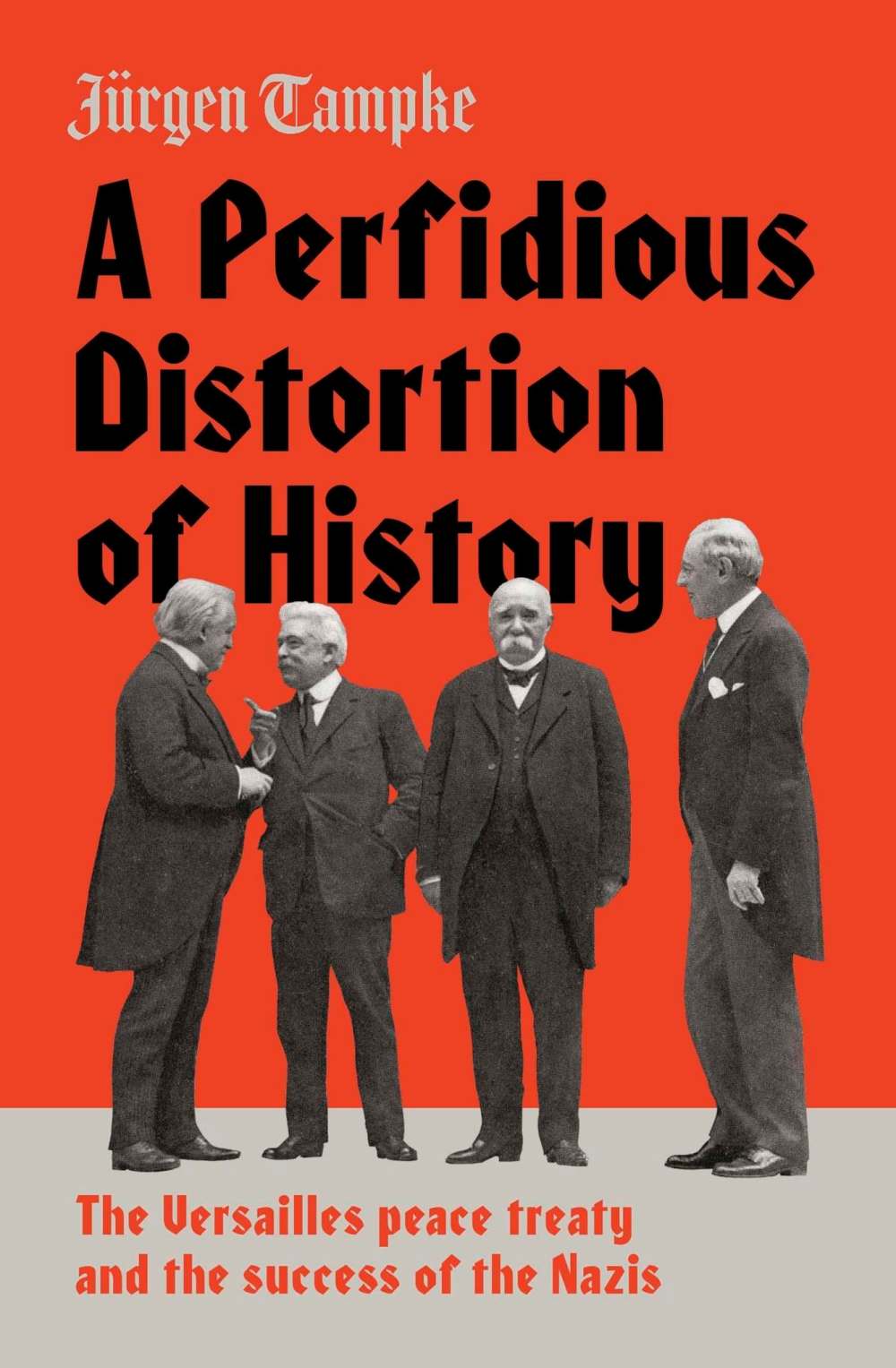
This conventional interpretation is utterly rejected by Jürgen Tampke, a retired German historian who lives in Australia. Tampke articulates his revisionist view of Versailles and its legacy in a provocative narrative.

Germany may have lost the First World War, Tampke says, but it won the peace. Indeed, it was arguably in a stronger position economically and in geopolitical terms in 1919 than it was in 1914, when the war began.

On its western border, Germany faced a debilitated France which had been devastated by the war. To the east, Russia was weakened by revolution. The German economy survived the war largely intact — it was Europe’s “industrial powerhouse.”

And the reparation terms mandated by the Versailles Treaty, Tampke contends, were modest: they were “within Germany’s capacity to pay, and did not effectively cripple the immediate post-war economy.”

Hitler’s rise to power, then, cannot be explained by the terms of the Versailles Treaty. Tampke attributes the Nazis’ success to the influence of the Great Depression, which began in 1929, and a general disillusionment with the Weimar Republic.

While Tampke makes at least a strong prima facie case that historians have distorted the significance of the Versailles Treaty, his concept of the causes of the First World War is less convincing. He states flatly that “The First World War was not brought about by the alliance system.”

But the alliance system was crucial to the events that precipitated the war. It was precisely because of the alliance system that a local conflict between Austria-Hungary and Serbia escalated into a global apocalypse, drawing in Russia, Germany, France and Britain.

Tampke writes that Britain declared war on Germany because the latter violated the neutrality of Belgium. But British historian Christopher Clark, in his 2012 book The Sleepwalkers, maintains that Belgium was not central to British deliberations in the summer of 1914. Rather, Britain entered the war to contain German expansion.

One of the most insightful parts of this book is the author’s critique of “postmodernism,” an academic fashion of the 1980s and 1990s which denied the reality of objective historical truth. This doctrinaire relativism, Tampke points out, provides intellectual cover for those who seek to misrepresent the past, e.g. Holocaust deniers.

Tampke challenges so much conventional wisdom that the effect is breathtaking, urging a complete re-evaluation of the Versailles Treaty. Some of his assertions are dubious, particularly about the origins of the First World War. And other historians will doubtless find much to criticize in his account.

But it is precisely through this process of debate that historical truth is crystallized — and Tampke, to his credit, clearly believes in an objective historical reality, which is why he is so determined to set the record straight.

Graeme Voyer is a Winnipeg writer.
Report Error Submit a Tip

More Stories

MMF walks away from bid to buy Fort Garry Hotel

Carol Sanders 3 minute read Preview

MMF walks away from bid to buy Fort Garry Hotel

Carol Sanders 3 minute read Yesterday at 3:03 PM CDT

The Manitoba Métis Federation won’t buy the historic Fort Garry Hotel, President David Chartrand said Monday.

Read
Yesterday at 3:03 PM CDT

Defenceman Morrissey focused on season ahead

Ken Wiebe 8 minute read Preview

Defenceman Morrissey focused on season ahead

Ken Wiebe 8 minute read Yesterday at 12:08 PM CDT

Josh Morrissey insists that a trade request from the franchise goalie doesn’t change his desire to be a lifelong Winnipeg Jet.

The top-pairing defenceman and alternate captain reinforced that view on Monday morning when speaking to a group of reporters prior to the Winnipeg Jets Golf Classic at St. Charles Country Club.

“At the end of the day, I love being here and I love being a Jet. That’s how I’ve always felt,” said Morrissey, who spoke for just over nine minutes on a variety of topics. “That doesn’t change because of somebody else’s decision. Nothing is finalized, so who knows, he could be back. My position doesn’t change.”

Morrissey has two years left on a contract that pays him US$6.25 million and he’s only eligible to sign an extension on July 1, but the future of the franchise pillar will be a topic of discussion as the Jets work to sort through the situation with franchise goaltender Connor Hellebuyck, which remains unresolved.

Read
Yesterday at 12:08 PM CDT

Storied photojournalist inducted into Media Roll of Honour

Taylor Allen 5 minute read Preview

Storied photojournalist inducted into Media Roll of Honour

Taylor Allen 5 minute read Updated: 7:56 PM CDT

If you’re a longtime hockey fan from around these parts, chances are you’ve seen the photo.

It’s an iconic snapshot of Ulf Nilsson and Anders Hedberg carrying the Avco Cup together on the ice after helping the Winnipeg Jets win the World Hockey Association’s top prize in 1978.

The person behind the camera was the late, great Jon Thordarson, who was inducted into the Manitoba Sportswriters and Sportscasters Association’s Media Roll of Honour on Tuesday inside the Manitoba Sports Hall of Fame.

And while they say every picture tells a story, there’s also a darn good story about what happened after Thordarson hit the shutter button.

Read
Updated: 7:56 PM CDT

Federal Court awards OCN $27M, 62 years after construction of hydro dam

Nicole Buffie 5 minute read Preview

Federal Court awards OCN $27M, 62 years after construction of hydro dam

Nicole Buffie 5 minute read 6:34 PM CDT

The Federal Court has ordered Ottawa pay Opaskwayak Cree Nation $27 million over damages suffered due to the construction of the Grand Rapids hydro dam in the 1960s.

In a decision dated Sept. 3, Federal Court Justice Sébastien Grammond says the federal government had a fiduciary duty to protect the community from the impacts of the dam.

“When the Crown exercises a discretionary power over an Indigenous interest, it has a fiduciary duty and it must exercise the discretion in the best interests of the Indigenous group,” the ruling said. “Canada breached its fiduciary duty to OCN because it approved the (project) without ensuring that the impacts of the Grand Rapids dam on OCN’s traditional way of life were mitigated or compensated.”

The First Nation took the federal government to court in February over impacts on the community after the dam, located about 145 kilometres southeast of Opaskwayak Cree Nation, was installed on the Saskatchewan River in 1964. The case was heard over 14 days in a judge-alone trial in Winnipeg.

Read
6:34 PM CDT

Winnipeg venues saying no to AI-made advertisements

Sheldon Birnie 8 minute read Preview

Winnipeg venues saying no to AI-made advertisements

Sheldon Birnie 8 minute read Updated: Yesterday at 10:22 AM CDT

Although the days when telephone poles and notice boards across the city were thick with gig posters, either slopped up with wheat paste or wrapped tight with packing tape, are behind us, the art of making an appealing visual ad for live music events is still a vital part of the local creative scene.

However, a widespread backlash against a new kind of slop — the use of generative AI images — has been building, especially among creatives when it comes to promoting live music.

“Live music is and always has been a DIY type of scene, especially locally,” says Evan Simpson, who has been working as a graphic designer for nearly a decade.

“For years people have been making their own flyers, or if they have the budget, hiring a designer or artist to come up with some artwork for their flyers. It’s a whole ecosystem, a scene supporting itself. If you take away the visual side of it, the spark, individuality and uniqueness of each gig poster is lost. What a sad world it would be if all art were made by AI.”

Read
Updated: Yesterday at 10:22 AM CDT

Transit safety drives first mayoral debate

Morgan Modjeski 4 minute read Preview

Transit safety drives first mayoral debate

Morgan Modjeski 4 minute read 2:01 AM CDT

The safety of Winnipeg Transit drivers was front and centre Monday as the first mayoral debate of the 2026 election focused on public transit.

Kevin Klein, the most experienced of the 10 candidates at the Amalgamated Transit Union 1505-hosted debate, said the time for partial safety shields has passed.

“The partial shields have failed drivers. That’s why we need change,” the former PC MLA and city councillor said, adding driver safety is not a staffing issue, but a “protection failure.”

If elected, Klein said he will bring in full-shield implementation across the city within two years and start a nine-bus pilot project immediately.

Read
2:01 AM CDT