Federal Court awards OCN $27M, 62 years after construction of hydro dam Ottawa knew project would hurt First Nation’s way of life, judge rules
Read this article for free:
or
Already have an account? Log in here »
To continue reading, please subscribe:

Digital Subscription
One year of digital access for only $205*
- Enjoy unlimited reading on winnipegfreepress.com
- Read the E-Edition, our digital replica newspaper
- Access News Break, our award-winning app
- Play interactive puzzles
*First annual payment billed as $205.00 + GST for one year. This annual subscription will automatically renew at $233.00 + GST every 52 weeks (10% off the regular annual price of $259.35). Offer available to new and qualified returning subscribers only. Cancel any time.
To continue reading, please subscribe:
Add Free Press access to your Brandon Sun subscription for only an additional
$1 for the first 4 weeks*
- Enjoy unlimited reading on winnipegfreepress.com
- Read the E-Edition, our digital replica newspaper
- Access News Break, our award-winning app
- Play interactive puzzles
*Your next Brandon Sun subscription payment will increase by $1.00 and you will be charged $17.95 plus GST for four weeks. After four weeks, your payment will increase to $24.95 plus GST every four weeks.
Read unlimited articles for free today:
or
Already have an account? Log in here »
The Federal Court has ordered Ottawa pay Opaskwayak Cree Nation $27 million over damages suffered due to the construction of the Grand Rapids hydro dam in the 1960s.
In a decision dated Sept. 3, Federal Court Justice Sébastien Grammond says the federal government had a fiduciary duty to protect the community from the impacts of the dam.
“When the Crown exercises a discretionary power over an Indigenous interest, it has a fiduciary duty and it must exercise the discretion in the best interests of the Indigenous group,” the ruling said. “Canada breached its fiduciary duty to OCN because it approved the (project) without ensuring that the impacts of the Grand Rapids dam on OCN’s traditional way of life were mitigated or compensated.”
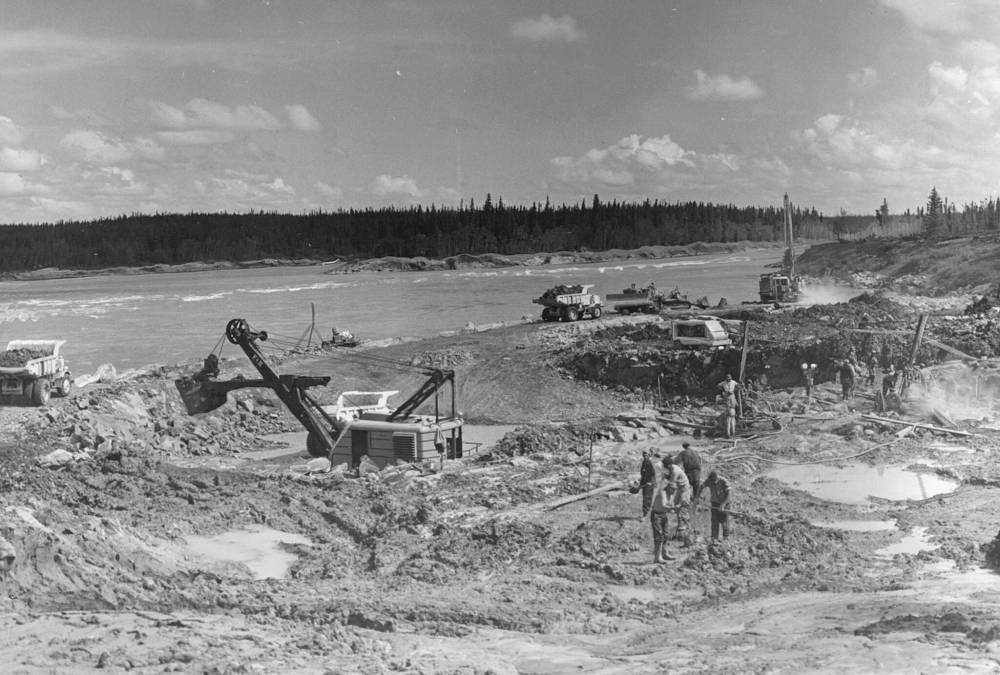
FREE PRESS FILES
Boring out and marking the Saskatchewan River in 1957 during construction of the Grand Rapids hydro dam. Canada's Federal Court has ordered Ottawa pay Opaskwayak Cree Nation $27 million over damages suffered due to the construction of the dam.
The First Nation took the federal government to court in February over impacts on the community after the dam, located about 145 kilometres southeast of Opaskwayak Cree Nation, was installed on the Saskatchewan River in 1964. The case was heard over 14 days in a judge-alone trial in Winnipeg.
Court heard testimony from several elders who described a disappearing moose population, difficulty accessing waterways crucial for fishing and berry picking and the decline of traditional medicine after the dam was installed.
Grammond said in his decision that documents revealed in the trial showed Ottawa was aware of the dam’s potential impacts on the community and surrounding areas, but chose to approve the expropriation anyway.
In the early 1960s, the provincial government and OCN leadership signed an agreement to expropriate some of the community’s land for the dam’s construction, but the First Nation argued the federal government ought to have known the project would cause long-lasting damage to the community and the traditional ways of life of its residents.
The federal government has ultimate jurisdiction over First Nations land and had to sign off on the expropriation, which made way for the dam’s construction.
The project forced Chemawawin First Nation to relocate to what is now Easterville, on the southeast shore of Cedar Lake, and flooded parts of Misipawistik Cree Nation.
“Canada breached its fiduciary duty to OCN because it approved the (project) without ensuring that the impacts of the Grand Rapids dam on OCN’s traditional way of life were mitigated or compensated.”
“By the 1980s, these environmental changes made it much more difficult to pursue the traditional Cree way of life,” Grammond wrote in his decision. “As wildlife populations declined, OCN members were no longer able to rely on country food to feed their families and needed to buy processed food in much greater quantities.”
With little to no access to alternative training or employment opportunities, many men lost their traditional roles as providers, and families became increasingly reliant on social assistance, the ruling said.
The judge stated the federal government knew the Grand Rapids dam would impact fishing, hunting and trapping activities that were central to the way of life in OCN.
“As early as 1955, the (Indian Affairs Branch) received a memorandum from Manitoba recognizing that the Grand Rapids dam ‘will almost completely ruin the (Saskatchewan River) delta below The Pas for the production of fur’ and flood the Chemawawin reserve. The memorandum concluded that the project ‘would therefore destroy any future use of the resources and the potential resources of the delta except the fish resource,’” the ruling said.
OCN, located about 620 kilometres north of Winnipeg, has approximately 6,700 members, half of whom live on reserve.
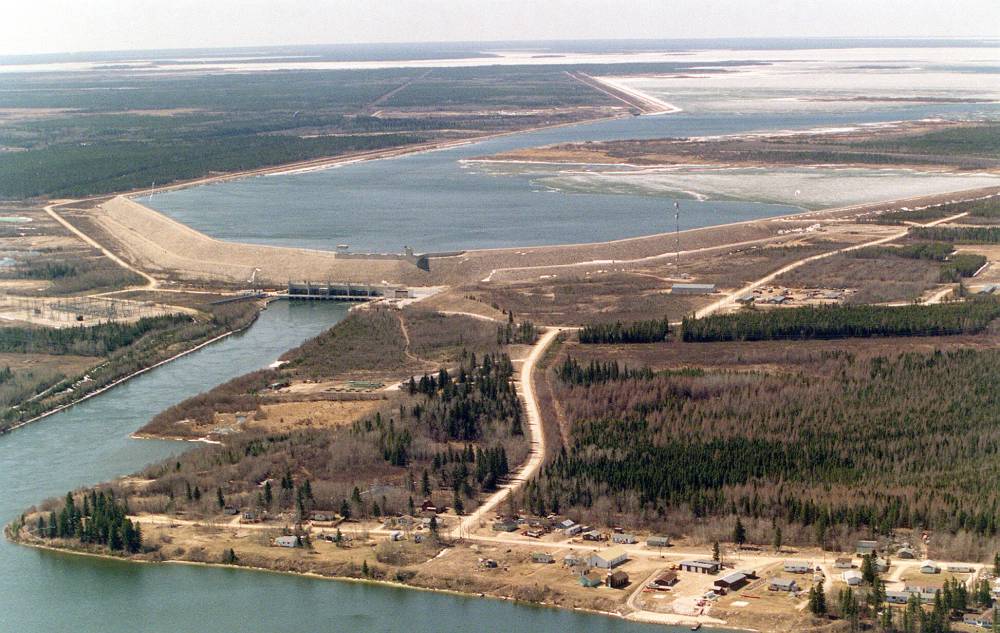
WAYNE GLOWACKI / FREE PRESS FILES
Aerial photo of Grand Rapids hydro dam in 2000. The completion of the project forced Chemawawin First Nation to relocate to the southeast shore of Cedar Lake and flooded parts of Misipawistik Cree Nation.
The court’s compensation order was based on the price of moose and fish at the time of the dam’s construction, paid over the course of 15 years. OCN leadership feels they may be entitled to more money.
The First Nation held a meeting last week to discuss the judge’s ruling. In a post on social media, OCN said chief and council discussed the community’s right to appeal the decision regarding the failure to compensate for all its losses, not just 15 years’ worth.
The First Nation’s lawsuit originally sought as much as $4 billion in damages, but the judge argued the evidence was insufficient because the ‘intangible’ impacts (such as social connection, mental wellness and physical health) were weighed heavier by witnesses than the tangible ones (such as livelihood and food security).

Opaskwayak Cree Nation Chief Michael Constant and several councillors could not be reached Tuesday.
Manitoba Hydro spokesman Peter Chura said the public utility had no comment on the ruling. Chura said in an email as with all communities affected by Hydro developments and operations, there is “ongoing engagements with Opaskwayak Cree Nation, guided by our licence obligations and signed agreements.”
A spokesperson for Crown Indigenous Relations and Northern Affairs said the department is reviewing the court decision to determine its next steps.
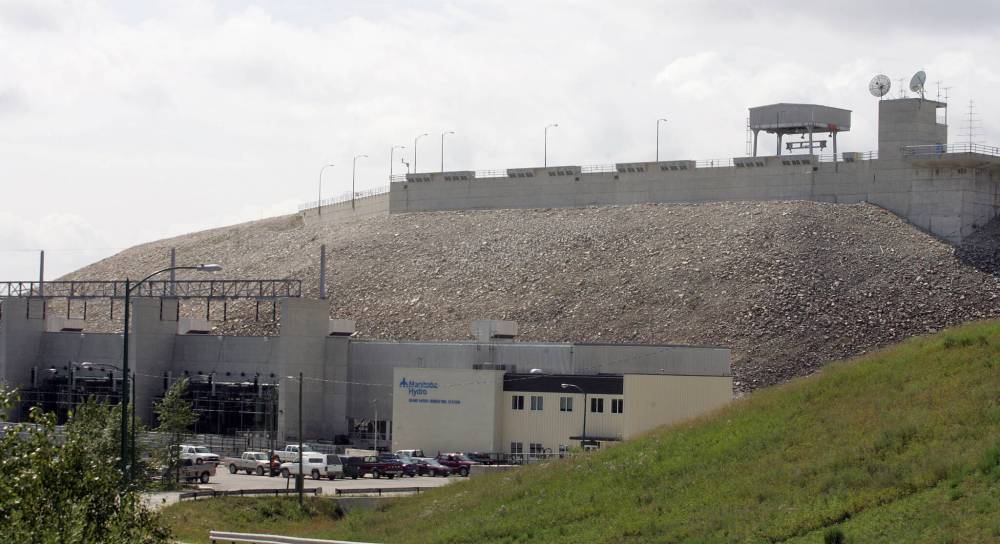
KEN GIGLIOTTI / FREE PRESS FILES
Grand Rapids Hydro Generating Station on Cedar Lake.
A spokesperson for Natural Resources and Indigenous Futures Minister Ian Bushie said the province is reviewing the court’s decision.
nicole.buffie@freepress.mb.ca

Nicole Buffie
Multimedia producer
Nicole Buffie is a reporter for the Free Press city desk. Born and bred in Winnipeg, Nicole graduated from Red River College’s Creative Communications program in 2020 and worked as a reporter throughout Manitoba before joining the Free Press newsroom as a multimedia producer in 2023. Read more about Nicole.
Every piece of reporting Nicole produces is reviewed by an editing team before it is posted online or published in print — part of the Free Press‘s tradition, since 1872, of producing reliable independent journalism. Read more about Free Press’s history and mandate, and learn how our newsroom operates.
Our newsroom depends on a growing audience of readers to power our journalism. If you are not a paid reader, please consider becoming a subscriber.
Our newsroom depends on its audience of readers to power our journalism. Thank you for your support.


History
Updated on Wednesday, September 16, 2026 12:02 PM CDT: Corrects typo