

In China, the new motto is ‘Xi Forever’
Advertisement
Read this article for free:
or
Already have an account? Log in here »
To continue reading, please subscribe:
Monthly Digital Subscription
$1 per week for 24 weeks*
- Enjoy unlimited reading on winnipegfreepress.com
- Read the E-Edition, our digital replica newspaper
- Access News Break, our award-winning app
- Play interactive puzzles
*Billed as $4.00 plus GST every four weeks. After 24 weeks, price increases to the regular rate of $19.95 plus GST every four weeks. Offer available to new and qualified returning subscribers only. Cancel any time.
Monthly Digital Subscription
$4.99/week*
- Enjoy unlimited reading on winnipegfreepress.com
- Read the E-Edition, our digital replica newspaper
- Access News Break, our award-winning app
- Play interactive puzzles
*Billed as $19.95 plus GST every four weeks. Cancel any time.
To continue reading, please subscribe:
Add Free Press access to your Brandon Sun subscription for only an additional
$1 for the first 4 weeks*
*Your next subscription payment will increase by $1.00 and you will be charged $16.99 plus GST for four weeks. After four weeks, your payment will increase to $23.99 plus GST every four weeks.
Read unlimited articles for free today:
or
Already have an account? Log in here »
Hey there, time traveller!
This article was published 01/03/2018 (2956 days ago), so information in it may no longer be current.
On Monday, the Chinese Communist Party’s central committee approved a proposal that the country’s president no longer be limited to two five-year terms in office. Today, the National People’s Congress will rubber-stamp the change. And that will be the end of three decades of consensus-seeking collective leadership in the party. The god-king model is back.
President Xi Jinping has spent his first five-year term eliminating all his powerful rivals (generally on corruption charges), and now his victory is being enshrined by a change in the constitution.
The change does not mean “that the Chinese president will have a lifelong tenure,” said an editorial in the state-owned Global Times. But the paper also quoted Su Wei, a prominent Communist Party intellectual, who said that China needed a “stable, strong and consistent leadership” from 2020-2035. No need to wonder who that might be, although Xi Jinping would be 82 by 2035.
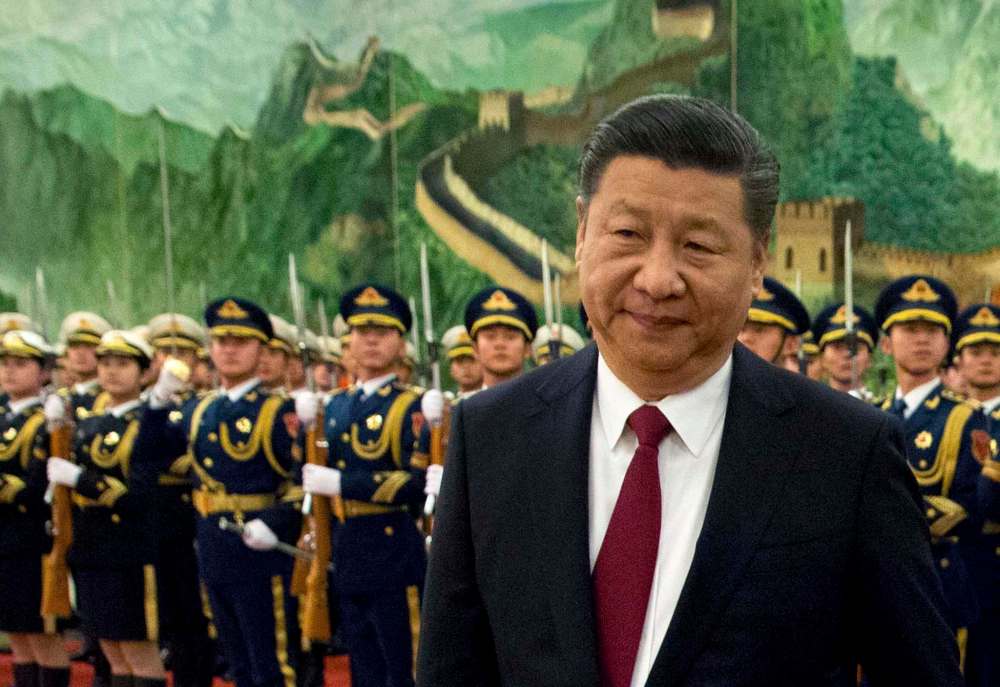
Shades of Mugabe, I hear you thinking, although Xi commands a country around a thousand times richer than Zimbabwe. He is now effectively president-for-life, or at least until things get so bad that the people around him decide they have to overthrow him, as Mugabe’s cronies eventually did. And although Xi obviously thinks being president-for-life is a good idea, it is not.
Being president-for-life certainly wasn’t a good idea for former Soviet leader Leonid Brezhnev, who was also effectively in power for life. In his case that was 18 years. It became known as the “era of stagnation,” and only seven years after Brezhnev died in 1982 the whole Communist empire in eastern Europe collapsed.
Alerted to the danger of leaving somebody in power too long by the collapse of the Soviet Union, the Chinese Communist Party has kept its leaders on a short leash since the early 1990s. They got two five-year terms, no more, and they had to keep the support of other members of the central committee or it might even be just one term.
It has worked pretty well, as dictatorships go. There have been no more maniacs in power like Mao Zedong with his crazy Great Leap Forward and Cultural Revolution, which killed millions and cost the country two decades of economic growth. During the past quarter-century of cautious, consensus-based politics, China’s economy has grown about tenfold.
That pace of growth cannot continue no matter who is in power, but it is very important for the party’s survival that the economy does continue to grow. There is certainly no evidence that one-man rule will provide that growth better than the existing system, so why (presuming that he is a loyal Communist) has Xi decided to overthrow it?
Mere personal ambition is one obvious possibility, but there is probably more to it than that. Xi’s father was Communist royalty — one of the founders of the party, and at one time its general secretary — and he himself was a “princeling’ who spent his early years in very comfortable circumstances. Then in 1966, Mao launched the Cultural Revolution.
Xi’s father was expelled from the party and publicly humiliated. He himself was sent to the countryside at the age of 15 to “learn from the peasants,” and ended up in a work camp digging ditches. For some years, he actually lived in a cave (although it had a door). But he survived, and he was eventually allowed to join the party, move back to the city and go to university.

It all left a lasting impression on the young Xi. He knew that working hard, keeping your nose clean and even rising to high rank cannot protect you in an essentially lawless one-party state if party politics takes the wrong turn. So he really only had two choices: work to change the party into a law-abiding entity (which is probably impossible), or take control of the party and keep it forever.
He has chosen the latter course, and in terms of protecting himself it is probably the right choice. “I think he will become emperor for life and the Mao Zedong of the 21st century,” said Willy Lam, former Hong Kong democratic politician and now politics professor at the Chinese University of Hong Kong. And that is precisely the problem.
Xi, no doubt, justifies his actions to himself by believing that he is the indispensable man for China’s modernization, but the cemeteries are full of indispensable men. The longer you are in power, the more poor, or at least sub-optimal, decisions you make. And, when the passage of time makes the mistakes obvious, you are obliged to defend them, although a successor could just drop them and move on.
Xi is not likely to “do a Mao” and unleash chaos in China. He is intelligent and he works hard. But the mistakes will accumulate, nevertheless, and stagnation awaits.
Gwynne Dyer is an independent journalist whose articles are published in 45 countries.