How food fixations can mirror faith
Advertisement
Read this article for free:
or
Already have an account? Log in here »
To continue reading, please subscribe:

Digital Subscription
One year of digital access for only $205*
- Enjoy unlimited reading on winnipegfreepress.com
- Read the E-Edition, our digital replica newspaper
- Access News Break, our award-winning app
- Play interactive puzzles
*First annual payment billed as $205.00 + GST for one year. This annual subscription will automatically renew at $233.00 + GST every 52 weeks (10% off the regular annual price of $259.35). Offer available to new and qualified returning subscribers only. Cancel any time.
To continue reading, please subscribe:
Add Free Press access to your Brandon Sun subscription for only an additional
$1 for the first 4 weeks*
- Enjoy unlimited reading on winnipegfreepress.com
- Read the E-Edition, our digital replica newspaper
- Access News Break, our award-winning app
- Play interactive puzzles
*Your next Brandon Sun subscription payment will increase by $1.00 and you will be charged $17.95 plus GST for four weeks. After four weeks, your payment will increase to $24.95 plus GST every four weeks.
Read unlimited articles for free today:
or
Already have an account? Log in here »
Hey there, time traveller!
This article was published 24/03/2018 (3076 days ago), so information in it may no longer be current.
Many atheists downplay their lack of faith when talking with pollsters, according to a recent study. This means levels of atheism in Canada could be twice as high as previously thought, and it’s already well known as the fastest-growing segment in the world.
But when people leave church, what do they replace it with? Does a lack of organized religion create a void in people’s lives? The emergence of atheist churches suggests it does.
As a Christian dietitian, I’ve observed that the increase in atheism is also coinciding with an increase in a different type of faith: a belief in the powers of a restrictive diet. It seems that people are eager for something to believe in and a community to belong to, but I’m concerned that many people’s health is being harmed in the process.
The rise of the internet has provided a place for these food-faith communities to form. Instead of meeting in ornate church buildings, people chat online and occasionally organize real-life get-togethers. Instead of moral rules, they adopt food rules:
“Thou shalt not eat gluten.”
“Thou shalt not eat sugar.”
“Thou shall not eat carbs.”
“Thou shall cleanse thyself with coconut oil.”
Every diet faith group has their set of food rules, and although the rules vary from group to group, they share a theme with most religions: the battle between good and evil. There are pure foods and corrupt foods. The body is the temple, and requires strict rules to filter out the corrupt food of the world. While churchgoers might purify their souls for everlasting life, this new movement purifies the body, to gain everlasting health, increased energy and a longer life.
This trend towards replacing church with food-based rules is understandable. I understand the human need to place faith in something and to work out that faith in a community of like-minded people. But I’m also troubled. Most of the time, I see this new intersection of faith and food introducing problems… problems that are not too different from the problems that pop up in organized religion as well.
For example, Christians are familiar with legalism, where an unhealthy obsession with restrictive rules can take something positive and turn it negative. A faith that is based on freedom, rich tradition, heartfelt worship and relationship can become a joyless, slave-like addiction to controlling behaviour, passing judgment and feeling superior to others.
But Christians don’t have the market cornered on legalism.
In 2014, blogger Jordan Younger stunned her half-million followers by confessing that her dedication to “clean” and “plant-based” eating had turned into an obsession. It had developed into an eating disorder and was endangering her well-being.
The specific eating disorder she had developed is called orthorexia nervosa. The term literally means “fixation on righteous eating.” It’s a problem that health professionals are increasingly concerned about, to the point where they are wondering when it will be added to the Diagnostic and Statistical Manual of Mental Disorders.
Orthorexia takes the belief that restricted eating is healthy eating, and eventually makes purity of food all-encompassing. Every day becomes a chance to eat “cleaner,” and one’s self-esteem becomes wrapped up in following the rules better than other people.
At her lowest point, Younger had stopped getting her period and was losing her hair. And yet, it wasn’t until a friend confronted her that she realized the problem she had, and took steps to lose her food fixation.
The sense of superiority over others and the strong community pressure to maintain food rules made it hard for her to notice the negative affects on her life, her relationships and even her health.
In short, she had succumbed to legalism. Her belief in restrictive rules had turned her positive desire to eat healthy into a destructive obsession.
The most important weapon against legalism is relationship. A healthy faith life stems from a dynamic relationship between human and creator, as well as a network of relationships with other people. A healthy food life stems from a dynamic relationship with one’s own body.
Instead of seeing food as a battleground between good and evil, I encourage my clients to think of it as a relationship between them, food and their body.
All relationships can weather storms, and even grow stronger from them. There’s a time and place for a decadent dessert, a quick snack and a hearty meal.
Communication is key. Listening to our bodies makes it clear which foods are nourishing to them. When we make those the backbone of our relationship, we allow space for a wide variety of foods, and are able to always enjoy our time together with food!
Food and religion should bring joy into your life. If they don’t, you’re doing it wrong.
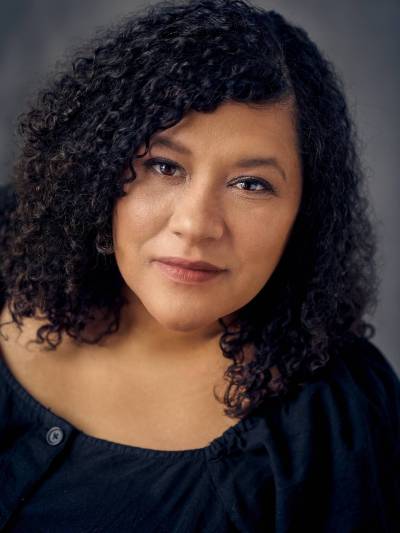
Jessica Penner is a Winnipeg-based registered dietitian and founder of Smart Nutrition.
The Free Press is committed to covering faith in Manitoba through our Religion in the News project. This reporting continues because readers like you step forward to fund it.
Donate now to support our reporting on religion.
Your donation is eligible for a charitable tax receipt.
BECOME A FAITH JOURNALISM SUPPORTER
History
Updated on Tuesday, April 10, 2018 4:16 PM CDT: added hyperlink at end of article
The Free Press acknowledges the financial support it receives from members of the city’s faith community, which makes our coverage of religion possible.