Waste not, want not
These tips will help you reduce the $31 billion in food Canadians toss out every year
Advertisement
Read this article for free:
or
Already have an account? Log in here »
To continue reading, please subscribe:

Digital Subscription
One year of digital access for only $205*
- Enjoy unlimited reading on winnipegfreepress.com
- Read the E-Edition, our digital replica newspaper
- Access News Break, our award-winning app
- Play interactive puzzles
*First annual payment billed as $205.00 + GST for one year. This annual subscription will automatically renew at $233.00 + GST every 52 weeks (10% off the regular annual price of $259.35). Offer available to new and qualified returning subscribers only. Cancel any time.
To continue reading, please subscribe:
Add Free Press access to your Brandon Sun subscription for only an additional
$1 for the first 4 weeks*
- Enjoy unlimited reading on winnipegfreepress.com
- Read the E-Edition, our digital replica newspaper
- Access News Break, our award-winning app
- Play interactive puzzles
*Your next Brandon Sun subscription payment will increase by $1.00 and you will be charged $17.95 plus GST for four weeks. After four weeks, your payment will increase to $24.95 plus GST every four weeks.
Read unlimited articles for free today:
or
Already have an account? Log in here »
Hey there, time traveller!
This article was published 03/04/2018 (3018 days ago), so information in it may no longer be current.
If you’re taking time to carefully choose produce you’re putting in your cart, it’s important to get everything you can out of that produce. You need to use it as efficiently as possible.
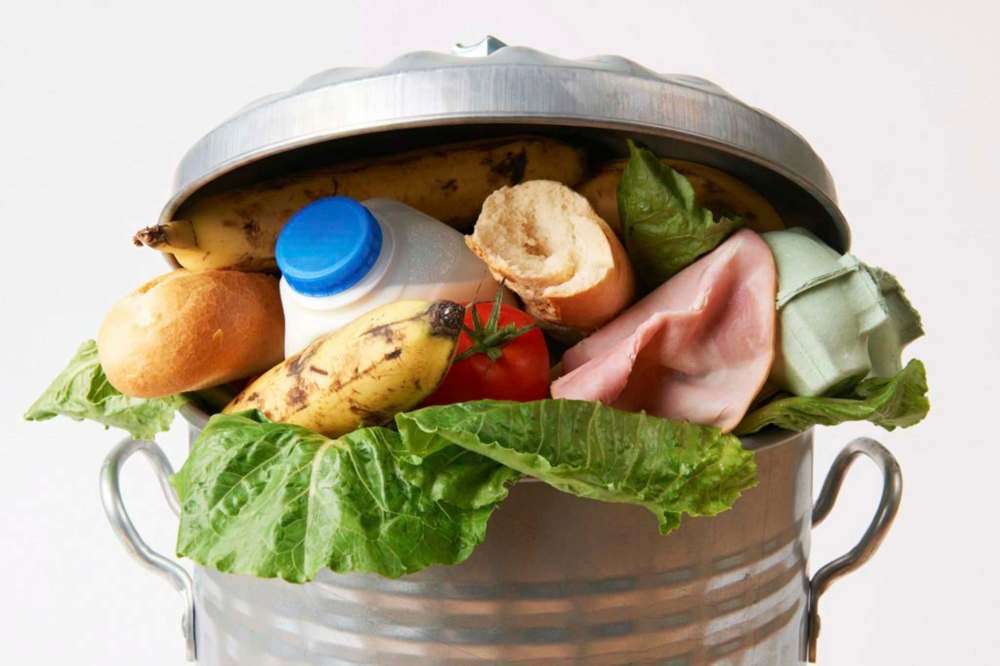
Food waste is a big problem. In 2014, statistics show $31 billion of food goes to Canada’s landfills or compost bins every year. Globally, 1.3 billion tonnes of food is wasted.
If that seems staggering, well, it is. And while there is a substantial amount of that wasted by retailers and various arms of the food industry — it also comes right out of our kitchens. With Earth Day coming up on April 22, and a new growing season just around the corner, it’s a good time to look at a few ways to improve those statistics, for the health of our families, the planet and yes, our pocket books.
With food waste, it comes down to this: we buy too much and we don’t use or store it properly — meaning we don’t get to it quick enough or we’re not using up every bit.
We are also unintentionally throwing out food that could be eaten — especially vegetable parts such as leaves and stems. Every time you remove and discard an edible vegetable part, you are throwing away good, nutritious food, and you are increasing the cost per pound of your purchase.
Here are some tips on how to get the most — and waste the least — of your produce purchases:
Keep the greens and stalks
● Most vegetable greens are edible (but not rhubarb!) Carrot tops, turnip tops, beet tops, celery greens, radish tops, leaves and stems from broccoli and cauliflower can all be steamed, sautéed or tossed into salad. It’s best to remove the greens and store them separately as the tops will draw moisture.
● For broccoli stems, peel off the tough outer stalk (it’s too fibrous to cook with) and slice up the lighter, tender stalk. Do the same with cauliflower.
● Leek greens can be cooked but they take time. They are good sautéed with bacon, for example. They can also be used in quiches, dehydrated as vegetable chips and added to soup.
● “Spare parts” should be used in vegetable and meat stocks. Be cautious with greens as they can become strong — add leaves, tops, and beets to the finished soup instead. You can keep a zipper bag in the freezer and add vegetable bits until you are ready to make stock. Simmer for about an hour.
● Don’t overlook apple cores, tomato trimmings, corn husksand mushroom stems for use in vegetable stocks.
● Freeze the tough ends from asparagus and simmer (then remove them) to make the base for cream of asparagus soup.
● Roast squash and pumpkin seeds. It’s easy to do. Wash them, toss them in oil or melted butter and a little salt, spread them out on a cookie sheet and roast at 150 C (300 F) until golden brown. Give them a stir now and then.
● Don’t toss the bitter, white leaves from inside leaf lettuces like romaine. Keep the stalk intact, put it in a shallow dish of water and leave it a sunny window until the leaves turn green. That’s an extra serving of lettuce.
● You can eat those tougher stems from chard and kale — they just need a little more prep. Thin slice them for stir-fries and sautées.
● Don’t peel unless you must. Organic root vegetables such as carrots, potatoes, turnips and baby beets just need a good scrub. Most of the nutrients are right under the skin.
● The skin of kiwi fruit is edible and packed with fibre. So are sweet potato skins.
Use your freezer and other storage better
● Commit to using up everything in your freezer by the end of each season.
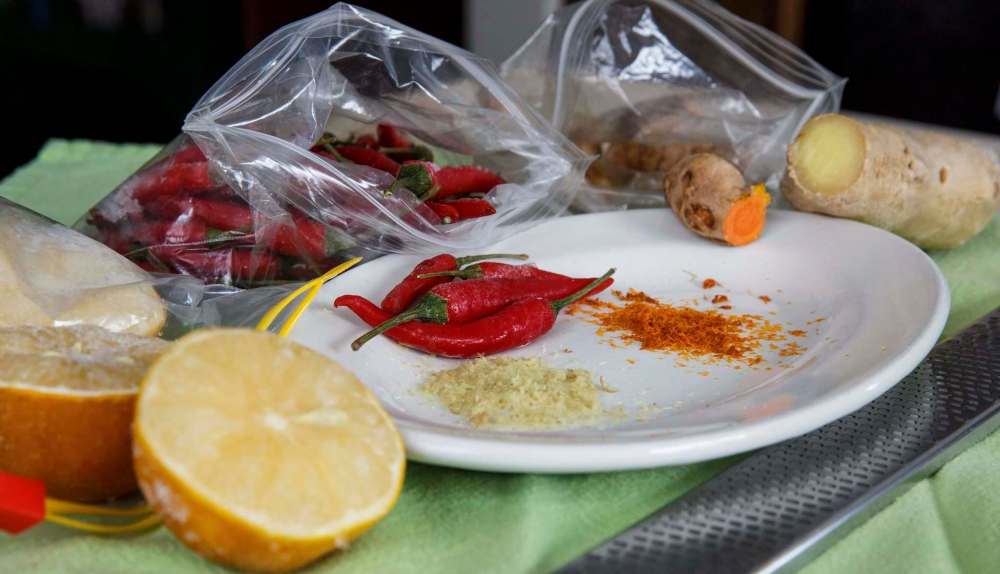
● Freeze washed lemons and limes cut into eighths — they’re easy to thaw and add to foods. Leave them frozen for drinks.
● Keep ginger and turmeric and those little red chili peppers in the freezer. Grate the ginger and turmeric frozen on a micro-plane. No need to peel since it stays on top of the micro-plane. The chilies are easier to slice and seed when frozen.
● Freeze washed and hollowed-out whole sweet peppers to stuff later.
● Purée washed tomatoes, skins and all, and pour into leak-proof freezer bags or containers for soups, stews and sauces.
● You can freeze guacamole.
● Some canned goods can be frozen once opened: leftover cranberry sauce divided into 1/3- to 1/2-cup portions for use in between the holidays; puréed pumpkin can be divided into portions for smoothies and frozen; large cans of ketchup can be divided and frozen.
● Before you shop, get your kitchen ready to receive the vegetables: Be ready to wash and re-wrap to refrigerate or freeze; have containers ready.
● Wrap washed greens in paper or lightweight cotton towels.
● Separate onions and potatoes for storage. They aren’t good roommates.
● Commit to emptying the freezer at the end of each season before you re-stock and take notice of what you’ve been ignoring — maybe you should take it off the list.
● When you plan your menus — think of vegetables as the main, then starchy vegetables and legumes, then meat and accompaniments like rice and pasta.
Regrow and reuse
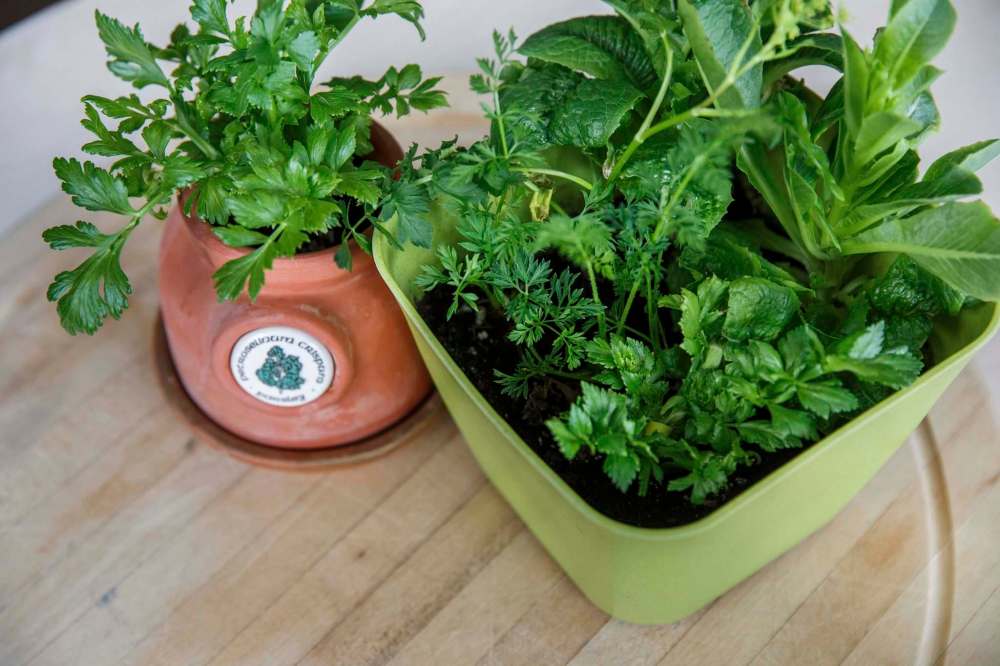
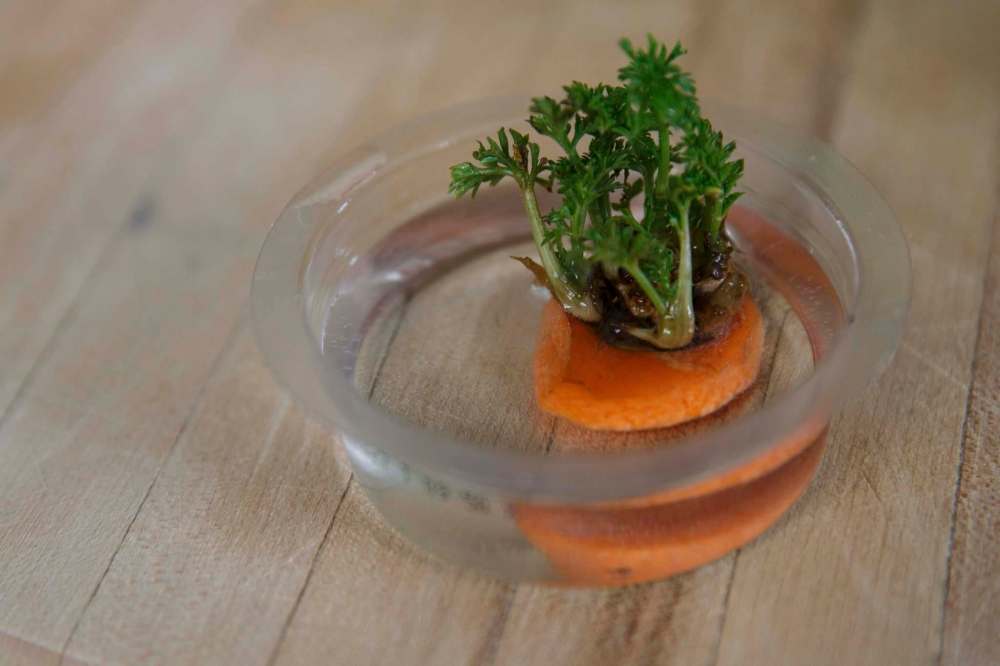
This is a cheery thing to do when it’s too early to garden and especially if you have kids. You can use the tops of carrots and parsnips, the bottoms of leaf lettuces and celery to start plants in your kitchen. Trim them a little, put them in some water and let them root. Transplant them into a pot and they will re-grow giving you greens for a salad. Google around for more vegetables and herbs that will re-grow. You can also keep green onions, celery stalks and live herbs fresher, longer by storing them with the roots in water like flowers in a vase or jar.
Make more pickles
There are recipes online for watermelon rind, broccoli stems and even chard stems. And there are lots of recipes online and books for small batch refrigerator-pickled vegetables and fruit. You can make just a few jars at a time if that’s all you have (or want).
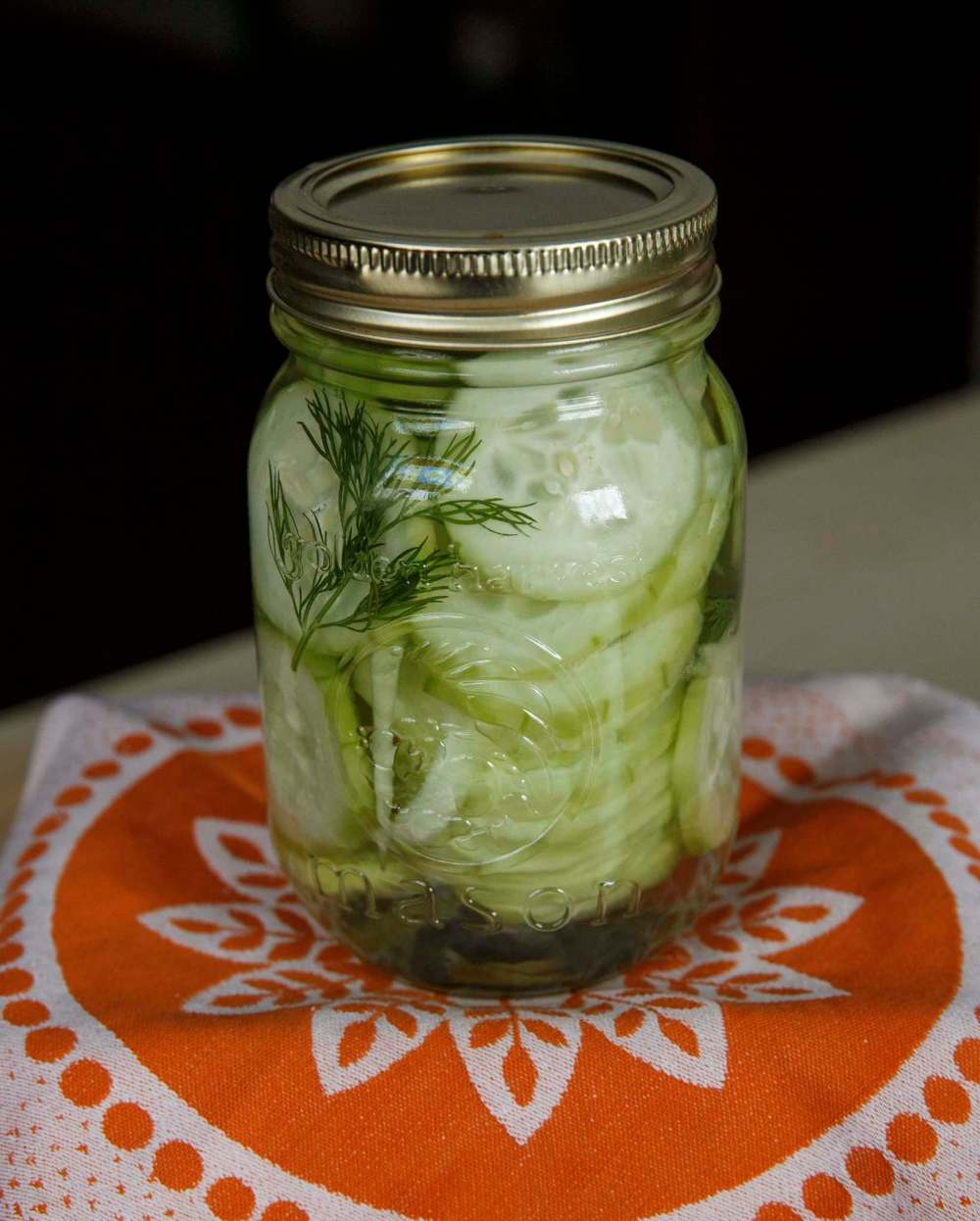
I’ve had this recipe kicking around forever. If you like cucumbers but find you aren’t using them up quick enough, this will help.
Sandwich and Supper Cucumbers
This is a refrigerator pickle, so no need to process it. It will keep for a week to 10 days and is great on sandwiches with cheese, meat, tuna or cream cheese; as a side on its own or with cottage cheese; or tossed into a salad. You can use either English or field cucumbers. Increase measurements as much as you need for more servings.
Makes one 500-millilitre jar
1 20- to 25-cm (8 to 10-inch) cucumber sliced thin (peel or score a field cucumber or, if you are using an English cucumber, leave the peel on) You need enough to lightly pack the jar.
3 to 5 thin slices sweet onion (you can add more to your taste)
125 ml (1/2 cup) sugar
125 ml (1/2 cup ) white vinegar
125 ml (1/2 cup) water
Optional: a snippet of fresh dill or a pinch of dried dill
500 ml (2 cup) jar with tight fitting lid.
Layer sliced cucumbers and onions into the jar, add dill if using.
In a 2 cup-size measuring cup (you want room to stir), mix the sugar, water and vinegar until sugar is dissolved.
Pour liquid into jar and cover tightly. Give it a gentle shake. Refrigerate for at least 1 hour before serving.
Twitter: @WendyKinginWpg