

TSN’s Munz fondly remembers his time covering the Humboldt Broncos

Advertisement
Read this article for free:
or
Already have an account? Log in here »
To continue reading, please subscribe:

Digital Subscription
One year of digital access for only $205*
- Enjoy unlimited reading on winnipegfreepress.com
- Read the E-Edition, our digital replica newspaper
- Access News Break, our award-winning app
- Play interactive puzzles
*First annual payment billed as $205.00 + GST for one year. This annual subscription will automatically renew at $233.00 + GST every 52 weeks (10% off the regular annual price of $259.35). Offer available to new and qualified returning subscribers only. Cancel any time.
To continue reading, please subscribe:
Add Free Press access to your Brandon Sun subscription for only an additional
$1 for the first 4 weeks*
- Enjoy unlimited reading on winnipegfreepress.com
- Read the E-Edition, our digital replica newspaper
- Access News Break, our award-winning app
- Play interactive puzzles
*Your next Brandon Sun subscription payment will increase by $1.00 and you will be charged $17.95 plus GST for four weeks. After four weeks, your payment will increase to $24.95 plus GST every four weeks.
Read unlimited articles for free today:
or
Already have an account? Log in here »
Hey there, time traveller!
This article was published 07/04/2018 (3096 days ago), so information in it may no longer be current.
Brian Munz has made the trip by bus from Humboldt to Nipawin so many times the route is etched in his brain.
Munz is a radio and TV broadcaster for the Winnipeg Jets and TSN now, but his start in the business began in the mid-1990’s with the Humboldt Broncos, his hometown club.
He spent five years on the bus with the Broncos, to towns across Saskatchewan and into Flin Flon; Kindersley, Estevan, Yorkton, Weyburn, and, of course, Nipawin.
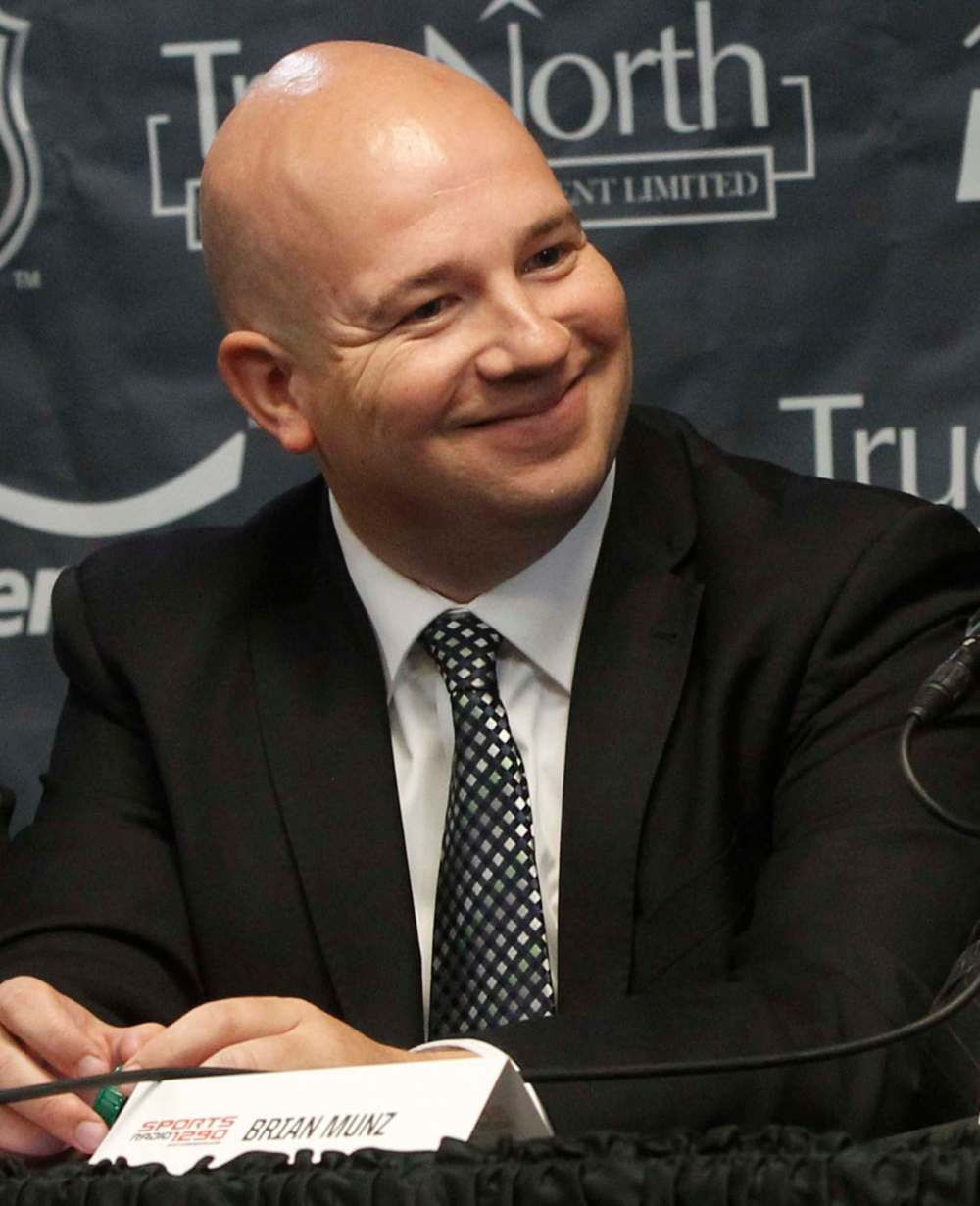
So when Munz first got news of the tragic bus accident that claimed the lives of 15 members of the Broncos team Friday, he could close his eyes and envision the spot.
“As soon as I was told where it happened I had a 100 per cent picture in my mind of exactly where it was,” Munz said Saturday, shortly before working the radio broadcast of the Jets last regular season game at Bell MTS Centre.
Munz could even picture the scene on the Broncos’ bus near the end of a two-hour drive.
“I think back on the days when you’re on the road trip and everybody gets on the bus and has a bite to eat and just nap for awhile,” he recalled. “You look at the scenario for the Broncos and last night I would assume they were just waking up from a pregame snooze on the bus, or were about to because they were only a few minutes from getting into Nipawin.
“That’s when the coaches would start getting the players up and start thinking about hockey. Then tragedy obviously struck.”
Munz’s family moved from Regina to Humboldt in 1993. And it didn’t take long before understanding what made the community tick.
“You realize in a matter of minutes that everybody knows everybody,” he said. “In a town of 6,000-7,000 people, everybody gravitates to the hockey rink. That’s what you do in the winter.
“Before there was the internet and every game was on television, so everybody went to the Broncos games as a meeting point, as a social place. And they’ve had such a rich history of success and championships. The Humboldt Broncos are one of the most storied franchises in Canada.”
Which is why Munz doesn’t hesitate to call the horrific accident “one of the most tragic hockey and life stories that Canada has ever seen.”
“It’s heartbreaking,” he added. “Everybody knows someone who’s affected. You know, all those kids billet. There’s only a few local guys. So everybody opens up their house to a kid who’s coming in from Winnipeg or B.C. or the United States.
“So it’s the billet families who become the player’s families and the players are out playing street hockey with the neighbours’ kids. In a small community like that, the Broncos team is big but it’s the individual players who spread out across the town and become a part of the community and do much more than just play hockey. They’re apart of everybody’s daily life.
“People get upset when they lose and when they win they’re the kings of the town. It’s just crazy when you think about them being 16 to 20 years old and the impact they have on a town like that both on and off the ice.”
‘It’s just crazy when you think about them being 16 to 20 years old and the impact they have on a town like that both on and off the ice’– Brian Munz
Bus trips are a reality in prairie hockey, in particular, for junior players. Munz remembers them fondly.
“Some of the best stories, some of the best memories, you have is really on the bus,” he noted. “Until cellphones came in that was really your time as a team to bond. You look back and you remember the goals or see highlights on television but, for me, it was the time together on the bus with the coaches and management and trainers. Then you had the one broadcaster and the players. And you became a family for nine months of the year. You knew everything about them and they knew everything about you.
“Some of those guys are still my closest friends today.”

Today, though, the memories were jarred by a brutal, deadly reality.
“And obviously you feel for the families,” Munz said, “to get the word that your son is going to play in one of the great Junior A cities in Canada and then you get the call and find out he was one of the 15 that didn’t make it….”
One of the 15 on the bus who didn’t make it was a young man named Tyler Bieber.
He was the team’s radio broadcaster.
randy.turner@freepress.mb.caTwitter: @randyturner15
Randy Turner
Reporter
Randy Turner spent much of his journalistic career on the road. A lot of roads. Dirt roads, snow-packed roads, U.S. interstates and foreign highways. In other words, he got a lot of kilometres on the odometer, if you know what we mean.
Our newsroom depends on a growing audience of readers to power our journalism. If you are not a paid reader, please consider becoming a subscriber.
Our newsroom depends on its audience of readers to power our journalism. Thank you for your support.
Randy Turner
Reporter
Randy Turner spent much of his journalistic career on the road. A lot of roads. Dirt roads, snow-packed roads, U.S. interstates and foreign highways. In other words, he got a lot of kilometres on the odometer, if you know what we mean.
Our newsroom depends on a growing audience of readers to power our journalism. If you are not a paid reader, please consider becoming a subscriber.
Our newsroom depends on its audience of readers to power our journalism. Thank you for your support.
Advertisement Advertise With Us
Advertisement Advertise With Us
History
Updated on Saturday, April 7, 2018 4:58 PM CDT: Headline changed.
Updated on Saturday, April 7, 2018 11:12 PM CDT: Edited