

Cinematic scope to Philippine politics
Advertisement
Read this article for free:
or
Already have an account? Log in here »
To continue reading, please subscribe:
Digital Subscription
One year of digital access for only $1.44 a week*
- Enjoy unlimited reading on winnipegfreepress.com
- Read the E-Edition, our digital replica newspaper
- Access News Break, our award-winning app
- Play interactive puzzles
*Billed as $5.77 plus GST every four weeks. After 52 weeks, price increases to the regular rate of $19.95 plus GST every four weeks. Offer available to new and qualified returning subscribers only. Cancel any time.
To continue reading, please subscribe:
Add Free Press access to your Brandon Sun subscription for only an additional
$1 for the first 4 weeks*
- Enjoy unlimited reading on winnipegfreepress.com
- Read the E-Edition, our digital replica newspaper
- Access News Break, our award-winning app
- Play interactive puzzles
*Your next Brandon Sun subscription payment will increase by $1.00 and you will be charged $17.95 plus GST for four weeks. After four weeks, your payment will increase to $24.95 plus GST every four weeks.
Read unlimited articles for free today:
or
Already have an account? Log in here »
Hey there, time traveller!
This article was published 16/04/2018 (3107 days ago), so information in it may no longer be current.
MANILA — It has been 42 years since Francis Ford Coppola came to the Philippines to film his Vietnam war epic Apocalypse Now. The legacy of the film remains strong here, not just in what the production left behind but in the themes that echo in today’s politics.
When I moved here with my family more than nine years ago, I was tickled to learn that we would be living in the same gated village that Coppola’s family stayed in during the production. Apocalypse Now is acknowledged by many critics as one of the best films ever made. It’s certainly my favourite.
Coppola’s wife Eleanor called Dasmarinas Village “the Philippine Beverly Hills” in a book she wrote about the experience. Its quiet, leafy streets are home to embassies and the mansions of the country’s richest families.
Outside the village, much has changed since the 1970s. Skyscrapers tower over it, evidence of the frantic growth that has seen the Philippine economy outpace most of its neighbours in recent years. But alongside those shiny new buildings (often literally alongside), the desperate poverty that the Coppolas witnessed has only worsened, with millions of poor squatters crammed into tumbled lanes of tin and tarpaper shacks.
Overhead, I often hear the fwap-fwap-fwap of helicopters on their way to the nearby air force base, a noise featured repeatedly in the film. To get authentic “Huey” choppers like those used in Vietnam, Coppola made a deal to rent them from the country’s strongman dictator, Ferdinand Marcos. He also bargained for troops to use as extras and got permission to operate mostly as he wished, building and destroying whole villages during production.
Marcos had placed the country under martial law and could do what he wanted to help Coppola. The only downside was that those choppers had to be pulled out at times to fight insurgents in the southern island of Mindanao, where clashes had originally given Marcos the excuse to declare countrywide martial law.
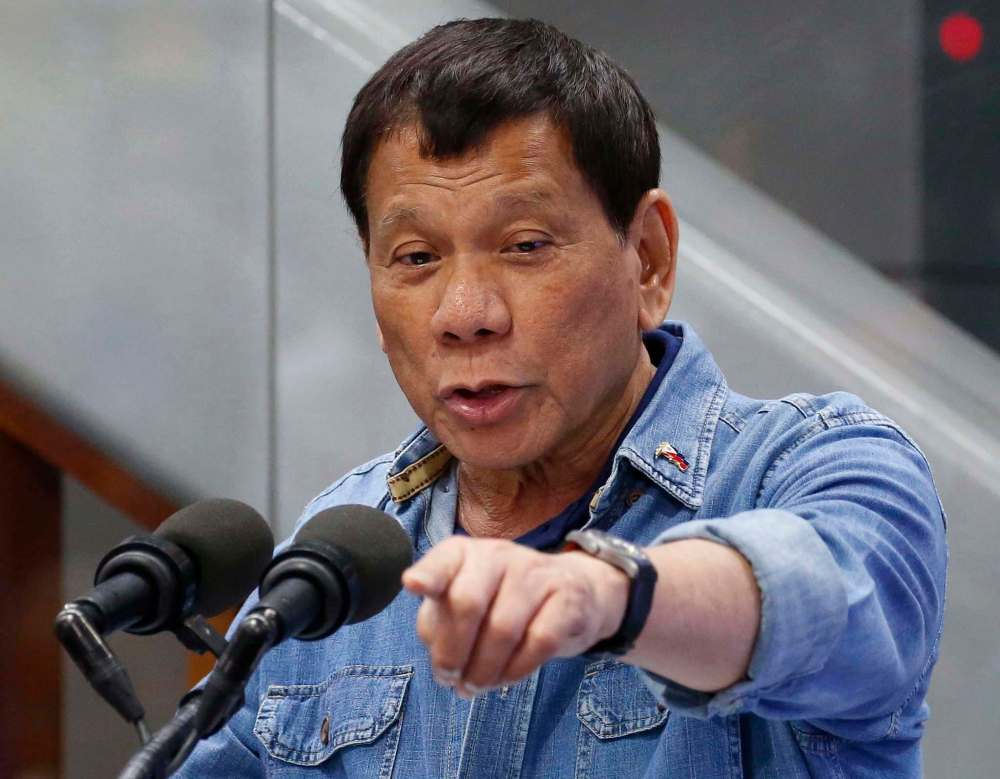
Mindanao is again under martial law because of anti-government fighting, this time declared by another popular strongman, President Rodrigo Duterte. He has mused about extending it to the rest of the country, should opposition to his policies prove troublesome.
Duterte has been active in rehabilitating the Marcos name.
The family is still in the public eye, with Ferdinand’s widow Imelda (yes, the shoe lady) an elected congresswoman. Marcos’s son, also named Ferdinand but known to all as Bong Bong, ran in an unsuccessful bid to become vice-president.
Leni Robredo, who beat the younger Marcos, has been sidelined by Duterte. He was quoted as saying the last straw in the breakdown of their relationship was her opposition to the decision to allow the re-burial of the elder Marcos in a cemetery reserved for the country’s heroes.
Like Colonel Kurtz in Coppola’s movie, Duterte advocates radical methods. The colonel wanted to exterminate his enemies “pig after pig, cow after cow, village after village, army after army.” Duterte pledged to fill Manila Bay with the criminals he would kill if elected. Like the country’s initial reaction to Marcos, who was ousted in 1986, his strong hand remains very popular.
Since his election in 2016, Human Rights Watch estimates more than 12,000 have been killed in Duterte’s anti-drug campaign. When the International Criminal Court said it would investigate the deaths last month, Duterte withdrew the Philippines from the treaty that oversees the court. He said last week he would have any investigators from the court arrested if they came to the Philippines.

Marcos gave Coppola what he wanted. Some critics say Duterte is doing the same with China.
The last administration won its case in international court that China had overstepped by developing islands in water claimed by the Philippines. Duterte has put that ruling aside and with every tirade against human rights critics in the West he has moved the country closer to an alliance with China.
Politics aside, the legacy of Apocalypse Now lives on in daily life. I have hiked with our dog through a mountainside jungle where some of its scenes were shot. The school my two boys attend sends students on a trip every year to a nearby waterfall on a river where some of the movie’s boat scenes took place.
The fishing town of Baler, north of Manila, where Coppola blew up a village and shot the film’s “Charlie don’t surf!” scenes, is now a top surfing destination. When the production wrapped up, the surfboards left behind were taken up by locals. That’s a much more pleasant legacy than what seems to live on in the country’s current president.
Phillip Day is a Canadian writer and journalist who lives with his family in Manila.
History
Updated on Thursday, April 19, 2018 12:31 PM CDT: Removes reference to Ferdinand Marcos as Duterte's running mate