

Homelessness not improving
14 per cent of polled say they have nowhere to sleep but the streets: Winnipeg Street Census

Advertisement
Read this article for free:
or
Already have an account? Log in here »
To continue reading, please subscribe:
Monthly Digital Subscription
$1 per week for 24 weeks*
- Enjoy unlimited reading on winnipegfreepress.com
- Read the E-Edition, our digital replica newspaper
- Access News Break, our award-winning app
- Play interactive puzzles
*Billed as $4.00 plus GST every four weeks. After 24 weeks, price increases to the regular rate of $19.95 plus GST every four weeks. Offer available to new and qualified returning subscribers only. Cancel any time.
Monthly Digital Subscription
$4.99/week*
- Enjoy unlimited reading on winnipegfreepress.com
- Read the E-Edition, our digital replica newspaper
- Access News Break, our award-winning app
- Play interactive puzzles
*Billed as $19.95 plus GST every four weeks. Cancel any time.
To continue reading, please subscribe:
Add Free Press access to your Brandon Sun subscription for only an additional
$1 for the first 4 weeks*
*Your next subscription payment will increase by $1.00 and you will be charged $16.99 plus GST for four weeks. After four weeks, your payment will increase to $23.99 plus GST every four weeks.
Read unlimited articles for free today:
or
Already have an account? Log in here »
Hey there, time traveller!
This article was published 12/06/2018 (2873 days ago), so information in it may no longer be current.
The state of homelessness in Winnipeg doesn’t look much different than it did three years ago, results of the latest street census show.
Initial findings of the Winnipeg Street Census 2018 — the second edition of a comprehensive count that seeks to further knowledge about the extent and nature of homelessness in the city — were published Tuesday. Of the 1,500 homeless Winnipeggers surveyed April 18 by teams of volunteers, 14 per cent had nowhere to sleep but the streets. Those either couch-surfing or staying in a shelter made up nearly half of respondents.
The first such census took place Oct. 25, 2015. Volunteers then found at least 1,400 people didn’t have a permanent home, with less than 10 per cent of respondents sleeping outside.
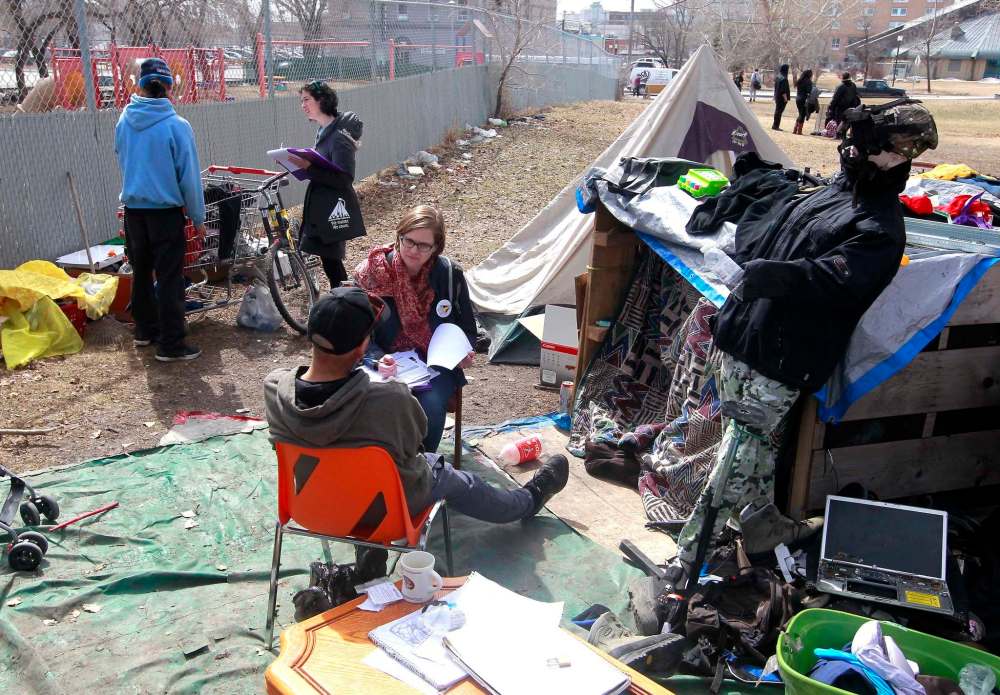
“One of the things that stands out for me is just how much hasn’t changed in the past three years,” said Josh Brandon, the lead author of the report and community animator at the Social Planning Council of Winnipeg.
“The groups that were experiencing disproportionate levels of homelessness (in 2015), in particular Indigenous people and young people, continue to be disproportionately represented. We also see a lot of the same trends around people that had experience in foster care or group homes, being overrepresented.”
In 2015, more than 70 per cent of the homeless Winnipeggers surveyed identified as Indigenous. That number dropped 10 per cent in 2018.
As for those who experienced homelessness for 10 or more years throughout their lives, the majority first experienced homelessness when they were 18 years old or younger, the survey said.
“If we don’t invest upstream, helping families and young people, this is going to be a problem that’ll stick with us through decades,” Brandon said.
None of the numbers surprised Jolene Wilson, community connector at West Central Women’s Resource Centre.
“This is just the folks that were willing to talk about their homelessness, and I think that’s what needs to be really put out there. These numbers are great, the work is great, this is stuff we really need to know, but the numbers themselves are just the tip of the iceberg,” said Wilson, who said she, too, was homeless for 15 years.
Carol Morris, grant co-ordinator at Siloam Mission, volunteered during the April census. She said many of the stories she was told involved residential school survivors and women who had fled abusive relationships.
One of the people accessing the services Monday at Siloam, Gordon Kent, said he’s spent half his life without a stable home and experienced homelessness for the first time when he was seven years old.
“The creator gave us land to live off and, next thing you know, you’ve got no place to live,” the 55-year-old Ojibwe man from Sagkeeng First Nation said.
“(My home’s) kind of rough right now, but that’s the typical native way of life: harsh, oppression,” said Kent, who’s been living off social assistance since an injury put him out of construction work when he was 27.
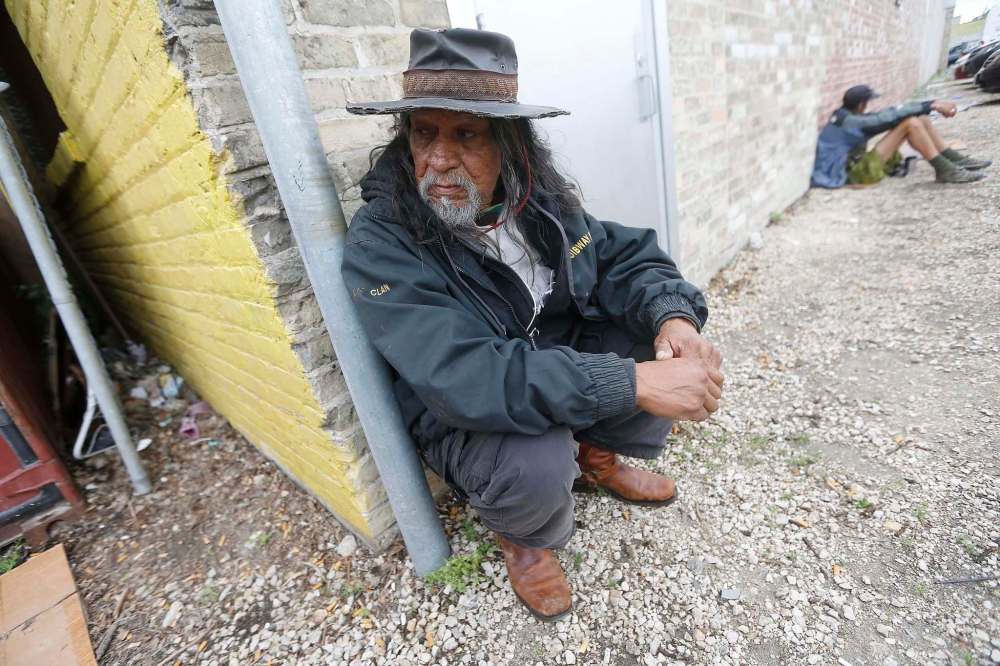
Having spent countless nights on family members’ couches and in public spaces engaging with other homeless Winnipeggers, Kent said he’s not surprised about the numbers of Indigenous homeless people in the city. He said he believes they face an additional challenge of discrimination when it comes to finding affordable housing.
“Sometimes, even when I did have an apartment, I’d go sleep on a bench, too, just to feel back to normal.”

The $81,000 census is funded through the federal government’s Homelessness Partnering Strategy, which is administered through the City of Winnipeg as the local entity.
The census report will be published in its entirety in early September.
maggie.macintosh@freepress.mb.caTwitter: @macintoshmaggie
Maggie Macintosh
Education reporter
Maggie Macintosh reports on education for the Free Press. Originally from Hamilton, Ont., she first reported for the Free Press in 2017. Read more about Maggie.
Funding for the Free Press education reporter comes from the Government of Canada through the Local Journalism Initiative.
Every piece of reporting Maggie produces is reviewed by an editing team before it is posted online or published in print — part of the Free Press‘s tradition, since 1872, of producing reliable independent journalism. Read more about Free Press’s history and mandate, and learn how our newsroom operates.
Our newsroom depends on a growing audience of readers to power our journalism. If you are not a paid reader, please consider becoming a subscriber.
Our newsroom depends on its audience of readers to power our journalism. Thank you for your support.
2018 street census
OF at least 1,500 individuals experiencing homelessness:
14.3 per cent were unsheltered;
23.7 per cent were in emergency shelters;
25.4 per cent were staying with family or friends;
17.4 per cent were in transitional housing;
14 per cent were in institutions (detox, mental health programs, etc.) with no home to return to;
3.4 per cent were staying at hotel or motels;
Median age of those experiencing homelessness: 39; with 367 individuals under the age of 30;
At least 20 individuals were senior citizens;
More than 60 per cent of respondents identified as Indigenous.
Maggie Macintosh
Education reporter
Maggie Macintosh reports on education for the Free Press. Originally from Hamilton, Ont., she first reported for the Free Press in 2017. Read more about Maggie.
Funding for the Free Press education reporter comes from the Government of Canada through the Local Journalism Initiative.
Every piece of reporting Maggie produces is reviewed by an editing team before it is posted online or published in print — part of the Free Press‘s tradition, since 1872, of producing reliable independent journalism. Read more about Free Press’s history and mandate, and learn how our newsroom operates.
Our newsroom depends on a growing audience of readers to power our journalism. If you are not a paid reader, please consider becoming a subscriber.
Our newsroom depends on its audience of readers to power our journalism. Thank you for your support.
Advertisement Advertise With Us
Advertisement Advertise With Us
History
Updated on Tuesday, June 12, 2018 6:59 AM CDT: Adds photos
Updated on Tuesday, June 12, 2018 9:05 AM CDT: Corrects date of study's release