

Life is good in French Polynesia
All kinds of adventures offered from Mo'orea to Bora Bora

Advertisement
Read this article for free:
or
Already have an account? Log in here »
To continue reading, please subscribe:
Monthly Digital Subscription
$1 per week for 24 weeks*
- Enjoy unlimited reading on winnipegfreepress.com
- Read the E-Edition, our digital replica newspaper
- Access News Break, our award-winning app
- Play interactive puzzles
*Billed as $4.00 plus GST every four weeks. After 24 weeks, price increases to the regular rate of $19.95 plus GST every four weeks. Offer available to new and qualified returning subscribers only. Cancel any time.
Monthly Digital Subscription
$4.99/week*
- Enjoy unlimited reading on winnipegfreepress.com
- Read the E-Edition, our digital replica newspaper
- Access News Break, our award-winning app
- Play interactive puzzles
*Billed as $19.95 plus GST every four weeks. Cancel any time.
To continue reading, please subscribe:
Add Free Press access to your Brandon Sun subscription for only an additional
$1 for the first 4 weeks*
*Your next subscription payment will increase by $1.00 and you will be charged $16.99 plus GST for four weeks. After four weeks, your payment will increase to $23.99 plus GST every four weeks.
Read unlimited articles for free today:
or
Already have an account? Log in here »
Hey there, time traveller!
This article was published 30/06/2018 (2835 days ago), so information in it may no longer be current.
MO’OREA, French Polynesia — Roosters, despite their fabled reputation as harbingers of the new day, do not have a great idea of when morning is.
Certainly 2:50 a.m. would be no one’s description of dawn, and yet the air is full of their throttled cries as I wait outside my hotel for the shuttle to take me to the starting line of the Mo’orea Marathon, the premier sporting event on this tiny island in the South Pacific.
There’s a full moon, perhaps an indicator of how crazy you’d have to be to A) get up this early and B) run 42 kilometres in the moist Polynesian heat.
But almost 100 people are doing so, along with 283 who will run the half marathon and 80 who have signed up for the 10K.
If you go:
French Polynesia (often called Tahiti or the Islands of Tahiti) is an overseas collectivity of the French Republic. It’s made up of 118 islands in five archipelagoes that lie in the South Pacific (in the same time zone as Hawaii). Tahiti, Mo’orea, Raiatea, Taha’a and Bora Bora are all part of the Society Islands archipelago (the first two are Windward Islands, the latter three are Leeward).
French Polynesia (often called Tahiti or the Islands of Tahiti) is an overseas collectivity of the French Republic. It’s made up of 118 islands in five archipelagoes that lie in the South Pacific (in the same time zone as Hawaii). Tahiti, Mo’orea, Raiatea, Taha’a and Bora Bora are all part of the Society Islands archipelago (the first two are Windward Islands, the latter three are Leeward).
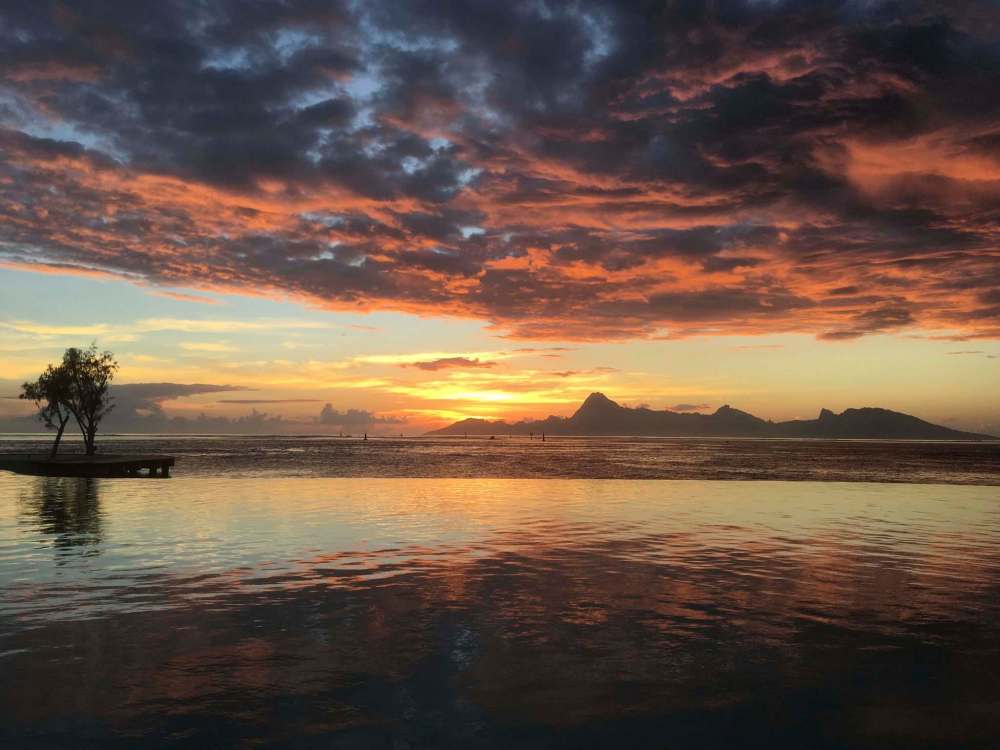
While on Tahiti — home to the administrative capital, Papeete, and the international airport — the Manava Suite Resort makes a nice home base. The rooms are oddly laid out, with unwelcoming furniture, but they have a kitchen and the infinity pool provides stunning sunset views, with Mo’orea in the distance. The staff are lovely and helpful, the restaurant is excellent with an immense breakfast buffet (because of its large Asian population, many hotels in French Polynesia include Chinese breakfast selections). There’s a lively bar that’s also frequented by non-guests. manavatahitiresort.com
Ia Ora Na Tahiti Expeditions is a great way to explore Tahiti. The full-day safari four-by-four tour takes you into the wild, gorgeous interior of the island and guide Olivier Lenoir is a fount of knowledge. There’s a stop for a picnic lunch and a swim. Be warned: there are no bathrooms after you leave the main road. (”Ia orana” loosely translates as “good day;” you will hear the phrase a lot.) iaoranatahitiexpeditions.com
Like sport tourism? Founded in 1988, the Mo’orea Marathon is a spectacular course, with five different run options. Check out the website for more information and to register: mooreamarathon.com.
On Raiatea, the Opoa Guest Hotel is highly recommended, with fantastic food, a pool and glorious sunrise views from the beach and pier. The staff are welcoming and will set up any tours or excursions you desire. opoabeach.com
Also in Raiatea, a guided tour from Polynesian Escapes is a must. Guide and cultural adviser Tahiraii Yoram Pariente is passionate and informed about Polynesian culture and history; the company offers a variety of activities and options. sites.google.com/view/polynesianescape
For a tour of the vanilla island, the lovely and knowledgeable Yvann Mama at Taha’a Tour Excursions offers adaptable itineraries: tahaatourexcursion.com.
In Bora Bora, the Sofitel Private Island offers the overwater bungalow experience that is de rigueur for any trip to French Polynesia. The rooms are due for an upgrade and the food is so-so for the price, but the location and service are wonderful, and the private-island experience and amazing coral garden are a once-in-a-lifetime treat.
Getting there: It ain’t easy. You’ll have to get to Los Angeles first, which will entail at least one connection. Then there’s an 81/2-hour flight on Air Tahiti, which takes to you Fa’a’a International Airport. There are lots of inter-island flights offered, and regular ferry service from Tahiti to Mo’orea.
Currency: French Polynesia has its own currency, the Pacific Franc (CFP or XFP). You can order it ahead of time, or use an ATM once you arrive.
Cellphone: International rates are prohibitive; best to use Wi-Fi, which is widely available, if sometimes sporadic.
Water: Most hotels will provide you with free bottled water in the room, as the tap water is not drinkable (it’s fine for brushing your teeth).
Electricity: Pack an adapter/converter, as French Polynesia uses 220 volts.
Language: French is the official language; Tahitian and some other Polynesian languages are spoken. While many people involved in the tourism industry speak excellent English, it is not guaranteed. If you are arranging tours or services, check to see if they are offered in English.
Packing essentials: Everyday products — Band-Aids, sunscreen, bug spray — are insanely expensive, especially if you have to buy them on a resort. Take enough for the duration of your trip. Also, hotels may offer snorkels for use, but pack your own aqua shoes; you don’t want to cut your foot on coral. Unless you are bilingual, be sure to have enough reading material on hand, because even airport stores don’t sell English books or magazines.
Mingling among participants at the starting line, the makeup is the same as marathons the world over: tanned men and women who look as if they’re composed out of leather and catgut.
There’s a sense of camaraderie — most people seem to know each other, asking “ça va?” and offering double cheek kisses. The run is an international event, but most of the full-race runners are from France, though there are also participants from Germany, Spain and New Zealand, as well as lots of locals.
Some wear elaborate fanny packs filled with water bottles and nutrition gels. Others have bottles filled with their own energy concoctions, labelled with their bib numbers and the kilometre marker at which they’d like them placed.
Race association president Manu Keck loads them into the back of a van to drop them off at the appropriate roadside water stop.
This personal touch is just one element that sets the Mo’orea Marathon apart from other races… that and, you know, the route being one of the most stunning race courses it’s possible to imagine.
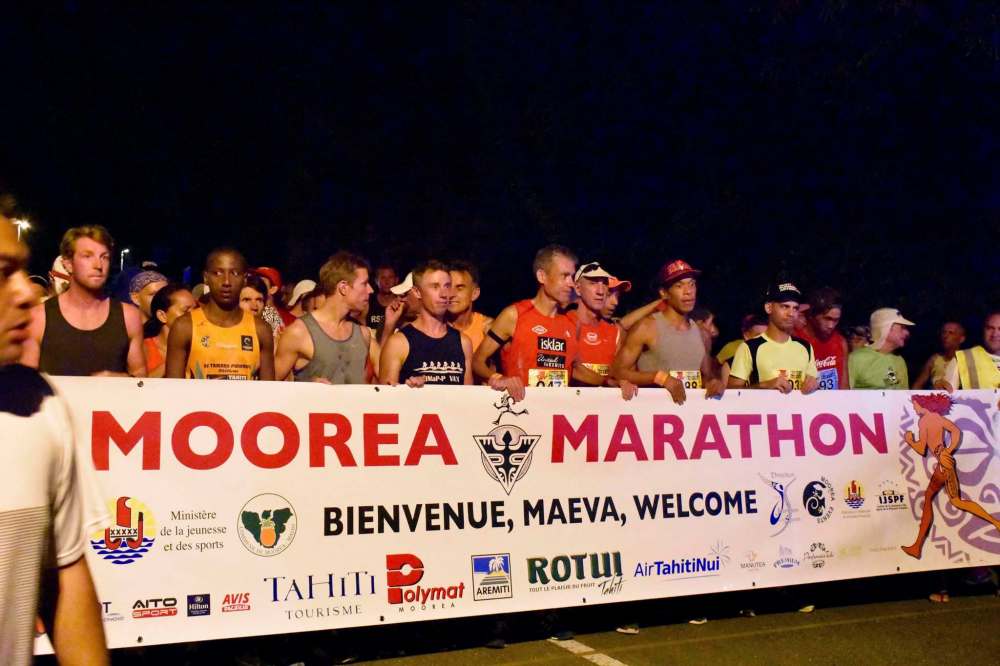
Steve, one of the course officials, is kind enough to pop me on the back of his motorcycle, and we zip ahead of the runners, around the winding road that circles the island. He is forgiving of my halting French and my insistence on stopping frequently to take in the view.
Though it’s still dark out as the starting horn sounds, the moon is a beacon that makes a silvery path along the water, visible through the fringes of palm trees by the roadside.
St. Joseph’s Protestant church is lit from within, the simple, geometric stained-glass windows sending out a jujube-hued glow.
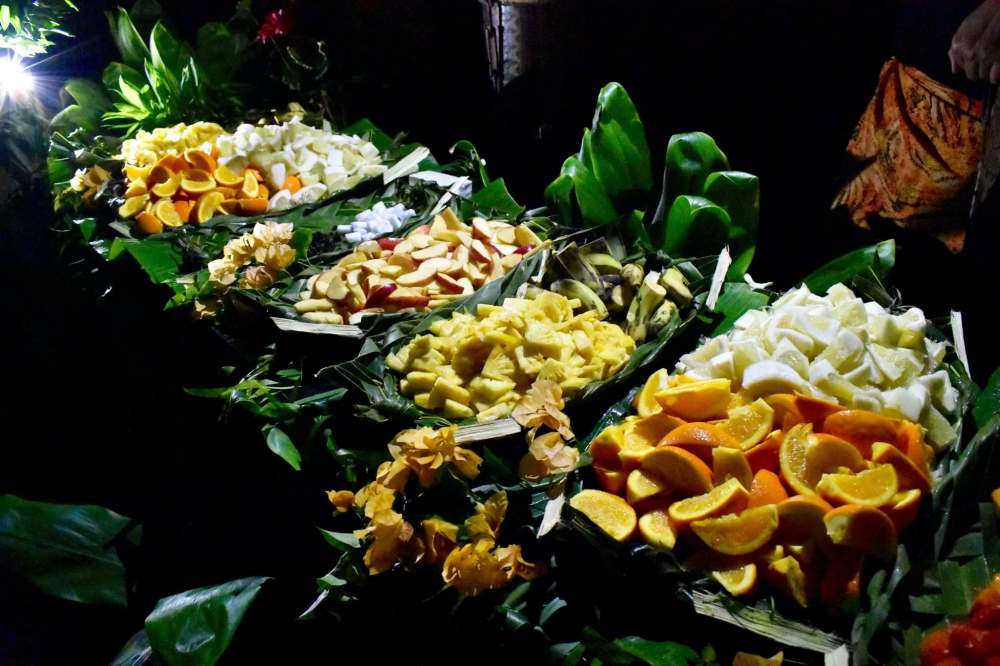
And the refreshment stations are nothing like the Dixie cups of Gatorade or tubes of energy gloop at North American races. Arrayed on tables sheathed in woven palm leaves are trays of papaya, pineapple, sugar lumps, raisins, orange, banana and grapefruit.
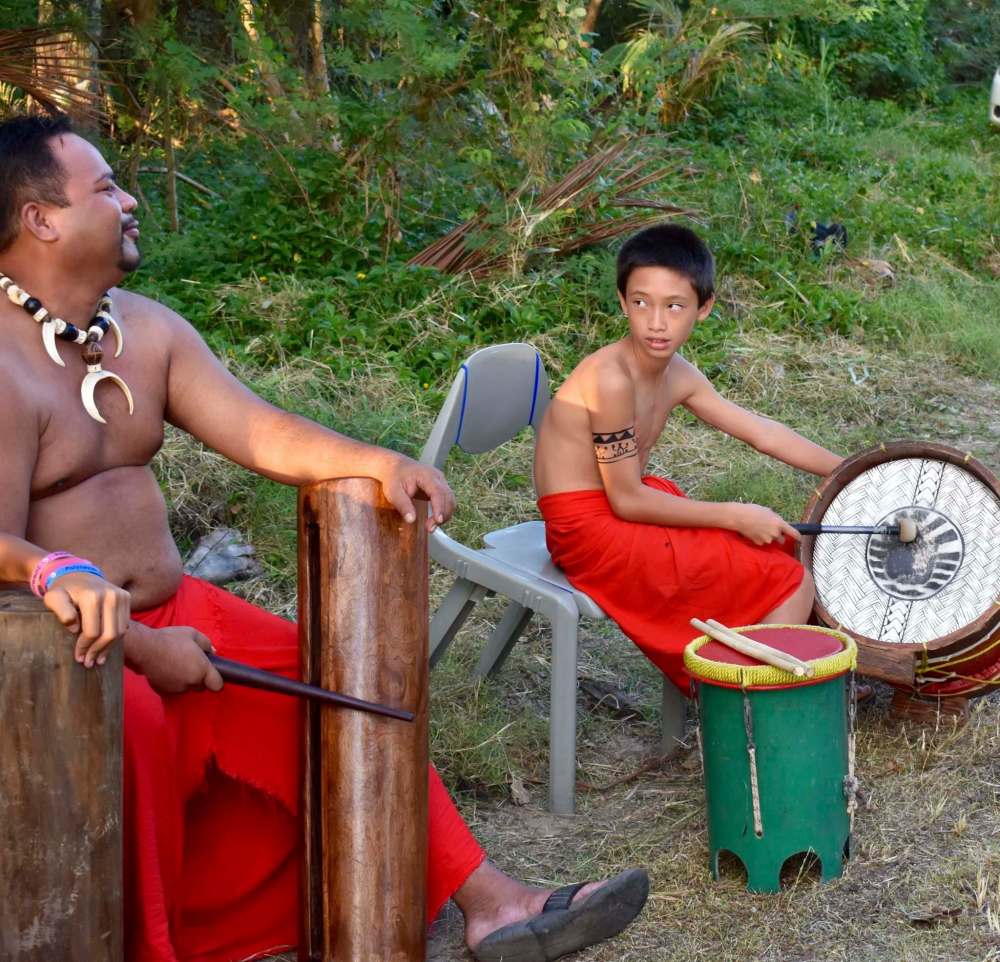
Certain stops also feature a form of haka performances, a ceremony that in this case involves men clad in red pareos pounding out a song on pahou (tall drums) and toere (hollow wooden cylinders struck with a stick). It’s a powerfully motivating beat that eggs the runners on as the sun comes up (by 7:30 a.m., the temperature is already 29 C).
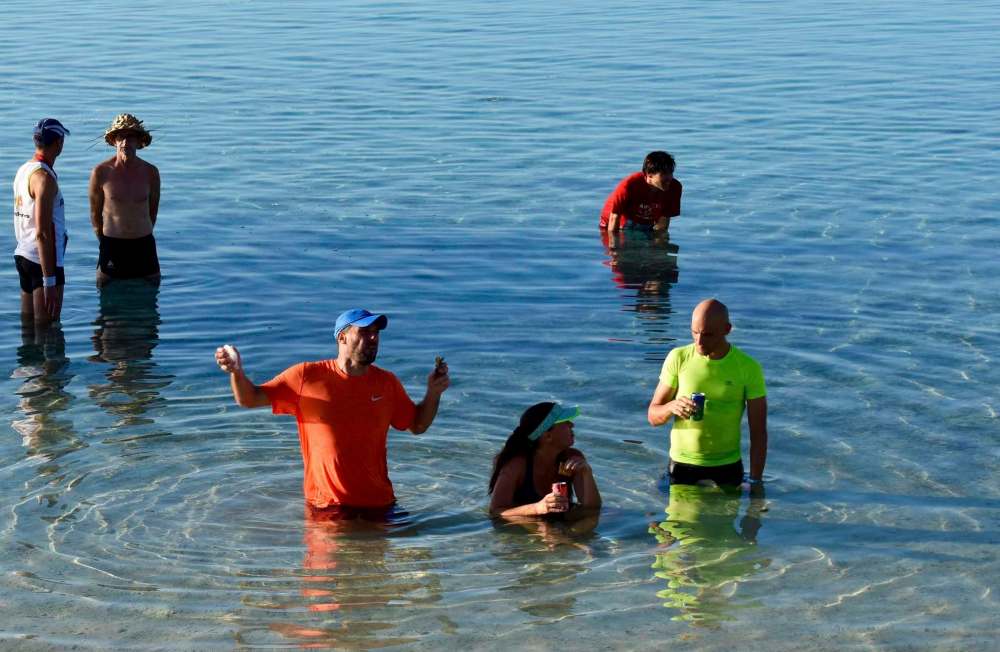
Another motivation awaits at the finish line, which is at Temae, a public beach with tranquil water. Finishers shed their shoes and stagger into into the soothing, cool sea, some still wearing their medals.
Later, the beach will be littered with the sleeping forms of knackered runners, who are going to wake up to wicked sunburns to accompany their aching muscles.
● ● ●
In theory, Jet Skis are awful. They are the scourge of open waterways. The whine of their engines spoils the calm of any beach and their wakes are a menace.
In practice, though? There might be nothing more thrilling than riding a Jet Ski at 30 miles an hour through water that shifts from indigo to pale aqua so clear you can see the ripples carved into the white sand below.
Albert Tours on Mo’orea offers different adventures, including four-by-four, but the Jet Ski tour is an exhilarating experience that gives you a different perspective of the island.
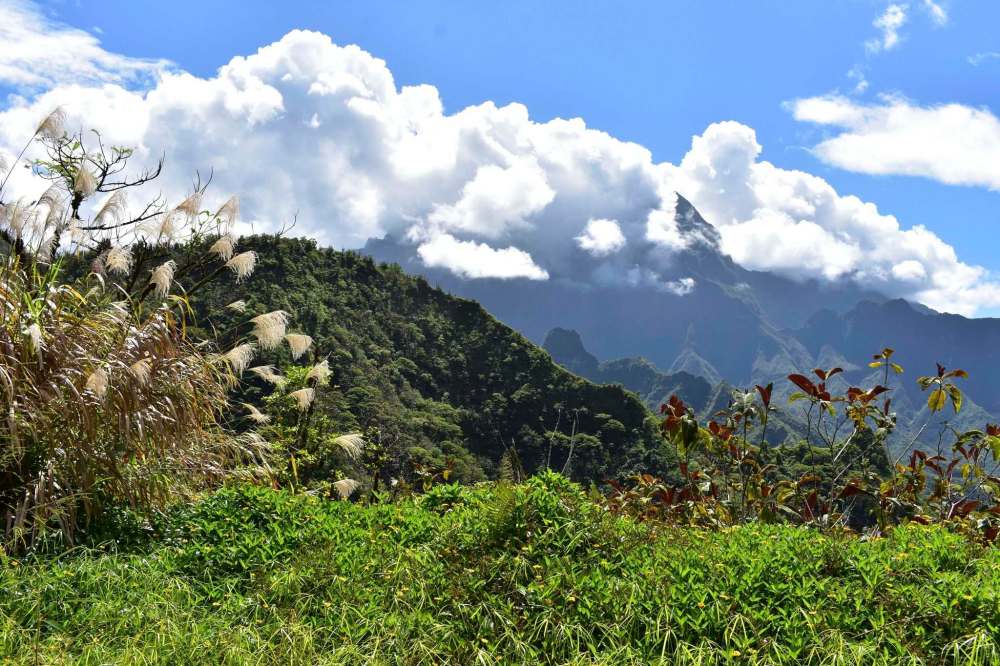
Our group leader zooms off and we follow in his wake, as he guides us safely on a path around the island. We stop in Cook’s Bay to soak in the beauty of Mount Moua Roa, also called “Shark’s Tooth.” This dramatic peak was thought to have inspired Bali Hai, the island in James Michener’s Tales of the South Pacific. It always seems to have a wisp of cloud attached to it, like a bit of cotton ball caught on the peak.
We pause again in a shallow area where 20 years’ worth of tour groups have essentially trained stingrays to come visit when they hear the Jet Skis’ engines. Reef sharks, too, swim by looking for scraps, and gulls wheel overhead hoping for leftovers.
The rays eat fish out our guide’s hand — when he’s not generous or fast enough, they pull themselves out of the water, rippling their way up onto his shoulders in a wet embrace. They respond to his kissy noise by lifting up to press the front of their “faces” to his mouth. Their side-mounted eyes, like a crocodile’s, regard you unblinkingly while they consent to being stroked.
Tourists get a snack, too — a juicy segment of the enormous Tahitian grapefruit, the flesh of which is the pale green of a lime, but which tastes sweeter.
Then we roar off again, likely annoying everyone within earshot — but when the wind’s in your hair and the powder-blue water is whizzing by under your feet, it’s impossible to care.
• • •
The island of Raiatea, about a 25-minute flight from Tahiti, is the cradle of Ma’ohi civilization. These are the Indigenous people of New Zealand (Maori), Polynesia, the Cook Islands, Hawaii and Samoa.
Marae Taputapuatea, on the south eastern coast of Raiatea, is a UNESCO World Heritage site. The site features a number of marae, sacred stone structures whose purpose in Polynesian culture is still not fully understood. This area was once the central temple and religious centre of Eastern Polynesia.
My tour guide, Tahiarii Pariente of Polynesian Escape, explains that people from Raiatea, originally called Havaii, set out in outrigger canoes for neighbouring islands thousands of kilometres away, eventually settling in such places as the Cook Islands, Tonga and Hawaii (which they named in remembrance of their home).
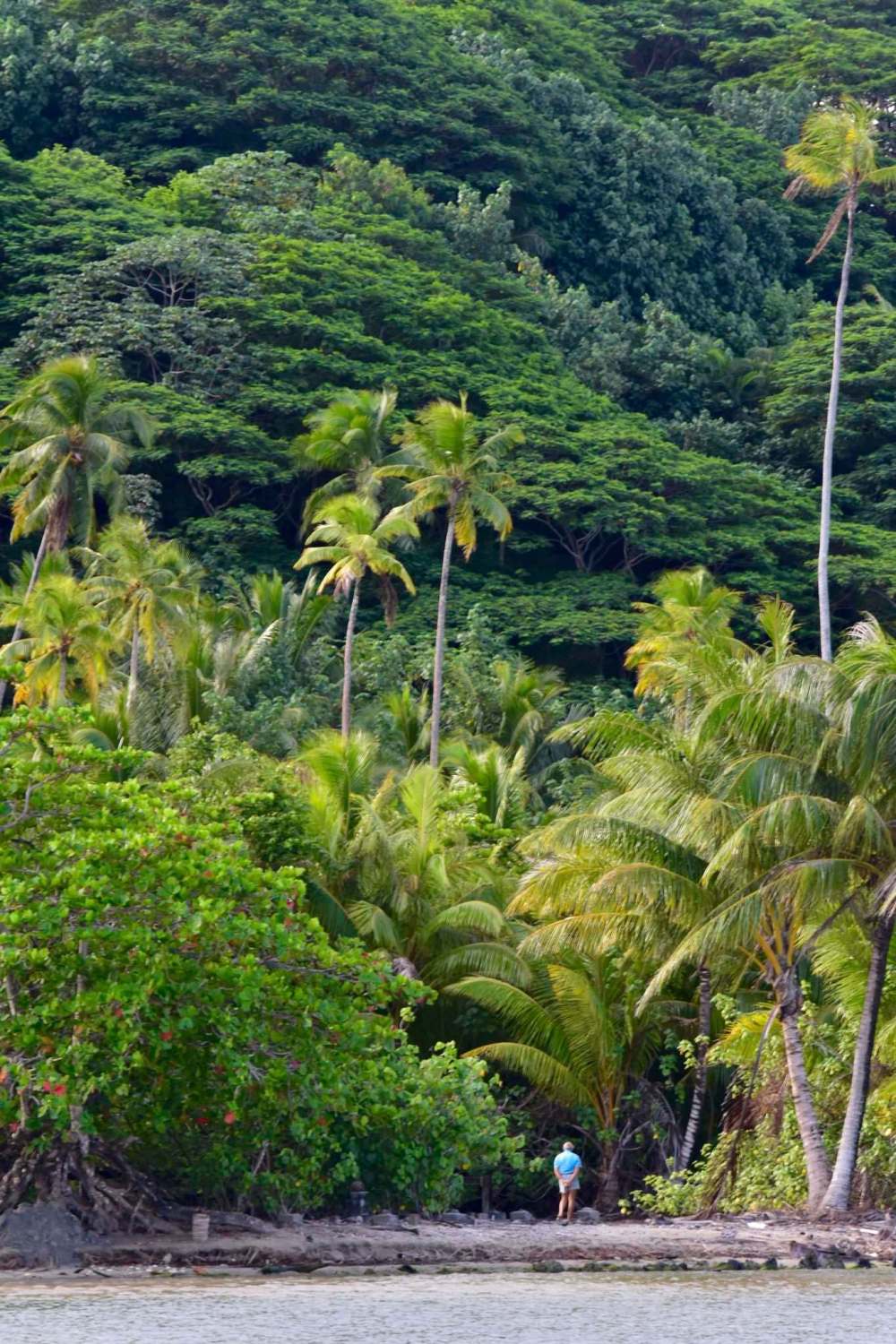
On Raiatea, there are fewer big hotels, but guest houses are a wonderful option. It’s a bit remote, but the Opoa Beach Hotel is excellent, with immaculate white wooden cottages, beds draped in romantic (and practical) mosquito netting and a hammock on the porch.
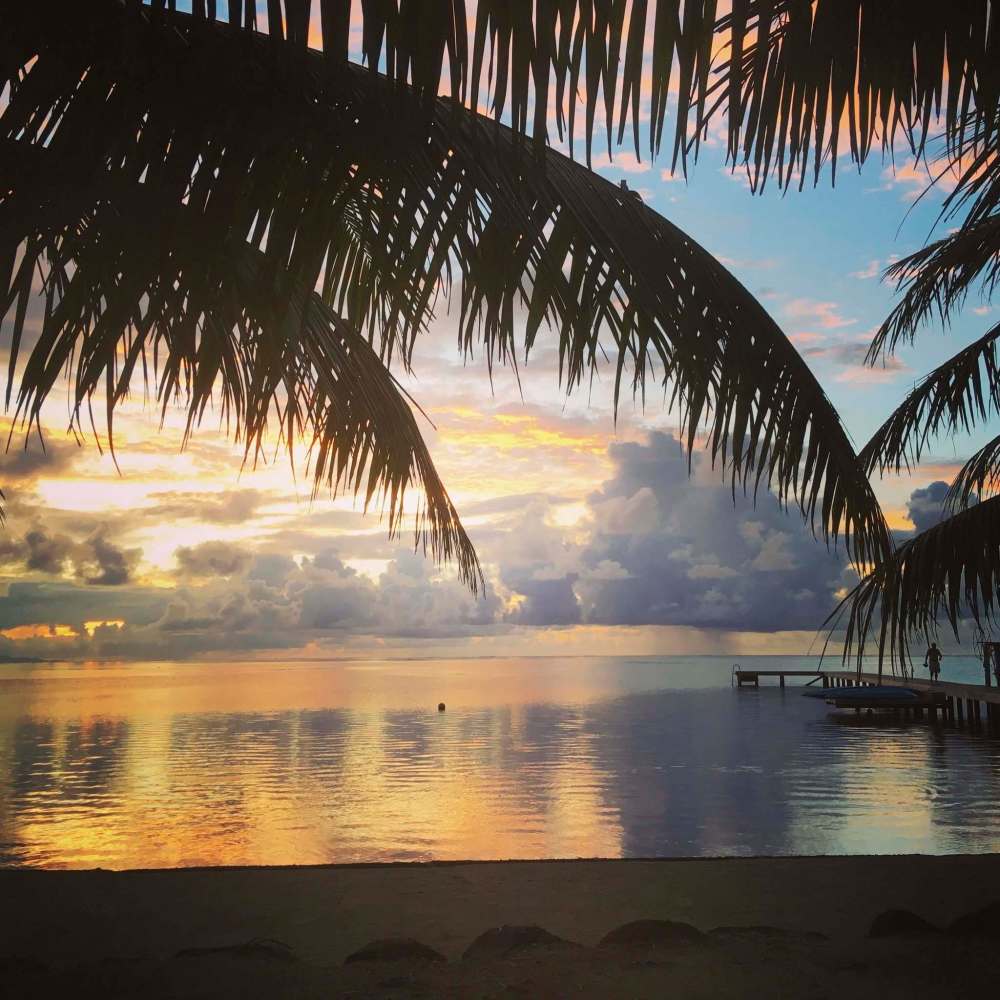
If you opt for the half-board option, breakfast and dinner are included — and this is no continental breakfast with a stale danish. It includes fresh-squeezed juice, homemade vanilla yogurt and granola, assorted breads, pain au chocolate, croissant, fruit salad, two kinds of jam, cold cuts and cheese.
Dinners are three courses; you choose your meal — all focused on fresh, local ingredients — from the options offered on a whiteboard every morning. They include such things as fish stew with taro crisps, shrimp in garlic sauce with potatoes and lardons, chocolate fondue with tropical fruit and pineapple sorbet.
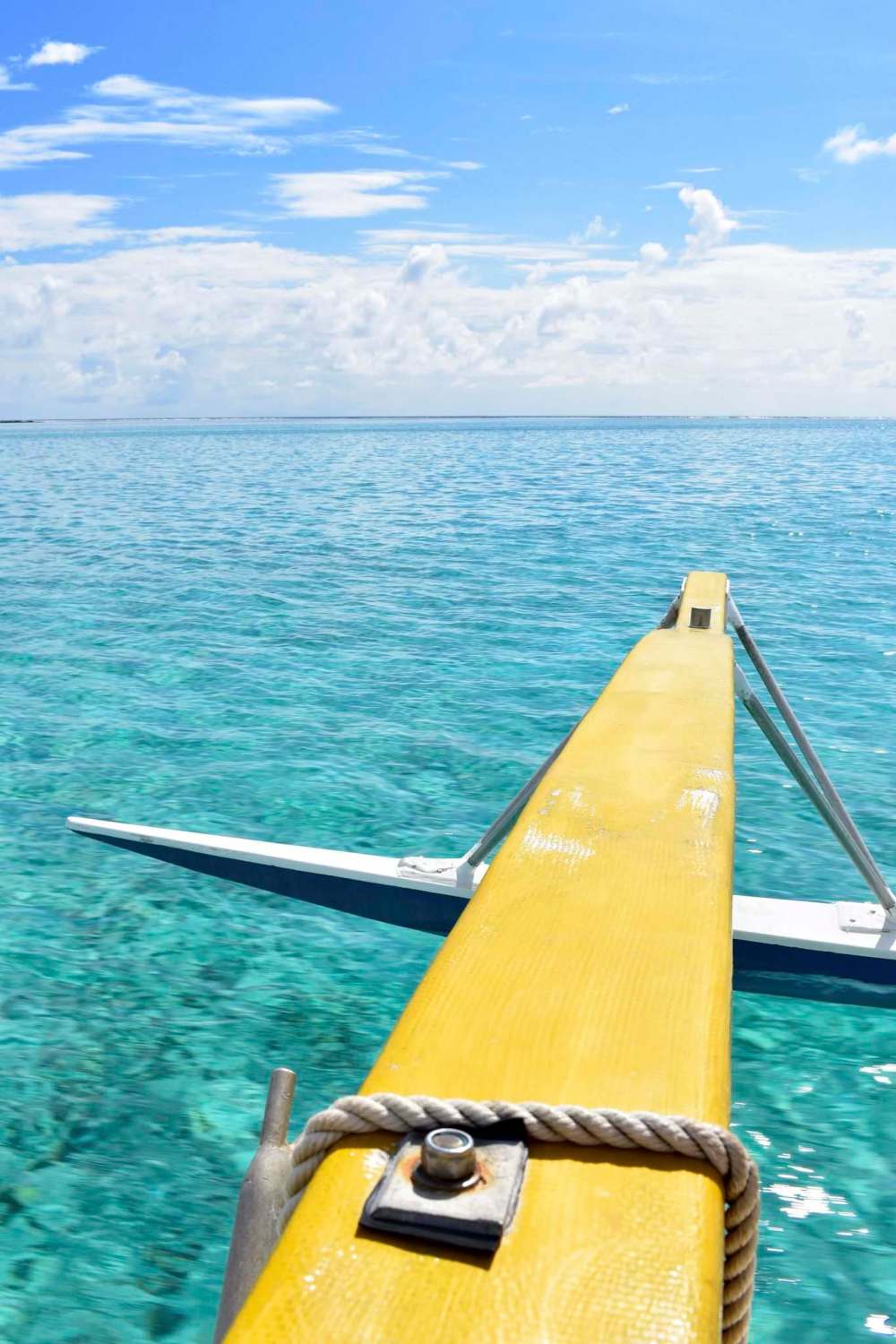
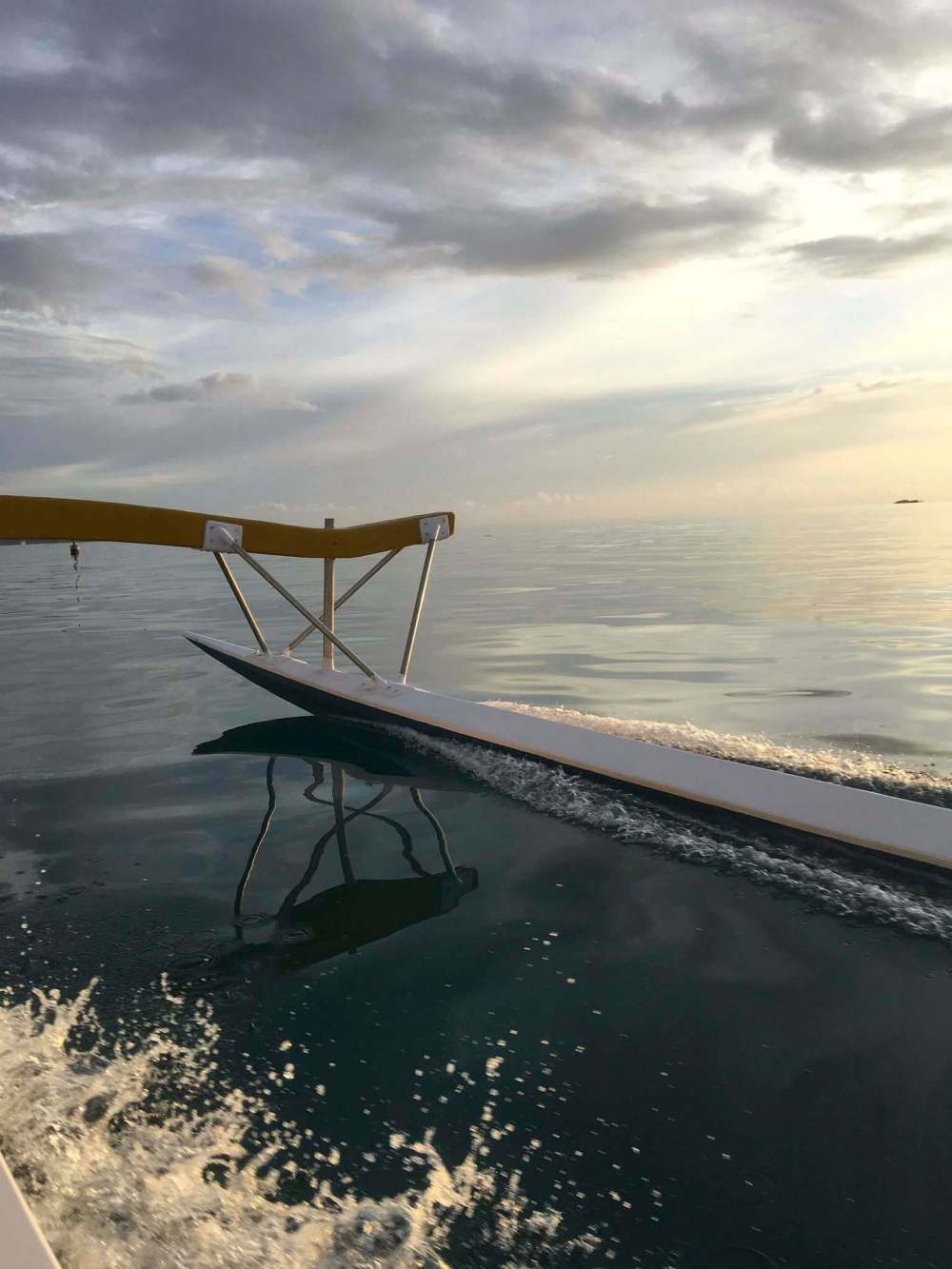
I could happily have lounged in a hammock there all day, but there was sightseeing to be done. Just a short boat ride away from Raiatea is Taha’a, known as the vanilla island. Speeding across the ocean in an outrigger canoe — the traditional boat used by seafaring Polynesians, with a second stabilizing hull — is a beautiful way to get there, especially when the sea is calm and the view goes on forever.
During the short journey, you might see boys diving down to bring up buckets of white sand to be used by hotels or in gardens.
My captain and guide, Yvann Mama, has been running a tour company for years with his father, Edwin, and will cater an experience to your interests. When he hears that I have yet to go in the water because of a slow-to-heal wound on my leg, he anchors the boat so we can drift snorkel through a coral garden, where a gentle current pushes you down a natural corridor — you don’t even have to move your arms, just take in the sights.
After a stop at a black pearl farm, where we watch the almost surgical process of implanting grafts into black lip oysters to create the organic gems known as Tahitian pearls, Yvann takes me to his family’s property, where they grow vanilla. (Tahiti is second only to Madagascar for vanilla production; some French chefs come to buy their supply directly from the plantations because one kilogram of beans in France can cost 100 euros.)
His sister, Heirava, has prepared a wonderful meal that includes poisson cru (a kind of ceviche) and filets of fish in a delicate vanilla sauce. Then we’re off in a four-by-four to explore the island, with visits to a vanilla plantation and a copra-drying house, before Yvann ferries me back to Raiatea at dusk, the horizon bleeding into the sunlit sea.
• • •
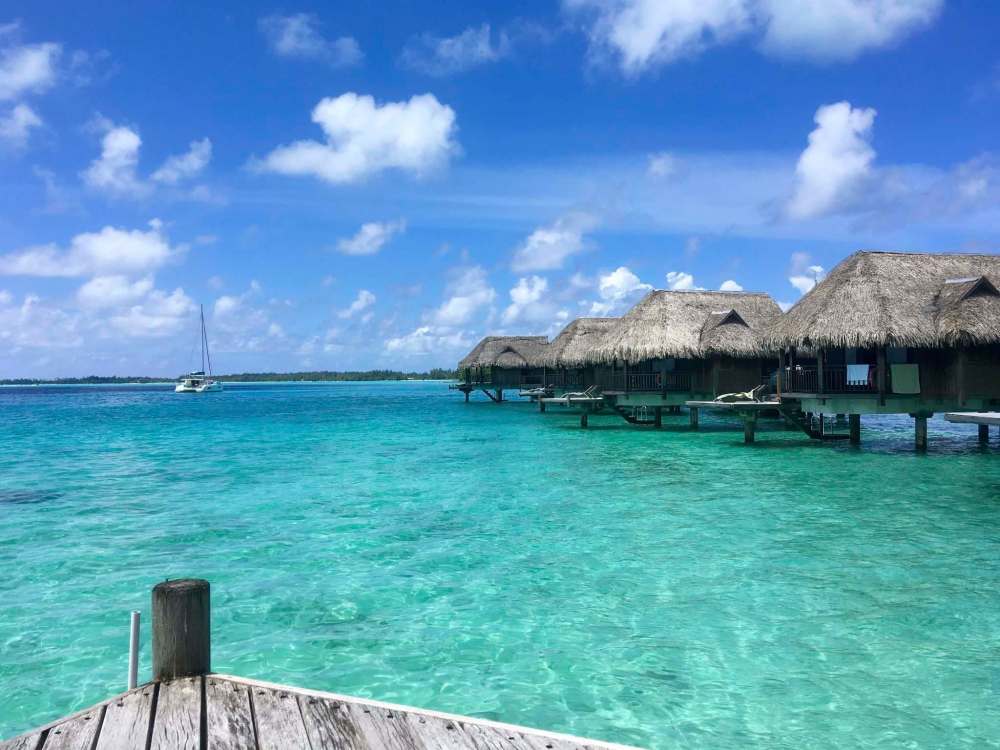
There are few sights more likely to elicit a deep “this is the life” sigh than a thatched overwater bungalow, hovering on stilts over a clear blue expanse of ocean.

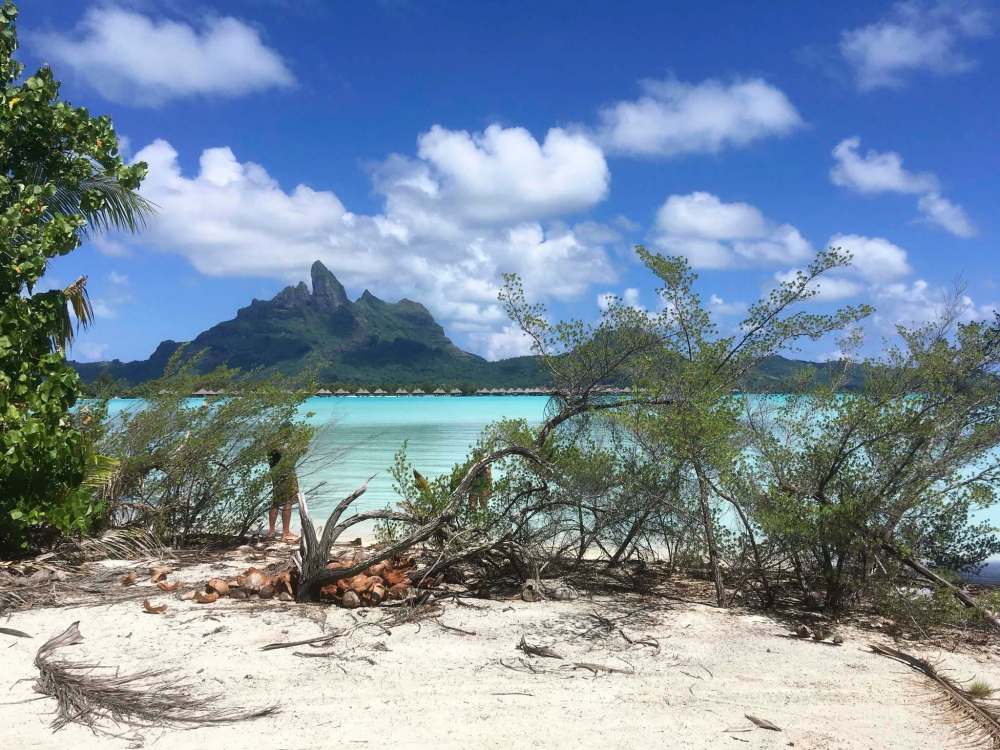
And there are few places to see more of that sight than in Bora Bora. It’s circled by a barrier reef — there’s only one inlet that allows access from the sea — and a series of motus, idyllic little islets of sand and coral that are what you’re usually thinking of when you think of Bora Bora.
The lagoon that lies between the reef and the mainland — an inactive volcano — is something that pictures can’t truly capture. The shifting, startling colours of the water make the blues of the Caribbean look positively frumpy.
The boat shuttle (the Bora Bora airport is also on a motu) deposits me at the Sofitel Private Island, which is exactly as exclusive and lovely as it sounds. I’m greeted with a cool cloth and a coconut water and showed around the tiny motu, which has its own coral garden, accessible by kayak.
The bungalow, with its private dock and glorious view, does not disappoint. There is a Plexiglas hole in the floor (lit at night) that allows you to watch fish swimming below; the closet is stocked with snorkels to explore the shallow, bath-warm water that surrounds the motu.
I could spend hours just floating passively and burbling excitedly to myself as one colourful creature after another comes to nibble at the coral.
The water is only about waist-deep in spots, so it’s a shock when a reef shark cruises by — no matter how many times you’re told these creatures aren’t dangerous to humans, you can’t help but feel a jolt of fear when you see their distinctive sharky shape — but it glides away, leaving me to exclaim inwardly over the giant maxima clams, their lips in gem-like hues of turquoise, violet and emerald green, pulsing gently.
This is the life, truly.
jill.wilson@freepress.mb.ca
Twitter: @dedaumier
Jill Wilson is the editor of the Arts & Life section. A born and bred Winnipegger, she graduated from the University of Winnipeg and worked at Stylus magazine, the Winnipeg Sun and Uptown before joining the Free Press in 2003. Read more about Jill.
Jill oversees the team that publishes news and analysis about art, entertainment and culture in Manitoba. It’s part of the Free Press‘s tradition, since 1872, of producing reliable independent journalism. Read more about Free Press’s history and mandate, and learn how our newsroom operates.
Our newsroom depends on a growing audience of readers to power our journalism. If you are not a paid reader, please consider becoming a subscriber.
Our newsroom depends on its audience of readers to power our journalism. Thank you for your support.