

Peru fiercely protects prized bird poop
Guano has been highly sought after as fertilizer for centuries
Advertisement
Read this article for free:
or
Already have an account? Log in here »
To continue reading, please subscribe:
Monthly Digital Subscription
$0 for the first 4 weeks*
- Enjoy unlimited reading on winnipegfreepress.com
- Read the E-Edition, our digital replica newspaper
- Access News Break, our award-winning app
- Play interactive puzzles
*No charge for 4 weeks then price increases to the regular rate of $19.95 plus GST every four weeks. Offer available to new and qualified returning subscribers only. Cancel any time.
Monthly Digital Subscription
$4.99/week*
- Enjoy unlimited reading on winnipegfreepress.com
- Read the E-Edition, our digital replica newspaper
- Access News Break, our award-winning app
- Play interactive puzzles
*Billed as $19.95 plus GST every four weeks. Cancel any time.
To continue reading, please subscribe:
Add Free Press access to your Brandon Sun subscription for only an additional
$1 for the first 4 weeks*
*Your next subscription payment will increase by $1.00 and you will be charged $16.99 plus GST for four weeks. After four weeks, your payment will increase to $23.99 plus GST every four weeks.
Read unlimited articles for free today:
or
Already have an account? Log in here »
Hey there, time traveller!
This article was published 30/06/2018 (2752 days ago), so information in it may no longer be current.
LIMA, Peru — Bird droppings are a nuisance for most people, but in Peru, they have been a closely guarded treasure since pre-Columbian times.
Guano, a gentler word for dung, is one of the few words in English derived from Quechua, the language of the Incas. The Incas used guano harvested from islands that dot Peru’s 2,400-kilometre coastline as fertilizer. They fiercely guarded the source. And execution was the ultimate punishment for anyone who disturbed the seabirds or the islands where they deposited dung.
Execution is off the table today, but not much else has changed. Peru’s government maintains strict control over the islands, which are part of a coastal protected reserve. Guano remains a highly prized fertilizer, and Peru is at the top of the field thanks to the gigantic quantity of oily anchovies that guano birds feast on — which makes their dung valuable — and the unusual nature of Peru’s desert coast. It never rains, so the guano just piles up.
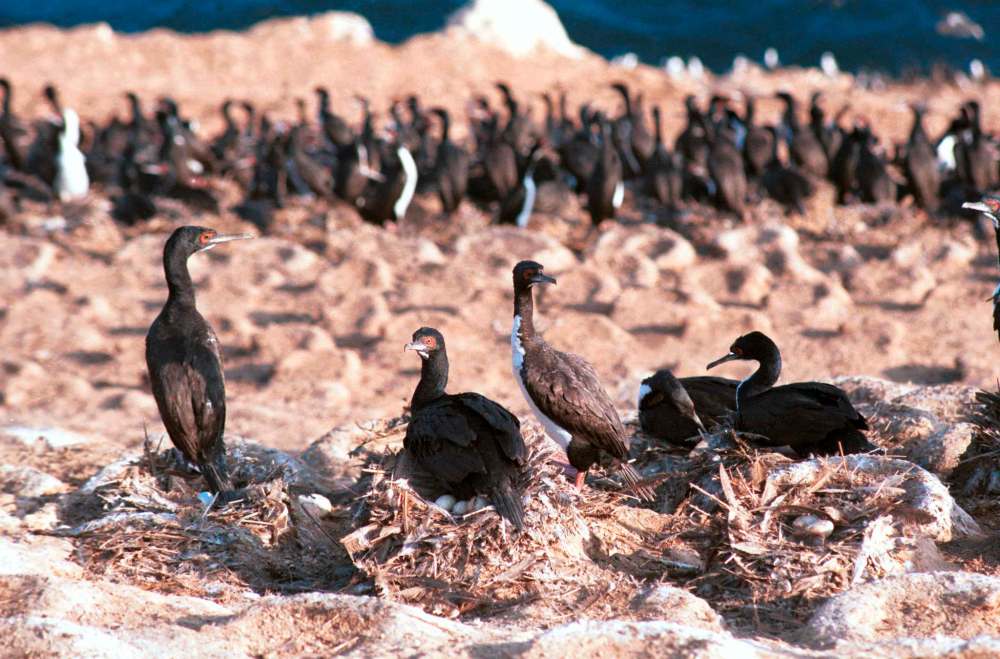
Guano is harvested much the same way it was hundreds of years ago, with a squadron of workers manually scraping, sifting and bagging it. The government, through a division of the Agriculture and Irrigation Ministry, selects about 400 men each year to work eight months as harvesters. More than 60 per cent of the workers return from one harvest to the next, and many are relatives. The work is limited to one or two islands, sometimes three, in each campaign.
The islands are chosen after an evaluation by biologists to guarantee that no birds are nesting. The harvest target this year is about 20,000 tons of guano. The yearly campaign was just past the halfway mark in June.
The work is gruelling. Teams use picks, shovels and brooms to loosen the guano, which is several yards thick in some spots. Machinery cannot be used because of the rugged and dung-slick terrain, and because it would spook the birds.
Workers earn 2,400 soles (about US$750) a month, more than double the national average of about US$300 a month. They would earn much less in the farming villages where they are recruited — including in Cajamarca, the country’s poorest state. They generally work eight-hour shifts and receive meals and health insurance.
The majority of the guano stays in Peru and is sold locally at a subsidized rate to help boost production for small-scale farmers. About 25 per cent of it is sold at market value either in Peru or abroad.
— Washington Post