Keep your pooch away from your pot
Guard your stash so Fido doesn't get sick from a 'special snack'

Advertisement
Read this article for free:
or
Already have an account? Log in here »
To continue reading, please subscribe:

Digital Subscription
One year of digital access for only $205*
- Enjoy unlimited reading on winnipegfreepress.com
- Read the E-Edition, our digital replica newspaper
- Access News Break, our award-winning app
- Play interactive puzzles
*First annual payment billed as $205.00 + GST for one year. This annual subscription will automatically renew at $233.00 + GST every 52 weeks (10% off the regular annual price of $259.35). Offer available to new and qualified returning subscribers only. Cancel any time.
To continue reading, please subscribe:
Add Free Press access to your Brandon Sun subscription for only an additional
$1 for the first 4 weeks*
- Enjoy unlimited reading on winnipegfreepress.com
- Read the E-Edition, our digital replica newspaper
- Access News Break, our award-winning app
- Play interactive puzzles
*Your next Brandon Sun subscription payment will increase by $1.00 and you will be charged $17.95 plus GST for four weeks. After four weeks, your payment will increase to $24.95 plus GST every four weeks.
Read unlimited articles for free today:
or
Already have an account? Log in here »
Hey there, time traveller!
This article was published 09/10/2018 (2839 days ago), so information in it may no longer be current.
As the Oct. 17 legalization of marijuana nears, Canada’s veterinarians are gearing up to add cannabis-based medicines to their tool kits for therapeutic uses in pets, but are also warning pet owners to keep a close eye on their stash.
“As a group, we’re excited to see more clinical research come out and be able to add these products as another tool for helping treat pain, anxiety or other neurological issues,” said Dr. Ian Sandler, CEO of Grey Wolf Animal Health and a veterinarian at Rosedale Animal Hospital in Toronto. Medical marijuana for pets isn’t something that’s necessarily imminent, he said.
Sandler quickly tempers his enthusiasm by warning pet owners against medicating their pets without a veterinarian’s help, and to take precautions to prevent inadvertent ingestion by a ravenous Rottweiler or curious cocker spaniel.
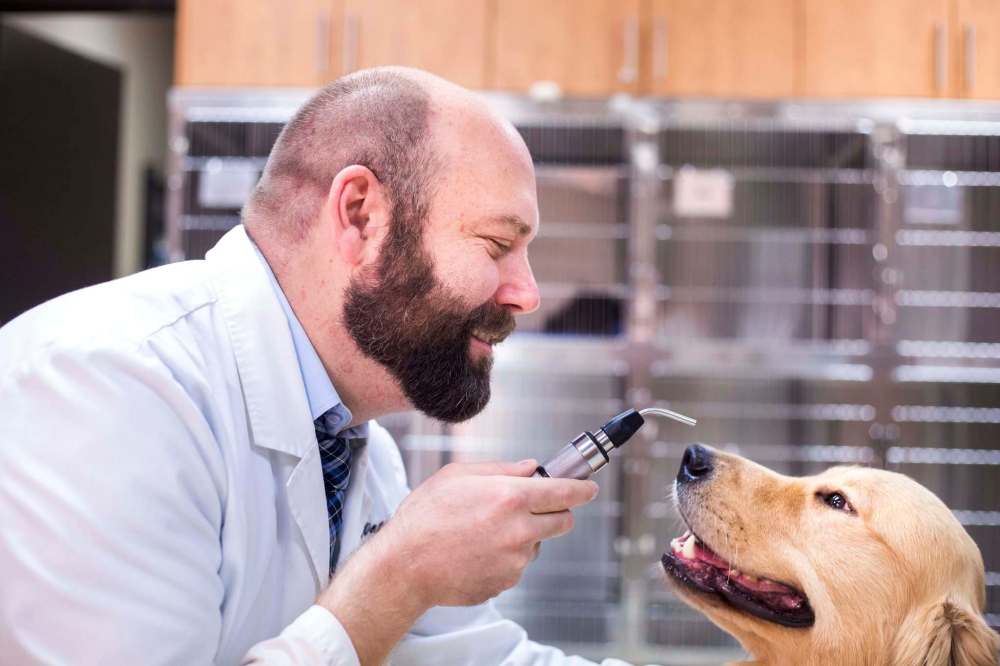
Dr. Jonas Watson, president of the Manitoba Veterinary Medical Association, said not enough is known about dosage and side-effects, but suggests that may come over time.
“Once some peer-reviewed, controlled clinical studies have been conducted, we may confirm anecdotal evidence that cannabis has a utility as an appetite stimulant, an anticonvulsant, an anti-anxiety medication and possibly a pain reliever,” Watson said.
Complicating the studies is separating out the effects of the two key ingredients in cannabis, CBD and THC. CBD (cannabidiol) generally promotes calmness while THC (tetrahydrocannabinol) is what offers a “high.” Knowing how each works in animals is key, Sandler said. Different strains of cannabis products have differing concentrations of each chemical, with some high in CBD and low in THC and vice versa.“Marijuana in all its forms– fresh or dried plant material, baked and other edible products — whether ingested or inhaled, can have deleterious effects on pets, which are usually transient but certainly require veterinary care” – Dr. Jonas Watson, president of the Manitoba Veterinary Medical Association
But what if Fido decides to bogart your supply? Sandler said there are a number of concerns, and recommends contacting a veterinarian immediately.
Watson said signs of marijuana toxicosis in dogs include lethargy, lack of co-ordination, vomiting, behaviour disorders, hyper-salivation, slow heart rate and urinary incontinence. He said in areas where legalization has already occurred, other symptoms like hypertension, seizures and intoxication have, rarely, resulted in death.
It isn’t just the pot that’s a problem, either. Sandler said in edible form, cannabis can sometimes be the least of a dog’s concerns, particularly if the brownie contains chocolate, certain nuts (such as macadamia) or raisins, all of which could make the brownie toxic even if it wasn’t “special.”
As well, which dog is ever going to be smart enough to stop at just one brownie, one cookie, one piece of cake?
Even if you safeguard your edibles, when it comes to smoking, should Sparky be in the room when you spark up? “Absolutely not!” Sandler said. “Dogs, and especially cats, are sensitive to second-hand smoke of any kind. Same advice for children.”
Dogs are the main concern, Watson said. “Marijuana toxicosis is primarily a problem in our canine patients, though it has also been reported occasionally in cats and ferrets.”


Both Watson and Sandler say the danger to pets exists regardless whether the cannabis has been heated. “Marijuana in all its forms — fresh or dried plant material, baked and other edible products — whether ingested or inhaled, can have deleterious effects on pets, which are usually transient but certainly require veterinary care,” Watson said.
Treatment depends on when the ingestion occurred and what was also on board. Sandler said treatment usually begins with getting the pet to vomit, but he recommends that only be done by a veterinarian to reduce the risk of choking or from side-effects of home-remedy mixes to induce vomiting.
If Fido has stolen your stash, it’s important to contact the vet quickly, and provide as much information as possible, including what and how much was eaten, what other ingredients were included — other drugs, nuts, chocolate, etc. — and when it occurred.
And once you bring Fido home, see about securing your stash.
kelly.taylor@freepress.mb.ca
Kelly Taylor
Copy Editor, Autos Reporter
Kelly Taylor is a copy editor and award-winning automotive journalist, and he writes the Free Press‘s Business Weekly newsletter. Kelly got his start in journalism in 1988 at the Winnipeg Sun, straight out of the creative communications program at RRC Polytech (then Red River Community College). A detour to the Brandon Sun for eight months led to the Winnipeg Free Press in 1989. Read more about Kelly.
Every piece of reporting Kelly produces is reviewed by an editing team before it is posted online or published in print — part of the Free Press‘s tradition, since 1872, of producing reliable independent journalism. Read more about Free Press’s history and mandate, and learn how our newsroom operates.
Our newsroom depends on a growing audience of readers to power our journalism. If you are not a paid reader, please consider becoming a subscriber.
Our newsroom depends on its audience of readers to power our journalism. Thank you for your support.
Kelly Taylor
Copy Editor, Autos Reporter
Kelly Taylor is a copy editor and award-winning automotive journalist, and he writes the Free Press‘s Business Weekly newsletter. Kelly got his start in journalism in 1988 at the Winnipeg Sun, straight out of the creative communications program at RRC Polytech (then Red River Community College). A detour to the Brandon Sun for eight months led to the Winnipeg Free Press in 1989. Read more about Kelly.
Every piece of reporting Kelly produces is reviewed by an editing team before it is posted online or published in print — part of the Free Press‘s tradition, since 1872, of producing reliable independent journalism. Read more about Free Press’s history and mandate, and learn how our newsroom operates.
Our newsroom depends on a growing audience of readers to power our journalism. If you are not a paid reader, please consider becoming a subscriber.
Our newsroom depends on its audience of readers to power our journalism. Thank you for your support.
Advertisement Advertise With Us
Advertisement Advertise With Us