Beautiful Berlin

Lutes's sprawling, cinematic graphic novel explores glitz of interwar Germany

Advertisement

Advertise with us

The heady mix of politics, culture and sex of the Weimar-era Berlin — the time period between the two world wars — has long been a source of fascination for writers and filmmakers. Jason Lutes’s long-awaited omnibus edition of Berlin adds a masterwork to this oeuvre in the form of a graphic novel.

Read this article for free:


By clicking the button above, an account will be created and you will begin to receive some of our recommended newsletters. You may opt out of any newsletter by visiting your Email and Communication Preferences page or by clicking "unsubscribe" at the bottom of any email.

or

Already have an account? Log in here »

To continue reading, please subscribe:

Digital Subscription

One year of digital access for only $1.44 a week*

  • Enjoy unlimited reading on winnipegfreepress.com
  • Read the E-Edition, our digital replica newspaper
  • Access News Break, our award-winning app
  • Play interactive puzzles

*Billed as $5.77 plus GST every four weeks. After 52 weeks, price increases to the regular rate of $19.95 plus GST every four weeks. Offer available to new and qualified returning subscribers only. Cancel any time.

To continue reading, please subscribe:

Add Free Press access to your Brandon Sun subscription for only an additional

$1 for the first 4 weeks*

  • Enjoy unlimited reading on winnipegfreepress.com
  • Read the E-Edition, our digital replica newspaper
  • Access News Break, our award-winning app
  • Play interactive puzzles
Start now

*Your next Brandon Sun subscription payment will increase by $1.00 and you will be charged $17.95 plus GST for four weeks. After four weeks, your payment will increase to $24.95 plus GST every four weeks.

Hey there, time traveller!
This article was published 13/10/2018 (2934 days ago), so information in it may no longer be current.

The heady mix of politics, culture and sex of the Weimar-era Berlin — the time period between the two world wars — has long been a source of fascination for writers and filmmakers. Jason Lutes’s long-awaited omnibus edition of Berlin adds a masterwork to this oeuvre in the form of a graphic novel.

This edition combines the 22 serialized issues of Lutes’s Berlin comics, previously collected in two separate volumes published in 2000 and 2008. The final third volume was being released at the same time as this complete edition. Lutes has spent the past 20 years on this project, and this lengthy gestation pays off in a historically nuanced, visually stunning and narratively complex graphic novel with lasting power.

Lutes is an American cartoonist who graduated with a BFA from the Rhode Island School of Design and then spent 10 years working in the vibrant Seattle comics scene for publisher Fantagraphics and the alternative weekly the Stranger. Since 2008, he has been a faculty member at the Centre for Cartoon Studies in White River Junction, Vt., which offers a master of fine arts and certificates in comics and graphic novels.

Lutes’s fine arts training and design skills are evident in every elegantly composed, meticulously rendered black-and-white panel. He adopts a cinematic, noir-ish visual style that echoes the Weimar films of Fritz Lang and a kaleidoscopic narrative approach he admits is indebted to Alfred Döblin’s 1929 novel Berlin Alexanderplatz.

There are three main character groups whose stories Lutes follows from 1928 to 1933. The graphic novel begins with art student Marthe Müller’s arrival from provincial Cologne and her chance encounter with the jaded left-wing newspaper journalist Kurt Severing. They eventually become lovers, but their relationship is complicated by Kurt’s wealthy ex-lover, Margarethe, and Marthe’s transgender best friend, Anna.

A second main storyline follows a working-class family tragically divided between communism and Nazism. Through them, Lutes introduces key historical events, including the bloody 1929 May Day demonstrations and the electoral victory of the National Socialists in 1930. Most of the characters are fictional, but some historical figures also appear, including Joseph Goebbels, Adolf Hitler and 1935 Nobel Peace Prize winner Carl von Ossietzky, whose exposure of clandestine German re-armament led to his arrest and death in Gestapo custody.

Another plotline about a visiting African-American jazz quartet features real-life dancer Josephine Baker. Lutes also folds in a variety of minor characters to represent the cosmopolitan world of Weimar Berlin, taking care to represent the Jewish community as culturally and economically diverse. Female characters are equally strong and multifaceted, from the wealthy heiress to the radical Communist to the cabaret performers and sex workers.

Even when they only appear in a few panels, Lutes’s expressive linework and subtle facial expressions convey the characters’ back stories and present dilemmas with devastating clarity. He also exploits the simultaneity of comics when he inserts Marthe’s letters in text boxes over the events she describes and draws crowd scenes with thought balloons over each person to reveal their largely banal inner lives.

Most strikingly, Lutes doesn’t fetishize the surface glitz of this era. He draws characters realistically, both emotionally and physically, and takes us through the squalid areas of the city as well as the halls of power.

In keeping with the long history of screen culture’s fascination with Weimar Berlin, from the 1972 film Cabaret to the recent German television series Babylon Berlin, Lutes frames all of the human drama as a product of the living city. His precise line drawings of Berlin’s streets, parks, office buildings, tenements, restaurants, and nightclubs — all criss-crossed by cars, buses, and trains — invite us to linger on the scenes contemplatively even as they pull us into the feverish action.

Berlin is a big book in every sense, an epic narrative drawn over many compelling pages and a landmark of contemporary historical fiction that uses the form of comics to bring that past alive.

Candida Rifkind is an associate professor in the department of English at the University of Winnipeg, where she teaches and researches comics, graphic narratives and Canadian literature and culture.

Supplied
Supplied
Report Error Submit a Tip

More Stories

Winnipeg Jets trade Connor Hellebuyck to New Jersey Devils

Mike McIntyre 8 minute read Preview

Winnipeg Jets trade Connor Hellebuyck to New Jersey Devils

Mike McIntyre 8 minute read Updated: Yesterday at 5:45 PM CDT

Connor Hellebuyck finally got his wish. Kevin Cheveldayoff finally got an offer he couldn’t refuse. And a long-running sports soap opera has finally ended.

The Winnipeg Jets pulled off a blockbuster deal Friday morning, shipping their disgruntled franchise goaltender to the New Jersey Devils for a package including four players and two draft picks.

Although they liked the return, nobody within the organization was popping champagne. This was, in many ways, a dark but necessary day.

“It certainly hasn’t been fun. There’s no question about it. But at the end of the day, Connor made his choice. And, as an organization, we had to act accordingly and we did,” the general manager said during an afternoon news conference inside Canada Life Centre.

Read
Updated: Yesterday at 5:45 PM CDT

Goblin:Macbeth is a monstrously entertaining show

Holly Harris 4 minute read Preview

Goblin:Macbeth is a monstrously entertaining show

Holly Harris 4 minute read 2:18 PM CDT

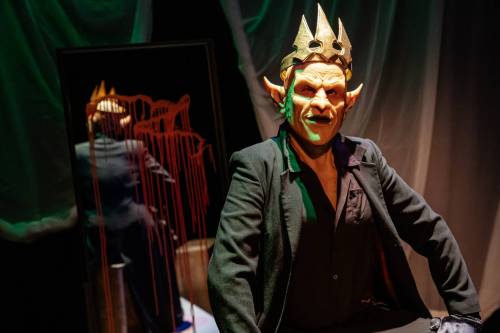
Screw your courage to the sticking point, for Royal Manitoba Theatre Centre has just unleashed a gaggle of goblins at the Tom Hendry Warehouse in its ghoulishly theatrical Goblin:Macbeth.

The darkly subversive, 95-minute (sans intermission) production is the brainchild of Spontaneous Theatre’s Bruce Horak and Rebecca Northan (also serving as director), with Ellis Lalonde (sound designer).

It stars a trio of larger-than-life, pointy-eared goblins, Wug, Kragva and Moog — fie on anyone seeking to determine their tightly guarded mortal identities — who cavort and kibbitz with audience members before stumbling across The Complete Works of William Shakespeare.

After indignantly declaring “we are not Tolkien goblins,” and sharing a bit of goblin-lore (who knew these demons had 17 genders?) they vow they will attempt to “do theatre” to better understand our culture, choosing the Bard’s superstition-riddled Scottish Play for being the shortest and bloodiest.

Read
2:18 PM CDT

Opening of Portage and Main shows even seemingly insurmountable impasses can be overcome

Jason Syvixay 10 minute read Preview

Opening of Portage and Main shows even seemingly insurmountable impasses can be overcome

Jason Syvixay 10 minute read 2:00 AM CDT

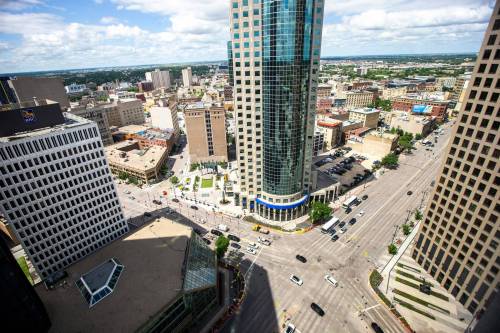
There are places in a city that become more than places. Portage and Main is one of them. For generations of Winnipeggers, the intersection has represented downtown, traffic, development and civic identity. Its reopening to pedestrians in 2025, after 46 years of closure, was about more than crossing a street. It was a reminder that decisions made by one generation can shape the choices available to another — and that even seemingly permanent decisions can be reconsidered.

I have spent much of my professional life thinking about Winnipeg as a planner, working in public, private and non-profit settings. My PhD research gave me an opportunity to examine Portage and Main differently: not simply as a debate about cars and pedestrians, but as a window into how power operates in a city. I reviewed 569 archival documents spanning the 1960s to the present, interviewed 48 planners with experience in Winnipeg, and mapped the relationships between planners, politicians, developers, engineers, residents, businesses and advocacy groups.

What emerged was a story about how planning decisions become embedded in a city’s institutions, agreements, infrastructure, professional practices and political expectations — shaping not only what gets built, but who gets to influence what gets built.

The closure of Portage and Main in 1979 did not remain a decision confined to a particular political moment. Over time, it was reinforced by development agreements, physical infrastructure, property relationships, traffic-engineering practices, administrative routines, and public narratives about mobility and downtown revitalization. The people who made many of those original decisions eventually left office. The arrangements they created remained. Later planners inherited them.

Read
2:00 AM CDT

A life's story: From wartorn Poland to Winnipeg’s streets, Kazimierz Patalas worked to help others

Jim Timlick 7 minute read Preview

A life's story: From wartorn Poland to Winnipeg’s streets, Kazimierz Patalas worked to help others

Jim Timlick 7 minute read 6:00 AM CDT

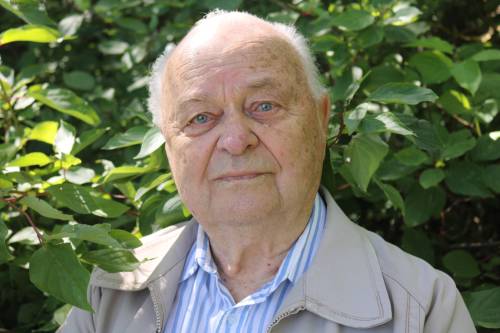
Kazimierz Patalas left Poland in the late 1960s to make a new life for him and his family elsewhere, but he never forgot the lessons he learned as a young man in the country of his birth.

Perhaps no one lesson stuck with him more than the importance of giving back to the community. It was something he first endeavoured to do as a teen in his native Poland and continued to do for many decades after arriving in his adopted home of Winnipeg in 1967.

“He was always trying to do good for the community. I guess that was sort of ingrained in him from Poland,” says son Jacek, one of three children born to Patalas and his wife Józefa.

“Everything you did you kind of did for the community, for making sacrifices. Your life was geared towards or focused on helping society or the community where you live.”

Read
6:00 AM CDT

Builder beefs up security after string of blazes

Morgan Modjeski 3 minute read Preview

Builder beefs up security after string of blazes

Morgan Modjeski 3 minute read Updated: Yesterday at 9:36 AM CDT

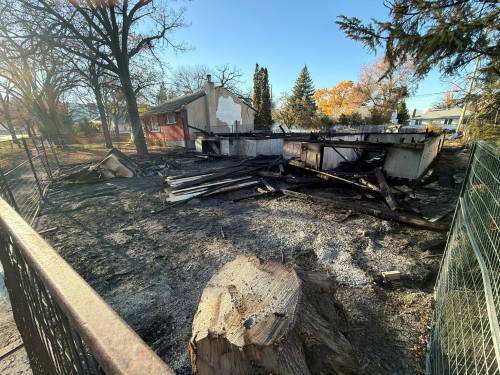
A Winnipeg builder said he’s had to beef up security around his developments after one of his projects sustained significant damage Wednesday in suspected arson cases.

Read
Updated: Yesterday at 9:36 AM CDT

‘Savage and brutal’ Erickson home invasion nets 17-year sentence

Tessa Adamski 6 minute read Preview

‘Savage and brutal’ Erickson home invasion nets 17-year sentence

Tessa Adamski 6 minute read 8:27 AM CDT

BRANDON — A woman who fought off the man who slashed her throat in a random home invasion in Erickson described the violent assault as the worst day of her life and a nightmare she can’t seem to shake off.

“I feel like a shell of the person I used to be. Not every second of every day, but definitely every day. It comes in waves,” Candace Richardson said as she read from a victim impact statement in a Brandon courtroom on Friday.

Carter Prince, 21, who pleaded guilty to attempted murder for the June 2023 attack, sat in the prisoner’s box as Richardson spoke.

“I’ll be completely fine, laughing, having fun or just relaxing with my family,” she told the court. “Then time goes so slowly, like you’re floating away, but instead of floating, I’m pinned to the ground, being stabbed over and over again. There’s blood everywhere and darkness surrounding me.”

Read
8:27 AM CDT