Joseph overcame challenging childhood
Advertisement
Read this article for free:
or
Already have an account? Log in here »
To continue reading, please subscribe:

Digital Subscription
One year of digital access for only $205*
- Enjoy unlimited reading on winnipegfreepress.com
- Read the E-Edition, our digital replica newspaper
- Access News Break, our award-winning app
- Play interactive puzzles
*First annual payment billed as $205.00 + GST for one year. This annual subscription will automatically renew at $233.00 + GST every 52 weeks (10% off the regular annual price of $259.35). Offer available to new and qualified returning subscribers only. Cancel any time.
To continue reading, please subscribe:
Add Free Press access to your Brandon Sun subscription for only an additional
$1 for the first 4 weeks*
- Enjoy unlimited reading on winnipegfreepress.com
- Read the E-Edition, our digital replica newspaper
- Access News Break, our award-winning app
- Play interactive puzzles
*Your next Brandon Sun subscription payment will increase by $1.00 and you will be charged $17.95 plus GST for four weeks. After four weeks, your payment will increase to $24.95 plus GST every four weeks.
Read unlimited articles for free today:
or
Already have an account? Log in here »
Hey there, time traveller!
This article was published 03/11/2018 (2860 days ago), so information in it may no longer be current.
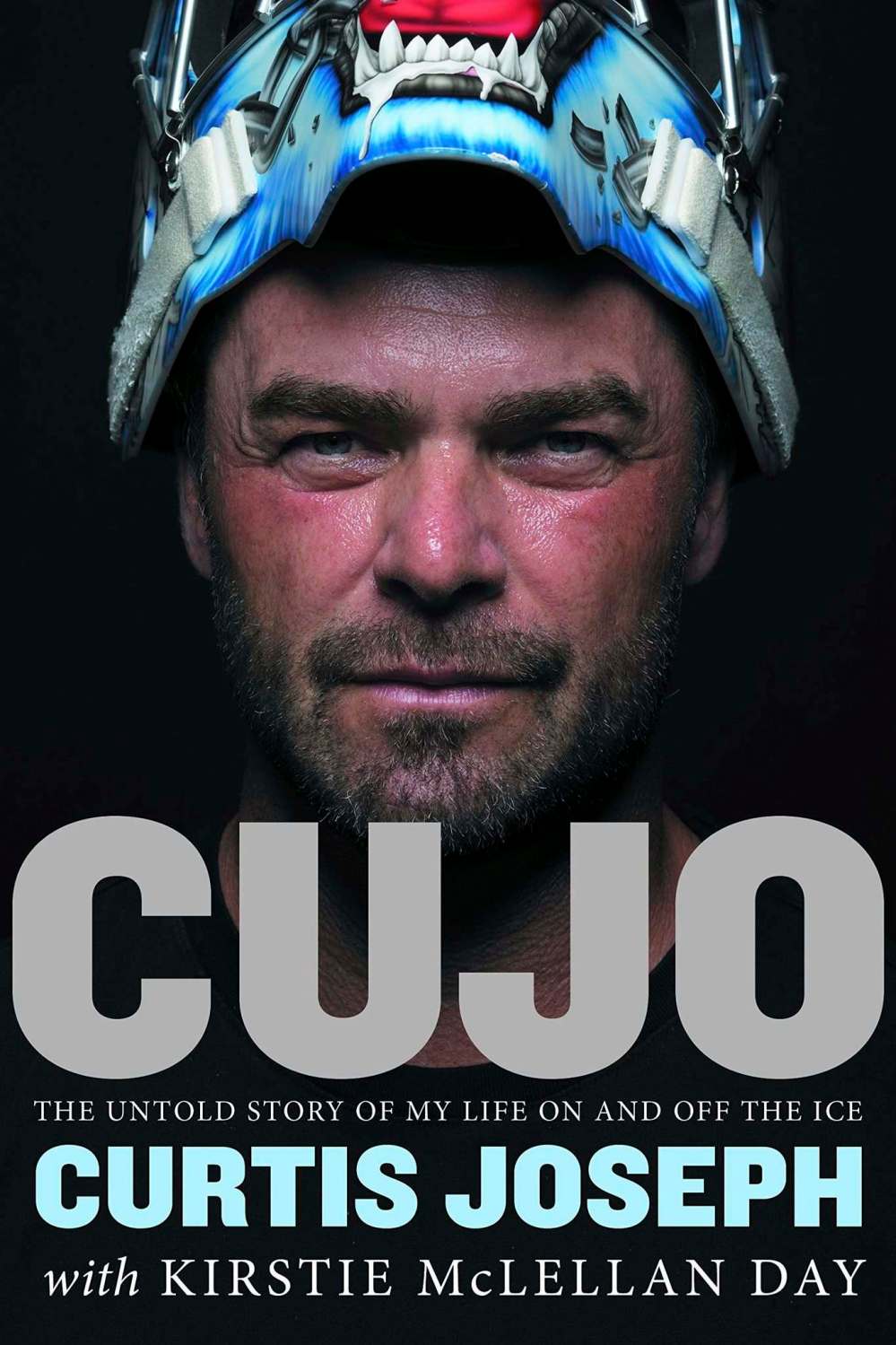
The life story of former NHL goaltender Curtis Joseph as told in his memoir Cujo: the Untold Story of My Life On and Off the Ice is not a typical sports autobiography — at least at the outset.
Joseph’s path to a lengthy career that saw him establish himself as one of the best goalies of his era was anything but conventional. He’s almost nonchalant in telling the story of being raised by an emotionally unstable woman who manipulated his unwed teen mother into giving her custody of the future NHL legend shortly after he was born in 1967.
Instead of providing young Curtis with a stable, healthy home, he was neglected and raised in a halfway house for mental patients before the woman he knew as his mother lost interest and moved to Nova Scotia, leaving him behind to live with relatives in Ontario.
Growing up in this environment, Joseph found his refuge in sports and role models in his coaches and friends’ parents and families, making note of how they lived and modelling his future behaviour after them. He was a beneficiary of the generosity of many of these people who often fed him, let him stay at their homes and made sure he got to his games and practices.
Playing junior B hockey in Ontario, Joseph fell through the cracks and was unheralded until he joined the Notre Dame Hounds of the Saskatchewan Junior Hockey League as a 20-year-old in 1987. From Notre Dame, he played one season at the University of Wisconsin, where he again proved himself an elite player and embarked on his professional career after being signed as a free agent by the St. Louis Blues. (He would go on to play with the Edmonton Oilers, Toronto Maple Leafs, Detroit Red Wings, Phoenix Coyotes and Calgary Flames before his retirement in 2010.)
As fascinating as the story of Joseph’s childhood resilience and survival is, Cujo becomes a run-of-the mill hockey biography (co-written with serial hockey biographer Kirstie McLellan Day) once he becomes a pro.
From a career that spanned 20 years, Joseph tells a lot of stories about games he played, changing teams and contract negotiations. What his autobiography doesn’t reveal is anything about any lasting and deep friendships he made playing the game. His most enduring friendship, it would seem, is with Tyler Stewart, drummer for the Barenaked Ladies, with whom he has been friends since high school.
Even Joseph’s stories about mischief he and his teammates got up to have little to make them interesting other than the fact they give readers a glimpse into the lives of professional athletes.
Nowhere is his reluctance to explore his feelings on display more than when he tells the story of meeting his birth mother after establishing himself in the NHL. The reader is given the barest of details about a visit to her home.
To his credit, Joseph does not use his autobiography as a platform to even scores and tell tales about people with whom he has an axe to grind. He is critical of some people, such as doctors and trainers who put the interests of the team above the health of the players. This is not to fault Joseph for keeping his criticism to himself. It is quite possibly a byproduct of a childhood in which surviving, not holding grudges, was his No. 1 priority.
Despite its shortcomings, Cujo is an at-times fascinating look at the life of someone who beat incredible odds to rise to the top of his profession. While it is at times frustratingly mundane, it still offers an interesting look into the world of professional sports not always included in these kinds of biographies.
Gilbert Gregory is a Free Press copy editor.