In the footsteps of a refugee
Church-run event shows risks, difficult choices faced by those fleeing persecution

Advertisement
Read this article for free:
or
Already have an account? Log in here »
To continue reading, please subscribe:

Digital Subscription
One year of digital access for only $205*
- Enjoy unlimited reading on winnipegfreepress.com
- Read the E-Edition, our digital replica newspaper
- Access News Break, our award-winning app
- Play interactive puzzles
*First annual payment billed as $205.00 + GST for one year. This annual subscription will automatically renew at $233.00 + GST every 52 weeks (10% off the regular annual price of $259.35). Offer available to new and qualified returning subscribers only. Cancel any time.
To continue reading, please subscribe:
Add Free Press access to your Brandon Sun subscription for only an additional
$1 for the first 4 weeks*
- Enjoy unlimited reading on winnipegfreepress.com
- Read the E-Edition, our digital replica newspaper
- Access News Break, our award-winning app
- Play interactive puzzles
*Your next Brandon Sun subscription payment will increase by $1.00 and you will be charged $17.95 plus GST for four weeks. After four weeks, your payment will increase to $24.95 plus GST every four weeks.
Read unlimited articles for free today:
or
Already have an account? Log in here »
I used to have a meaningful job, a loving family and a strong community. All that changed overnight.
There was a regime change.
I lost my job and found myself targeted by the new military government. One day I came home to find my father and brother had been beaten by police for refusing to reveal my whereabouts.
I used all my cash to pay a taxi driver to smuggle me over a border into the neighbouring country.
I lived for three years in a refugee camp, unable to work, surviving on meagre rations, before I finally got a work permit.
Eventually I became a permanent resident. I wasn’t a citizen, but at least I was safe.
This is the fictional journey I went on when I participated in “Explore the Refugee Highway,” a choose-your-own-adventure-style game that was set up in Kildonan Park on Aug. 29 to give Winnipeggers a taste of the terror, risks, challenges and occasional breakthroughs faced by refugees.
I was one of the lucky few.
From left: Natalya Abigail Piper and Tracey McDonald finish off their fictional journeys to Canadian Citizenship during the Refugee Highway event, organized by Naomi House, Sunday.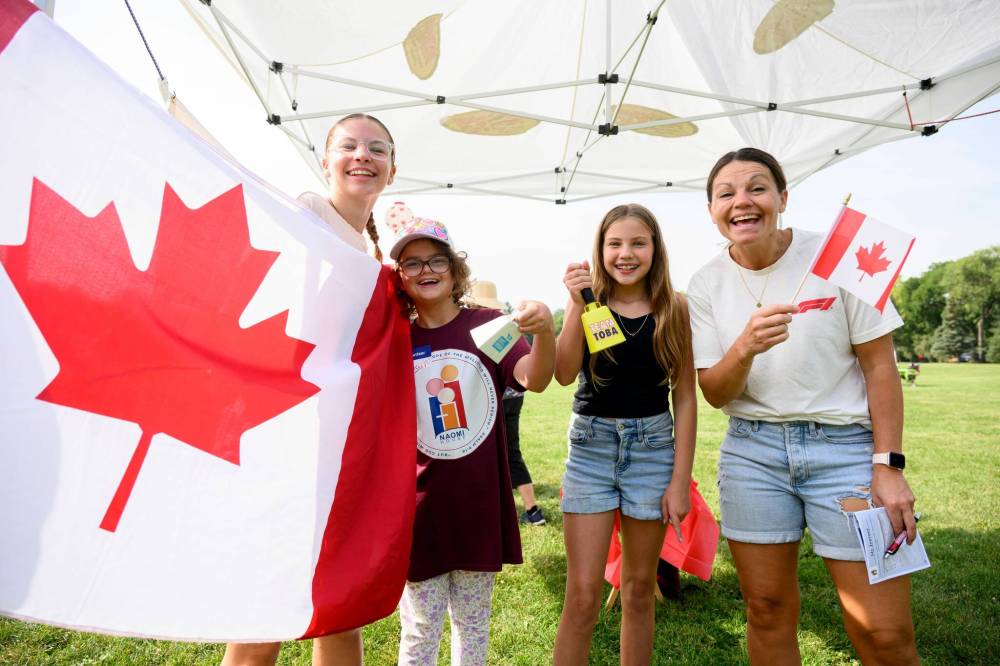
“Historically, only one per cent of all refugees ever make it to a safe third country like Canada,” said Tim Nielson, a pastor who helped organize the event.
City Church, where Nielson ministers, is made up largely of former refugees. They gather for services in English, Chin, Karen, Punjabi and Farsi in a red brick, Gothic-style church building on Maryland Avenue.
City Church was started in 2008 by two couples: Tim and Sue Nielson and Indiana Cungcin and Lal Cerlian Cungcin.
Indiana came to Winnipeg from Myanmar in 1997, forced to flee because of his role in a student movement for democracy that was crushed by the government. He said he was moved to help start City Church after three busloads of refugees from that country arrived in Winnipeg and needed a place to worship.
Candace Loewen was one of the main organizers of the Second Annual Refugee Highway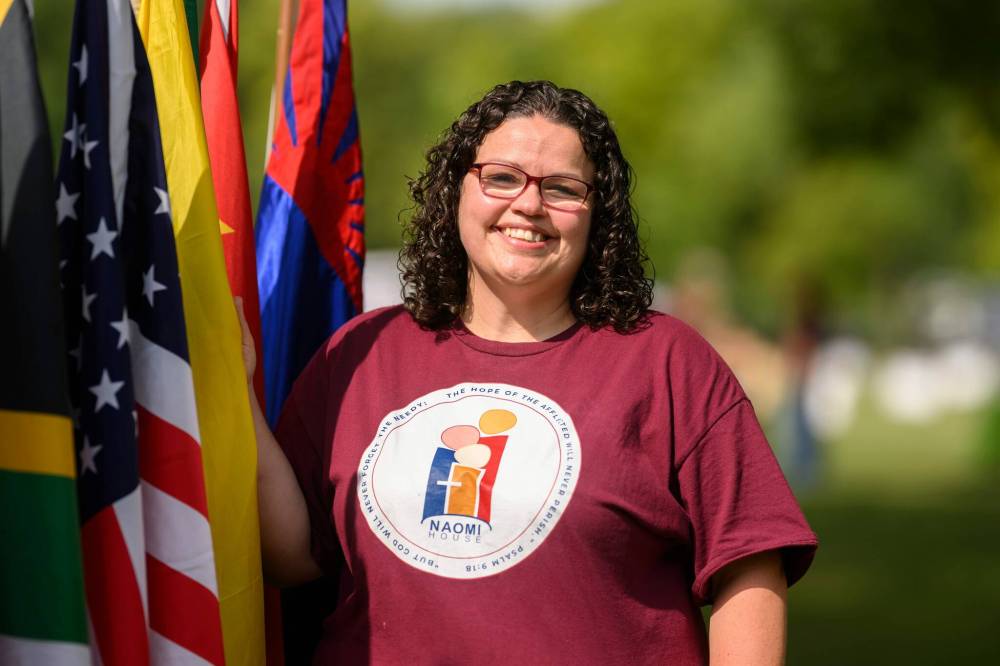
Candace Loewen works for Naomi House, a ministry of City Church that helps refugees rebuild their lives in Winnipeg. She designed Explore the Refugee Highway and wrote the script for the interactive game by drawing on the stories she has heard from hundreds of refugees.
In the game, players make their way from station to station, forced to make the kinds of impossible choices refugees face every day: Do I leave my family or put them at risk by staying? Do I try to sneak across the border or trust my life to the officials who guard it?
“We wanted people to walk away a little more educated, feeling a little more compassionate,” Loewen said.
“So the next time they see a news article that says refugee claimants have increased, or border security needs to be tightened, they remember that those are all people who have been through circumstances we can only imagine.”
Participants in the event spin a wheel to find out what will happen to them on their fictional refugee journeys.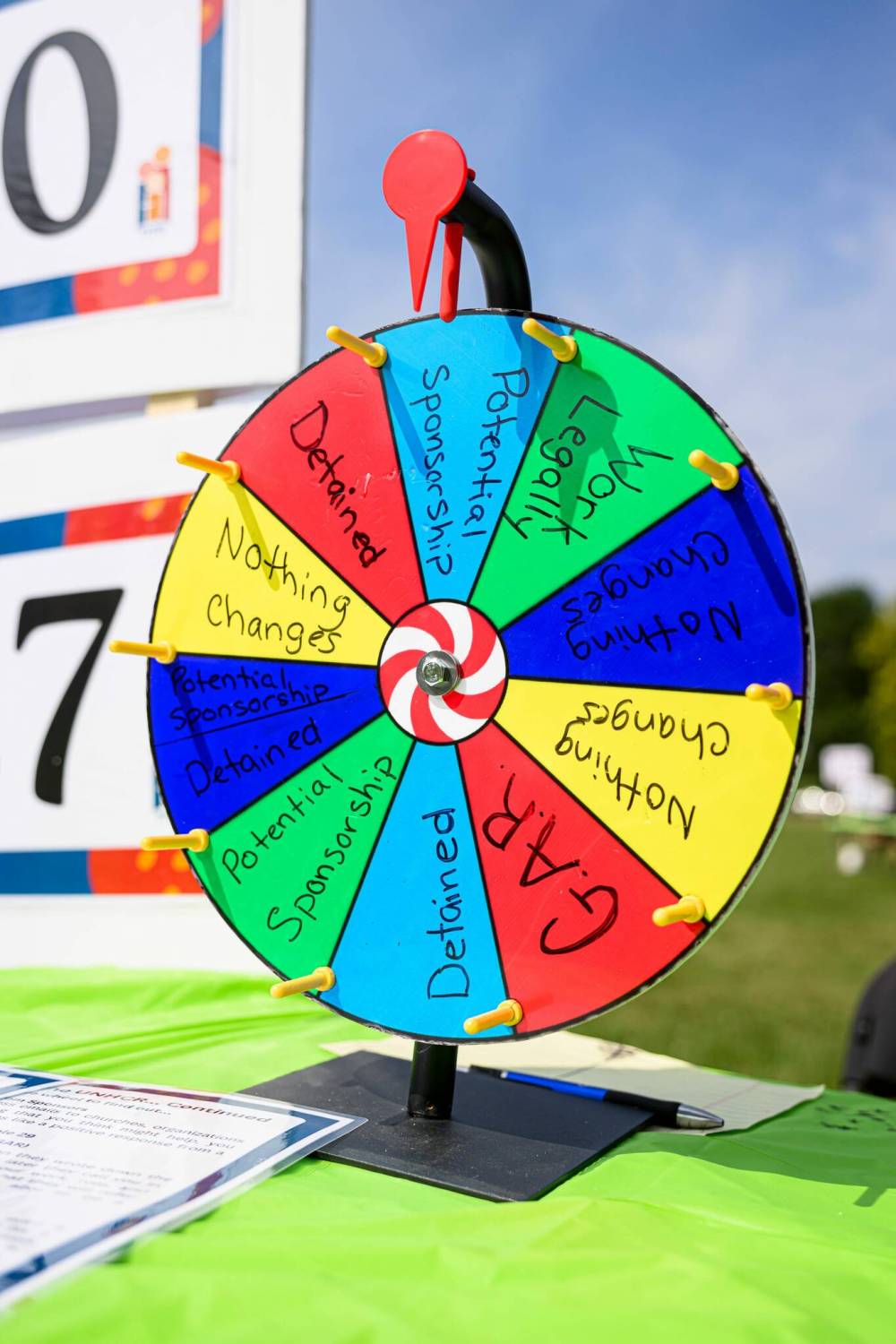
The game is fun; participants spin a wheel or pick a rubber ducky from a bin or shake a colourful chip from a jar to find out what will happen next. In reality, refugees often feel helpless, at the mercy of tightening borders and lottery-like admissions policies.
“The world is quite negative toward refugees right now, but if it was your family and you were forced to flee and you were responsible for trying to get your kids a future, what would you do?” Loewen said.
City Church is an official sponsorship agreement holder, which allows it to help settle refugees in Canada.
Each year the Canadian government allocates a set number of spots for refugees to sponsorship agreement holders. In 2024, City Church received 119 refugees. This year, it received only 37.
Under Prime Minister Mark Carney, the government has drastically reduced the number of refugees accepted by Canada, even though globally there are more people displaced by conflict than in the past.
In recent years, public opinion has shifted against immigration. In 2022, 27 per cent of Canadians said there was too much immigration; in 2024, that sentiment rose to 58 per cent.
Politicians such as Conservative Leader Pierre Poilievre often blame newcomers for Canada’s housing shortage and economic woes, even though neither of these crises was caused by immigration.
Volunteer Sadaf Saberi explains traditional Myanmar clothing and cultural objects at the
event. The event’s interactive game draws on real stories from hundreds of refugees. 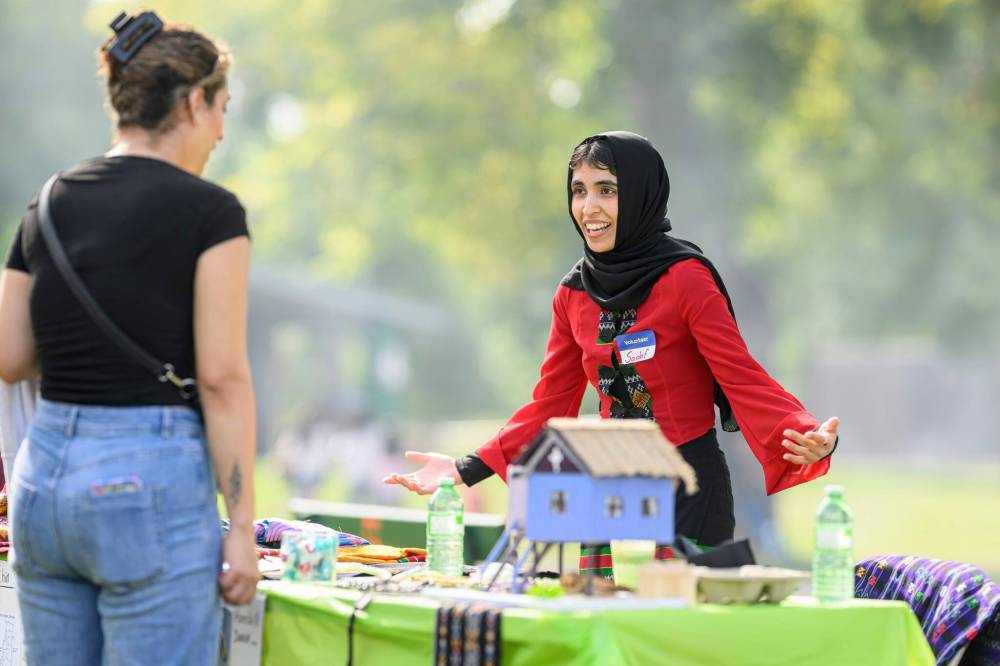
On the contrary, a report published earlier this year by the Royal Bank of Canada and Eurasia Group said that anti-immigration sentiment runs contrary to Canada’s needs. A clamp-down on immigration would hurt businesses and reduce the standard of living, the study warned.
Last year, Canada’s population shrank for the first time in history while baby boomers are retiring and people are having fewer children. Without newcomers to fill jobs, Canada will suffer, the study said.
Refugees who arrive in Canada have very high success rates, Loewen said. Most are settled within a year, working and paying taxes.
Refugees bring an incredibly strong work ethic and enormous creativity, Nielson said. “We’re a richer country for having more perspectives.”
Newcomers bring many benefits to Canada, but that’s not the primary reason to welcome them, Loewen said.
Gewra Mengisteab (left) and her friend Genet Haile wave their Canadian flags after finishing the Refugee Highway.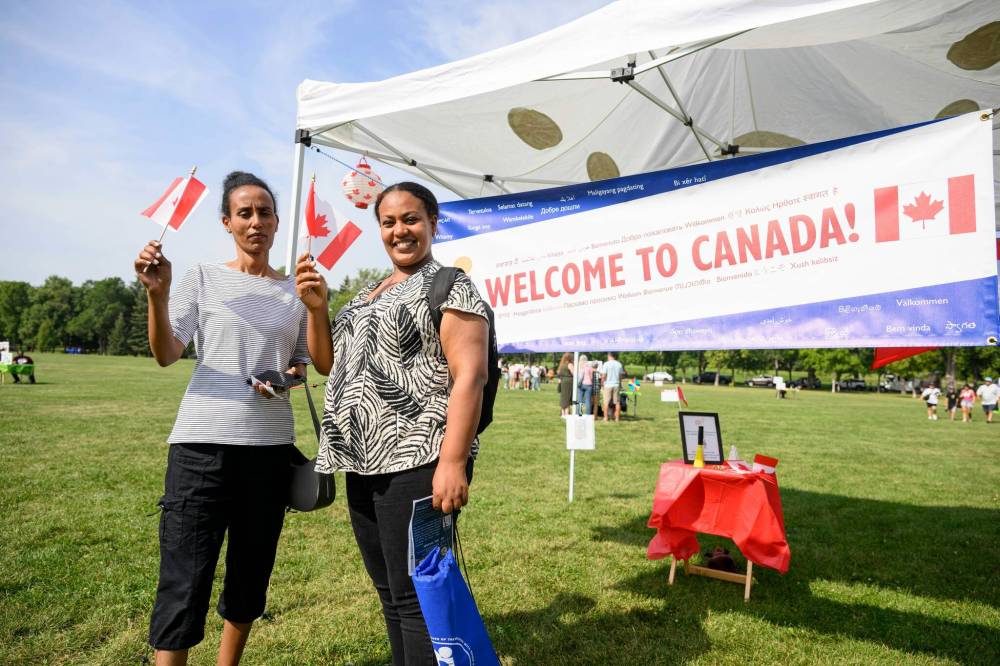
A nearby sign on the grass reminded participants that Jesus himself was a refugee when his parents fled to Egypt.
“We think that (welcoming refugees) reflects the heart of Christ,” Loewen said.
“It would be very hard for someone to open their Bible and get an anti-immigrant view. Because everywhere it’s saying welcome the stranger, treat them like your own.”
This story was produced in conjunction with Broadview, as part of a joint Religion in the News partnership covering issues of faith in Manitoba and nationally.
josiah.neufeld@winnipegfreepress.com

The Free Press is committed to covering faith in Manitoba through our Religion in the News project. This reporting continues because readers like you step forward to fund it.
Donate now to support our reporting on religion.
Your donation is eligible for a charitable tax receipt.
BECOME A FAITH JOURNALISM SUPPORTER
Josiah Neufeld
Religion reporter
Josiah Neufeld covers issues of faith in Manitoba and nationally for the Free Press and Broadview as part of a joint Religion in the News partnership. Read more about Josiah.
Every piece of reporting Josiah produces is reviewed by an editing team before it is posted online or published in print — part of the Free Press‘s tradition, since 1872, of producing reliable independent journalism. Read more about Free Press’s history and mandate, and learn how our newsroom operates.
Our newsroom depends on a growing audience of readers to power our journalism. If you are not a paid reader, please consider becoming a subscriber.
Our newsroom depends on its audience of readers to power our journalism. Thank you for your support.
The Free Press is committed to covering faith in Manitoba through our Religion in the News project. This reporting continues because readers like you step forward to fund it.
Donate now to support our reporting on religion.
Your donation is eligible for a charitable tax receipt.
BECOME A FAITH JOURNALISM SUPPORTER
Josiah Neufeld
Religion reporter
Josiah Neufeld covers issues of faith in Manitoba and nationally for the Free Press and Broadview as part of a joint Religion in the News partnership. Read more about Josiah.
Every piece of reporting Josiah produces is reviewed by an editing team before it is posted online or published in print — part of the Free Press‘s tradition, since 1872, of producing reliable independent journalism. Read more about Free Press’s history and mandate, and learn how our newsroom operates.
Our newsroom depends on a growing audience of readers to power our journalism. If you are not a paid reader, please consider becoming a subscriber.
Our newsroom depends on its audience of readers to power our journalism. Thank you for your support.
Advertisement Advertise With Us
Advertisement Advertise With Us
The Free Press acknowledges the financial support it receives from members of the city’s faith community, which makes our coverage of religion possible.