

Separating teams along racial lines isn’t what hockey’s about, KJHL lawyer says
Advertisement
Read this article for free:
or
Already have an account? Log in here »
To continue reading, please subscribe:

Digital Subscription
One year of digital access for only $205*
- Enjoy unlimited reading on winnipegfreepress.com
- Read the E-Edition, our digital replica newspaper
- Access News Break, our award-winning app
- Play interactive puzzles
*First annual payment billed as $205.00 + GST for one year. This annual subscription will automatically renew at $233.00 + GST every 52 weeks (10% off the regular annual price of $259.35). Offer available to new and qualified returning subscribers only. Cancel any time.
To continue reading, please subscribe:
Add Free Press access to your Brandon Sun subscription for only an additional
$1 for the first 4 weeks*
- Enjoy unlimited reading on winnipegfreepress.com
- Read the E-Edition, our digital replica newspaper
- Access News Break, our award-winning app
- Play interactive puzzles
*Your next Brandon Sun subscription payment will increase by $1.00 and you will be charged $17.95 plus GST for four weeks. After four weeks, your payment will increase to $24.95 plus GST every four weeks.
Read unlimited articles for free today:
or
Already have an account? Log in here »
Hey there, time traveller!
This article was published 09/11/2018 (2879 days ago), so information in it may no longer be current.
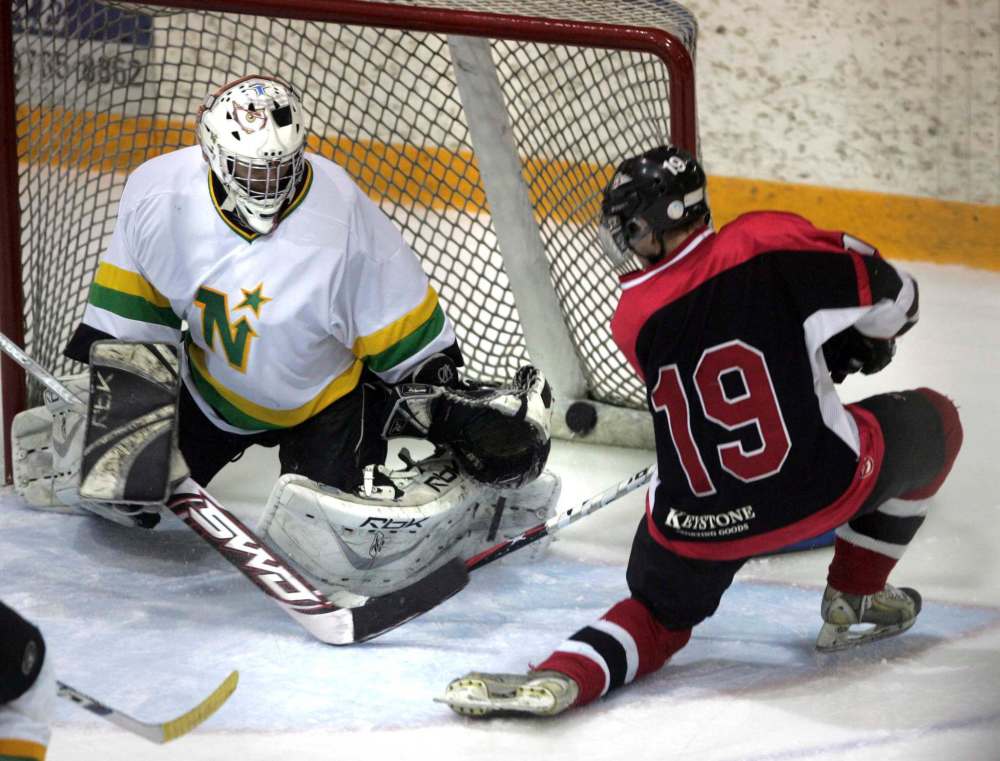
Manitoba First Nations-based teams say they offered scheduling changes and money to non-First Nations clubs to keep the 10-team Keystone Junior Hockey League intact prior to the 2018-19 season.
The offers were declined. The junior B circuit broke in half, with the five southern teams forming the Capital Region Junior Hockey League, a move that allegedly did not follow the KJHL constitution nor offer remedies acceptable to the First Nations franchises.
“The email I got back (from the new CRJHL) said that inclusion or return of First Nations (teams) is not negotiable,” Jamie Kagan, a lawyer with Thompson Dorfman Sweatman LLP representing the remaining KJHL teams, said at a news conference Friday.
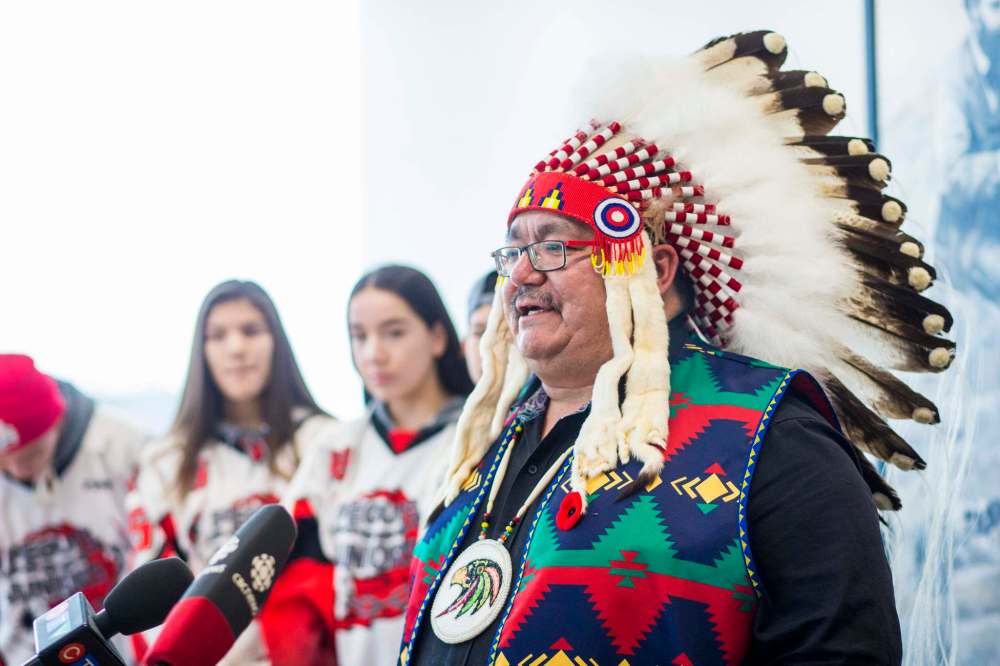
In response, the four First Nation-based teams — Peguis Juniors, Opaskwayak Cree Nation Storm, Cross Lake Islanders and Norway House North Stars (the Fisher River Hawks are on a leave of absence from the league) — last week launched a legal challenge seeking a court-ordered injunction to stop the CRJHL from operating.
A contested motion hearing is set for Dec. 19.
Peguis Chief Glenn Hudson said First Nations put a high priority on funding its youth in sports such as hockey.
“We’re willing to put those costs forward because that’s part of their growth, part of their dreams and aspirations, to let them be the best players they can be,” Hudson said Friday.
First Nations residents have dreams just like other people, Norway House Chief Larson Anderson added.
“We want our players to play in the NHL. What’s wrong with that?” he said.
The league, which has been in operation since 1977, is not considered a strong developmental league, ranking behind the Manitoba Junior Hockey League (junior A) and Western Hockey League (major junior) in player development.
Perhaps the league’s most famous alumnus is forward Darren Helm of the Detroit Red Wings. Helm, now in the third year of a five-year, US$19.25-million NHL contract, started his junior career with the Selkirk Fishermen.
Officials with the new CRJHL (comprised of the St. Malo Warriors, Selkirk, Lundar Falcons, North Winnipeg Satellites and Arborg Ice Dawgs) say they will not speak to the issue while it is in litigation.
However, in previous statements, the CRJHL cited travel times and expenses for southern teams playing road games in the North, along with parents’ fears of accidents in the wake of the Humboldt Broncos fatal bus crash in Saskatchewan in April.
CRJHL officials have also said long road trips conflict with players who have jobs or attend post-secondary school, and keeping travel to an hour-and-a-half outside Winnipeg has made it easier to attract players.
On Friday, Hudson poked holes in that argument.
“Peguis is only 30 minutes away from Arborg. It’s only 40 minutes away from Lundar,” he said, adding teams in Lundar and Arborg travel two hours to play in St. Malo.
Kagan said separating teams along racial lines isn’t what hockey’s about.
“These players from Winnipeg go up and play in Peguis and hang out with the kids… and realize they have a lot more in common than the media or others might say,” the lawyer said. “What comes out of that is they realize those people are a lot like them.”

Kagan said the First Nations teams also offered to play an unbalanced schedule to reduce the southern teams’ travel, and even suggested championship playoffs between northern and southern teams.
Some observers have suggested one reason behind the split was recent run of success for Peguis, who won the last three KJHL championship titles.
“When the Edmonton Oilers or the New York Islanders were (the NHL’s) best teams, did (other teams) pull out?” Hudson said in response. “They don’t. It’s all part of the game.”
In the meantime, the four active KJHL teams have drawn up a schedule and began play Oct. 27. The CRJHL started its season Oct. 12.
bill.redekop@freepress.mb.ca