Locked away, forgotten: Muslim Uighur wives of Pakistani men

Advertisement

Advertise with us

ISLAMABAD - The last time Chaudhry Javed Atta saw his wife was over a year ago — the Pakistani trader in dried and fresh produce was leaving their home in northwestern China's heavily Muslim Xinjiang region to go back to his country to renew his visa.

Read this article for free:


or

Already have an account? Log in here »

To continue reading, please subscribe:

Subscribe and receive a limited-edition Free Press branded hat or tote.

Digital Subscription

One year of digital access for only $205*

  • Enjoy unlimited reading on winnipegfreepress.com
  • Read the E-Edition, our digital replica newspaper
  • Access News Break, our award-winning app
  • Play interactive puzzles

*First annual payment billed as $205.00 + GST for one year. This annual subscription will automatically renew at $233.00 + GST every 52 weeks (10% off the regular annual price of $259.35). Offer available to new and qualified returning subscribers only. Cancel any time.

To continue reading, please subscribe:

Add Free Press access to your Brandon Sun subscription for only an additional

$1 for the first 4 weeks*

  • Enjoy unlimited reading on winnipegfreepress.com
  • Read the E-Edition, our digital replica newspaper
  • Access News Break, our award-winning app
  • Play interactive puzzles
Start now

*Your next Brandon Sun subscription payment will increase by $1.00 and you will be charged $17.95 plus GST for four weeks. After four weeks, your payment will increase to $24.95 plus GST every four weeks.

Hey there, time traveller!
This article was published 17/12/2018 (2834 days ago), so information in it may no longer be current.

ISLAMABAD – The last time Chaudhry Javed Atta saw his wife was over a year ago — the Pakistani trader in dried and fresh produce was leaving their home in northwestern China’s heavily Muslim Xinjiang region to go back to his country to renew his visa.

He remembers the last thing she told him: “As soon as you leave, they will take me to the camp and I will not come back.”

That was August, 2017. By then, Atta and Amina Manaji, from the Muslim ethnic Uighur group native to Xinjiang, had been married for 14 years.
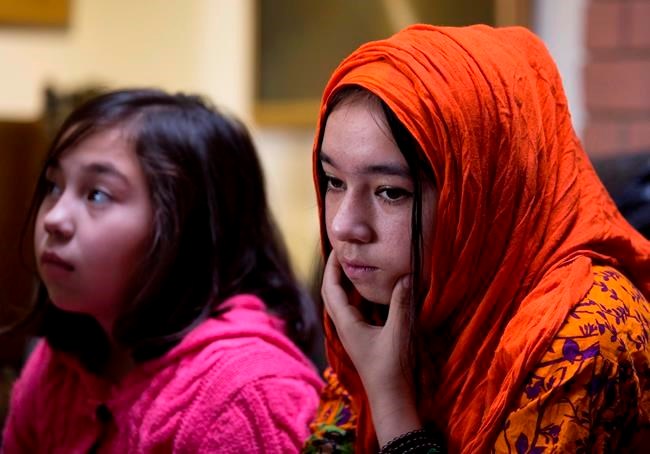
In this Nov. 29, 2018 photo, Shahnaz, 16, right, and Shakeela, 12, daughters of Mir Aman, speak to The Associated Press, in Islamabad, Pakistan. Scores of Pakistani men like Aman, whose Muslim Uighur wives have disappeared into internment camps in China, feel helpless, fighting a wall of silence as they struggle to reunite their families. Political and economic factors, including concerns about losing out on vast Chinese investments, have kept Muslim countries like Pakistan quiet about the plight of their fellow Muslims, being weaned off their faith in so-called re-education camps. (AP Photo/B.K. Bangash)

Atta is one of scores of Pakistani businessmen __ and he says there are more than 200 __ whose spouses have disappeared, taken to what Chinese authorities tell them are education centres.

Beijing has been accused of interning members of its Muslim population — by some reports as many as 1 million — to “re-educate” them away from their faith. It is seen as a response to riots and violent attacks that the government blamed on separatists. Ethnic Uighurs and Kazakhs in China have told The Associated Press that ostensibly innocuous acts such as praying regularly, viewing a foreign website or taking phone calls from relatives abroad could land one in a camp.

“They call them schools, but they are prisons,” Atta said. “They can’t leave.”

Pakistanis often rally loudly in defence of Islam and Muslims whenever they are perceived offended around the world — most recently over cartoons depicting the Prophet Muhammad. In 1989, protests spread from Pakistan elsewhere, leading to the fatwa by Iran’s Ayatollah Ruholla Khomeini against author Salman Rushdie for his depiction of Islam in his book Satanic Verses.

But political and economic factors, including concerns about losing out on vast Chinese investments, have kept Pakistan and other Muslim countries silent about the plight in China of fellow Muslims, the Uighurs.

“Cold, hard interests will always carry the day” in international relations, said Michael Kugelman, deputy director of the Asia Program at the Washington-based Wilson Center. “The Muslim world’s deafening silence about China’s treatment of Muslims can be attributed to its strong interest in maintaining close relations with the world’s next superpower.”

China is financing major development projects in cash-strapped Pakistan. Islamabad says Beijing’s up to $75 billion development project known the China-Pakistan Economic Corridor — part of an effort to reconstruct the historic Silk Road linking China to all corners of Asia — will bring new prosperity to Pakistan, where the average citizen lives on just $125 a month.

For Atta, it’s not just the separation from his wife.

He has also had to leave their two sons, who are 5 and 7 years old and whose passports were confiscated by the Chinese government, in the care of his wife’s family. Otherwise, he said, the authorities would have put them in an orphanage. The AP has previously reported that the government is placing the children of detainees and exiles into dozens of orphanages across Xinjiang.

Atta went back to China twice for a few months but both times his visas expired and he had to return to Pakistan. Getting in touch with family in Xinjiang is a circuitous route that involves reaching out to Pakistani friends still there, who then track down family members willing to talk.

“Now especially I am worried. It is now eight, almost nine months, that I have not seen my children,” he said. “I haven’t even been able to talk to them.”

Last week, Atta finally talked to his brother-in-law after a friend discovered he had a heart attack and was recovering in a hospital in Urumqi, the capital of Xinjiang.

“He said my sons were good, but he had no news of my wife,” said Atta.

China routinely responds to queries on Uighurs by saying its policies are aimed at creating “stability and lasting peace” in Xinjiang but President Xi Jinping’s campaign to subdue a sometimes restive region, including the internment of more than 1 million Uighurs and other Muslim minorities, has alarmed a United Nations panel and the U.S. government.

Mushahid Hussain, chairman of Pakistan’s Senate Foreign Affairs Committee, said the cardinal principle of Pakistan-China relations is to refrain from commenting on anything to do with the other country’s domestic issues.
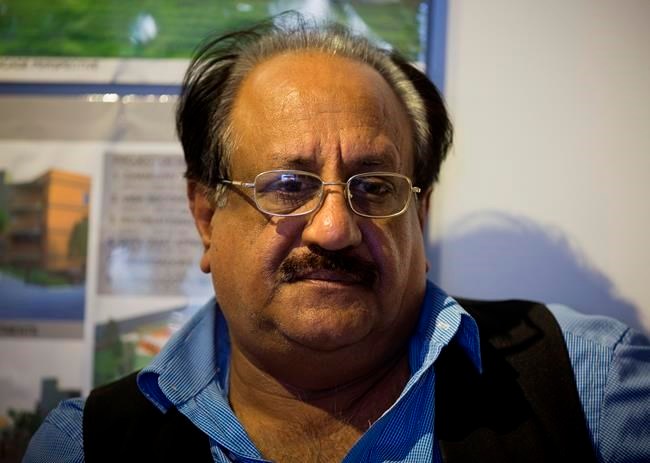
In this Nov. 29, 2018 photo, Pakistan's Chaudry Javed Atta speaks to The Associated Press, in Islamabad, Pakistan. The last time Atta saw his wife was over a year ago - the Pakistani trader in dried and fresh produce was leaving their home in northwestern China's heavily Muslim Xinjiang region to go back to his country to renew his visa. Atta is one of scores of Pakistani businessmen _-- and he says there are more than 200 -- whose spouses have disappeared, taken to what Chinese authorities tell them are education centers. (AP Photo/B.K. Bangash)

“Given the relationship of Pakistan with China, and in the Muslim world in particular, the Chinese narrative is apparently being accepted across the board as the one that is correct,” Hussain said.

A steady stream of Pakistani men has visited Beijing in recent months , lobbying for the release of their wives to little avail. Some say they met Pakistan’s ambassador to China, Masood Khalid, on multiple occasions, and were told their issues were raised privately with the Chinese.

Another Pakistani man in a similar predicament, Mir Aman, went to China more than 25 years ago as a poor labourer in search of work.

There, he met his wife, Maheerban Gul, they worked hard and eventually bought a hotel. The couple has two daughters, Shahnaz, 16, and Shakeela, 12, both now with their father in Pakistan.

Last year, Aman first tried to go back to China alone, but the authorities denied him entry at a border crossing without his wife. Then they returned together to Xinjiang. There, she was ordered to report every morning to the police, who gave her books on the Communist Party to read.

“When they would see anything written in Urdu, a prayer mat or something related to religion, they would seize it,” he said. “They want to eliminate Islam.”

After a few weeks, Aman was ordered to leave even though he had a six-month visa. He was told he could return after one month. When he did, his wife was gone.

For four months he pestered police every day, threatened to take his life in public. He was finally allowed to see his wife, who was brought to a local police station, for just an hour.

They cried. When the meeting ended he was told to go home to Pakistan “and stop making trouble for the administration,” Aman said.

He has no idea where she is being held.

___

Associated Press video-journalist Dake Kang in Beijing contributed to this report.

Report Error Submit a Tip

The Free Press acknowledges the financial support it receives from members of the city’s faith community, which makes our coverage of religion possible.


More Stories

Elmwood–East Kildonan candidate promises to tackle ‘inefficiency’ in government

Gabrielle Piché 3 minute read Preview

Elmwood–East Kildonan candidate promises to tackle ‘inefficiency’ in government

Gabrielle Piché 3 minute read Yesterday at 6:17 PM CDT

The former assistant of late Elmwood–East Kildonan councillor Jason Schreyer is again running for the seat.

Chris Sweryda officially launched his campaign Saturday. He did so with the backdrop of a grocery program he runs, where food is sold near-cost out of St. Gerard School’s gym.

Rows of cereal, pasta sauce and chips filled tables ahead of the program’s afternoon opening. Sweryda created the pop-up with Schreyer months ahead of the former councillor’s April 2025 death.

The program sees roughly 500 people each day it’s open (which is every other week on Saturday), Sweryda said.

Read
Yesterday at 6:17 PM CDT

Family account spiced with magic realism, geopolitical intrigue and a ghost story

Reviewed by Zilla Jones 4 minute read Preview

Family account spiced with magic realism, geopolitical intrigue and a ghost story

Reviewed by Zilla Jones 4 minute read Yesterday at 2:01 AM CDT

Tom Lin’s second novel Babylon, South Dakota moves beyond a historical account of an immigrant family’s struggle, delightfully blending and bending genres.

Lin is a Chinese-born novelist whose family emigrated to the U.S. when he was four years old. His debut novel, The Thousand Crimes of Ming Tsu, won the 2022 Andrew Carnegie Medal for Excellence in Fiction, making him the youngest ever recipient of that award. He earned a PhD in English from the University of California Davis and is currently an assistant professor of English and creative writing at the University of Iowa.

Babylon, South Dakota takes place in an unspecified time period that can be understood to be during the Mao era — likely the 1950s or ’60s. A young Chinese couple, the Hsuis, immigrate to the rural community that gives the book its title. They take the names Saul and Mei and settle on a 160-acre homestead left to them by a distant relative.

Saul’s dream is to breed and sell chrysanthemums from seeds he brought from China, while Mei wants to raise livestock. They speak no English, know nothing of life in the United States, are unprepared for the harshness of winter and the isolation of the farm and bring nothing with them except some gold, which Mei hides around the house for emergencies. Their only link to the outside world is a discarded and marginally functioning TV set, which Saul rescues and rigs up.

Read
Yesterday at 2:01 AM CDT

American Hostage stars recall warmth of Winnipeggers during brutal winter

Randall King 7 minute read Preview

American Hostage stars recall warmth of Winnipeggers during brutal winter

Randall King 7 minute read Friday, Sep. 18, 2026

TORONTO — When you stream the eight-part series American Hostage, a sense of familiarity may strike.

That’s because the show was shot in Winnipeg — especially in the Exchange District — from November of last year to the beginning of February, with Winnipeg portraying Indianapolis circa 1977.

The whole world seemed to be watching that midwest American city that year as a hostage crisis unfolded involving one Tony Kiritsis, an angry man who goes ballistic when a mortgage brokerage was poised to foreclose on property he had dreamed of developing into a shopping centre.

Kiritsis kidnapped his mortgage broker, Richard Hall, wiring a shotgun to the back of his head, and demanded a public airing of his grievances, with the reluctant help of popular radio broadcaster Fred Heckman.

Read
Friday, Sep. 18, 2026

Locked away, forgotten: Muslim Uighur wives of Pakistani men

Kathy Gannon, The Associated Press 7 minute read Preview

Locked away, forgotten: Muslim Uighur wives of Pakistani men

Kathy Gannon, The Associated Press 7 minute read Monday, Dec. 17, 2018

ISLAMABAD - The last time Chaudhry Javed Atta saw his wife was over a year ago — the Pakistani trader in dried and fresh produce was leaving their home in northwestern China's heavily Muslim Xinjiang region to go back to his country to renew his visa.

He remembers the last thing she told him: "As soon as you leave, they will take me to the camp and I will not come back."

That was August, 2017. By then, Atta and Amina Manaji, from the Muslim ethnic Uighur group native to Xinjiang, had been married for 14 years.

Atta is one of scores of Pakistani businessmen __ and he says there are more than 200 __ whose spouses have disappeared, taken to what Chinese authorities tell them are education centres.

Read
Monday, Dec. 17, 2018

Today’s horoscope

Georgia Nicols 4 minute read Preview

Today’s horoscope

Georgia Nicols 4 minute read Yesterday at 2:01 AM CDT

MOON ALERT: After 12:15 a.m., there are no restrictions to shopping or important decisions today. The moon is in Capricorn.

ARIES (March 21-April 19)

This is a tricky day. Don’t be too ambitious. It’s totally OK to kick back and relax. But be aware that communications with parents and authority figures might be confused, vague or subject to misunderstandings. Nevertheless, romance is sweet and cosy!

TAURUS (April 20-May 20)

Read
Yesterday at 2:01 AM CDT

Hellebuyck standoff caused by… Nathan MacKinnon?

Mike McIntyre 6 minute read Preview

Hellebuyck standoff caused by… Nathan MacKinnon?

Mike McIntyre 6 minute read Friday, Sep. 18, 2026

Looking for someone to blame in the Connor Hellebuyck fiasco and cast as public enemy No. 1? How about long-time Winnipeg Jets nemesis Nathan MacKinnon?

Allow us to explain as we fire up the time machine and head back to February in Italy.

Oh, what could have been if MacKinnon had been able to score on what appeared to be an open net late in the third period of the men’s gold medal game with Hellebuyck down and seemingly out of position.

Instead, the star forward fired wide, keeping the score deadlocked at 1-1 as the clock ticked down on regulation.

Read
Friday, Sep. 18, 2026