At botanical garden in Mexico, natural species blossom again

Advertisement

Advertise with us

SAN MIGUEL DE ALLENDE, Mexico - Imagine a botanical garden, and acres of carefully designed, highly manicured, delicately pruned "zoos for plants" may come to mind. But at El Charco del Ingenio, a botanical garden and natural protected area in central Mexico, the sprawling scrubland has been allowed to return to its unencumbered, wilder roots.

Read this article for free:


or

Already have an account? Log in here »

To continue reading, please subscribe:

Subscribe and receive a limited-edition Free Press branded hat or tote.

Digital Subscription

One year of digital access for only $205*

  • Enjoy unlimited reading on winnipegfreepress.com
  • Read the E-Edition, our digital replica newspaper
  • Access News Break, our award-winning app
  • Play interactive puzzles

*First annual payment billed as $205.00 + GST for one year. This annual subscription will automatically renew at $233.00 + GST every 52 weeks (10% off the regular annual price of $259.35). Offer available to new and qualified returning subscribers only. Cancel any time.

To continue reading, please subscribe:

Add Free Press access to your Brandon Sun subscription for only an additional

$1 for the first 4 weeks*

  • Enjoy unlimited reading on winnipegfreepress.com
  • Read the E-Edition, our digital replica newspaper
  • Access News Break, our award-winning app
  • Play interactive puzzles
Start now

*Your next Brandon Sun subscription payment will increase by $1.00 and you will be charged $17.95 plus GST for four weeks. After four weeks, your payment will increase to $24.95 plus GST every four weeks.

Hey there, time traveller!
This article was published 24/12/2018 (2836 days ago), so information in it may no longer be current.

SAN MIGUEL DE ALLENDE, Mexico – Imagine a botanical garden, and acres of carefully designed, highly manicured, delicately pruned “zoos for plants” may come to mind. But at El Charco del Ingenio, a botanical garden and natural protected area in central Mexico, the sprawling scrubland has been allowed to return to its unencumbered, wilder roots.

The approximately 160-acre property, acquired from several different families, had been overgrazed for hundreds of years, according to Mario Arturo Hernández Peña, the park’s director.

“Thirty years ago, people said the only thing that grows here is stones,” Hernández said. But by limiting access, protecting the soil from runoff, pruning trees and controlling unwanted species, the land has blossomed, he said.
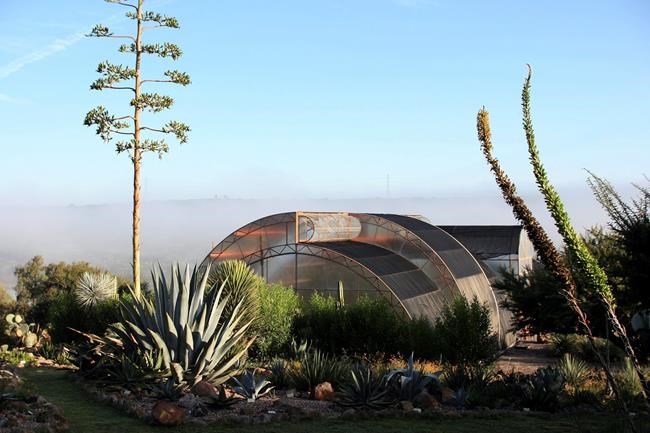
This 2007 photo shows The Conservatory of Plants in El Charco del Ingenio in San Miguel de Allende, Mexico. (El Charco del Ingenio AC via AP)

In 1991, when El Charco first opened, volunteers and staff had identified about 183 different species of plants and about 130 species of birds. Those numbers exploded to about 600 and 186 in 2007 and 2014, respectively.

“We’re just helping nature,” he said.

El Charco is easily accessible from touristy downtown San Miguel de Allende. It’s a few minutes by car or a longer, uphill jaunt by foot. The park hosts about 50,000 visitors each year. About 70 per cent are Mexicans and, of those, about 35 per cent are students, which is exactly how Hernández and the board of directors like it.

“It’s an educational environment, not a park where you can have a picnic,” explained Naomi Zerriffi, the only non-Mexican on the seven-member board of directors.

Even so, the high tourist season of November through February is the park’s busiest time of year, Hernández said.

“We’re working with the University of Guanajuato on a study of the capacity of intake. We’re discussing how much is too much,” he said. “We can pack this place with people . but then its natural structure, which we guard as a treasure, would be highly affected.”

In addition to its biodiversity, El Charco is culturally and historically significant. Its name combines two Spanish words, “el charco” or “puddle,” and “ingenio” or “mill.” They refer to the ancient flow of water in the canyon, which originated in a natural spring, long since dried up, and the remains of an ancient mill or waterwheel, likely used to grind grain, which shows up on a map of San Miguel from 1580.

Today’s visitors also can see the remains of an 18th century bridge, the ruins of a 19th century hacienda and a still-intact dam built in 1902. There are workshops and classes, guided tours in Spanish and English, bird-watching excursions, sweat lodge and full moon ceremonies, as well as an annual spring equinox concert and summer festival in July.

El Charco, a non-profit organization, receives no government funding, and the bulk of its annual budget is drawn from memberships and fees, Hernandez said. About 20 per cent comes from private donations. In addition to Hernandez and the board of directors, the park is run by a team of 24 full-time staff, including an environmental engineer and two biologists, and 10 volunteer tour guides.

Andrew Goodell, a volunteer and engineering geologist, said groups of students, ranging from pre-kindergarten to post-doctoral, have toured the park.

“I want to give them an appreciation for nature and their heritage,” he said. “I want to show them what the land has looked like in the past, what the names of things are and what they’ve been used for.”

Hernández’s intentions are even broader.

“We can have a much larger impact if we focus not just on environmental education, but on cultural change,” he said. “We can just have tourists running through here and taking off, but if people leave here thinking about their actions and their impacts, that’s real.”

___

Online: http://www.elcharco.org.mx/
Report Error Submit a Tip

More Stories

At botanical garden in Mexico, natural species blossom again

Kim Curtis, The Associated Press 4 minute read Preview

At botanical garden in Mexico, natural species blossom again

Kim Curtis, The Associated Press 4 minute read Monday, Dec. 24, 2018

SAN MIGUEL DE ALLENDE, Mexico - Imagine a botanical garden, and acres of carefully designed, highly manicured, delicately pruned "zoos for plants" may come to mind. But at El Charco del Ingenio, a botanical garden and natural protected area in central Mexico, the sprawling scrubland has been allowed to return to its unencumbered, wilder roots.

The approximately 160-acre property, acquired from several different families, had been overgrazed for hundreds of years, according to Mario Arturo Hernández Peña, the park's director.

"Thirty years ago, people said the only thing that grows here is stones," Hernández said. But by limiting access, protecting the soil from runoff, pruning trees and controlling unwanted species, the land has blossomed, he said.

In 1991, when El Charco first opened, volunteers and staff had identified about 183 different species of plants and about 130 species of birds. Those numbers exploded to about 600 and 186 in 2007 and 2014, respectively.

Read
Monday, Dec. 24, 2018

Jets pick up netminder as relatively new 23-man roster announced

Mike McIntyre 7 minute read Preview

Jets pick up netminder as relatively new 23-man roster announced

Mike McIntyre 7 minute read Updated: 5:28 PM CDT

Let’s get the caveats out of the way: Nothing is set in stone, nor written in permanent ink, and what you see right now could change in the blink of an eye.

With that being said, allow us to introduce you to the 2026-27 Winnipeg Jets — where change is very much in the air.

The 23-man roster submitted to the NHL offices by Monday’s 4 p.m. deadline includes seven players who were not on the team at this time last year. In fact, there could be as many as 10 new faces in the opening-night lineup on Friday against Boston when you factor in three regulars didn’t start the 2025-26 campaign due to injury.

That’s a lot of turnover, which isn’t surprising for a team that finished 26th overall in the standings and was — to most fans and pundits — too old and too slow.

Read
Updated: 5:28 PM CDT

Puzzles Palace

1 minute read Monday, Jul. 27, 2026

To solve our puzzles, please subscribe with this special offer: |

Canada resorting to its tried and true playbook

Niigaan Sinclair 5 minute read Preview

Canada resorting to its tried and true playbook

Niigaan Sinclair 5 minute read 6:00 AM CDT

In 1846, Britain faced an emergency influenced by the Irish famine, so leaders repealed the country’s “Corn Laws” and restrictions on imported food and grain, transitioning to a system of free trade.

This created a crisis in the then Province of Canada, which had relied on British “preferential” status to prop up its agricultural and resource industries.

As a result, Canada looked south for new markets and eventually negotiated a free trade agreement with the United States.

This required land to be acquired and converted for industrial use quickly, so Canada quickly dispatched Commissioner William Robinson to negotiate with Indigenous communities along Lake Huron and Lake Superior for land.

Read
6:00 AM CDT

Restaurants ‘under pressure’

Gabrielle Piché 5 minute read Preview

Restaurants ‘under pressure’

Gabrielle Piché 5 minute read Friday, Sep. 25, 2026

Happy hour outings are on Jackie Piggott’s calendar — but even those are fewer.

She and her husband might visit a restaurant once a month. It’s a change over the past year: earlier, they might go twice, thrice or weekly.

“It’s something that we’ve talked about, my husband and myself, just because the pricing is so expensive,” Piggott said, stopping during a grocery run in St. Vital. “It’s also better for our health.”

She’s in the majority: a new Restaurants Canada report found 80 per cent of Canadians are eating out less frequently because of higher living costs, up from 75 per cent in 2025.

Read
Friday, Sep. 25, 2026

Bison kicker Turner named captain, shows she belongs

Joshua Frey-Sam 8 minute read Preview

Bison kicker Turner named captain, shows she belongs

Joshua Frey-Sam 8 minute read Saturday, Sep. 26, 2026

Even on nights like this, Maya Turner can appreciate how far she’s come.

Though it feels like yesterday that the Manitoba Bisons kicker arrived on the scene with an unheralded right leg and a point to prove, these days the fifth-year student-athlete is lining up to split the uprights with a veteran boot and the added responsibility of being a team captain.

Getting to this point wasn’t easy, though.

It’s now four years ago that Turner ditched her NCAA Division 1 soccer career at Loyola University in Chicago to kick a different ball on the gridiron and signed with the Bisons, who were one of more than one hundred programs across North America that she sent tape to in hopes of realizing a new dream.

Read
Saturday, Sep. 26, 2026