Synthetic cartilage implants called ‘game-changer’ for arthritis of big toe

Advertisement

Advertise with us

TORONTO - They're hardly the most glamorous parts of the human anatomy, but the big toes take the brunt of a lifetime of walking and other weight-bearing activities, often making these lowly appendages prone to painful osteoarthritis.

Read this article for free:

or

Already have an account? Log in here »

To continue reading, please subscribe:

Subscribe and receive a limited-edition Free Press branded hat or tote.

Digital Subscription

One year of digital access for only $205*

  • Enjoy unlimited reading on winnipegfreepress.com
  • Read the E-Edition, our digital replica newspaper
  • Access News Break, our award-winning app
  • Play interactive puzzles

*First annual payment billed as $205.00 + GST for one year. This annual subscription will automatically renew at $233.00 + GST every 52 weeks (10% off the regular annual price of $259.35). Offer available to new and qualified returning subscribers only. Cancel any time.

To continue reading, please subscribe:

Add Free Press access to your Brandon Sun subscription for only an additional

$1 for the first 4 weeks*

  • Enjoy unlimited reading on winnipegfreepress.com
  • Read the E-Edition, our digital replica newspaper
  • Access News Break, our award-winning app
  • Play interactive puzzles
Start now

*Your next Brandon Sun subscription payment will increase by $1.00 and you will be charged $17.95 plus GST for four weeks. After four weeks, your payment will increase to $24.95 plus GST every four weeks.

Hey there, time traveller!
This article was published 29/01/2019 (2744 days ago), so information in it may no longer be current.

TORONTO – They’re hardly the most glamorous parts of the human anatomy, but the big toes take the brunt of a lifetime of walking and other weight-bearing activities, often making these lowly appendages prone to painful osteoarthritis.

Arthritis can wear away the joint’s cushioning cartilage while causing a buildup of bone, resulting in swelling and stiffness that can make the mere act of walking excruciatingly painful. And unlike with arthritic knees and hips, there’s been little success in coming up with an acceptable artificial joint replacement for the big toe.

Instead, orthopedic surgeons are increasingly turning to an implant of synthetic cartilage, developed in the U.S. and put through many of its clinical trial paces by researchers in Canada and the U.K.
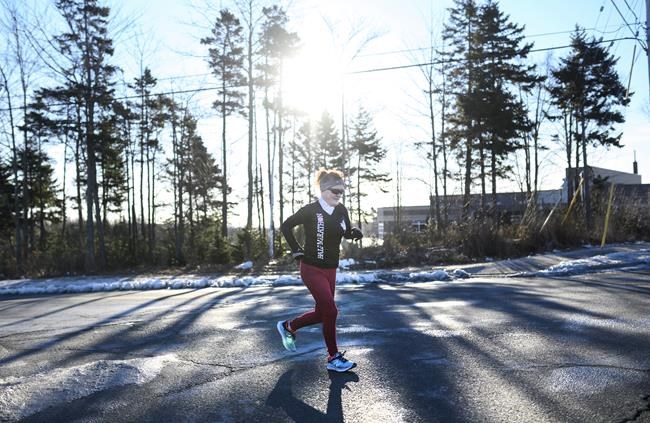
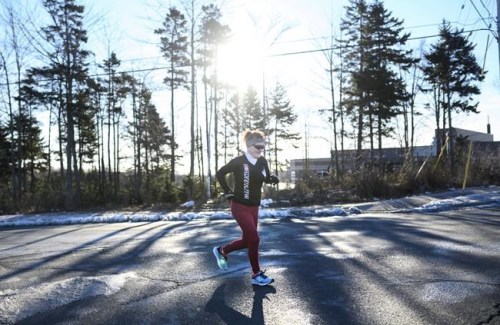
Brenda Kennedy goes for an early-morning run in her Cole Harbour, N.S. neighbourhood on Saturday, January 19, 2019. Kennedy is one of the first patients in the world to have the Cartiva synthetic cartilage implanted in her left big toe. And, five years later, she had her right big toe done. In both cases, she resumed running within ten weeks of surgery. THE CANADIAN PRESS/Darren Calabrese

“This technology applied in the big toe has been described by my American colleagues as a game-changer,” said Dr. Mark Glazebrook, a Halifax orthopedic surgeon who was among the Canadian researchers who conducted clinical trials comparing the synthetic cartilage implant to standard treatment, known as joint fusion.

Brenda Kennedy of Dartmouth, N.S., was one of the first patients in the world to receive the Cartiva implant — in her left big toe in 2010 — followed five years later by one in her right big toe, both of which had been affected by osteoarthritis.

“I was having a lot of pain, the cartilage … it was literally bone on bone,” said Kennedy, 51, who regularly gave her feet a pounding doing gymnastics as a child and later as an adult when she took up running, including competing in 5K and 10K races, as well as half-marathons.

“I had been so active over the years, and I think it was just a lot of wear and tear … And improper footwear. I wore a lot of heels.”

Before her first implant surgery, Kennedy said she couldn’t walk barefoot across the floor without some support for her feet because of the “searing hot pain,” especially in her left toe. “Even in bed at night, I couldn’t stand the sheets around my feet.”

Having Glazebrook perform the synthetic cartilage implant was a life-saver, she said. “I felt the result within weeks after … and it was just amazing.”

Dr. Tim Daniels, an orthopedic surgeon at St. Michael’s Hospital in Toronto, began using the Cartiva implant about a decade ago.

“The reason I got interested in it is because it’s a bone-sparing implant, meaning we don’t have to take out a lot of bone to get it in there,” he said. “And if it doesn’t work, we can still go ahead and do a fusion in a standard way.”

The gumdrop-sized implant is made from polyvinyl alcohol hydrogel, the same material used in contact lenses.

After surgically exposing the joint and removing excess bone caused by the arthritis, a small cavity is drilled in one of the two bones on either side of the joint and the implant is snugged into the opening, where it acts as a cushion similar to that of natural cartilage.

“It’s got the same compressability and the same characteristics as cartilage … and it also has a low-wear characteristic,” said Daniels, who has performed about 120 of the implant surgeries. “It doesn’t mean it can’t wear out, it just does it at a much slower rate.”

However, he said fusion remains a standard option for patients, as the procedure was found in studies to provide slightly better long-term pain relief, though it does limit movement in the big toe.

With fusion, the two toe bones connected by the joint are positioned end-to-end and then held together with plates and screws. The bones then grow together, fusing into one.

“A lot of people worry about mobility,” Daniels said. “Motion at the first joint is important, but it’s not essential. I’ve done first-toe fusion in triathletes, marathon runners, even a long jumper and she returned to her sport.

“So you can do a lot with a stiff first toe as long as it isn’t painful,” he said, stressing that pain relief “is the Number 1 goal,” no matter which option is chosen.

In a recent study of 27 patients that assessed the performance of the synthetic cartilage more than five years after their surgeries, Canadian researchers found significant improvement in function and pain reduction from the implants.

“We looked at the satisfaction rate,” said Daniels, who led the study. “It was higher in the Cartiva group because the patients did appreciate the motion.”

Ramona Rea, 60, developed increasingly painful arthritis in her big toe after dropping a motorcycle on her right foot some 40 years ago.

“So there was a long time for the cartilage to deteriorate and eventually it got fairly painful to walk,” she said. “So it was getting to the point where it was starting to inhibit my lifestyle, which always includes a lot of activity.”

Rea, who recently moved to Vancouver from Toronto, was enrolled in an earlier trial that randomized patients to receive either a Cartiva implant or fusion in a head-to-head comparison of the two procedures.

To her relief, she landed in the implant group and in 2010 had the surgery on her right big toe.

“I know they say that with fusing the joint you can still do things, but I’m sure that it limits mobility and I’m really happy that I was randomized into this arm of the trial,” said Rea, who ran a 10K race with her daughter last May.

“My toe didn’t bother me at all. I’m thrilled that I still have mobility.”

Daniels said the synthetic cartilage is now being used to treat arthritis in the small toes and is being tested for other joints, including in the thumb and foot.

“The exciting thing, where I think it’s been a game-changer, is for arthritis in the lesser toes because we literally have not had an option for that.”

— Follow @SherylUbelacker on Twitter.

Report Error Submit a Tip

More Stories

Stampeding to Starlette’s

David Sanderson 7 minute read Preview

Stampeding to Starlette’s

David Sanderson 7 minute read Saturday, Aug. 1, 2026

ELMA — Build it and they will come.

Lee and Star Giesbrecht are the owners of Starlette’s Burger Saloon, a western-themed, outdoor eating spot situated on the married couple’s 40-acre spread, immediately north of Elma.

Seated at one of a half-dozen picnic tables that dot the grounds, Star recalls a conversation she and Lee had prior to the May 2025 grand opening of their locale, which, with its weathered-wood exterior and rustic swinging doors, wouldn’t look out of place in an episode of Yellowstone.

Because they are “literally in the middle of nowhere,” Star says Lee thought it would be advantageous to mount a TV in one corner of the kitchen, for those occasions when they’d be twiddling their thumbs for hours on end, with little to do.

Read
Saturday, Aug. 1, 2026

Book gives patients tools for navigating the Canadian health-care system and getting treatment they need

Janine LeGal 8 minute read Preview

Book gives patients tools for navigating the Canadian health-care system and getting treatment they need

Janine LeGal 8 minute read 6:00 AM CDT

More than a few of us have been known to complain about the Canadian health-care system: the lack of staffing, the long ER waits, the challenge of finding a family physician, the lengthy waiting lists for specialized tests and surgeries. There’s been an outcry for answers for a long time.

The publication of The Canadian Health Care Guerrilla Handbook: How to Fight for What You Need is welcome news for anyone seeking those answers.

Written by Michael Decter, who served as cabinet secretary in Manitoba before his move to Ontario — and Mike McCarthy, patient advocate and consultant who brings a personal story of living with hemophilia, the book is a must-have, packed with answers to commonly asked questions that will help the reader navigate a complex and fractured system.

The book, written in plain language, talks about how to get what you want and need: a family doctor, diagnostic tests, appropriate medications, a second opinion, long-term care, home care, mental-health care — all of that and more is easily accessible in its 217 pages.

Read
6:00 AM CDT

Surgeons have new option for arthritis of big toe

Sheryl Ubelacker, The Canadian Press 6 minute read Preview

Surgeons have new option for arthritis of big toe

Sheryl Ubelacker, The Canadian Press 6 minute read Tuesday, Jan. 29, 2019

TORONTO - They're hardly the most glamorous parts of the human anatomy, but the big toes take the brunt of a lifetime of walking and other weight-bearing activities, often making these lowly appendages prone to painful osteoarthritis.

Arthritis can wear away the joint's cushioning cartilage while causing a buildup of bone, resulting in swelling and stiffness that can make the mere act of walking excruciatingly painful. And unlike with arthritic knees and hips, there's been little success in coming up with an acceptable artificial joint replacement for the big toe.

Instead, orthopedic surgeons are increasingly turning to an implant of synthetic cartilage, developed in the U.S. and put through many of its clinical trial paces by researchers in Canada and the U.K.

"This technology applied in the big toe has been described by my American colleagues as a game-changer," said Dr. Mark Glazebrook, a Halifax orthopedic surgeon who was among the Canadian researchers who conducted clinical trials comparing the synthetic cartilage implant to standard treatment, known as joint fusion.

Read
Tuesday, Jan. 29, 2019

Travellers in Winnipeg scramble to rebook flights as WestJet attendants reach tentative deal

By Melissa Martin 4 minute read Preview

Travellers in Winnipeg scramble to rebook flights as WestJet attendants reach tentative deal

By Melissa Martin 4 minute read Yesterday at 4:21 PM CDT

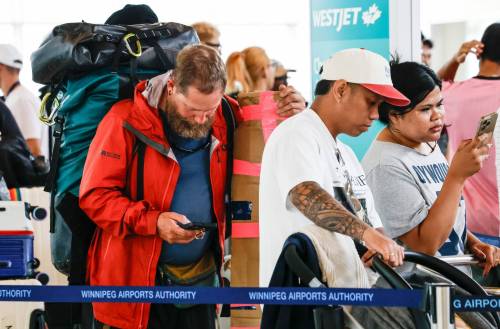
WestJet flights were back in the skies Monday after a brief flight-attendant strike grounded planes across the country. But even as their cancelled flights were rebooked, many travellers spent the holiday scrambling to adapt to new, altered plans.

By 11:30 a.m. about 200 people were queued up in front of WestJet’s check-in booths at Winnipeg Richardson International Airport. Many were there to check in for an afternoon flight to Toronto, which, along with most other WestJet flights for the day, was now listed on the departure board as proceeding as planned.

Others, unable to reach someone on WestJet’s apparently overburdened customer service hotline, were hoping to find a solution to altered travel plans that had delayed their travel by days, or in some cases rerouted them through other cities.

Dan Schenkeveld was among them. The Kamloops resident spent most of the past month on a deep wilderness canoe trip in Nunavut. When he got back in cellular service range, he learned that a WestJet flight attendant strike was looming: “We’re aware of the issues around unpaid work, and we’re compassionate to that,” he said.

Read
Yesterday at 4:21 PM CDT

Toronto’s alternative crisis response model deemed a success

Scott Billeck 4 minute read Preview

Toronto’s alternative crisis response model deemed a success

Scott Billeck 4 minute read 2:01 AM CDT

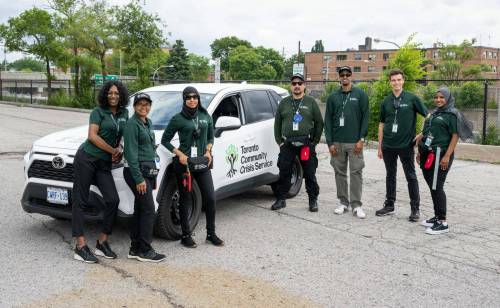
A Toronto emergency response program that helped inspire Winnipeg’s proposed alternative crisis response model has already expanded city-wide, just four years after launching as a pilot project.

The Toronto Community Crisis Service, launched in 2022, has become the city’s fourth emergency service, providing a 24-7, community-based response to people experiencing mental health crises. The service has handled nearly 50,000 calls through 911 and 211, dispatched mobile crisis teams to more than 41,000 incidents, made more than 11,600 referrals to health and social services and resolved the majority of eligible 911 calls without police involvement.

Winnipeg Mayor Scott Gillingham last week proposed creating a similar “fourth crisis response pathway” that would allow 911 calls that aren’t violent or criminal in nature to be transferred to community-based crisis teams.

Under the proposal, which has support from both the Winnipeg Police Service and the Winnipeg Fire Paramedic Service, a centralized crisis dispatch and co-ordination hub would receive triaged calls and match them with citywide response teams, staffed in part through existing community organizations, including the Downtown Community Safety Partnership and The Link’s mobile crisis teams. The goal is to divert appropriate calls away from the WPS and WFPS.

Read
2:01 AM CDT

WestJet, CUPE reach tentative deal as passengers scramble amid flight disruptions

The Canadian Press 6 minute read Preview

WestJet, CUPE reach tentative deal as passengers scramble amid flight disruptions

The Canadian Press 6 minute read Updated: Yesterday at 3:44 PM CDT

CALGARY - WestJet and the union representing some 4,400 flight attendants reached a tentative deal Monday to resume work after a brief work stoppage, but neither side is sharing specifics yet.

The airline had said Sunday it had proposed a 13 per cent pay increase starting in October, and then a 2.5 per cent increase in each of the next three years until 2029.

The airline also said it offered a new duty pay premium, equivalent to another 12 per cent salary increase, which WestJet said is designed to solve the cabin crew's claim of unpaid work.

In a news conference in Calgary on Monday, CUPE local 8125 president Alia Hussain said the flight attendants have 30 days to ratify the agreement, and the union will spend the coming days preparing a slide show to present to the members.

Read
Updated: Yesterday at 3:44 PM CDT