Not so fast: Some restaurants resist third-party delivery
Advertisement
Read this article for free:
or
Already have an account? Log in here »
To continue reading, please subscribe:

Digital Subscription
One year of digital access for only $205*
- Enjoy unlimited reading on winnipegfreepress.com
- Read the E-Edition, our digital replica newspaper
- Access News Break, our award-winning app
- Play interactive puzzles
*First annual payment billed as $205.00 + GST for one year. This annual subscription will automatically renew at $233.00 + GST every 52 weeks (10% off the regular annual price of $259.35). Offer available to new and qualified returning subscribers only. Cancel any time.
To continue reading, please subscribe:
Add Free Press access to your Brandon Sun subscription for only an additional
$1 for the first 4 weeks*
- Enjoy unlimited reading on winnipegfreepress.com
- Read the E-Edition, our digital replica newspaper
- Access News Break, our award-winning app
- Play interactive puzzles
*Your next Brandon Sun subscription payment will increase by $1.00 and you will be charged $17.95 plus GST for four weeks. After four weeks, your payment will increase to $24.95 plus GST every four weeks.
Read unlimited articles for free today:
or
Already have an account? Log in here »
Hey there, time traveller!
This article was published 07/02/2019 (2737 days ago), so information in it may no longer be current.
Food delivery services like Uber Eats and Grubhub are taking off like a rocket. But some restaurants aren’t on board.
This week, Jimmy John’s sandwich chain launched a national ad campaign promising never to use third-party delivery. Jimmy John’s says its own drivers — which number around 45,000 at its 2,800 U.S. restaurants — can best ensure fast, quality service.
“We just don’t trust anybody else to deliver our product,” Jimmy John’s President and CEO James North told The Associated Press.
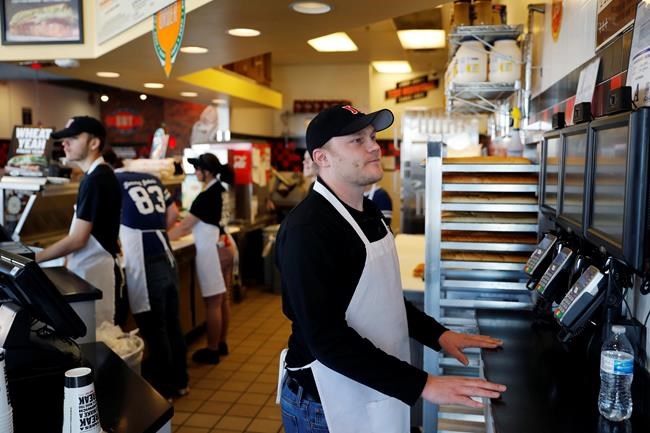
Jimmy John’s is swimming against the tide — for now, at least. Starbucks recently announced it’s expanding delivery to more U.S. stores through its partnership with Uber Eats. Taco Bell said Thursday it will offer delivery nationwide through Grubhub.
A third-party service lets customers order food through an app. It then contracts with drivers who use their own cars or other transportation to make the deliveries. The services earn money through restaurant commissions, delivery fees or both. Grubhub was founded in 2004, but most are much newer.
Others besides Jimmy John’s have rejected third-party delivery, including Domino’s, Panera Bread and Olive Garden. In some cases, it would disrupt their long-established business models; Domino’s has been delivering pizzas for 60 years. Other companies just aren’t convinced. Olive Garden tested third-party delivery but says its customers weren’t satisfied.
There’s a lot for restaurants not to like. Delivery services eat into their profits. Grubhub charges them a commission of 12 to 18 per cent per order; Uber Eats charges as much as 30 per cent. Service can be haphazard; some drivers have coolers to keep food chilled, for example, while others don’t.
“They are delivering a very valuable experience to the consumers, but they are still growing themselves,” said Dylan Bolden, a senior partner at Boston Consulting Group who has studied restaurant delivery. “Their model isn’t completely ironed out yet to deliver a consistent experience.”
Third parties can also take longer. Boston Consulting Group found that four of the most popular services — Uber Eats, Grubhub, Postmates and DoorDash — averaged 49 minutes to deliver an order. Liz Meyerdirk, Uber Eats’ head of global business development, says Uber Eats averages 31 minutes.
Jimmy John’s average is less than 20 minutes, partly because it limits delivery to a small radius. The company trains its drivers and gives them uniforms, North said. Pay varies by location. Jimmy John’s charges customers around $2 for deliveries — some third parties charge $8 or more — and makes that work economically by doing more deliveries per hour.
“With Uber Eats, the drivers have no vested interest in getting the customer their food quickly,” North said.
Chicago college student Matthew Robbins has seen the issue from all sides. He frequently orders meals through Uber Eats. He also manages a Slim Chickens restaurant in Plainfield, Illinois, that started using Uber Eats five months ago.
Robbins said his restaurant gets around 10 orders a day through Uber Eats. He would like to see more consistency from the service. Some drivers seem professional, but others bring a carload of friends and clog up the drive-thru instead of picking up their orders inside the restaurant.
Robbins has also had occasional issues as a customer, like waiting so long for sushi that it arrived warm. But he’ll continue to use delivery services because it’s the most convenient way to eat between classes.
The phenomenal growth of third-party delivery indicates customers will put up with some hiccups for the convenience and variety they provide. On Thursday, Grubhub reported $5.1 billion in food sales in 2018, a 34 per cent increase from the prior year, and said it has grown to 17.7 million diners. Uber Eats said it expects to deliver $10 billion worth of food in 36 countries this year, up from $6 billion in 2018.
Meyerdirk says poor service can get weeded out thanks to customer reviews on Uber Eats. And the company is constantly working to improve logistics and speed up delivery times.
“We’re all trying to figure out how to serve that customer,” she said.
Third-party delivery services can help restaurants by bringing in new customers. Grubhub has 100,000 restaurants in the U.S. and London on its platform, including ones that do their own delivery and just rely on the site for referrals. Uber Eats has 200,000 worldwide.

Farm Burger, an Atlanta-based grassfed burger chain with 12 locations, has limited marketing resources, so it’s grateful for the business that delivery services bring in. After DoorDash featured the chain in a December promotion, it saw an all-time monthly high of 2,942 orders, says Dawn Law, the chain’s marketing director.
Even McDonald’s says 70 per cent of the orders it gets through its partnership with Uber Eats are customers it might not have gotten otherwise, particularly late at night.
Bolden of the Boston Consulting Group expects third-party delivery services will probably consolidate over the next few years, leaving two or three big players with the scale to be profitable.
At the same time, he said, many big restaurant brands will probably follow Jimmy John’s lead and do their own delivery so they can control the customer experience and retain valuable order data.
“They may use third parties today because they want the demand, but in the long run they don’t want to be dependent on them,” Bolden said.