States weigh bans on shackling jailed moms during childbirth

Advertisement

Advertise with us

SALT LAKE CITY - Michelle Aldana gave birth to her first child chained to a hospital bed.

Read this article for free:


or

Already have an account? Log in here »

To continue reading, please subscribe:

Subscribe and receive a limited-edition Free Press branded hat or tote.

Digital Subscription

One year of digital access for only $205*

  • Enjoy unlimited reading on winnipegfreepress.com
  • Read the E-Edition, our digital replica newspaper
  • Access News Break, our award-winning app
  • Play interactive puzzles

*First annual payment billed as $205.00 + GST for one year. This annual subscription will automatically renew at $233.00 + GST every 52 weeks (10% off the regular annual price of $259.35). Offer available to new and qualified returning subscribers only. Cancel any time.

To continue reading, please subscribe:

Add Free Press access to your Brandon Sun subscription for only an additional

$1 for the first 4 weeks*

  • Enjoy unlimited reading on winnipegfreepress.com
  • Read the E-Edition, our digital replica newspaper
  • Access News Break, our award-winning app
  • Play interactive puzzles
Start now

*Your next Brandon Sun subscription payment will increase by $1.00 and you will be charged $17.95 plus GST for four weeks. After four weeks, your payment will increase to $24.95 plus GST every four weeks.

Hey there, time traveller!
This article was published 13/03/2019 (2713 days ago), so information in it may no longer be current.

SALT LAKE CITY – Michelle Aldana gave birth to her first child chained to a hospital bed.

Then serving time at the Utah state prison on a drug charge, she says she laboured through the difficult 2001 birth for nearly 30 hours, her ankles bleeding as the shackles on both her legs and one arm dug in. “I felt like a farm animal,” she says.

The practice of keeping inmates shackled during childbirth was once common around the United States, but that’s gradually been changing after women began speaking out, with 22 states passing laws against it over the past two decades.
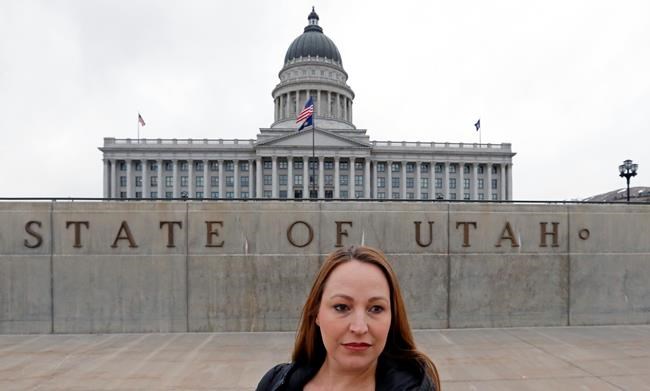
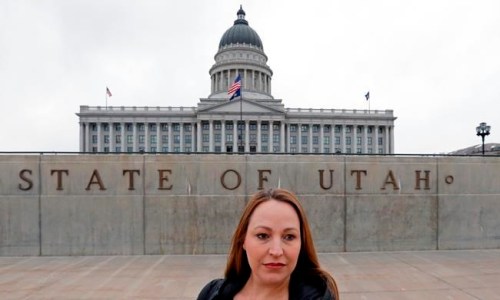
In this Feb. 27, 2019, photo, Michelle Aldana is shown at the Utah State Capitol in Salt Lake City. Utah is one of at least four states considering bans this year on the shackling of incarcerated women during childbirth. The Utah measure has passed the state House and is being considered by the Senate. The measure is a relief for mothers like Aldana, who was shackled when she gave birth while incarcerated on a drug charge in 2001. (AP Photo/Rick Bowmer)

Utah and at least three other states are considering joining them this year, after the federal government recently banned the practice with a sweeping criminal justice reform law. Many other states have policies against shackling, but advocates say that without a law it’s harder to stop a practice they condemn as dangerous and inhumane.

Women are America’s fast-growing segment of prisoners. The American Civil Liberties Union estimates about 12,000 pregnant women are incarcerated in U.S. jails or prisons each year.

“For me, it’s just a fundamental issue of dignity,” said Democratic state Rep. Stephanie Pitcher, who is sponsoring the Utah measure. “A woman deserves dignity in childbirth.”

Though the state prison changed its official policy to prohibit shackling in 2015, Pitcher has heard from a number of Utah doctors who have treated incarcerated women having babies in shackles, some as recently as this year. Her bill, which would apply to both the prison and local jails, passed the state House and is being considered by the Senate.

The practice is an outgrowth of policies requiring all prisoners to be restrained during medical treatment for safety, said Amy Fettig, deputy director of the National Prison Project at the ACLU.

But childbirth is different, she said. Preventing a woman from moving during labour increases the risk of potentially life-threatening health risks inherent in childbirth, like blood clots. It also makes it harder to move her if there is an emergency, or feed the baby after it’s born.

Meanwhile, the physical conditions of labour make escape attempts unlikely, and there are no documented cases of a woman getting away while having a child, Fettig said.

Still, some have raised safety concerns. In Utah, Republican Rep. Eric Hutchins has pointed out that violent incidents happen often in state prisons, and hospitals have far less built-in security.

He ultimately voted in favour of the bill, which does allow some shackling during transportation and the use of soft restraints if an inmate is documented to be dangerous. Prison officials are also in support, and say their policy change means women like Aldana are treated differently today.
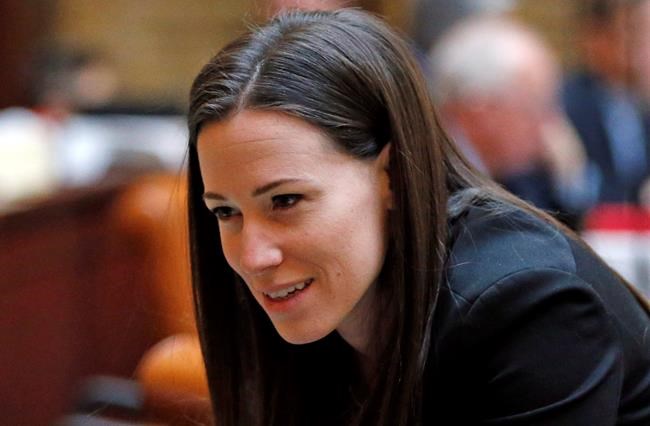
In this Feb. 22, 2019, photo, State Democratic Rep. Stephanie Pitcher speaks on the house floor at the Utah State Capitol, in Salt Lake City. Utah is one of at least four states considering bans this year on the shackling of incarcerated women during childbirth. The Utah measure has passed the state House and is being considered by the Senate. Pitcher argues the chains are both unnecessary during labor and exacerbate health risks. (AP Photo/Rick Bowmer)

Most other states without laws against shackling do have policies in place, but without strict controls, the practice is hard to stamp out, said Lauryn King, a public-policy Ph.D. student at The George Washington University who completed a state-by-state analysis of laws on the topic.

“What are the odds that without specific training, your average corrections officer knows every policy?” she said. In New York, for example, a report found the practice continued even after a law was passed.

In Wisconsin, a woman said in a lawsuit she was shackled with a chain so short that she couldn’t reach the stirrups during labour in February 2014. Tennessee and Arkansas have faced similar lawsuits and are weighing bans on the practice this year, along with South Carolina.

In Utah, Aldana was bloody and sore after her tough labour, which also left her with a broken pelvis from the pressure of the baby. She was released a month after her son was born, and in the years since she’s recovered and become a substance abuse counsellor. Now pregnant with her third child, she still suffers with anxiety about childbirth but said a law against shackling would be a relief.

“I just don’t think any woman, when they’re that vulnerable, should ever be treated that way,” she said. “It’s just wrong.”
Report Error Submit a Tip

More Stories

Manitoba family finalist for cattle producers environmental award

Aaron Epp 4 minute read Preview

Manitoba family finalist for cattle producers environmental award

Aaron Epp 4 minute read Yesterday at 2:00 AM CDT

A family in western Manitoba is one of seven finalists for a national environmental award honouring beef cattle producers.

Connor and Kyla English, alongside Connor’s parents, Brian and Leanne English, are nominated for the Canadian Cattle Association’s Environmental Stewardship Award. The 30-year-old award is presented to beef farmers and ranchers who explore innovative ways to protect, preserve and enhance their operations and the environment simultaneously.

This year’s recipient will be announced on Wednesday during a banquet at the Canadian Beef Industry Conference in Winnipeg.

The English family’s roots near Bradwardine — about 265 kilometres west of Winnipeg — date back to 1898. Today, Connor, Kyla, Brian and Leanne manage a herd of about 320 breeding cows on nearly 445 hectares (1,100 acres) of owned and rented pasture and forage land.

Read
Yesterday at 2:00 AM CDT

States weigh bans on shackling jailed moms during childbirth

Lindsay Whitehurst, The Associated Press 5 minute read Preview

States weigh bans on shackling jailed moms during childbirth

Lindsay Whitehurst, The Associated Press 5 minute read Wednesday, Mar. 13, 2019

SALT LAKE CITY - Michelle Aldana gave birth to her first child chained to a hospital bed.

Then serving time at the Utah state prison on a drug charge, she says she laboured through the difficult 2001 birth for nearly 30 hours, her ankles bleeding as the shackles on both her legs and one arm dug in. "I felt like a farm animal," she says.

The practice of keeping inmates shackled during childbirth was once common around the United States, but that's gradually been changing after women began speaking out, with 22 states passing laws against it over the past two decades.

Utah and at least three other states are considering joining them this year, after the federal government recently banned the practice with a sweeping criminal justice reform law. Many other states have policies against shackling, but advocates say that without a law it's harder to stop a practice they condemn as dangerous and inhumane.

Read
Wednesday, Mar. 13, 2019

News briefs for Sunday, August 16, 2026

1 minute read Updated: 12:40 PM CDT

A collection of breaking news briefs filed on Sunday, August 16, 2026

Cross-border abduction under investigation

12:36 PM

A cross-border kidnapping from Winnipeg to Minnesota is under investigation, according to North Dakota state patrol.

Firefighter’s death fuels cancer fight

Zoe Pierce 5 minute read Preview

Firefighter’s death fuels cancer fight

Zoe Pierce 5 minute read Yesterday at 2:01 AM CDT

The United Fire Fighters of Winnipeg is mourning the loss of Winnipeg firefighter Darrel Maynard while continuing its work to raise awareness of occupational cancer and improve health protections for firefighters.

Maynard, a senior firefighter II and acting lieutenant with the Winnipeg Fire Paramedic Service, died Aug. 5 at age 41 after a three-year battle with occupational cancer.

He served Winnipeg for nearly two decades and leaves behind his wife Francine and sons Colin and Christian.

“Darrel was an incredible, incredible person, an incredible firefighter, and really, really special to all of us,” said Nick Kasper, president of UFFW.

Read
Yesterday at 2:01 AM CDT

Development turning long-vacant gas station in Selkirk into commercial hub

By Tiago Resko 2 minute read Preview

Development turning long-vacant gas station in Selkirk into commercial hub

By Tiago Resko 2 minute read Thursday, Aug. 13, 2026

A plot of land that has sat vacant in Selkirk for 30 years is being redeveloped to host new businesses in the heart of the city.

The former gas station site on Main Street — between Rosser and Pacific avenues — will be turned into a commercial hub that will be home to six local businesses, and will be a big stepping stone for economic growth in Selkirk, Mayor Larry Johannson said Thursday.

“For decades this site has been a reminder of what once was. Today, it represents what is possible when investors see the potential of our community and choose to be a part of its future,” he said in a news release announcing the project and Thursday’s groundbreaking.

“This development reflects confidence in Selkirk, our economy and the direction we are heading.”

Read
Thursday, Aug. 13, 2026

Today’s horoscope

Georgia Nicols 4 minute read Preview

Today’s horoscope

Georgia Nicols 4 minute read 2:00 AM CDT

MOON ALERT: There are no restrictions to shopping or important decisions today. The moon is in Libra.

ARIES (March 21-April 19)

The day is a mixed bag. For the most part, it’s romantic, friendly, congenial and a great time to socialize with others and enjoy playful activities with kids. Nevertheless, you might meet a real sourpuss or someone who is a wet blanket. Keep things light!

TAURUS (April 20-May 20)

Read
2:00 AM CDT