Monkey birth a step to saving fertility of boys with cancer

Advertisement

Advertise with us

WASHINGTON - Scientists are closing in on a way to help young boys undergoing cancer treatment preserve their future fertility — and the proof is the first monkey born from the experimental technology.

Read this article for free:


or

Already have an account? Log in here »

To continue reading, please subscribe:

Subscribe and receive a limited-edition Free Press branded hat or tote.

Digital Subscription

One year of digital access for only $205*

  • Enjoy unlimited reading on winnipegfreepress.com
  • Read the E-Edition, our digital replica newspaper
  • Access News Break, our award-winning app
  • Play interactive puzzles

*First annual payment billed as $205.00 + GST for one year. This annual subscription will automatically renew at $233.00 + GST every 52 weeks (10% off the regular annual price of $259.35). Offer available to new and qualified returning subscribers only. Cancel any time.

To continue reading, please subscribe:

Add Free Press access to your Brandon Sun subscription for only an additional

$1 for the first 4 weeks*

  • Enjoy unlimited reading on winnipegfreepress.com
  • Read the E-Edition, our digital replica newspaper
  • Access News Break, our award-winning app
  • Play interactive puzzles
Start now

*Your next Brandon Sun subscription payment will increase by $1.00 and you will be charged $17.95 plus GST for four weeks. After four weeks, your payment will increase to $24.95 plus GST every four weeks.

Hey there, time traveller!
This article was published 21/03/2019 (2698 days ago), so information in it may no longer be current.

WASHINGTON – Scientists are closing in on a way to help young boys undergoing cancer treatment preserve their future fertility — and the proof is the first monkey born from the experimental technology.

More and more people are surviving childhood cancer, but nearly 1 in 3 will be left infertile from the chemotherapy or radiation that helped save their life.

When young adults are diagnosed with cancer, they can freeze sperm, eggs or embryos ahead of treatment. But children diagnosed before puberty can’t do that because they’re not yet producing mature eggs or sperm.
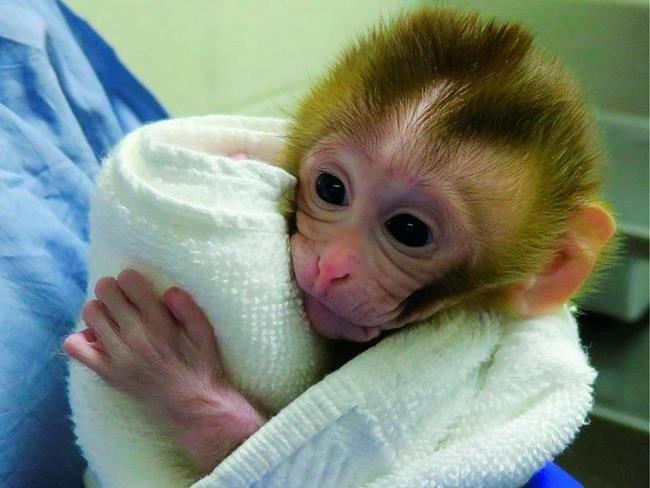
This undated photo provided by the Oregon Health and Science University in March 2019 shows a baby monkey named Grady, born from an experimental technology that aims to help young boys undergoing cancer treatment preserve their future fertility. Scientists froze testicular tissue from a monkey that had not yet reached puberty, and later thawed it to produce sperm used for Grady’s conception. (OHSU via AP)

“Fertility issues for kids with cancer were ignored” for years, said University of Pittsburgh reproductive scientist Kyle Orwig. “Many of us dream of growing up and having our own families. We hope our research will help these young patients to do that.”

Orwig’s team reported a key advance Thursday: First, they froze a bit of testicular tissue from a monkey that hadn’t yet reached puberty. Later, they used it to produce sperm that, through a monkey version of IVF, led to the birth of a healthy female monkey named Grady.

The technique worked well enough that human testing should begin in the next few years, Orwig said.

“It’s a huge step forward” that should give hope to families, said Susan Taymans of the National Institute of Child Health and Human Development, which helped fund the research published in the journal Science. “It’s not like science fiction. It’s something that seems pretty attainable.”

University of Pittsburgh Medical Center and a handful of other hospitals already freeze immature testicular tissue from young cancer patients, in hopes of knowing how to use it once they’re grown and ready to have their own children.

Boys are born with stem cells inside little tubes in the testes, cells that start producing sperm after puberty’s testosterone jolt. Orwig’s goal: Keep sperm-producing stem cells safe from cancer treatment by freezing small pieces of testicular tissue, and using them to restore fertility later in life.

How? Enter the monkey research.

Orwig’s team froze tissue from young male monkeys, and then sterilized them. Once the monkeys approached puberty, the researchers thawed those tissue samples and gave them back to the original animal — implanting them just under the skin.

“We’re not hooking it up to the normal plumbing,” Orwig cautioned.
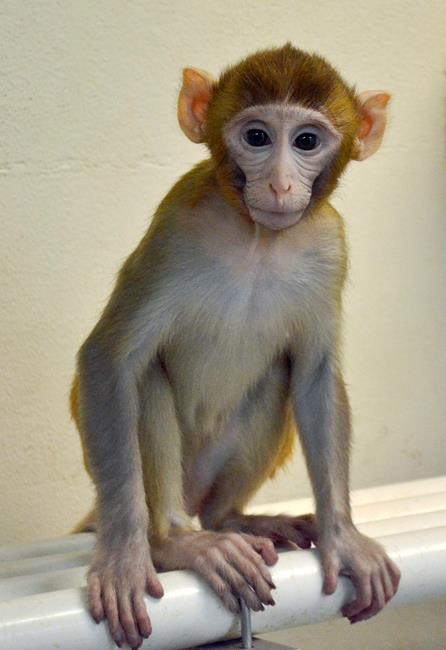
This undated photo provided by the Oregon Health and Science University in March 2019 shows a monkey named Grady, born from an experimental technology that aims to help young boys undergoing cancer treatment preserve their future fertility. Scientists froze testicular tissue from a monkey that had not yet reached puberty, and later thawed it to produce sperm used for Grady’s conception. (OHSU via AP)

Boosted by hormones, the little pieces of tissue grew. Months later, the researchers removed them. Sure enough, inside was sperm they could collect and freeze.

Colleagues at the Oregon National Primate Research Center injected some of that sperm into eggs from female monkeys and implanted the resulting embryos. Last April, Grady was born, and “she plays and behaves just like every other monkey that was grown the normal way,” Orwig said.

If the technique sounds a little bizarre, it’s similar to a female option.

Girls’ eggs are in an immature state before puberty. Researchers have removed and frozen strips of ovarian tissue harbouring egg follicles from young women before cancer treatment, in hopes that when transplanted back later the immature eggs would resume development. It’s considered experimental even for young adults but some births have been reported. Now some hospitals bank ovarian tissue from girls, too.

Surgery involving the boys’ testicular tissue is less invasive, noted Orwig, who also is researching ways to reinsert sperm-producing stem cells where they belong rather than the more roundabout technique.

The new research shows “immature testicular tissue may become an option” to preserve boys’ fertility, Nina Neuhaus and Stefan Schlatt of the Center of Reproductive Medicine and Andrology in Muenster, Germany, wrote in an accompanying editorial.

Meanwhile, “it’s important for parents to know about this,” said Christine Hanlon of Holiday, Florida, who took her son Dylan to Pittsburgh to have his tissue stored when he was newly diagnosed with Ewing’s sarcoma at age 9.

Today Dylan is a healthy teen, and no one knows if he’ll ever need the stored tissue, one of more than 200 samples Orwig’s study has preserved. But Hanlon was thrilled to learn the research is moving along, just in case.

“You lose part of your childhood in cancer treatment,” Hanlon said. “If there was a chance I could help him have normalcy in his future, with the potential of having a family if that’s what he decided to do, I wanted to be able to.”
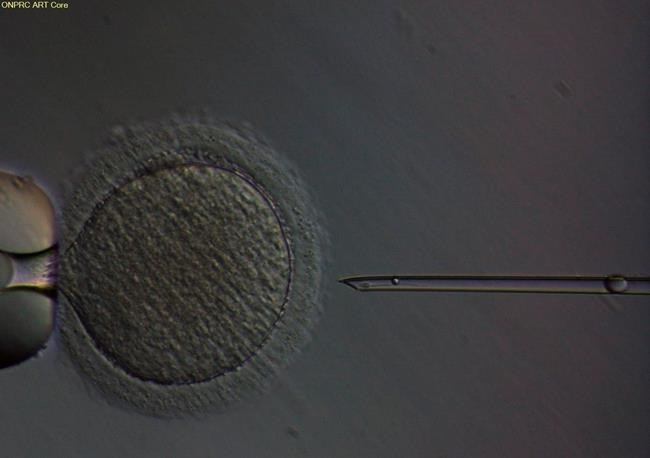
In this undated microscope photo provided by the Oregon Health and Science University in March 2019, sperm produced from previously frozen monkey testicular tissue is injected into a monkey egg. (OHSU via AP)

___

Online:

University of Pittsburgh fertility preservation program: www.fertilitypreservationpittsburgh.org

___

The Associated Press Health & Science Department receives support from the Howard Hughes Medical Institute’s Department of Science Education. The AP is solely responsible for all content.
Report Error Submit a Tip

More Stories

The view from here: Phyllis Green. Boob Tree, 1975

2 minute read Preview

The view from here: Phyllis Green. Boob Tree, 1975

2 minute read 2:01 AM CDT

Staycation: The Art of Being Here feautres more than 100 Manitoba-related artworks from the Winnipeg Art Gallery-Qaumajuq collection, spanning the past 50 years. These pieces reveal how the places around us are layered with memory, story and lived experience. Over the coming weeks, the Free Press will spotlight works from this eclectic exhibition, each one offering a new way of seeing home. Experience it in person and enjoy some staycation time at the gallery, on view until December.

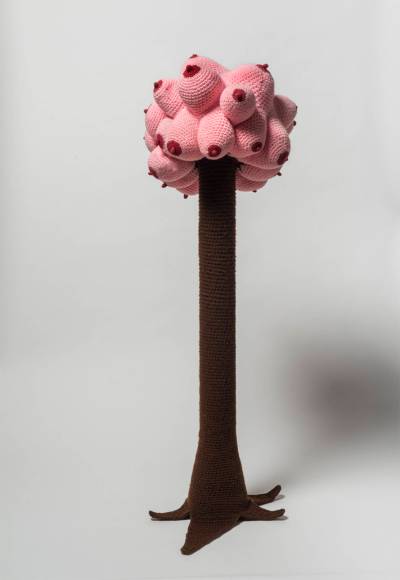
Phyllis Green. Boob Tree, 1975

(Yarn, wood. Collection of the Winnipeg Art Gallery; Acquired with funds from the Estate of Mr. and Mrs. Bernard Naylor, funds administered by The Winnipeg Foundation, 2014-128. Photo: Ernest Mayer.)

The year 1975 was designated International Women’s Year by the United Nations, and in celebration, the WAG staged the show Images of Women, which explored how women had historically been depicted, an impressive selection but by mostly male artists. Amid pushback from the community, Sharron Zenith Corne and Marian Yeo organized a second exhibition, Woman as Viewer, which challenged those portrayals by only featuring works by women. It was called the first Canadian exhibition of feminist art. American artist Phyllis Green’s Boob Tree, a four-foot-tall crochet sculpture of a cluster of breasts, adorned the exhibit posters, which were so popular they were snatched by passersby! The sculpture is playful and unsettling, re-appropriating the objectification of women’s bodies.

Read
2:01 AM CDT

$60M, six-storey Harbourview Terrace due to open in June 2028

Aaron Epp 4 minute read Preview

$60M, six-storey Harbourview Terrace due to open in June 2028

Aaron Epp 4 minute read Yesterday at 7:24 PM CDT

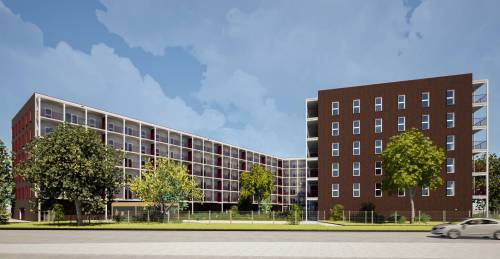
They donned high-vis vests and brandished shovels with gold-coloured blades Friday morning at the ceremonial groundbreaking for a multi-family residential development in northeast Winnipeg.

Concord Projects has started construction of Harbourview Terrace, the inaugural development by two-year-old real estate company Foxhill Properties. Located in North Kildonan at 1820 De Vries Ave., the $60-million, six-storey apartment building will contain 179 units.

Founder and president Frank Koch-Schulte, who runs the company with his wife Alisha, said Foxhill wants to develop and manage properties with integrity.

“This is kind of like my opportunity to try to do things our way, which I feel is a way that keeps tenants in mind,” Koch-Schulte said. “We live in this neighbourhood. We’re very much invested in seeing quality housing go here.”

Read
Yesterday at 7:24 PM CDT

Puzzles Palace

1 minute read Monday, Jul. 27, 2026

To solve our puzzles, please subscribe with this special offer: |

Winnipeggers hoping for shorter waits in rural ERs delay care for all, Selkirk nurse says

Nicole Buffie 5 minute read Preview

Winnipeggers hoping for shorter waits in rural ERs delay care for all, Selkirk nurse says

Nicole Buffie 5 minute read Thursday, Aug. 6, 2026

Nurses and union leaders say Winnipeggers — who are frustrated with wait times at city hospitals — head to rural emergency rooms instead, but the facilities don’t have enough staff to meet the extra demand.

As a result, patients in the Selkirk Regional Health Centre emergency department have waited up to 18 hours during peak times, said one nurse who works there.

The nurse, who spoke to the Free Press on the condition of anonymity, said in recent years they have noted more Winnipeg patients who’ve driven the 25 kilometres north to Selkirk’s ER, believing the wait for treatment would be shorter than in the three emergency departments inside the Perimeter.

“They’re all trying to access health care, right? And everybody deserves health care. And I feel bad, because people have to come out here thinking that the wait times are less,” the nurse said. “I can’t blame people for wanting to seek care, and they’re desperate to see someone.”

Read
Thursday, Aug. 6, 2026

50 years of rare tall grass prairie celebrated

Aaron Epp 4 minute read Preview

50 years of rare tall grass prairie celebrated

Aaron Epp 4 minute read 7:11 PM CDT

Kristin Bestvater is always glad when she heads to Winnipeg’s St. James neighbourhood and visits the Living Prairie Museum.

“It’s beautiful,” Bestvater said of the 13-hectare site, which is one of the last remaining tall grass prairies in North America. “I don’t know how many other cities would have something like this.”

The Island Lakes resident and her nine-year-old son were among the hundreds of people who gathered at the museum on Saturday to celebrate its 50th anniversary.

Designated a park in 1974, it officially became the Living Prairie Museum in 1976 with the opening of an interpretive centre which houses a gallery of exhibits, a gift shop and an observation deck.

Read
7:11 PM CDT

The true costs of your pet — for everyone

Jerry Storie 5 minute read Preview

The true costs of your pet — for everyone

Jerry Storie 5 minute read Yesterday at 2:00 AM CDT

Pets are a problem, but few will discuss the downsides of pet ownership.

Read
Yesterday at 2:00 AM CDT