Tremendous trek
Disgruntled Alaskan's epic hike a moving voyage of self-discovery
Advertisement
Read this article for free:
or
Already have an account? Log in here »
To continue reading, please subscribe:

Digital Subscription
One year of digital access for only $205*
- Enjoy unlimited reading on winnipegfreepress.com
- Read the E-Edition, our digital replica newspaper
- Access News Break, our award-winning app
- Play interactive puzzles
*First annual payment billed as $205.00 + GST for one year. This annual subscription will automatically renew at $233.00 + GST every 52 weeks (10% off the regular annual price of $259.35). Offer available to new and qualified returning subscribers only. Cancel any time.
To continue reading, please subscribe:
Add Free Press access to your Brandon Sun subscription for only an additional
$1 for the first 4 weeks*
- Enjoy unlimited reading on winnipegfreepress.com
- Read the E-Edition, our digital replica newspaper
- Access News Break, our award-winning app
- Play interactive puzzles
*Your next Brandon Sun subscription payment will increase by $1.00 and you will be charged $17.95 plus GST for four weeks. After four weeks, your payment will increase to $24.95 plus GST every four weeks.
Read unlimited articles for free today:
or
Already have an account? Log in here »
Hey there, time traveller!
This article was published 30/03/2019 (2726 days ago), so information in it may no longer be current.
Driving coast to coast, from Newfoundland to British Columbia, requires significant planning and a bit of good fortune. It nearly strains credulity to imagine a trip 2,000 kilometres longer — not by car but by walking, skiing and paddling — across some of the harshest terrain in North America.
Ornithologist Caroline Van Hemert’s first book, The Sun Is a Compass, details just such a voyage. In 2013, Van Hemert and her husband, Pat Farrell, (whose sketches adorn several chapters) made their way from Seattle to the coastal city of Kotzebue, Alaska.
By turns travel memoir and extended meditation, The Sun Is a Compass manages bravery without arrogance, inspiration with only occasional forays into the saccharine.

Growing up in an adventurous Alaskan family prepared Van Hemert for the rigours of outdoor adventure. More challenging was adulthood, with the tedium and confinement of academia.
Van Hemert’s journey began at the completion of her doctoral studies in biology, a field from which she had grown increasingly disconnected. Long hours with a microscope and complex mathematical models of bird beaks had conspired to wither her enthusiasm and curiosity.
The sheer distance of the trip posed a threat to Van Hemert and her husband, but so too did bears, near-drowning, possible starvation during blizzard conditions and relentless clouds of mosquitoes. She details each of these challenges with verve, but never seems to stray into exaggeration or self-congratulation. The reader is aware of Van Hemert’s fears and faults, even though she never invites pity.
The book’s strongest emotional resonance is developed in the sporadic contact Van Hemert makes with her family and with the generosity and kindness of strangers she meets living at the edges of civilization.
Van Hemert is careful to note, believably so, that her motivation had nothing to do with fame or recognition. The initial impetus instead came from a passionate desire to find her way back to nature, to erase the distance her academic work had fostered. As the narrative proceeds, it becomes clear that she is grappling with a number of other, larger concerns. With poignancy, she reflects on her once-vigorous father’s failing health, her fading youth and uncertainty about the next stage of her life. These questions are emphasized by the stark settings she moves through.
Adventure writing often founders upon two problems. The unfamiliarity of locale and the immensity of challenge can make it difficult to connect with an audience, creating a blur of events rather than a vicarious reading experience. At other times, the writer’s idiosyncrasies and beliefs can end up substituting for the story itself.
Fortunately, Van Hemert steers clear of both obstacles. Her writing is descriptive and fluid, and she makes the unfamiliar intriguingly inviting. The map that begins the book is not an afterthought, but helpfully labels each important point of passage. She passionately values the wilderness and makes the effects of climate change clear, but does not scold her readers or slide into polemic.
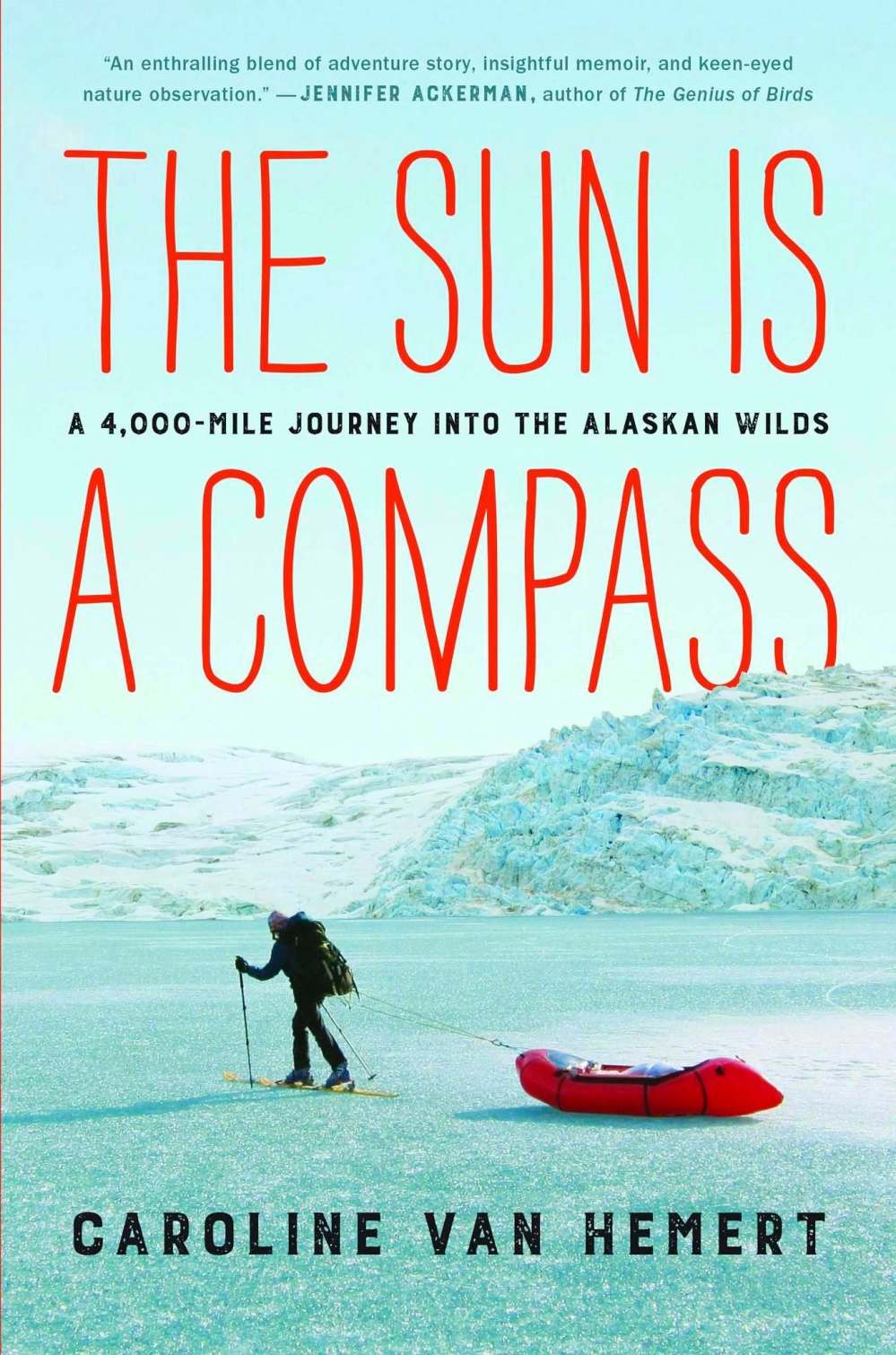
The Sun Is a Compass manages to educate without pedantry and to inspire without condescension. Van Hemert accomplishes more than just a tremendous challenge of physical and psychological endurance; she also learns to embrace uncertainty and rekindles her passion for the natural world. Throughout, her humility, perseverance and deep respect for nature shine.
Instead of the escape she had initially planned, Van Hemert found a return — not only to nature, but also to her own professional and personal instincts. More than a travel memoir or adventure log, Van Hemert has written a love story for nature, for her husband and family and for the profound power of co-operation.
Jarett Myskiw is a Winnipeg teacher and new father.