Scales of injustice
Gaining fitness doesn't always mean losing weight

Advertisement
Read this article for free:
or
Already have an account? Log in here »
To continue reading, please subscribe:

Digital Subscription
One year of digital access for only $205*
- Enjoy unlimited reading on winnipegfreepress.com
- Read the E-Edition, our digital replica newspaper
- Access News Break, our award-winning app
- Play interactive puzzles
*First annual payment billed as $205.00 + GST for one year. This annual subscription will automatically renew at $233.00 + GST every 52 weeks (10% off the regular annual price of $259.35). Offer available to new and qualified returning subscribers only. Cancel any time.
To continue reading, please subscribe:
Add Free Press access to your Brandon Sun subscription for only an additional
$1 for the first 4 weeks*
- Enjoy unlimited reading on winnipegfreepress.com
- Read the E-Edition, our digital replica newspaper
- Access News Break, our award-winning app
- Play interactive puzzles
*Your next Brandon Sun subscription payment will increase by $1.00 and you will be charged $17.95 plus GST for four weeks. After four weeks, your payment will increase to $24.95 plus GST every four weeks.
Read unlimited articles for free today:
or
Already have an account? Log in here »
Hey there, time traveller!
This article was published 30/03/2019 (2678 days ago), so information in it may no longer be current.
Picture this: You’re dutifully tracking your food intake, never missing a session with your trainer, and you wake up Monday one week into your plan ready to go do it all over again.
But you notice that thing taunting you from the corner of the bathroom and an uncontrollable urge sends you over in its direction.
You can’t help yourself. It holds some mystical power over you.
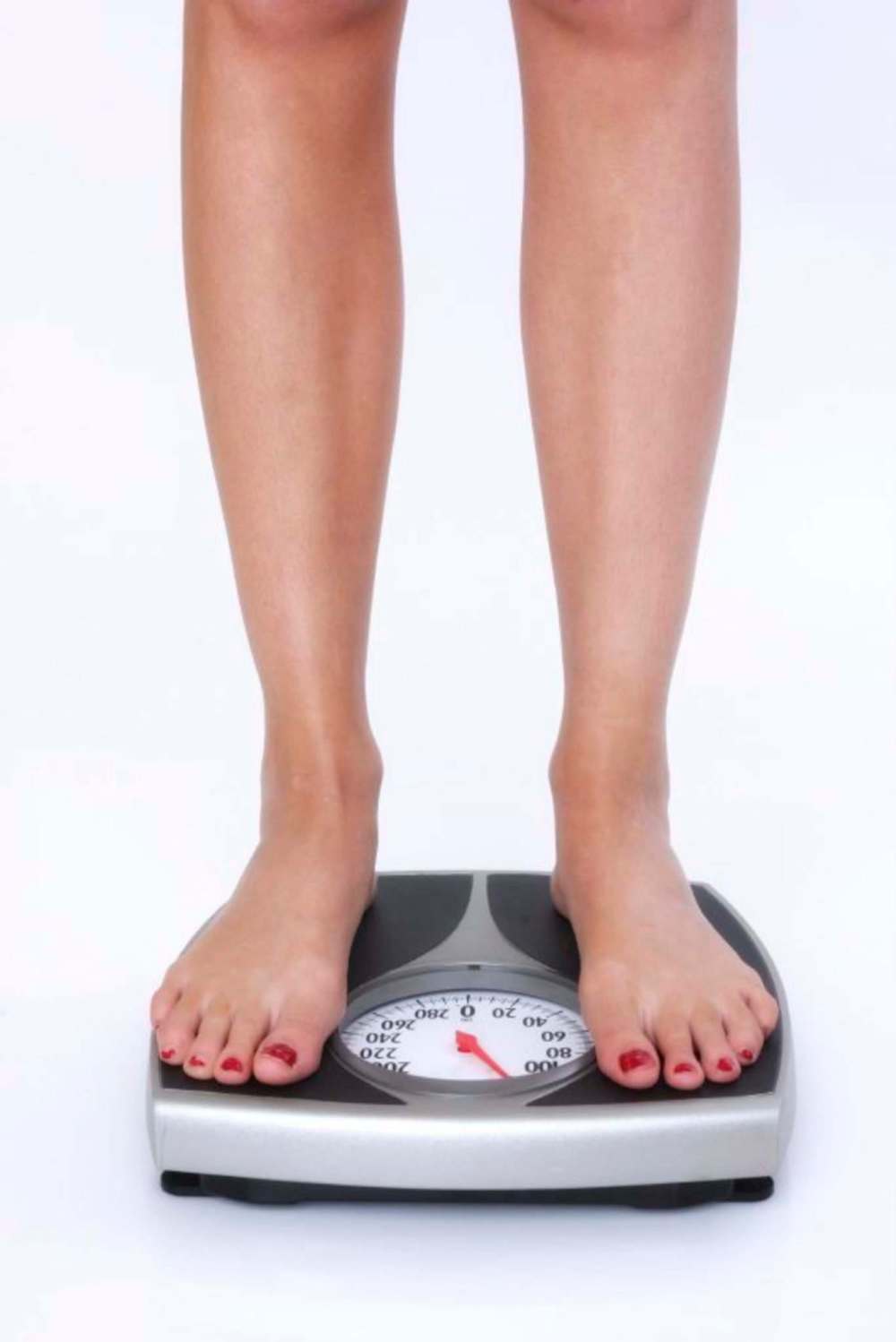
You climb atop, close one eye and wince in the other, praying to get a glimpse of a number that’ll satisfy you.
Yes, it’s the scale.
You’ve been good, after all. You haven’t missed a workout, you’ve been hungry at times and you’ve managed to overcome all those diet saboteurs put in front of you at the office.
So, as long as the scale validates your efforts, you’ll happily stick to the plan, right?
That’s a dangerous game to play. If it doesn’t show a positive number, then what?
You’ll angrily run downstairs for a big bowl of Froot Loops and cancel your workouts for the week?
How many diets have been derailed by a scale putting someone in a bad mood?
I’m here to tell you there’s hope. There’s a good chance you are losing fat at the right pace for your body, even if the scale suggests otherwise.
Let me explain.
A Trip Down Memory Lane
Not too long ago, I trained a couple in their late 40s.
They were both highly motivated, showed up to the workouts and did everything I asked, but the husband was losing weight and the wife wasn’t.
I had to do some investigating to discover she had been on every diet under the sun the previous couple of decades.
You know, those diets that have you chase the calorie rabbit farther and farther down the hole until you can’t eat any less food and fall off the wagon?
Each previous diet had her losing weight, but it was the quantity-over-quality approach, and inevitably when she fell off, the weight gained back was a higher proportion of fat to muscle.
Her metabolism was in the gutter, driven by these past diet attempts, due in large part to a lack of muscle (that toned look was lacking, in other words).
At this point, my job was to get her to do three things:
• Take a hammer to her scale Office Space style and avoid weighing in other than once weekly (if at all)
• Make sure she hit the protein minimum I set each day on her plan
• Make strength training the entrée, and cardio the side dish
That’s it. Just those three things consistently. It’s not unusual to see a client such as her gain muscle while simultaneously losing fat.
Eight weeks later, her weight had barely moved, but her body had changed so dramatically she fit into an old pair of “hot” jeans two sizes smaller than she was when she started.
The Scale Is A Liar (Sometimes)
The scale does one thing, exactly: it measures the Earth’s gravitational pull on you for one instant in time.
The scale doesn’t measure fat loss as a whole.
Measuring gravitational pull alone ignores several key components of fitness:
Muscle gain: This is especially important when a beginner is just picking up strength training. Lean body mass (muscle) is more dense than fat, meaning a small amount of it will weigh more than fat does.
Water retention: This can be due to many factors. That time of the month, a heavy meal the night before, hydration levels, sedentary or unusual situations such as air travel at altitude and so on.
Bowel contents: Getting adequate fibre — or supplementing your intake — can help reduce this number, but we all do it. Yes, even Halle Berry. Sometimes weighing after going No. 2 can show a pretty big difference. TMI?
Cellular glycogen storage: Your body holds onto carbohydrates (sugar) at the cellular level. When you deplete your body of its fuel, it will tap into this stored glycogen to give you energy. It’s stored in muscle and the liver. When you’re in a depleted state, you’ll weigh less. This is largely responsible for the “whoosh” effect at the start of a low carb (i.e. keto) diet. Sorry, it’s not magic.
Plus, times of stress or sleep deprivation can wreak havoc and send your weight in all sorts of directions by affecting the factors above.
You must take the good with the bad. People who don’t weigh themselves at all or rarely do so are less likely to lose weight than those who weigh themselves often, according to research from the American Heart Association presented late last year.
With that said, please only weigh yourself one time per day, first thing in the morning after using the restroom. Then move on with your day and don’t get back on the scale until the next morning.
How To Get The Full Picture

There are certainly lots of options beyond the scale to track progress these days. Locally, you can go to Body Measure and get total body scans providing precise measurements of total body composition, including bone mineral content, lean muscle mass, fat tissue mass and body fat percentage.
For my clients, I’ll have them track waist, hip and muscle circumference with a simple flexible tape measure from the comfort of their own home.
I’ll also ask them to self-assess in the mirror, see how their clothes are fitting and watch for validation from those who don’t see them every day. The compliments you receive along the way are a victory unto themselves.
The scale still has a role to play, but don’t make it the only measurement tool at your disposal.
Mitch Calvert is a Winnipeg-based fitness coach for men and women like his former self. Obese as a teenager, he now helps clients find their spark and lose weight for life. Are you ready to drop two pant sizes in time for summer? Mitch is running his Drop 2 Sizes Challenge this spring, which closes to applications on Monday. Send an email to mitch@mitchcalvert.com with the word “Interested” in the subject line to get more information.
Our newsroom depends on a growing audience of readers to power our journalism. If you are not a paid reader, please consider becoming a subscriber.
Our newsroom depends on its audience of readers to power our journalism. Thank you for your support.
Our newsroom depends on a growing audience of readers to power our journalism. If you are not a paid reader, please consider becoming a subscriber.
Our newsroom depends on its audience of readers to power our journalism. Thank you for your support.
Advertisement Advertise With Us
Advertisement Advertise With Us